
DOC // Moldova Prepared: Resilience Guide with 477 recommendations for 48 crisis situations launched in Moldova
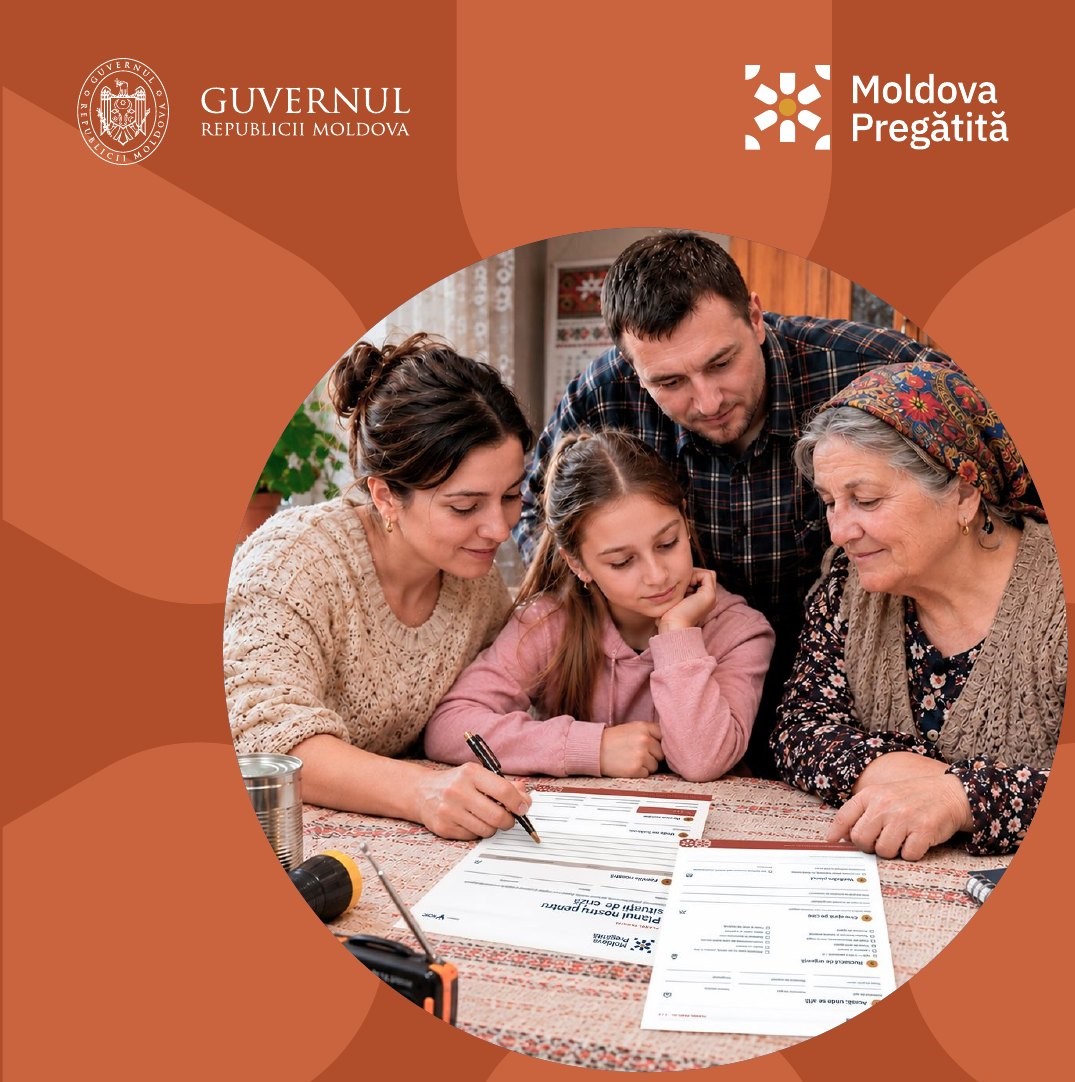
The Republic of Moldova today launched the Resilience Guide for Families, Communities and Citizens, a document bringing together 477 official recommendations for 48 crisis situations. The guide was presented during the first National Resilience Congress and is part of Moldova Prepared campaign, launched to help the population prepare for the first 72 hours of an emergency.

The document provides recommendations on the measures citizens should take in situations such as interruptions to water or electricity supplies, the inability to use electronic payments, loss of internet connectivity, earthquakes, floods or the appearance of drones.

990a848f8f3e33210195d64d3ffc574d_ghid-de-rezilienta-moldova-pregatita_6afeb68a9d28d.pdf

Expert Cristina Boroneanu-Drăgălin, who contributed to the development of the guide, explained that it brings together practical information on preparing households and on how people should behave during the first hours of a crisis.


„The guide brings together practical recommendations on how to prepare and what to do during the first hours of a crisis. It explains what a crisis situation is and what the potential consequences are, as well as what we need to prepare for. What do we do if the water supply has been cut off or the electricity is not working? What do we do if certain services, such as electronic payments, are not functioning, or if we cannot connect to the internet? What do we do in the event of an earthquake, a flood or if we see a drone?” the expert said.


The guide is not limited to recommendations for individuals, but also includes guidance on organizing the family, developing a household resilience plan and cooperating with neighbours, the community and colleagues at work.

Cristina Boroneanu-Drăgălin noted that the large number of recommendations does not mean that people have to apply all of them at the same time, but that they will have the necessary information to respond according to the situation they face.


„The fact that these recommendations are included in the guide does not mean that we will need every single one of them, but it does mean that when an unforeseen situation occurs, we will be prepared.”


According to the expert, the document is a platform bringing together official recommendations for unforeseen situations in everyday life and can serve as a basis for developing additional materials to inform the public.

In the coming period, the authors plan to develop supplements tailored to specific groups, including children and students, as well as the business community.


„Together with our development partners, as well as with partners from civil society, the business community and academia, we plan to develop supplements to this guide tailored to different groups. For example, a supplement for children and students or a supplement for the business community. This will allow the guide to be adapted and useful for different groups, depending on their role, age or activity.” Cristina Boroneanu-Drăgălin said.


The guide is available in three languages and can also be consulted without an internet connection after it has been accessed for the first time and its content has been stored locally in the EVO application. The information can be updated by specialists from the National Crisis Management Centre, so that the recommendations can be adapted according to needs.

Valeriu Poia, Head of the Digital Products and Experiences Directorate within the Electronic Governance Agency said that the document has been integrated into the new „Alerts” module in EVO.


„Forty-eight crisis situations and 477 official recommendations in your pocket. They are available in three languages and, most importantly, after the first time users enter the application, this module is stored locally and remains available even when citizens do not have internet access.” Valeriu Poia explained.


He noted that the information is not permanently fixed in the application, but is managed dynamically by the National Crisis Management Centre.


„The content is not hard-coded into the application. It is managed dynamically by our colleagues at the National Crisis Management Centre, who can update the recommendations and add new ones at any time. This means that the guide is alive and constantly up to date.” the Electronic Governance Agency representative said.


Sergiu Diaconu, Head of the National Crisis Management Centre said that the guide is one of the three tools of Moldova Prepared campaign, alongside the emergency backpack model and the alerts module in EVO.

He noted that the programme was developed with the involvement of state institutions, development partners, civil society and the business community, while the next stage involves assessing how useful the recommendations are for citizens.


„We want to find out what is useful for people, what questions they still have and where we need to provide clearer explanations. This will help us improve the programme as we move forward.” Sergiu Diaconu said.


Claudia Hermes, a representative of GIZ Moldova, which supported the organisation of the congress and the development of the guide, also stressed the importance of informing the public, drawing on Germany's experience, where the floods of 2021 caused the deaths of 130 people.


„There were alert notifications, but they did not arrive in time. It was also a challenge for people who, even when they received the alerts, did not understand what they meant.” Claudia Hermes recounted.


She said that the guide could contribute to developing a culture of emergency preparedness.


„I do not believe this is merely a set of applications and an information campaign; it is an opportunity to build a culture of preparedness.” the GIZ Moldova representative said.


The guide was launched during the first National Resilience Congress as part of Moldova Prepared campaign, dedicated to preparing citizens to manage the first 72 hours of a crisis situation.

 Facebook
 Instagram
 X/Twitter
 Telegram
PHOTO // Eight border crossing points of Moldova endowed with modern equipment for verification of documents, biometric data
Moldova's passport ranks 74th worldwide, with access to 107 destinations
Republic of Moldova participated in dismantling three international malware networks
All public digital services restored on EVO portal
Ukrainian refugee children supported in learning Romanian and integrating into schools in Moldova
Foreigners in Moldova to be able to access information about residence, employment and public services on digital platform
Moldovan Civil Aviation Authority explains presence of aircrafts in Chisinau's airspace: “There are three SR-20 aircrafts that flew from Czech Republic”
False fire alarm at Chisinau Airport; operations proceed as normal at airport
VIDEO // More than 2,000 people take part in reforestation campaign in central Moldova settlement
PHOTO GALLERY // Forest Generation campaign in Poganesti: more than 3,000 hectares to be afforested in Moldova this autumn
Moldova, Czech Republic strengthen cooperation in social assistance; RESTART reform supported through new partnership
PHOTO // Great National Planting campaign starts in central Moldova settlement; about 1,200 people to plant 40 hectares of forest in Prut River meadow
Grandparents of Moldova can benefit from childcare leave, allowance until child turns three: National Social Insurance House announces eligibility conditions
Five aerial incidents recorded in Moldova in past week
EVO App to add Alerts and Notifications Module: emergency information to reach around 200,000 users
DOC // Moldova Prepared: Resilience Guide with 477 recommendations for 48 crisis situations launched in Moldova
Republic of Moldova launches first-ever campaign to prepare population for crisis situations
0.5% tax on construction investments to be eliminated
Recipe for friendship and solidarity: Ukrainian refugees learn to make pizza alongside renowned Italian chef
PAS nearly decided on candidate for Chisinau city hall, but official announcement scheduled for November 29, says Igor Grosu
MOLDOVA PREPARED // Launch of national campaign to prepare population for crisis situations
 National Bank of Moldova

Legislation on producer organizations in agri-food sector aligned with EU standards
Legislative measures to streamline cooperation mechanism with EU member states in recovery of claims process adopted by Parliament
President to attend Coalition of Willing meeting in Berlin
Moldovan parliament's standing bureau approves agenda for plenary meeting due on November 19
Moldovan government's deputy secretary general discuss Council of Europe's support for local public administration reform in Strasbourg

Moldovan parliament speaker says under what conditions Gagauzia’s new governor could join government
Moldovan parliament speaker comments on Tiraspol leader's return to Transnistrian region, travel restrictions
PHOTO GALLERY // Italian Cuisine Week in the World; Ukrainian refugee children cook pizza alongside renowned chef Luca Pappagallo
University professors of Moldova receive English language training to teach foreign students
Better conditions for social services' beneficiaries in two north Moldova settlements: institutions made more energy efficient with EU's support
Moldovan parliament's standing bureau approves agenda for plenary meeting due on November 19
Moldovan government's deputy secretary general discuss Council of Europe's support for local public administration reform in Strasbourg
PHOTO // Drone detected in north Moldova settlement identified as of Gerbera-2 model
Deputy PM for reintegration has meeting with Representative of Office of United Nations High Commissioner for Refugees in Moldova
Issues examined at meeting of Moldovan parliament's standing commissions on November 16-18, 2026
Customs Service of Moldova to be authorized to conduct forensic examinations recognized as evidence in court
Moldovan national team's footballer signed by FCSB for 250,000 euros, awarded monthly salary of 10,000 euros
Moldovan Central Electoral Commission says runoff of elections for governor of Gagauzia to take place on November 29
PHOTO // First version of management plan for Lower Dniester National Park submitted for consultation with experts, authorities of Moldova
Moldovan government simplifies rules for entrepreneurs: over 70 authorizations to be eliminated or simplified, 150 permits to be reviewed
Foreign affairs minister has talks with group of Moldovans settled in Italy
Receive the latest news directly to your email

Receive the latest news directly to your email