
BTA: From Coffee Imports to High-End Fashion: The Adaptive Model of a Cooperative for People with Disabilities in Burgas
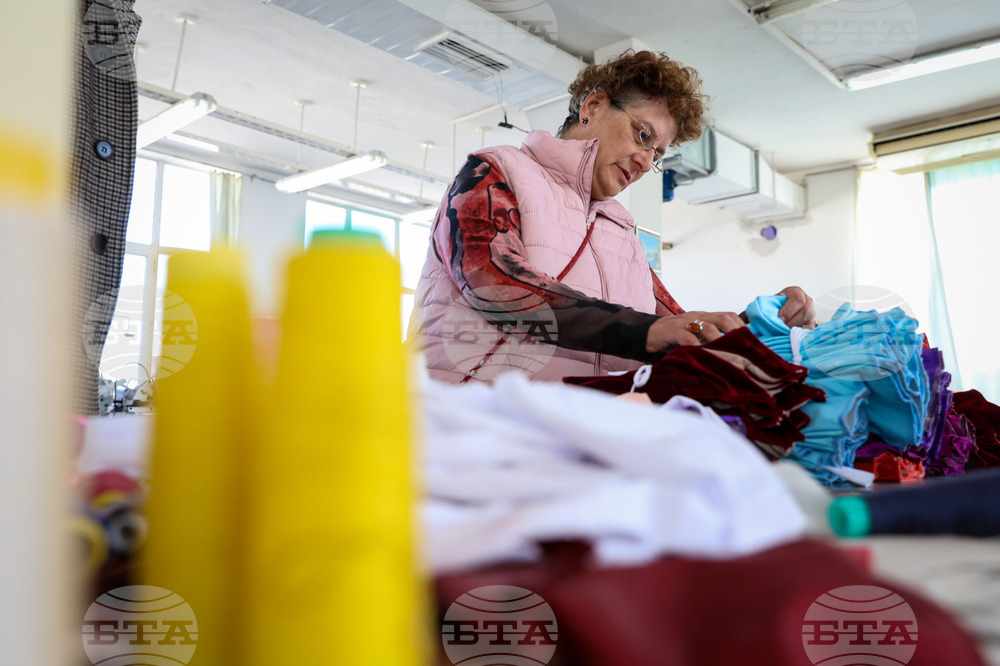
On the third floor of an old industrial building in Burgas, about twenty women are assembling high-end fashion garments for boutiques in France. The space is huge and bright. In one corner stands a machine, covered with fabric, for producing seamless sportswear worth thousands of euro - an expensive investment commissioned by a French client whose order was never actually placed.

This scene at the Chernomorka cooperative in Burgas captures the delicate balance of the modern textile industry. Founded in 1950 by people with disabilities, the enterprise - which will turn 76 on December 24 - is one of the few representatives of the social economy in Southeastern Bulgaria today. While garment factories in the region are struggling under the pressure of high electricity costs and competition from imports, Chernomorka stays afloat through a hybrid model: it sews high-end clothing for Western Europe but actually supports itself as a landlord.

When rents subsidize production

Across Bulgaria, there are about 70 labour-production cooperatives for people with disabilities remaining, and their number continues to decline, Chernomorka Chairwoman Antonela Ilieva tells BTA. She emphasizes that the secret to their survival lies not in sewing machines but in real estate.

The cooperative leases its vacant space to a diverse mix of businesses, ranging from manufacturers of bedding, hygiene products, and electronic circuit boards to a fish-processing plant, two fashion houses, and two pharmacy warehouses.

It is precisely this revenue that serves as a financial buffer, covering the hefty bills for industrial electricity and heating the sewing workshop, including air conditioning in the winter.

"We make ends meet because we have space to rent out. In fact, that is what brings in the most revenue for us, not clothing production," Ilieva admits. However, the ground floor of the cooperative's building - which management had considered converting into its own store selling Chernomorka brand children's clothing - remains closed due to a lack of foot traffic and parking spaces in Burgas' Northern Industrial Zone. Just a few years ago, the cooperative sold the children’s clothing it produced in its own store in downtown Burgas, but today its products are available only at trade shows throughout the country.

From coffee to sewing needles

Over the decades, the cooperative has engaged in dozens of activities: from manufacturing furniture, knitwear, baskets, and dolls to cracking almonds, hand-packaging spices, and producing Bulgaria's traditional fermented beverage boza. At one point, the enterprise was even one of the two official importers of green coffee beans in Bulgaria, roasting and packaging varieties from Vietnam, Costa Rica, and Venezuela, until widespread industrial automation put an end to that business.

Today, the cooperative's main asset is the people from Burgas and the surrounding villages, for whom the workshop provides a secure job from Monday through Friday. "We have about 30 workers in total," Ilieva tells BTA. "Some of them have 58 years of service at the company," she notes, adding that together with the bookbinding workshop in downtown Burgas and the tenants, these hardworking people are keeping alive an industrial model in which market pragmatism is the only guarantee for the survival of Chernomorka's social cause.
 Facebook
 Instagram
 X/Twitter
 Telegram
ARMENPRESS // Court orders Azerbaijani serviceman who shot Armenian woman held in pre-trial detention
ARMENPRESS // Armenia and US take practical steps to implement minerals memorandum
ARMENPRESS: Newly elected authorities have received a clear mandate from the people - PACE report on Armenia
ARMENPRESS: EU Commissioner Kos promotes Armenian products after trade measures adopted
EU Council adopts temporary trade-liberalization measures for Armenian products
ARMENPRESS // James Cameron to meet Yerevan fans in November
ARMENPRESS: Pashinyan says talks with five countries continue over new nuclear power plant
European Parliament approves temporary trade liberalization measures for Armenian products
ARMENPRESS // EUSR Grono: I do not contest past Armenian presence, rich cultural footprint in Karabakh
ARMENPRESS: Armenia’s EU membership is “absolutely” possible, Polish official says
ARMENPRESS: Economy Minister, Emirati logistics company discuss Armenia’s role as regional logistics hub
ARMENPRESS: Yerevan lodges EAEU complaint over Russian restrictions on Armenian products
ARMENPRESS: EU Council backs temporary trade-liberalization measures for Armenian products
BTA: Bulgarian Funding to Improve Kindergarten Yard in Moldova's Cairaclia
Elections in Gagauzia: CEC verifies 100% of polling station protocols in the election for the position of Governor of the autonomy
Alexandr Stoianoglo and Fiodor Gagauz to face each other in the second round of elections for the position of Bashkan of Gagauzia
Promo-LEX: Violations of ballot secrecy, voting on behalf of other voters and suspicions of voter bribery during elections in Gagauzia
Preliminary results: Independent candidate Alexandr Stoianoglo leads the race for the position of Governor (Bashkan) of Gagauzia
Polling stations closed; approximately 49,000 citizens cast ballots at elections in Autonomous Territorial Unit of Gagauzia
Moldovan Civil Aviation Authority explains presence of aircrafts in Chisinau's airspace: “There are three SR-20 aircrafts that flew from Czech Republic”
Transnistria's leader returns to Chisinau; Moldovan government's spokesperson: “He will be banned from leaving the country for five years”
 National Bank of Moldova

Forest Generation 2026 in Moldova: 33,000 poplar saplings planted across 40 hectares
Moldovan PM to attend Francophonie Summit in Phnom Penh
Moldovan parliament joins national #ForestGeneration Autumn 2026 campaign this year too
Moldovan PM visits glass fiber materials factory in Straseni, which produces including for Airbus
Reform of Moldova's unified pay system in public sector on agenda of parliament’s plenary meeting on November 16

Repeat election in Novosiolovca village: voter turnout reaches 17.44 per cent by 18:00
Over 43,500 citizens participate in elections in Autonomous Territorial Unit of Gagauzia by 18:00
Moldovan Central Electoral Commission's head says election validity threshold exceeded in 29 of 35 electoral districts from Autonomous Territorial Unit of Gagauzia
Over 170 voters participates in election held in Taraclia district village by 15:00
Elections in Gagauzia: about 25 per cent of voters cast ballots by 15:00
Moldovan Central Electoral Commission warns about risk of false information emerging on regional election day; citizens urged to consult official sources
Promo-LEX association of Moldova identifies 27 incidents at elections in Autonomous Territorial Unit of Gagauzia
About 120 citizens vote at repeat election held Taraclia district village by 12:00
Elections in Gagauzia; Over 14 per cent of voters cast ballots by 12:00
Repeat election in Taraclia district village: voter turnout reaches 1.61 per cent by 9:00
More than 2,800 voters cast ballots in Autonomous Territorial Unit of Gagauzia by 09:00; voting proceeds without incidents
False fire alarm at Chisinau Airport; operations proceed as normal at airport
Repeat mayoral election in Novosiolovca village, Taraclia district of Moldova; polling station opens
Citizens of Autonomous Territorial Unit of Gagauzia expected to vote to elect members of People's Assembly, region's governor
VIDEO // More than 2,000 people take part in reforestation campaign in central Moldova settlement
Forest Generation 2026 in Moldova: 33,000 poplar saplings planted across 40 hectares
Receive the latest news directly to your email

Receive the latest news directly to your email