
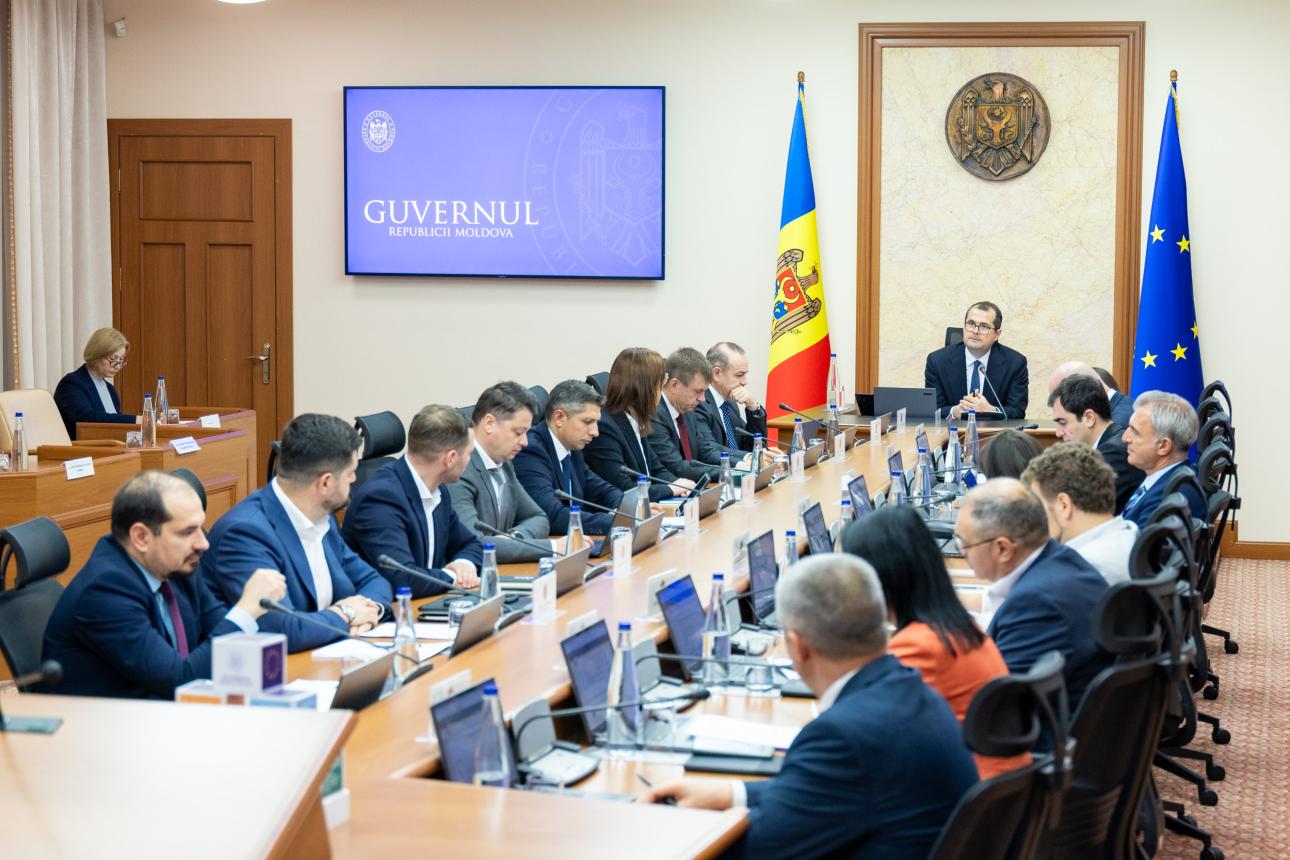
Government proposes declaring state of emergency in energy and hydrological sectors for 60 days
The Government will ask Parliament to declare a state of emergency in the energy and hydrological sectors nationwide for a period of 60 days, starting on September 26. The measure is preventive and necessary to enable the authorities to respond quickly in the event of disruptions to energy, fuel, and water supplies, amid regional risks and a severe hydrological deficit.

The states of alert previously established in the two sectors expire on September 25. However, the risks that led to their introduction persist, and pressure on the energy system will increase as the cold season approaches.

This winter, approximately 59% of the country's electricity needs will have to be covered through imports. During peak hours, the import requirement is estimated at 400–450 MW, of which approximately 360 MW represents guaranteed capacity.

Regarding natural gas, more than 90% of the requirements for the cold season have already been contracted. At present, there is no risk of insufficient gas volumes, but price developments on international markets are creating financial risks and requiring significant resources for purchases and the replenishment of mandatory reserves.

The situation on the fuel market has improved following measures implemented by the authorities. If, at the beginning of August, stocks covered approximately 3.5 days of consumption and 109 stations reported shortages of certain products, stocks currently cover around 10 days, while the number of stations reporting shortages has fallen to fewer than 7. External risks nevertheless persist amid disruptions on regional and international markets.

At the same time, the Republic of Moldova is facing a severe hydrological deficit on the Dniester and Prut rivers. Low water levels could affect water abstraction capacity and, consequently, the supply of drinking water to the population. The two sectors are directly interconnected: water abstraction, pumping, and treatment infrastructure depends on electricity, while drought in turn reduces hydroelectric power generation.

The state of emergency will allow the authorities, when circumstances require, to adopt temporary and proportionate measures to maintain energy and fuel stocks and imports, protect household consumers and critical infrastructure, and ensure continuity of water and energy supplies.

Prime Minister Vasile Tofan emphasized that the Government must focus on measures that could reduce the impact of these risks on the population, including by reviewing the support provided to households during the cold season. “This winter, we will have to reconsider the initial decision and increase compensation compared with the initial plans. We must ensure that we cover a larger number of households. Last year, we covered 620,000 households and, most likely, this figure will be even higher this year. We cannot control drought, war, or fuel shortages, but there are things we can control. In this regard, the assistance provided to people by the Government is an absolute priority.”

The official stressed that the measures are necessary so that the state can respond in time, before external risks directly affect citizens. The authorities’ objective is to prevent shortages and interruptions and ensure the continuity of energy, heating, water, and fuel supplies, as well as the uninterrupted operation of essential services.

The proposal to declare a state of emergency will be submitted to Parliament for review and approval.
 Facebook
 Instagram
 X/Twitter
 Telegram
Reforming recruitment in civil service: from legal framework to implementation
Summary of Moldovan parliament's plenary meeting held on September 17, 2026
Roman Rosca takes over as chair of special parliamentary commission for monitoring and oversight of Moldova’s reintegration policy
Working of small farms in built-up areas of localities to be regulated by law in Moldova
Moldova accedes to convention in marine environmental protection sector
Moldovan deputy PM for reintegration has meeting with Sweden’s Ambassador
Moldovan PM meets Director of European Bank for Reconstruction and Development for Ukraine and Moldova
Voted in first reading: Railway of Moldova state enterprise to be reorganized by late 2026
Clear requirements for classification, labelling of chemical products in Moldova
Regulatory framework for extractive waste management harmonized with EU standards in Moldova
Moldovan parliament denounces agreement with Commonwealth of Independent States on interlibrary lending
Moldovan government creates single structure for implementing strategic infrastructure projects
Defence Staff institutionalized by law in Moldova
Moldovan parliament adopts measures to prevent phone scams, electronic communications fraud
Chisinau’s Triumphal Arch to be registered as state public property
Government approves declaration of state of emergency in energy and hydrological sectors
Moldova and Hungary to boost economic cooperation
Foreign Ministry condemns two unauthorized overflights of Moldova’s airspace: Serious violation of sovereignty
 National Bank of Moldova
Moldovan National Security Council approves string of measures to ensure continuous energy supply, prepare country for cold season
Moldovan president's message following meeting of National Security Council
Moldovan PM meets Irish Ambassador
Deputy PM for reintegration has meeting with new Ambassador of Austria to Moldova
Europe at Your Home – dialogue on European path continues in Ungheni city of Moldova

VIDEO // Moldovan parliament to convene at extraordinary meeting to declare state of emergency in energy, hydrological sectors
Moldovan government to ask parliament to declare state of emergency in energy, hydrological sectors; PM: “We cannot afford to wait for a crisis to emerge”
Moldova's National Security Council orders measures to protect energy infrastructure from drones, cyberattacks
PHOTO // European integration can accelerate mobilization of green investments in Moldova; study presented in Montenegro
Moldovan president's message following meeting of National Security Council
Moldovan PM meets Irish Ambassador
Low water flows in Dniester; Moldovan environment minister announces measures to manage situation
VIDEO // Moldova's National Security Council: authorities to consider declaring state of emergency in energy, hydrological sectors
Deputy PM for reintegration has meeting with new Ambassador of Austria to Moldova
Natural gas price in European exchanges stays high, amid regional situation
Moldovan Education Ministry launches Young Researcher contest meant ethnic minorities' pupils
Europe at Your Home – dialogue on European path continues in Ungheni city of Moldova
Moldovan deputy PM for reintegration has meeting with members of Foreign Affairs, Defence and Security Committee of Czech Republic's Senate
Moldovan parliament speaker says leadership seeks closest possible cooperation with Lithuania during its presidency of Council of EU
Documentary play to be presented on Moldovan parliament's square
Investing in government securities: Ministry of Finance launches new subscription round
Receive the latest news directly to your email

Receive the latest news directly to your email