
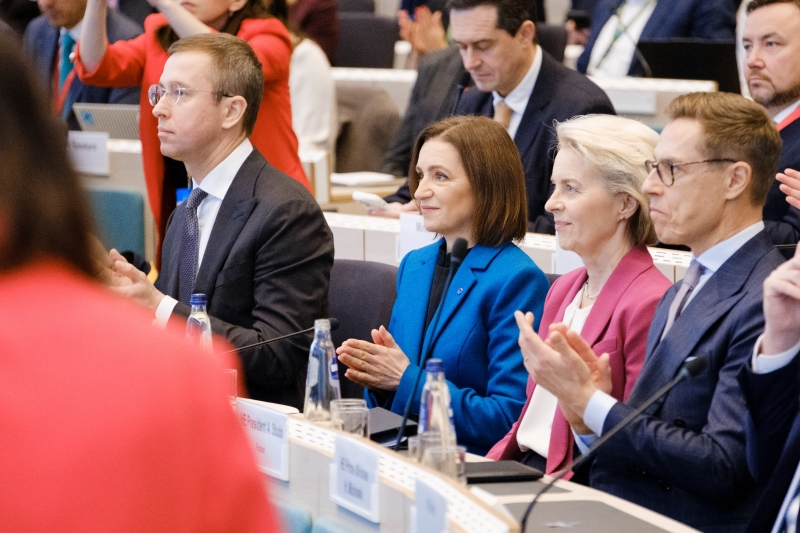
Moldovan president, at EU Enlargement Forum, says Moldova can conclude accession negotiations by 2028, even exceed European Commission’s expectations
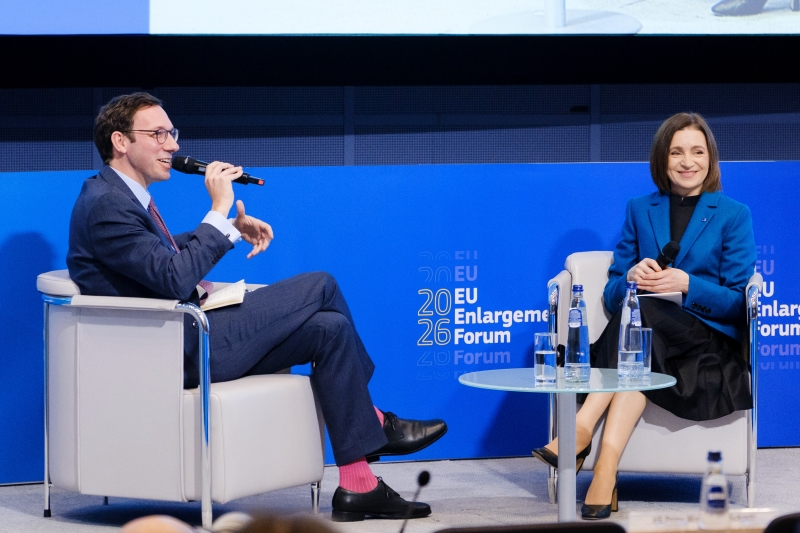
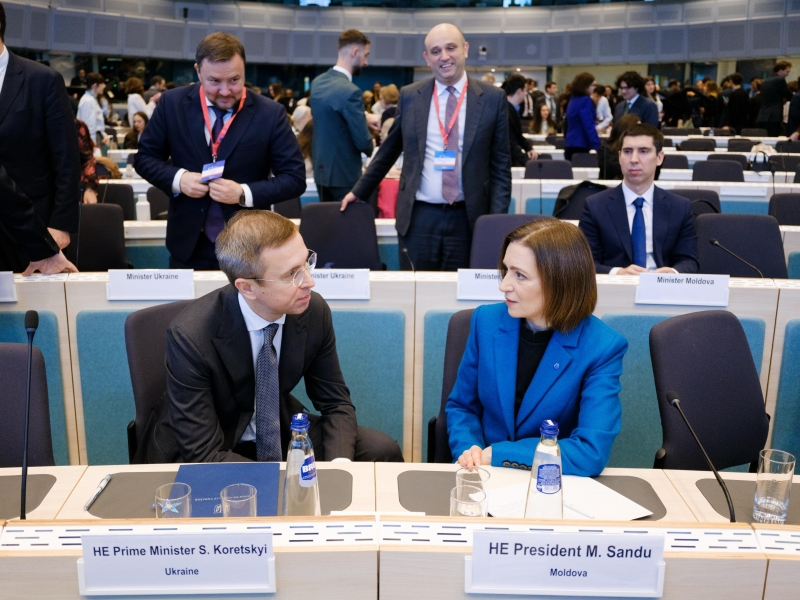
Moldova can conclude its accession negotiations with the European Union by the beginning of 2028 and may even deliver more than the European Commission expects. President Maia Sandu today made statements to this effect at the European Union Enlargement Forum in Brussels.

“It is ambitious, but I believe Moldova has demonstrated, in recent years, that it can achieve ambitious goals,” the head of state said.

The Moldovan president emphasized that the European Commission’s latest Enlargement Report confirmed the efforts of the Moldovan institutions. According to the report, Moldova is technically prepared to open the final two clusters of negotiating chapters. “We will work very hard next year to fulfill at least what the Commission says regarding the 25 chapters, perhaps even more,” the head of state said, adding: “It is realistic. We will deliver even more than what the Commission expects from us.”

The head of state called for a merit-based enlargement process, in which the reforms undertaken by candidate countries are followed by concrete steps on behalf of the European Union member states. The president noted that Russia was heavily investing in its hybrid war against Moldova, in order to use it against Ukraine and the EU member states in the region. “Moldovans will continue making sustained efforts to strengthen state institutions and society’s resilience as a whole. However, citizens must see that European integration is a concrete and real goal. Therefore, as long as the government fulfills its commitments and the European Commission confirms through its reports that the government is carrying out the reforms necessary for European integration, the citizens of Moldova must also see that the European Union is honoring its commitments. Because if this does not happen, it will be much easier for Moscow to promote the Russian narrative that European integration is a lie and that it does not represent a real perspective for Moldova,” Maia Sandu said.

The president recalled that European integration was the choice of Moldova’s citizens, expressed through the constitutional referendum and the presidential and parliamentary elections. “I believe this is the greatest guarantee that European integration will continue. I hope we will have the treaty signed before I end my mandate. But other steps will follow as well. And I am sure that this process will continue, thanks to the people of Moldova who have chosen this path,” the head of state said.

Maia Sandu also referred to the importance of closer dialogue with the member states and their societies, with the support of the Moldovan Diaspora, in order to better explain the benefits of Moldova’s accession for the entire Union, including regional security.

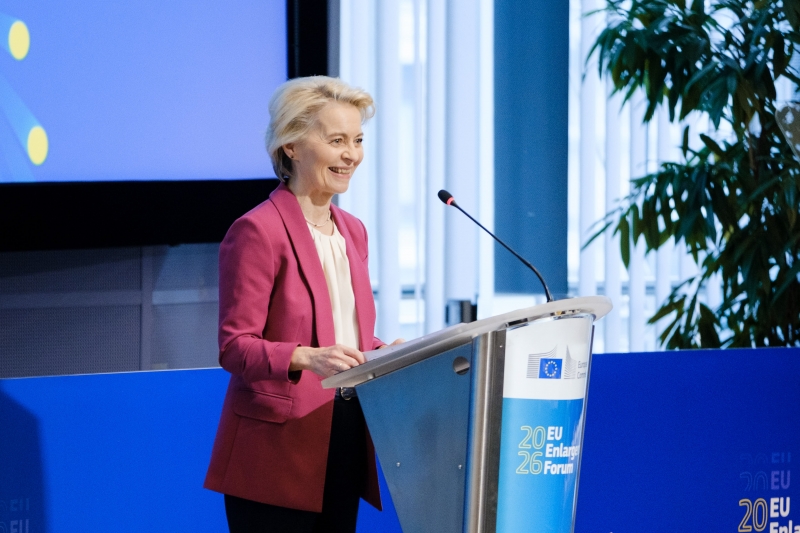
Moldova’s progress was also highlighted by European Commission President Ursula von der Leyen in her opening speech at the Forum: “Both Moldova and Ukraine are advancing on their European path, despite extraordinary pressures. It is impressive to see this.” She noted that Moldova’s experience in defending democracy against foreign interference offered important lessons in resilience for Europe as a whole.

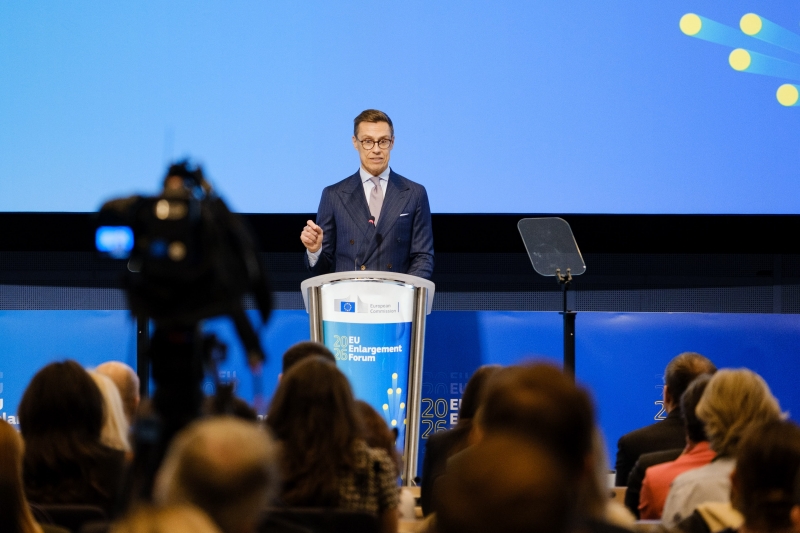
For his part, Finnish President Alexander Stubb delivered a firm message of support for the European perspective of Moldova and Ukraine: “You are Europeans and you will become members of the European Union. Your accession must remain merit-based, but once the reforms are carried out, Europe must respond with speed and determination.”

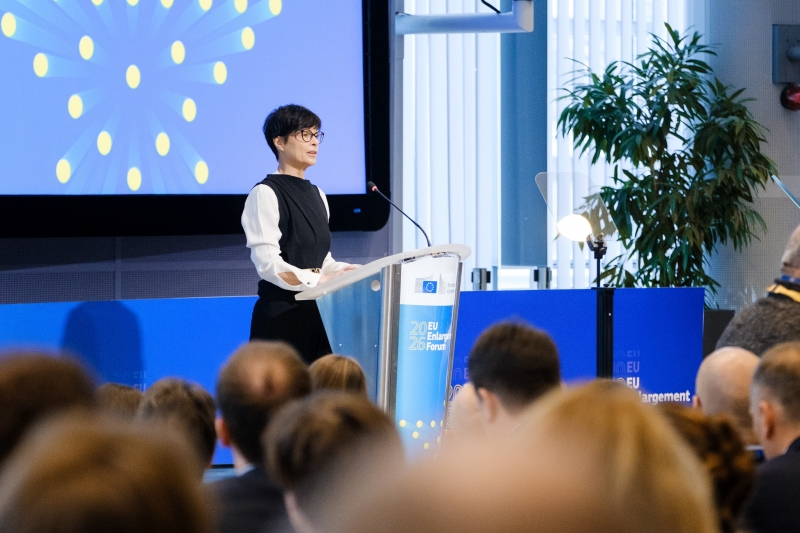
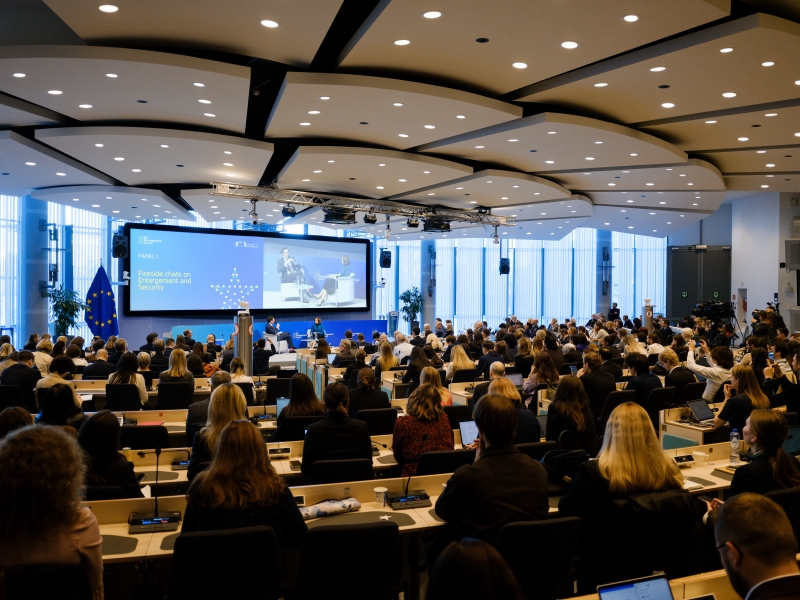
The European Union Enlargement Forum, entitled, Wider Europe – Stronger Europe, is hosted by the European Commission. The Forum brings together political leaders and representatives of civil society, the business community and young people from member states and candidate countries. The head of state’s participation takes place during her working visit to Brussels on November 16–17. The visit includes meetings with officials from European institutions and members of the European Parliament.
 Facebook
 Instagram
 X/Twitter
 Telegram
14 students and pupils with outstanding academic results proposed for President’s Scholarship
Government approves public sector pay reform: higher and fairer salaries for 172,000 employees
Social security agreement between Moldova and Ireland signed in Dublin, in presence of Moldovan president
Moldovan PM's speech at UN Conference on Climate Change (COP31)
Moldovan PM participates in UN Climate Change Conference
Moldovan PM, president of European Bank for Reconstruction and Development discuss cooperation between Moldova and top bank
Moldovan parliament's library hall to be named after Vasile Stroescu
Moldovan PM has meeting with Vice President of Turkey
President to attend European Political Community Summit in Dublin
Moldovan PM has discussions with World Bank's representatives
Moldovan PM to pay working visit to Turkey
Moldovan PM, European Commissioner for Enlargement attend event marking 15 years of European Business Association
Moldovan government's deputy secretary general, at annual conference on EU enlargement, says aim of local public administration reform to ensure that quality public services reach every citizen
PM, European Commissioner for Enlargement discuss Moldova's progress, priorities on European agenda
Moldovan president, at EU Enlargement Forum, says Moldova can conclude accession negotiations by 2028, even exceed European Commission’s expectations
Breaking news
President of Moldova’s National Confederation of Trade Unions detained in corruption case; allegedly received 2,000 dollars
Energy infrastructure investments to be financed through corporate bonds: Memorandum signed in Chisinau
Public-sector salaries to increase by 15.7 per cent on average in Moldova as of January 1, 2027: draft voted on by parliament
Moldovan president participates in EU Enlargement Forum in Brussels
Moldova's passport ranks 74th worldwide, with access to 107 destinations
European Commission President: Moldova has much to teach EU about resilience in face of foreign interference
 National Bank of Moldova

Over 172,000 public-sector employees to receive higher salaries; Moldovan parliament approves reform of unified pay system in first reading
Republic of Moldova joins International IDEA to strengthen electoral process integrity
Bootcamp for 6.2 edition of paid public service internships: two days for learning and professional development
Forest Generation 2026 in Moldova: 33,000 poplar saplings planted across 40 hectares
Moldovan PM to attend Francophonie Summit in Phnom Penh

Over 172,000 public-sector employees to receive higher salaries; Moldovan parliament approves reform of unified pay system in first reading
Republic of Moldova participated in dismantling three international malware networks
Reform of public-sector pay system examined by Parliament: higher salaries for about 172,000 employees
All public digital services restored on EVO portal
Deputy Speaker calls for explanations regarding opposition MPs' visit to Russia
Ukrainian refugee children supported in learning Romanian and integrating into schools in Moldova
Republic of Moldova joins International IDEA to strengthen electoral process integrity
Bootcamp for 6.2 edition of paid public service internships: two days for learning and professional development
Citizens can invest in government securities: new subscription round launched
Head of State visits Brussels: meetings with European officials and discussions on advancing accession negotiations
Foreigners in Moldova to be able to access information about residence, employment and public services on digital platform
Elections in Gagauzia: CEC verifies 100% of polling station protocols in the election for the position of Governor of the autonomy
Alexandr Stoianoglo and Fiodor Gagauz to face each other in the second round of elections for the position of Bashkan of Gagauzia
BTA: From Coffee Imports to High-End Fashion: The Adaptive Model of a Cooperative for People with Disabilities in Burgas
Promo-LEX: Violations of ballot secrecy, voting on behalf of other voters and suspicions of voter bribery during elections in Gagauzia
Preliminary results: Independent candidate Alexandr Stoianoglo leads the race for the position of Governor (Bashkan) of Gagauzia
Receive the latest news directly to your email

Receive the latest news directly to your email