
Government simplifies access for voluntarily amalgamated localities to infrastructure project funding
Localities that have voluntarily merged their administrations will have easier access to funds aimed at developing infrastructure and improving public services. The Government has approved amendments to the Methodology for voluntary amalgamation, establishing clear rules for the preparation, selection, financing and implementation of investment projects in amalgamated communities.

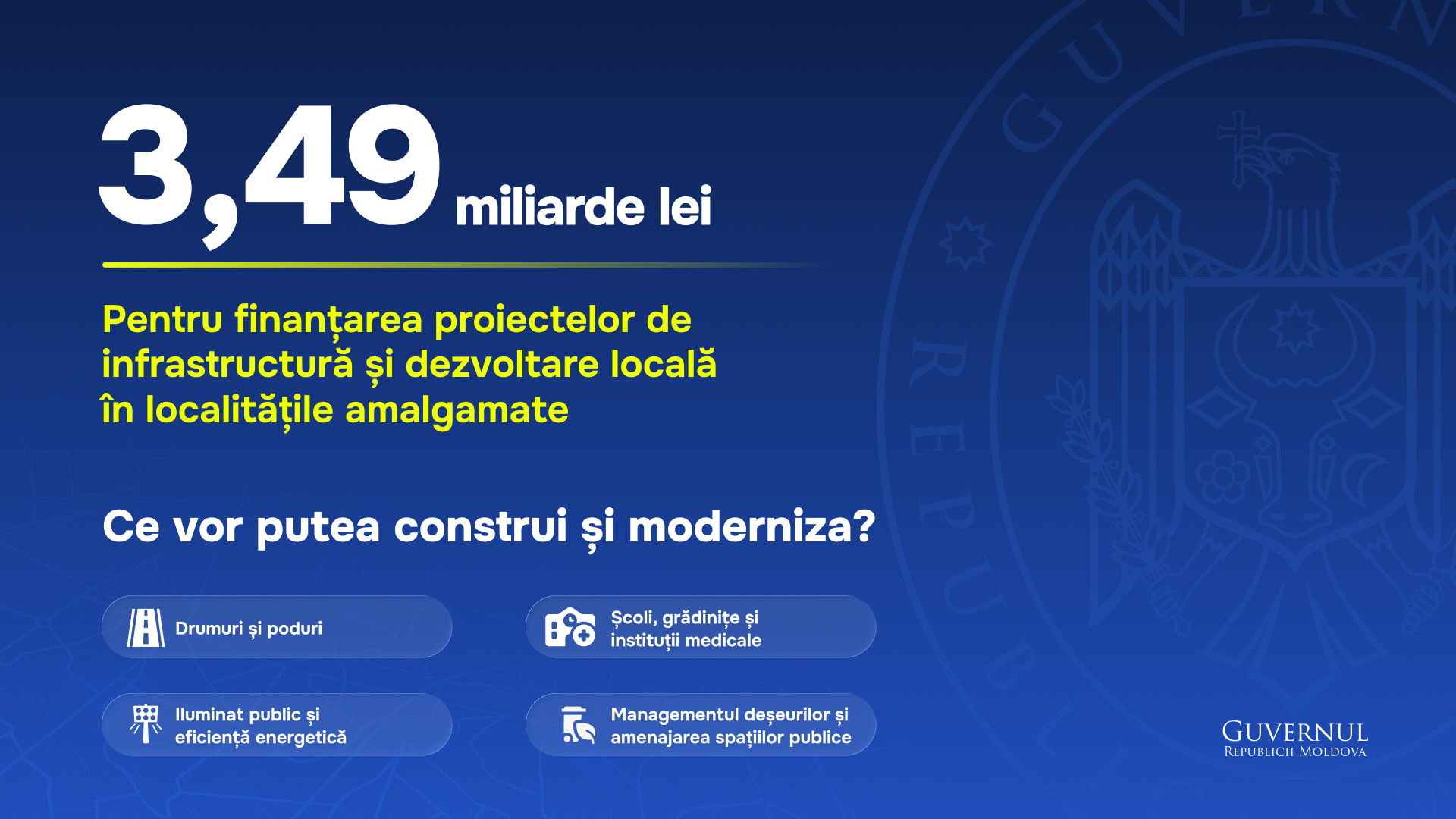
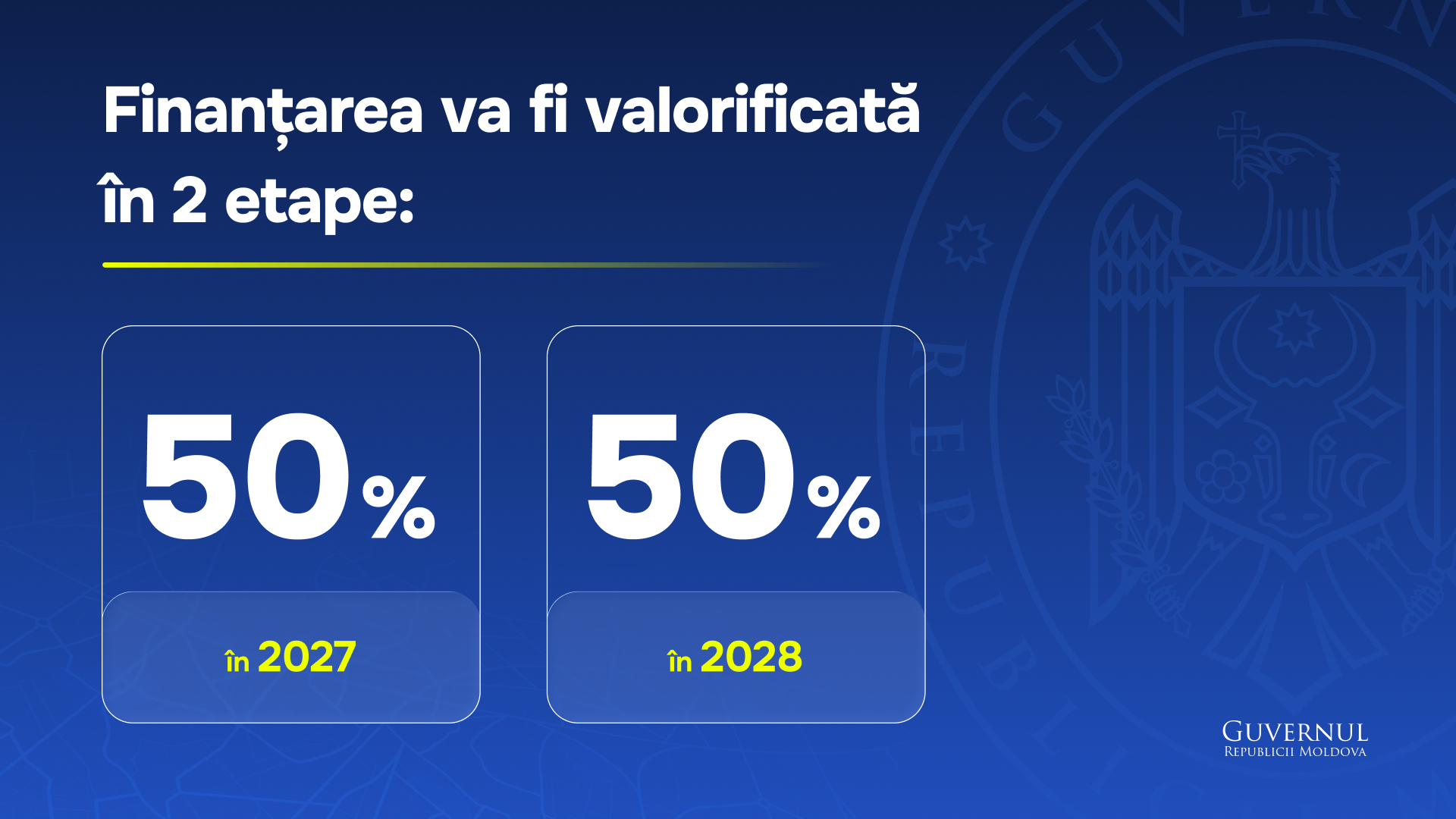
For 2027–2028, investments of approximately 3.49 billion lei are estimated, benefiting 161 groups of voluntarily amalgamated city halls. The funding is planned in two equal installments: 50% in 2027 and 50% in 2028.

The funds may be used to modernize local roads and bridges, expand water supply and sewerage networks, improve public lighting and the energy efficiency of public buildings, renovate schools, kindergartens, medical, cultural, and sports institutions, manage waste, and develop public spaces. The purchase of public transport vehicles, specialized vehicles, and equipment required for local services may also be financed.

Projects will be proposed by local authorities based on the priorities jointly established by the localities participating in the amalgamation process. City halls will also be able to make use of projects identified previously for which feasibility studies or technical documentation already exist. Funding may cover the preparation of these documents, as well as the co-financing of investments carried out through other programs, without duplicating expenses.

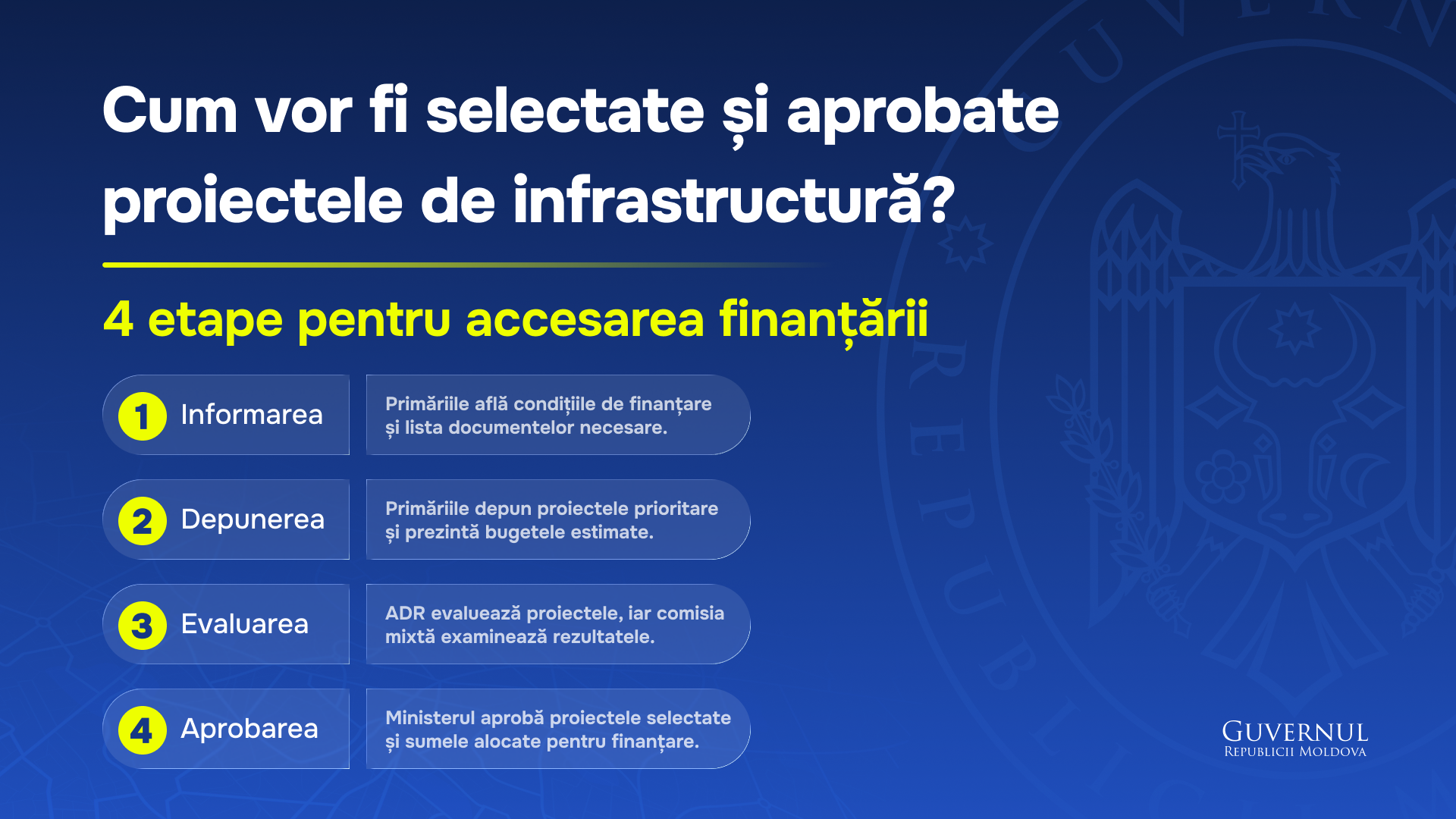
The selection and approval of projects will take place in four stages:

Information and preparation: city halls will receive information about the funding conditions, eligible investments, and documents required for submitting projects.

Submission of applications: local authorities will submit priority projects accompanied by supporting documents and estimated budgets.

Evaluation: Regional Development Agencies will verify the eligibility, documentation, and feasibility of the projects. The proposals will subsequently be examined by the investment selection committee, composed of representatives of the Ministry of Infrastructure and Regional Development, the Regional Development Agencies, and the State Chancellery.

Approval of funding: the selected projects will be approved by the Ministry of Infrastructure and Regional Development and included in the funding plan, specifying the beneficiaries and the approved amounts.

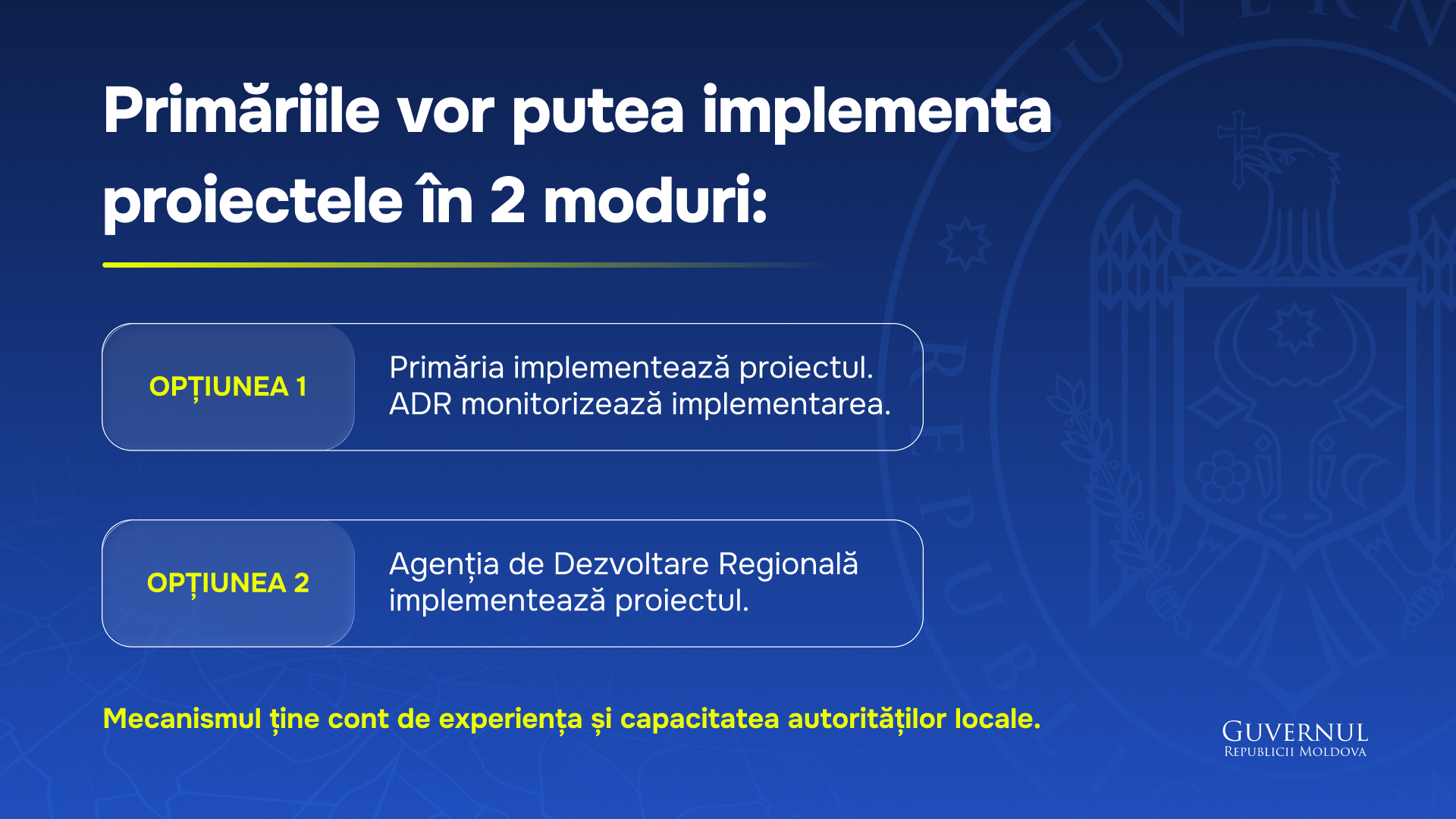
Under the new mechanism, the Ministry of Infrastructure and Regional Development will provide project funding through the Regional Development Agencies. These agencies will also play an important role in implementing the investments, depending on the experience and administrative capacities of the city halls.

Thus, local authorities with experience in managing investments will be able to organize procurement and carry out the works directly, subject to verification and monitoring by the Regional Development Agencies. In the case of city halls that lack the necessary experience, the agencies may take over the organization of tenders, contracting of works, execution of payments, and management of project implementation. This will enable municipalities with limited administrative capacity to carry out the investments planned for their communities.

The new mechanism also establishes rules for expenditure verification and monitoring of works. After the projects are completed, local authorities will be required to ensure the maintenance of the investments for a period of at least five years.
 Facebook
 Instagram
 X/Twitter
 Telegram
Moldovan president, at Connectivity Platform meeting: “Together and connected, even small countries are safer”
Moldovan deputy PM for reintegration has meeting with Head of International Committee of Red Cross Mission
Prime Minister at Digital Connectivity Platform meeting: For small country like Moldova, digitalization - competitive necessity
President: Moldova aims to conclude EU accession negotiations by 2028 and calls for stronger European mechanisms to protect rule of law after accession
President's message at annual conference on European Union enlargement – 2026 Enlargement Package
Parliament hosts visit by delegation from Seimas of the Republic of Lithuania
President: Energy independence means being able to decide for ourselves where we buy energy
President's message at launch event of Vulcănești–Chișinău power line project
Deputy Prime Minister for Reintegration meets with Ambassadors of Ireland, Italy, United Kingdom, Romania, United States and Netherlands accredited to OSCE
Moldova through eyes of Independence generation: painting, sculpture exhibition at parliament
Moldova's parliamentary factions consulted on legislative package for local public administration's reform
Moldova’s progress in EU accession process examined at meeting of Council of Experts under commission for European integration
National Security Council approves measures to strengthen cybersecurity of Moldova
Press statements made following meeting of Moldova's National Security Council
VIDEO // Moldovan president attends European Political Community Summit in Dublin; European path, security partnerships on agenda
Environment Minister urges people to join this autumn’s reforestation program
Fragments of aircraft found in vineyard in Ștefan Vodă
DOC // Government approves ratification of Moldova-Ukraine Agreement on military-technical cooperation
Electricity from European and Romanian markets reaching Chisinau Electricity Center via Vulcănești–Chisinau Power Line for more than 48 hours
Prime Minister to young interns: I don’t believe there is job where you can have greater impact than working in public service
PHOTO GALLERY // Decisions, discussions, and behind-the-scenes moments from 12 November Government meeting
 National Bank of Moldova

Prime Minister to young interns: I don’t believe there is job where you can have greater impact than working in public service
Government approves results of second auction for installation of wind power plants with capacity of 170 MW and battery storage, contributing to increased electricity production in Moldova
Government updates Register of state-protected monuments to better safeguard heritage
14 students and pupils with outstanding academic results proposed for President’s Scholarship
Government approves public sector pay reform: higher and fairer salaries for 172,000 employees

Government approves results of second auction for installation of wind power plants with capacity of 170 MW and battery storage, contributing to increased electricity production in Moldova
VIDEO // Prime Minister about public-sector pay reform: New law will bring higher salaries and more order to sector
Government updates Register of state-protected monuments to better safeguard heritage
14 students and pupils with outstanding academic results proposed for President’s Scholarship
Moldova's Foreign Minister meets with Lithuanian parliamentary delegation
Government approves public sector pay reform: higher and fairer salaries for 172,000 employees
Digital cadastral services restored
Preparation for 2028 Olympic Games, infrastructure and attracting private investment among priorities announced by new MEC State Secretary
VIDEO // Voluntarily amalgamated city halls to be able to access 3.4 billion lei for infrastructure projects in 2027–2028
Ministry of Education and Research to have new state secretary
Austrian writer in Chisinau: meeting on literature’s power to explore reality
VIDEO // Moldovan president in Dublin says years legally worked in Ireland to be taken into account when calculating pensions
Social security agreement between Moldova and Ireland signed in Dublin, in presence of Moldovan president
Moldovan PM, at COP31, says Moldova aims to reduce greenhouse gas emissions by 75 per cent by 2035
Moldovan PM's speech at UN Conference on Climate Change (COP31)
Moldovan PM participates in UN Climate Change Conference
Receive the latest news directly to your email

Receive the latest news directly to your email