
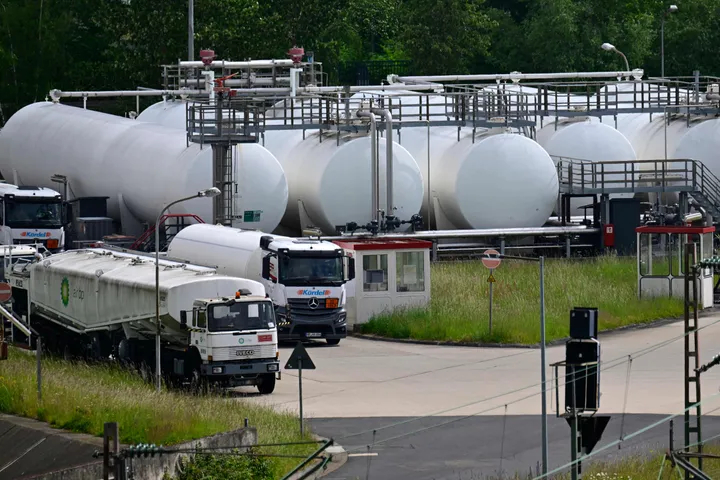
What state of alert in energy, hydrological sectors involves: Moldova's government prioritizes actions to protect population, ensure uninterrupted operation of vital services
The National Crisis Management Center (NCMC) has explained the main actions to be undertaken by the authorities during the state of alert in the energy and hydrological sectors, introduced by the government today. These measures are intended to protect the population and ensure the uninterrupted working of vital services, in the context of increasingly heightened risks regionally.
According to the NCMC, declaring a nationwide state of alert in the energy sector for a period of 30 days aims to prevent a possible disruption in energy supply. Current data shows a rapid deterioration of energy security, based on the following arguments:
• Price shock and market volatility: International Platts quotations for diesel have recorded a rapid rise, returning to around USD 1,300/ton, compared to 880–900 USD/ton in mid-June. At the same time, Brent crude oil has exceeded the threshold of 100 USD/barrel, triggering enormous financial pressure on importers.
• Logistics blockade in the Red Sea: The conflict between the US and Iran, together with Houthi rebel attacks, has forced the rerouting of ships. This has extended maritime transport times to up to 4 weeks, increased vessel charter rates, and affected international Platts and Brent quotations.
• Severe regional deficit of diesel stocks: This is caused by an overlap of critical factors: the suspension of Kazakh crude oil deliveries through the seaport terminal of the Caspian Pipeline Consortium near Novorossiysk in the Black Sea (a key supply route for refineries in Romania, where 80 per cent of imported crude is of Kazakh origin), the re export restrictions imposed by the Bulgarian authorities, and major disruptions of regional logistics chains caused by attacks on oil facilities in the Black Sea.
• Reduction of commercial stocks: Diesel reserves have fallen from a safety level of 17.6 days (at the end of June) to a threshold of 6.9 days, which requires rigorous management.
• Logistical and geopolitical blockages: Drought has lowered the water level of the Danube, limiting barge capacity to only half of normal and blocking access of large sea going vessels to the Port of Giurgiulesti, which has forced a massive and costly reorientation towards road transport. Moreover, the temporary suspension of Kazakh crude oil deliveries to the Petromidia refinery of Romania has affected our main source of fuel.The NCMC emphasized that, under the state of alert, the authorities are activating more intervention mechanisms focused on:
• Price regime flexibility to reflect the real acquisition costs.
• Logistical streamlining by prioritizing customs clearance of imports and creating green corridors at the border.
• Consumer protection.
• Strategic coordination: The National Crisis Management Commission will coordinate strategic decisions, and the Energy Ministry will be the sectoral entity responsible for managing the response.At the same time, the introduction of the hydrological state of alert for a period of 30 days is based on the analysis of hydrological indicators and available forecasts, which show a significant reduction of water resources in the river basin that supplies Moldova, the NCMC reported.
“The evolution is driven by the major precipitation deficit recorded in the Carpathian area, where an important part of the water resources that subsequently reach our country’s territory are formed. For this reason, the hydrological regime of Moldova depends not only on the precipitation recorded at the national level, but also on the hydrometeorological conditions across the entire river basin,” the institution underlined.
Given the current situation, preventive actions are needed for the following reasons:
• Reduction of water reserves. As of July 27, 2026, the water level in the Dniester reservoir has dropped to 113.24 m, significantly below the normal retention level of 121 m. Inflows are low, and forecasts indicate the continuation of this trend in the absence of significant precipitation in the upper basin.
• Need for prudent water resources management. Moldova uses water resources from this basin for public supply, economic activities and agriculture. Under these conditions, it is necessary to coordinate monitoring and management measures, so that the available resources are administered efficiently throughout the hydrological deficit period.
• The situation requires stricter protection of ecosystems and economic activities. Reduced flows affect the operation of irrigation systems and the balance of aquatic ecosystems, which requires continuous monitoring and, where necessary, the adoption of coordinated response measures.
• There is an imminent risk as August 1. The consequences of a possible reduction in discharge flows from Novodnistrovsk, starting August 1, below the critical threshold of 100 m³/s could endanger the operation of water intake stations and the river’s natural dilution capacity, while increasing the concentration of pollutants. It should be stressed that the volume of 100 m³/s is the minimum safety limit that allows the maintenance of the operational capacity of water intakes and the river’s natural dilution capacity; any further decrease would directly endanger water supply.By instituting the state of alert, the government will apply the necessary mechanisms for the coordinated and efficient management of the hydrological situation:
• The authorities will assess the available capacity for groundwater abstraction and other backup sources to ensure operational flexibility in the event of an unfavorable evolution of hydrological indicators.
• All water intake points on the Dniester and its tributaries will be inventoried, in order to assess the volumes used and detect irrational consumption. This action is imperative, in the context of the imminent risk of reduced discharge from Novodnistrovsk, starting from August 1, below the critical threshold of 100 m³/s.
• Local authorities and operators will promptly rehabilitate and prepare backup water wells, in order to offset the deficit at the Dniester intake points.
• Operators will update and activate continuity plans, including through the use of backup sources, adaptation of intake regimes and reduction of losses in distribution networks.
• The Environment Ministry will ensure continuous monitoring of hydrological parameters, and through the National Crisis Management Commission will coordinate the process of assessment and decision making as required by the evolution of the situation.Given the evolving regional security context and the need to strengthen governmental response capacity, the immediate entry into force of the decision allows the activation of the National Crisis Management Commission—a strategic coordination mechanism led by the PM, through which continuous situation assessment, coordination of the institutional response and prompt adoption of necessary decisions at the national level are ensured. At the same time, the date of August 10 2026 is maintained for the entry into force of the provisions applicable at the regional, territorial and local levels.
According to the authorities, this approach gives local public administration authorities the necessary time to finalize organizational measures and establish their own commissions, ensuring an orderly and efficient implementation of the new mechanism.
 Facebook
 Instagram
 X/Twitter
 Telegram
Rich apricot harvest in Moldova: up to 17,000 tons of high-quality fruits for export
Moldovan Energy Ministry proposes gas market solutions amid rising prices: quarterly tariff adjustments, lower distribution costs
Moldova, Bulgaria strengthen cooperation: meeting between representatives of two countries' Chambers of Commerce and Industry
VIDEO // Vulcanesti–Chisinau Overhead Power Line of 400 kV fully energized
VIDEO // Moldova's industry accelerates: 7.2 percent growth in first five months of 2026
Large infrastructure projects, capital investments to be accelerated in Moldova
VIDEO // Moldovan PM requests development of package of measures to reduce excessive inspections of entrepreneurs
Concept of new fiscal policy to be presented in Moldova by August 6
New Moldovan finance minister says balance must be found between budget needs and economic development
New agriculture minister of Moldova presents mandate's priorities
Moldova's designated PM proposes new vision for harnessing state-owned assets
VIDEO // Authorities to develop new concept of fiscal policy; Moldovan PM-designate says government to propose reform due to place emphasis where it is needed
At least seven billion lei to be mobilized in coming years for public, private investments in Moldova's agri-food sector
Moldovan PM-designate says ambition is for Moldova to become most entrepreneur‑friendly European country
Protest held outside Moldovan parliament building against higher gas tariffs; parliament speaker demands solutions from opposition
LIVE // Moldovan PM holds news conference
Peculiarities of elections to People’s Assembly of Gagauzia to be included in Electoral Code
Parliament speaker says Moldova does not risk running out of fuel
Over 10,000 applicants submit admission files to universities of Moldova on first day of contest
Moldovan PM, fuel market participants discuss measures to secure domestic market
What state of alert in energy, hydrological sectors involves: Moldova's government prioritizes actions to protect population, ensure uninterrupted operation of vital services
 National Bank of Moldova
Moldovan PM, fuel market participants discuss measures to secure domestic market
Moldovan government declares 30-day state of alert in energy, hydrological sectors
Moldovan PM says European integration government’s top priority
Moldovan president chairs meeting of National Commission for European Integration
Moldovan governments financially supports voluntary amalgamation: 81 mayoralties receive first incentive

Moldovan parliament speaker says observance of Supreme Law means respect for democracy, citizens’ rights
Moldovan government declares 30-day state of alert in energy, hydrological sectors
Moldova enters hydrological alert
Moldovan government declares state of alert in energy sector
Moldovan parliament speaker says elections for People’s Assembly of Gagauzia scheduled for November 15, 2026
Amendments to Moldova's Electoral Code on elections in Gagauzia consulted with representatives of People’s Assembly
Moldovan PM says European integration government’s top priority
Moldovan MPs to meet for final plenary meetings of spring session on July 29, 30; agenda includes 15 EU‑labelled draft laws
Moldovan president chairs meeting of National Commission for European Integration
PHOTO GALLERY // Former group work comes to life again in Varatic village
Over 100 road accidents involving cyclists recorded in Moldova since beginning of 2026 year; police urge drivers to follow safety rules
ARMENPRESS: Armenia’s economic activity grows by 7.9% in first half of 2026
Moldovan governments financially supports voluntary amalgamation: 81 mayoralties receive first incentive
Declaration for crossing Moldova's border with financial means exceeding 10,000 euros can be submitted online
Moldovan Energy Ministry consults business community to set priorities in energy sector
Natural gas prices on European exchange fall by over 7 per cent
Receive the latest news directly to your email

Receive the latest news directly to your email