
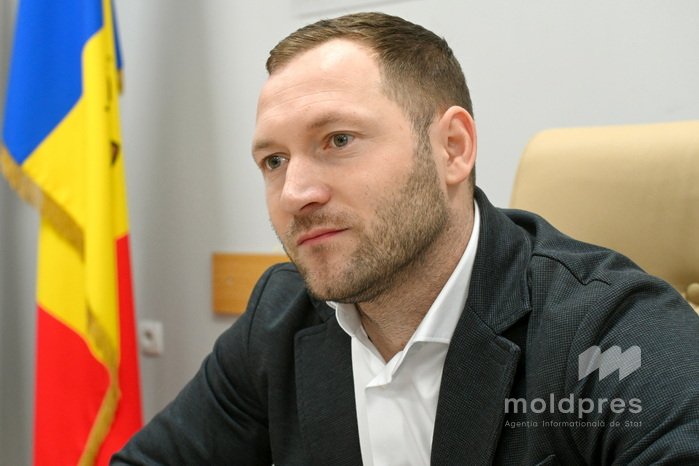
Environment Minister on Dniester situation: Water reserves three times lower than discharges, situation worsened
Dniester hydrological situation has worsened, with water reserves currently three times lower than the discharges from the reservoir, Environment Minister Gheorghe Hajder said following today’s Government meeting. According to the official, the authorities are preparing additional measures to ensure the population’s water supply if the situation deteriorates.


“Today water reserves are three times lower than the discharges from the reservoir, which means that the situation has worsened, while the state of emergency provides us with the tools to intervene if necessary, given that the risks have increased,” said Gheorghe Hajder.


The minister noted that the authorities’ main priority is maintaining the population’s water supply, including ensuring the operation of the two strategic stations that provide water to localities in northern and central Moldova.


“Our priority is to ensure the citizens’ water supply and to keep the two strategic stations that supply northern and central Moldova operational. If additional action is needed, we must have all the tools required to intervene,” Hajder said.


According to the minister, the authorities are monitoring water levels and reserves and are prepared to intervene rapidly if the situation becomes more critical.


“It is important to understand that we must monitor developments and the situation on the ground. If there is a risk that discharges will decrease, the water level will drop, and we must assess the situation. If additional measures are needed to capture water from lower levels, we must have those tools and intervene very quickly. It is important to continue supplying water,” the minister explained.


Possible measures under consideration include the temporary restriction of certain non-essential or non-priority water uses until the situation stabilizes.


“It is now certain that other actions may also be necessary, such as limiting water use for non-essential activities or activities that are not a priority at this stage, until the situation stabilizes. These are measures that could be needed if the situation worsens,” Hajder said.


The minister mentioned that, depending on how the situation develops, it may be necessary to purchase additional equipment and materials, as well as involve specialized companies.


“This includes securing new equipment, if necessary, purchasing additional materials, and involving companies with expertise, if required, because we need to be ready to intervene within a very short time. We know very well that when there is no water, it is a serious problem that cannot wait for all the bureaucratic procedures normally in place,” he said.


Hajder explained that the transition from a state of alert to a broader intervention regime is determined by the development of the hydrological situation. The state of alert was established during the summer, but the rainfall expected in autumn has been delayed, and water reserves have continued to decline.


“I want us to understand that the state of alert was necessary throughout the summer, given that we are now in the autumn period, when rainfall is normally heavier. We are in autumn, and we can see that this precipitation has been delayed. This means that the situation has worsened in the meantime because reserves have declined. Therefore, we are moving to a new stage so that we have the necessary tools in case they are needed,” Gheorghe Hajder said.


Regarding Ukraine’s requests for a further reduction in discharges, the minister said that reducing the flow is inevitable, but the authorities must ensure that this does not affect the population’s water supply.


“A drop in the flow is inevitable. It is now important to ensure that this restriction does not affect people’s water supply, and that is the Government’s primary objective. We must take water reserves into account and ensure that, if precipitation is delayed over the coming months, we do not nevertheless run out of water,” Hajder stated.


The minister added that the measures taken by the authorities so far have made it possible to maintain some reserves, even though they are at a minimum level.


“All the actions taken by the Government have at least ensured that we still have some reserves, even if they are minimal. Had no intervention taken place, we could already have reached a very low flow rate that would have caused problems,” Gheorghe Hajder said.


The Government will propose that Parliament declare a state of emergency in the energy and hydrological sectors nationwide for a period of 60 days, starting on September 26. The measure is preventive and is necessary so that the authorities can intervene rapidly in the event of disruptions to the supply of energy, fuel, and water, amid regional risks and the severe hydrological deficit.
 Facebook
 Instagram
 X/Twitter
 Telegram
PHOTO // Ștefan cel Mare Academy inaugurates drone operator training laboratory
Five youth centers to receive €500,000 for equipment and technical support
PHOTO // Fire Shield 2026 exercise concludes
DOC // New rules for recognition of professional qualifications obtained abroad
Palanca border crossing point temporarily suspended due to communication network failure
Unidentified drone briefly crossed airspace of Moldova
Moldova prepares to implement European Child Guarantee
Moldovan justice minister says justice reform enters new stage in context of EU accession process
Environment minister says Moldova to reduce Dniester’s flow, to conserve water reserves
Moldova's National Anticorruption Center, Italy’s Financial Guard to exchange information to combat economic, financial crime
Moldova to launch e-Consulate system, to modernize delivery of consular services for Diaspora citizens
Special access measures at Chișinău Airport remain in effect by 17 September
VIDEO // Justice reform and fight against corruption - focus of discussions at international forum in Chișinău
Government appoints new directors at SFS, CNAM, APP, AIPA
Crime victims to gain easier access to support and compensation
Government begins reorganization of central public administration to reduce expenditures
Serghei Diaconu on state of emergency: Any scheme in procurement procedures applied in crisis situations ruled out
Moldova and India expand cooperation: investments, exports and new agreements on bilateral agenda
 National Bank of Moldova
Government improves financing mechanism for regional and local development projects
National railway infrastructure program for 2026–2030 approved by Government: Railway to be modernized and passenger transport expanded
Crime victims to gain easier access to support and compensation
Arcul de Triumf din Chișinău va fi restaurat
Government begins reorganization of central public administration to reduce expenditures

Number of families eligible for energy compensation to increase
Chisinau’s Triumphal Arch to be registered as state public property
Government proposes declaring state of emergency in energy and hydrological sectors for 60 days
Government approves declaration of state of emergency in energy and hydrological sectors
Moldova and Hungary to boost economic cooperation
Foreign Ministry condemns two unauthorized overflights of Moldova’s airspace: Serious violation of sovereignty
Compensation for cold season to be provided throughout entire period; Moldovan president says government identifying additional resources
Moldovan National Security Council approves string of measures to ensure continuous energy supply, prepare country for cold season
Moldovan president explains why Moldova does not buy gas from Russia
VIDEO // Moldovan parliament to convene at extraordinary meeting to declare state of emergency in energy, hydrological sectors
Moldovan government to ask parliament to declare state of emergency in energy, hydrological sectors; PM: “We cannot afford to wait for a crisis to emerge”
Moldova's National Security Council orders measures to protect energy infrastructure from drones, cyberattacks
PHOTO // European integration can accelerate mobilization of green investments in Moldova; study presented in Montenegro
Moldovan president's message following meeting of National Security Council
Moldovan PM meets Irish Ambassador
Low water flows in Dniester; Moldovan environment minister announces measures to manage situation
Receive the latest news directly to your email

Receive the latest news directly to your email