
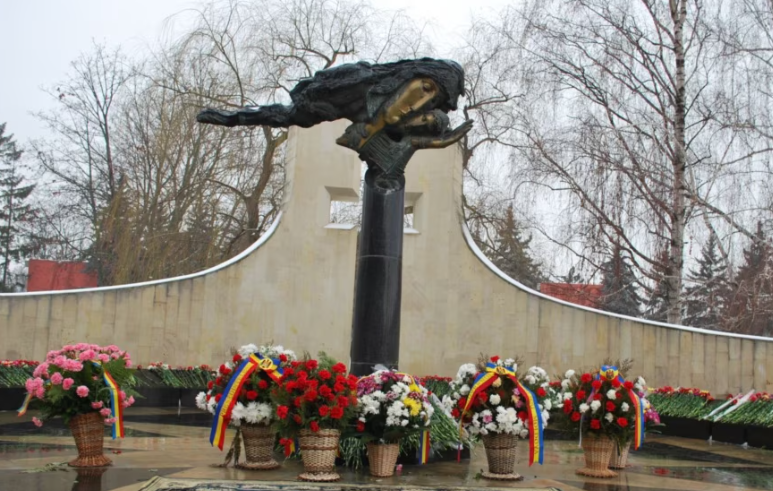
Thirty four years since Transnistria War // Memorial, Gratitude Day marked in Moldova
Moldova on March 2 marks the Day of Memory and Gratitude. On this day, commemorative events are held across the country, in order to honor the heroes who fell in the War for Independence and Territorial Integrity in 1992. In Chisinau, a Memory March and a rally will take place at the Eternity Memorial Complex.

The commemorative events honoring the heroes who fell in the Transnistria War will start at 10:00 a.m., with a flower-laying ceremony at the monument of Stephen the Great and Holy. President Maia Sandu, Parliament Speaker Igor Grosu, Prime Minister Alexandru Munteanu, veterans and representatives of state institutions will attend the event.

At 10:20, the three leaders will join the veterans of the Dniester War for the Memory March. The procession will be formed in the Great National Assembly Square and will move toward the Grieving Mother monument.

At the “Grieving Mother” monument, starting from 11:10 a.m., the events will continue with a Mourning rally, and at 11:30, a national moment of silence will be observed. After the speeches, the participants will lay flowers.

Contacted by MOLDPRES, Igor Casu, director of the National Archives Agency, said that the 1992 Transnistria War was launched by separatist forces supported by the 14th Soviet Army, which became Russian, under the command of General Alexander Lebed, with the approval of the Moscow authorities.

“It was supported by Cossacks from the Don region, as well as by some Ukrainian extremist groups. Moldova had an almost non-existent army; most of those who joined combat units were called combatants and were former fighters in Afghanistan, police officers or employees of security institutions. The forces were unequal, both in terms of arms and ammunition and in terms of access to real-time intelligence about the theater of war. The Moldovan authorities did not succeed in restoring sovereignty over the districts on the left bank of Dniester and the city of Bender on the Bessarabian bank.”

Even so, the Russo-Moldovan war, which ended with an agreement signed by Yeltsin and Snegur on July 21, 1992, amounted to both de facto and de jure recognition of the independence of the Republic of Moldova by the Russian Federation, the new imperial metropolis in the post-Soviet space. At present, there are reasonable expectations that the settlement of the Transnistrian issue will be decided within the framework of an agreement that will put an end to the Russo-Ukrainian war launched by Russia four years ago, on February 24, 2022, Casu noted.

The conflict on the Dniester officially began on March 2, 1992, although the first tensions had already appeared in 1990. Over two years, the situation in the region gradually deteriorated. In Dubasari, a duality of power emerged between the separatist authorities and the constitutional ones. Paramilitary formations of guards and Cossacks were created, and the state’s legitimate institutions were subjected to numerous provocations.

The first victims were recorded in November 1990 on the bridge at Dubasari, where violent clashes took place between law enforcement forces and supporters of the separatists. In 1991, further armed incidents led to the deaths of several police officers.

After getting UN membership on March 2, 1992, the Moldovan authorities authorized military intervention to restore constitutional order. The armed conflict lasted for about four months, with the fiercest fighting taking place in Cocieri, Cosnita and Tighina.

On July 21, 1992, Moldova and Russia signed the Convention on the Principles for the Peaceful Settlement of the Conflict, putting an end to military hostilities.

More than 30,000 citizens took part in the Transnistria War, including soldiers, police officers, volunteers and civilians. Approximately 400 people lost their lives and around 1,200 were wounded. The conflict also left behind missing persons, including among the civilian population.
 Facebook
 Instagram
 X/Twitter
 Telegram
Moldova modernizes Register of road accidents, aligns it with EU standards
Moldovan Interior Ministry has new secretary general
PHOTO // Denim Day international campaign campaign; Moldovan Labour Ministry's employees stand in solidarity with violence victims
PHOTO // Promotion of Gagauz language supported through new educational measures
PHOTO GALLERY // Event dedicated to Gagauz language held in Chișinău
Protected areas in Moldova to be managed according to European standards, based on new guide supported by Austria
SIS officers, held captive in Russian Federation, returned to Moldova
PHOTO // Moldovan soldiers from UN mission in Lebanon returned home
Stricter checks at EU borders existing rules enforced more rigorously, Foreign Minister says
VIDEO // Two employees of Moldovan Intelligence and Security Service, held captive in Russia, repatriated with support on behalf of U.S. President
Drone fragments detected on roof of apartment building from Chisinau; General Police Inspectorate says fragments do not contain explosive substances
Patient’s Voice platform launched in Moldova: patients’ feedback becomes official tool in reforming healthcare system
VIDEO // Results of 3rd edition of National Public Childcare Program show investments of about 340 million lei in Moldovan localities
Over 2.7 million Moldovans benefited from visa-free travel to EU and Schengen area
Moldova and Italy launch cooperation project to align national agricultural sector with European Union requirements
Moldovan Speaker to attend EU Speakers Conference
MOLDPRES INTERVIEW // Irinel Ionel Scrioșteanu: We want every district along Prut river to have own road bridge within 5–7 years
President to attend European Political Community Summit in Yerevan
Changes for shipments to USA: Moldovan Post Office announces new rules and fees for parcels with goods
Government’s message on 1 May: Citizens’ work and dedication - pillars of building European and prosperous Moldova
VIDEO, PHOTO // Young Moldovan lawyers preparing to implement European environmental standards in context of EU accession
 National Bank of Moldova
Moldovan Speaker to attend EU Speakers Conference
President to attend European Political Community Summit in Yerevan
Moldovan head of state continues dialogue on children’s safety online in Balti
Paid internships in public service of Moldova: young people invited to apply for edition 6.1 of programme
VIDEO // Prime Minister at National Forum of Labour Market and Social Dialogue

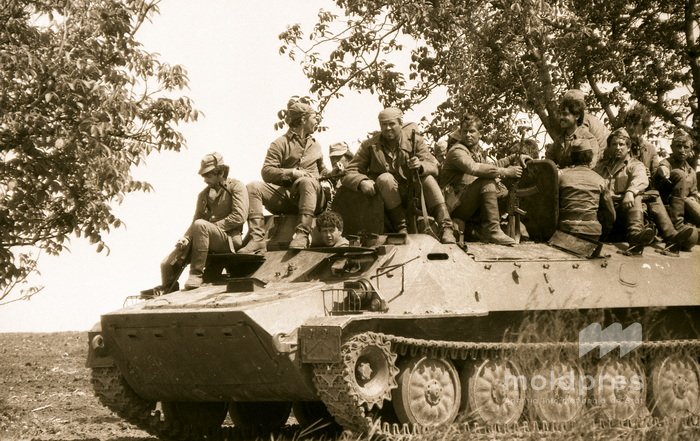
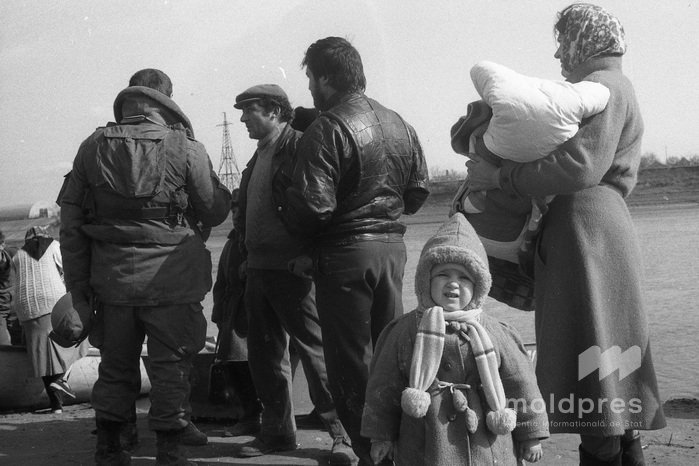
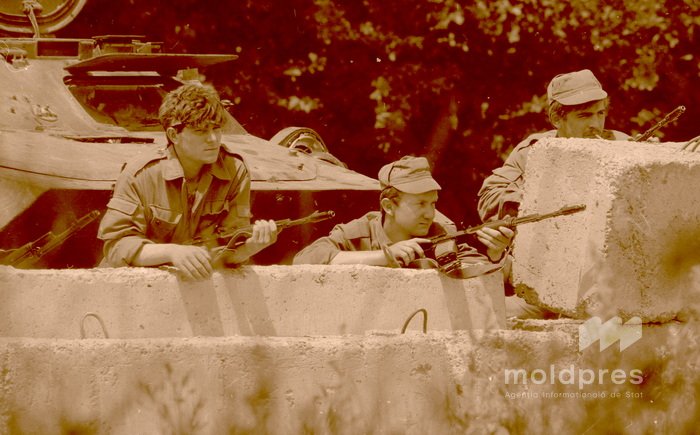
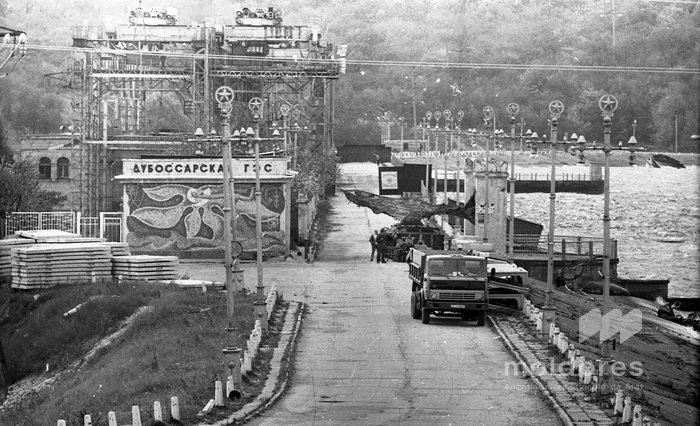
PHOTO // Republic of Moldova celebrates International Workers’ Day, between tradition, social rights and relaxation
SIS Director reveals details on Alexandru Bălan’s espionage activities
EXCLUSIVE // Moldova's People's Artist, composer conductor marks 75th birthday anniversary
Writers from Moldova, Romania call for turning idea of unification into national priority
BTA: 45 Years since First Bulgarian Ascent of Eight-Thousander: Himalaya's Lhotse
Integrity assessment at Moldova's Anticorruption Prosecutor’s Office: two prosecutors pass, two fail test
Head of Moldova's National Integrity Authority reports in parliament: irregularities worth tens of millions of lei detected in 2025
Former president of European Council encourages Moldova on path to EU
Moldovan head of state continues dialogue on children’s safety online in Balti
Moldovan parliament expands foreign relations: friendship groups with United Arab Emirates, Saudi Arabia created
Paid internships in public service of Moldova: young people invited to apply for edition 6.1 of programme
Largest energy storage system of Moldova launched in Radeni; Energy minister says investment promises competitive prices for consumers
Moldovan parliament speaker comments on detection of drones on country’s territory
Moldovan parliament speaker says removing tax, legislative discrepancies between two banks of Dniester River to bring concrete benefits for citizens
VIDEO // Prime Minister at National Forum of Labour Market and Social Dialogue
Japan’s Minister for Internal Affairs to pay visit to Moldova
Receive the latest news directly to your email

Receive the latest news directly to your email