
BTA: 45 Years since First Bulgarian Ascent of Eight-Thousander: Himalaya's Lhotse
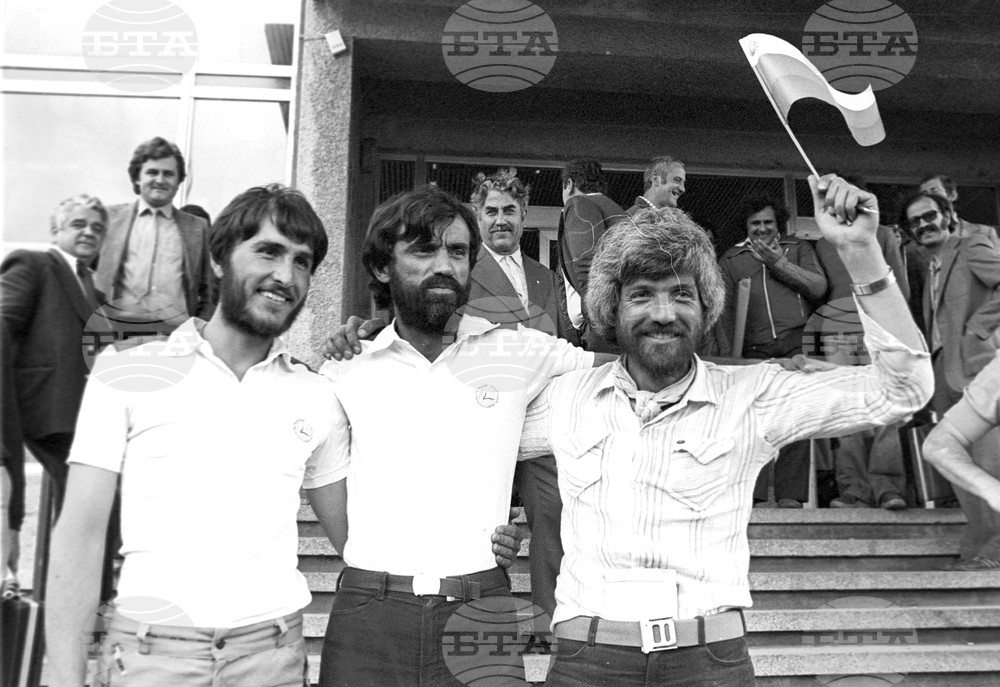
Thursday marks the 45th anniversary of the ascent by Hristo Prodanov, at 1:55 p.m. on April 30, 1981, of Lhotse, the Himalayan peak that, at 8,516 m, is the world's fourth-highest and one of the most difficult peaks to climb. Prodanov thus became the first Bulgarian to summit an eight-thousander and the fourth person in the world to reach that peak without oxygen.

Prodanov led a 21-member Bulgarian national expedition called "Himalayas 81" dedicated to the 1,300th anniversary of the founding of the Bulgarian State. This was the sixth expedition to climb the peak.

Following is an abridged English translation of BTA's coverage of the Bulgarian expedition success in 1981:

"Bulgarian Mountaineers in Kathmandu

Kathmandu, May 19, 1981 (BTA Special Correspondent Veselin Seykov) - The Bulgarian mountaineers who conquered the Himalaya heights have been in the Nepalese capital Kathmandu for several days.

[. . .]

On March 4, the Bulgarian mountaineers began their difficult trek from Lamsangu to the base camp. They were accompanied by seven Sherpa climbers, a Nepalese liaison officer, and a sirdar (leader).

On March 23, the group reached the majestic and terrifying Khumbu Icefall, filled with blocks of ice as high as a two- or three-storey building, with deep and ominous crevasses. The base camp was set up near it.

Despite the bad weather, by resolutely overcoming numerous dangers and difficulties, between April 1 and 27 the mountaineers established the intermediate camps: Camp 1 (at 6,060 metres), Camp 2 (6,800 metres), Camp 3 (7,450 metres), and Camp 4 (7,980 metres), and fixed the relevant route.

The initial plan to attack Lhotse with two groups of three was abandoned due to bad weather. It was decided that a group of four (experienced mountaineers Hristo Prodanov, Metodi Savov, Ognyan Baldzhiiski, and Kancho Dolapchiev) would begin the decisive ascent ahead of schedule.

At 6 a.m. on April 27, this group set out from the base camp and in the afternoon reached Camp 2, where they spent the night. On the following day, the four climbers made it to Camp 3. For health reasons, it was decided that Kancho Dolapchiev would return to the base camp.

On April 29, Prodanov, Savov, and Baldzhiiski established themselves in the final Camp 4, located in what is known as the 'death zone'. They spent the night there, with Prodanov and Metodi Savov not using oxygen apparatus.

The decisive assault on the final 531 metres to the summit began at 7 a.m. on April 30. Hristo Prodanov set off first without oxygen. At 7:45, Savov and Baldzhiiski followed him with oxygen equipment. At 8:18, Prodanov reported by radio to the base camp that he had reached the Reiss Couloir.

Around midday, the weather suddenly deteriorated. A strong wind arose, together with snowfall and fog. The temperature dropped to minus 35 degrees [Celsius]. After negotiating the couloir, using two ice axes and crampons, Prodanov reached the ridge and saw the left side of the summit. In order to avoid the ridge in the strong wind, which was extremely dangerous, he decided to change direction and climb along the face, graded as difficulty category IV. In 54 minutes, Prodanov managed to overcome a 50-metre wall of rock and ice. He stepped onto the uppermost rock beneath the sky of Lhotse (about 50 square centimetres in size) at 1:55 p.m. local time and remained there for about 20 minutes. Caught in a very strong magnetic storm, his body began to crackle with electricity.

The ensuing snowstorm reduced visibility. Prodanov planted the Bulgarian tricolour on the summit and placed a capsule with soil from his homeland, as well as a pennant specially made at the Kremikovtsi Iron and Steel Works. He took several photographs, radioed to base camp that he had reached the summit, and reported that the other two were still not in sight. Radio communication was poor. His message was recorded on tape by the radio operator at the base camp.

The expedition leader found an oxygen mask on the summit, left by a previous expedition. He then began the descent, braving numerous difficulties and obstacles, and reached Camp 4 at around 6 p.m.

Savov and Baldzhiiski reached the Reiss Couloir at about 8,200 metres at 12:30. They encountered problems with their oxygen equipment and, after some time below the summit ridge, returned to Camp 4. The two climbers did not carry a radio transmitter and were unable to contact Prodanov, nor could they see him after he disappeared into the Reiss Couloir. On May 2, all members of the expedition gathered safely at the base camp.”

“Moments of the Feat

Kathmandu, May 20, 1981 (BTA Special Correspondent Veselin Seykov) - Hristo Prodanov spoke in more detail about the most interesting stage: the decisive assault on April 30.

'As is already known,' he said, 'I set off on the difficult final half-kilometre at 7 a.m. on April 30.' [. . .]

Around his neck he had tied, as a good luck charm, a small toy duck - his young daughter's favourite toy. He also carried photographs of all his family members.

'At 10 o’clock I reached the most difficult point, at about 8,350 metres,' Hristo said. 'From there, the couloir changed direction sharply, and it turned out that I could no longer see those behind me, and they had also lost sight of me. I decided, while there was still time, to continue climbing, because on the descent I risked not returning to Camp 4 in daylight, which would have posed great dangers.'

[. . .]

'But for half of the 20 minutes I spent on the summit, I did not move. It was as if I were petrified. I looked around at the marvellous view, and my heart felt as though it would burst with emotion. At that spot, the three ridges of the summit converged. The true feeling of joy from mastering the summit came over me only after I had descended below it.'

Prodanov recounted the difficult descent, a dangerous fall that ended safely thanks to a timely driven ice axe, the pain caused by a twisted leg, and a mild frostbite to his feet. His meeting with Metodi Savov in the tent at Camp 4 (Baldzhiiski had already descended to Camp 4) was deeply moving. Prodanov also emphasized his two companions' achievements, the selfless and immense effort of all the Bulgarian mountaineers, and the willpower and climbing qualities they demonstrated. He stressed that the entire expedition deserved credit for the victory achieved. [. . .]

Ivan Kostov, authorized representative of the Central Council of the Bulgarian Tourist Union, had another interesting experience to share. On May 3 in Lukla, where he had gone to send a telegram to Bulgaria, he met Edmund Hillary, the veteran first climber of Mount Everest. Hillary highly praised the Bulgarian ascent of Lhotse and said that new and even greater successes lay ahead for the Bulgarian climbers."
 Facebook
 Instagram
 X/Twitter
 Telegram
BTA: Bozhidar Saraboyukov Wins Long Jump Bronze at Diamond League in Xiamen
ARMENPRESS: Armenian police set up cyber lab with U.S. support to fight cybercrime
ARMENPRESS: Armenia and Lithuania sign strategic partnership agreement
BTA: Ahead of Berlin Visit, Bulgarian PM Vows Spending Restraint
ARMENPRESS: Authorities investigate alleged assassination plot against Pashinyan after video surfaces showing armed suspects issuing threats
BTA: Bulgaria's Dara Wins Eurovision 2026
ARMENPRESS: Armenia to host Concours Mondial de Bruxelles international wine competition
BTA: Film Dedicated to Scientist Minko Balkanski's 99th Birthday to Be Screened in France
BTA Releases BG SPA - Health Through Water Catalogue
BTA: Second Giro d'Italia Stage Begins in Burgas as Matteo Moschetti Withdraws from Race
ARMENPRESS: Latvia welcomes Armenia’s EU path
BTA: Bulgarian President, Armenian PM Sign Strategic Partnership Declaration
ARMENPRESS // Ursula von der Leyen, Kaja Kallas and other EU leaders arrive in Armenia
BTA: Parties Spent over EUR 913,000 on Election Campaign Ads, Most in Small Number of Media – Analysis
Moldova's Foreign Affairs Ministry: Moldovan citizens dead in accident in Hungary to be repatriated
Lawmakers from four EU states support opening of accession negotiations with Moldova; declaration to this effect signed in Chisinau
VIDEO // Deputy Prime Minister for European Integration presented programme of Intergovernmental Conference Moldova–EU
VIDEO // European Commissioner: This is extremely important day for EU enlargement
 National Bank of Moldova
Moldovan, Luxembourg PMs hold dialogue on bilateral cooperation, support for European path of Moldova
Prime Minister leads Moldovan delegation to Luxembourg for second Moldova – EU intergovernmental conference
Moldovan president has phone conversation with European Council President
Deputy PM for reintegration on working visit to north Moldova district
Meeting of Monitoring Committee of Interreg NEXT Black Sea Basin Programme held in Moldovan capital

VIDEO // European Commissioner: This is extremely important day for EU enlargement
Prime Minister after last night’s attack on Kyiv: Republic of Moldova firmly stands with Ukraine
Speaker: Images of fire on roof of Kyiv Pechersk Lavra painful for all those who respect faith, culture, memory, and European heritage
VIDEO // Voluntary amalgamation in Fălești: town halls of Glinjeni, Pietrosu, Bocani, Ișcălău and Catranîc merging
Gross Domestic Product slightly up in first quarter of 2026: sectors with largest contribution
Day Laborers to be registered online
Republic of Moldova represented at Regional Energy Forum
President condemns attack on Kyiv Pechersk Lavra
Prime Minister leads Moldovan delegation to Luxembourg for second Moldova – EU intergovernmental conference
Meeting in Luxembourg. Moldova officially begins EU accession negotiations
Republic of Moldova in spotlight of Council of Europe
Igor Grosu re-elected PAS president for new four-year term
VIDEO // World Blood Donor Day: each donation can save up to three lives
PHOTO GALLERY // China Days in Chișinău through lens of MOLDPRES
Flavors, traditions and technology at China Days
Heavy traffic at Sculeni Border Crossing Point eased
Receive the latest news directly to your email

Receive the latest news directly to your email