
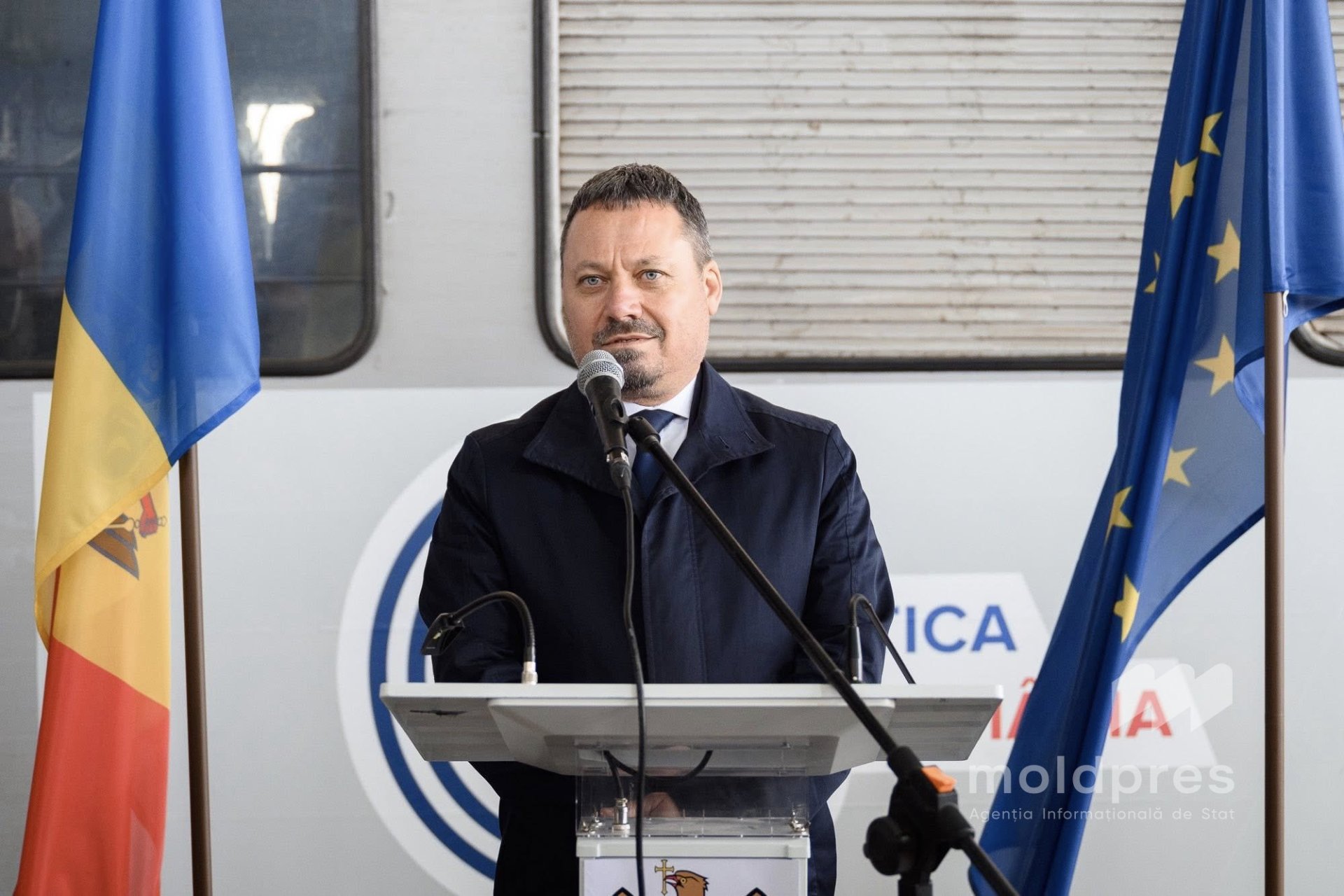
MOLDPRES INTERVIEW // Irinel Ionel Scrioșteanu: We want every district along Prut river to have own road bridge within 5–7 years
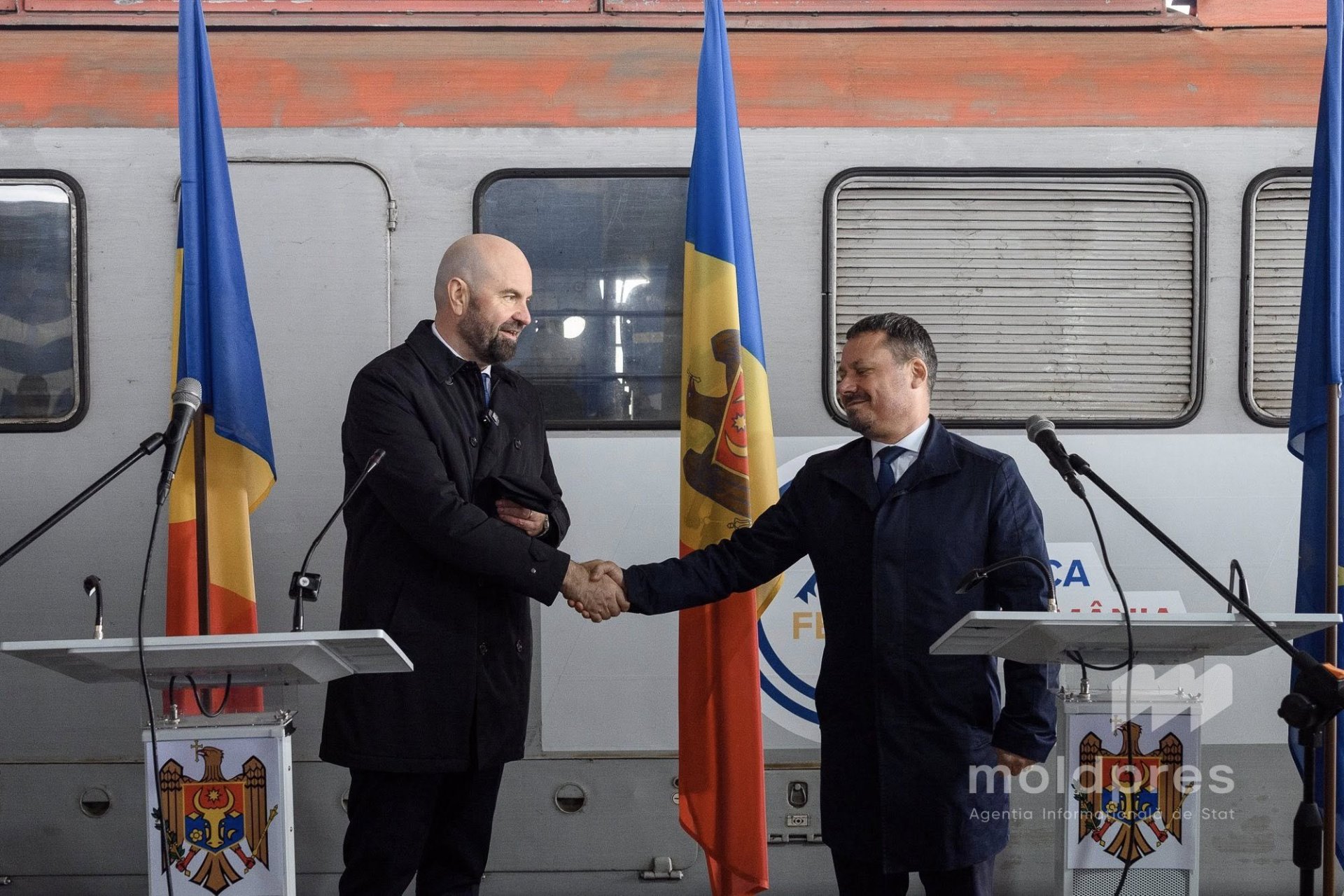
In the context of intensified infrastructure projects between Romania and the Republic of Moldova, the testing of Cantemir–Fălciu railway line marks a new concrete step in strengthening connectivity between the two states.

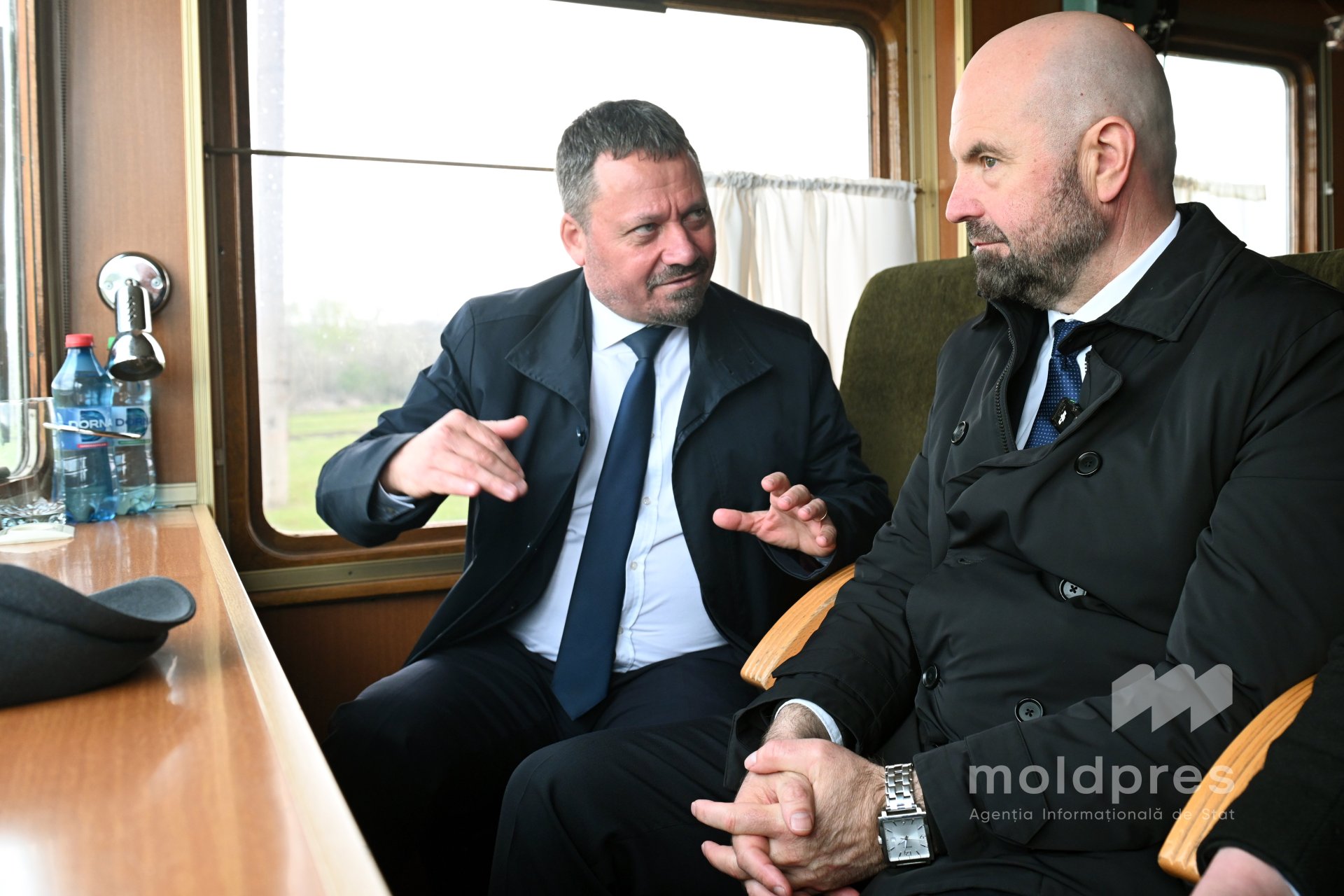
On this occasion, MOLDPRES correspondent spoke with Irinel Ionel Scrioșteanu, State Secretary of the Ministry of Transport and Infrastructure of Romania about the progress of the works, the economic impact of the new transport routes, as well as the ambitious plans for developing road and rail infrastructure across the Prut river.

The official emphasized that these investments not only facilitate mobility, but also directly contribute to bringing communities closer together and developing economic relations between the two countries.

MOLDPRES: Mr Secretary of State, we are in Fălciu, where the railway line connecting to the Prut-2 Cantemir station has been tested. What does this moment mean to you?

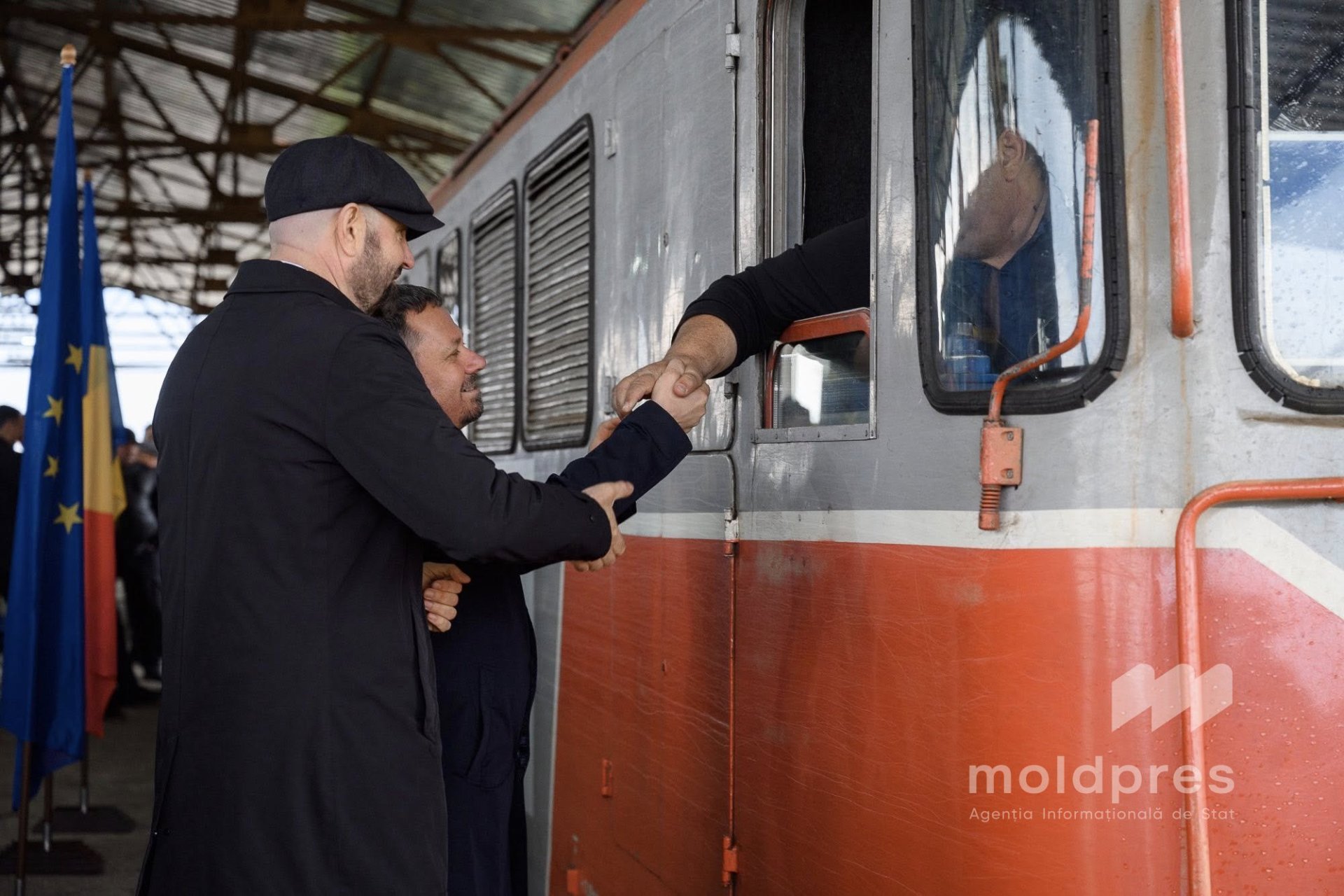
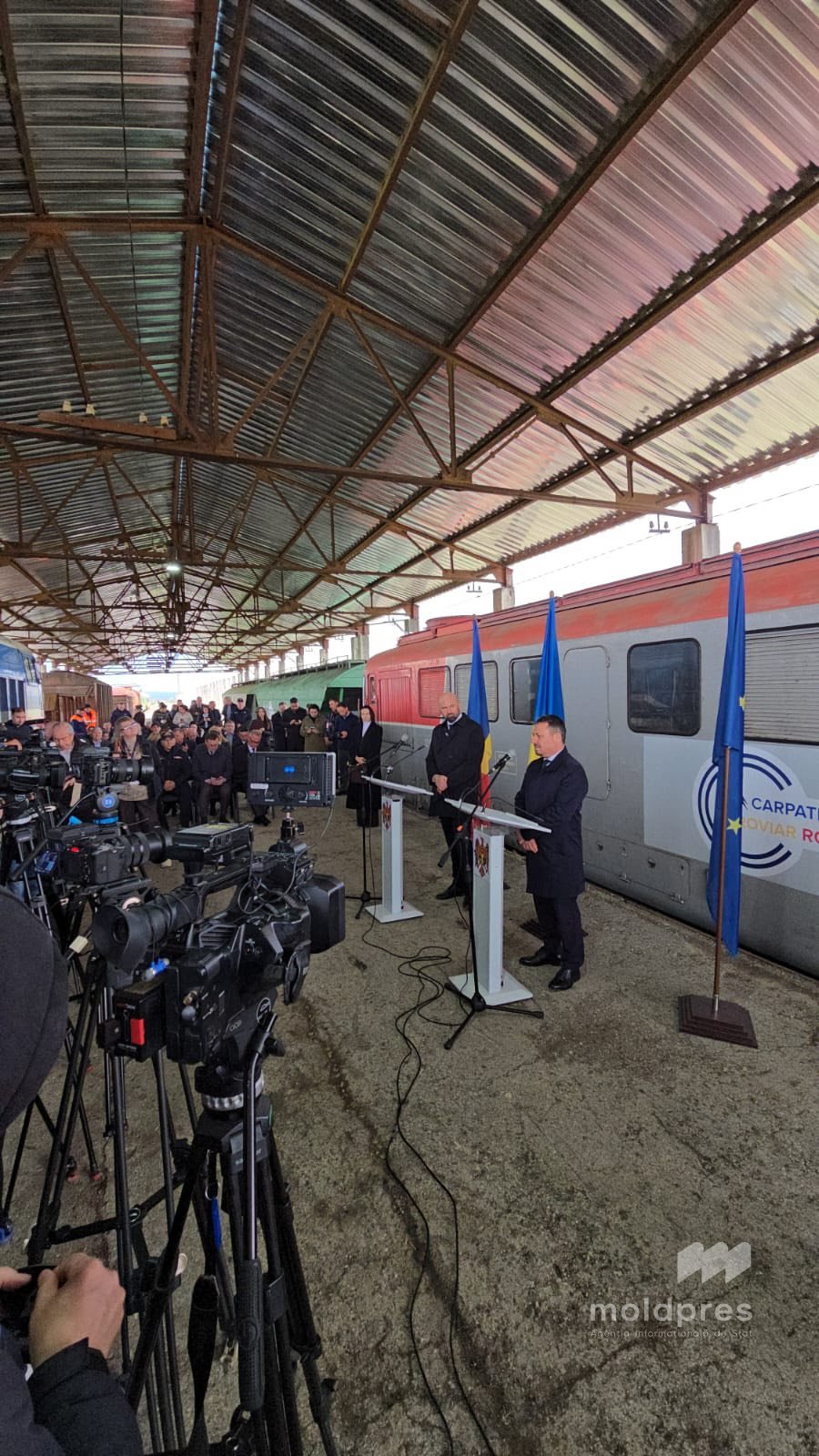
Irinel Ionel Scrioșteanu: It is an important moment for connectivity between Romania and the Republic of Moldova, but also for me personally. Today we tested both the European-gauge track and the broad-gauge one. Practically, the infrastructure is ready for the operation of traffic, including freight transport. We still have a few bureaucratic steps to complete for the official opening of the border crossing point, but we want this to happen as soon as possible, ideally before the agricultural season.

MOLDPRES: What are the concrete advantages of this project for the business environment?

Irinel Ionel Scrioșteanu: The main advantage is cost. According to the simulations carried out, this railway route to the Port of Constanța is shorter and cheaper. If economic operators have lower costs, then freight flows will naturally reorient in this direction.

It is a project that can change the dynamics of freight transport in the region.

MOLDPRES: You also mentioned other ongoing infrastructure projects. Which are the most important?

Irinel Ionel Scrioșteanu: We are talking about a comprehensive program. We are working on four new bridges over the Prut, including Fălciu–Cantemir, Bumbăta–Leova, and Răducăneni–Bărboieni. They are in the feasibility study phase, and the locations have already been established. In parallel, we are modernizing or preparing the reconstruction of key bridges such as Sculeni–Sculeni, Oancea–Cahul and Albița–Leușeni.

MOLDPRES: What can you tell us about the overall development of transport infrastructure?

Irinel Ionel Scrioșteanu: We have tested both railway lines between Fălciu and Cantemir with trains of different gauges (European and Soviet), following the completion of the rehabilitation works on this section. The main goal is for goods coming from the Port of Constanța to be able to be transshipped to broad-gauge trains and trucks at the Prut 2 station.

We have a joint project financed through the SAFE mechanism for the modernization and electrification of the Iași–Ungheni railway line. It is a strategic project, because it introduces the European gauge into the Republic of Moldova.

In approximately a year and a half we will have the first electrified section, which will represent the beginning of a modern connection up to Chișinău. Another important piece of news concerns Târgu Neamț–Iași–Ungheni (A8) motorway. The winner for the last lot, the one that connects across the Prut, has been announced, and the authorities have set an ambitious timetable.

We have jointly set a timetable to start the construction works no later than the spring of 2027 for this final section of the A8 motorway, as well as for the intermodal hub at Berești.

Also, within a maximum of two months we will launch the tenders for the rehabilitation and electrification of the Iași–Ungheni railway section, which also includes, for the first time, the electrification of a European-gauge section in the Republic of Moldova.

MOLDPRES: How is progress on the Bridge of Flowers in Ungheni coming along?

Irinel Ionel Scrioșteanu: On 26 April 2026 it will be one year since we started the works on this first motorway-level road bridge, more than 60 years after the last structure was built. The works are on schedule as per the contract. On the Romanian bank the metal deck is already being mounted, and on the Moldovan bank the first elements of it are to arrive as soon as possible.

The works are on schedule, with a physical progress of approximately 45%. It is the first motorway-level road bridge over the Prut built after more than 60 years. We estimate its completion during this year.

MOLDPRES: Are there plans to modernize passenger transport?

Irinel Ionel Scrioșteanu: Yes, we intend to reintroduce passenger trains, including on local routes. For example, between Cahul and Galați or on Fălciu–Cantemir route, with stops including in Vaslui. These connections will help revitalize the economic and social ties between communities.

MOLDPRES: What is your medium-term vision for infrastructure between the two states?

Irinel Ionel Scrioșteanu: We have set a goal to develop a solid network of connections by 2030. Moreover, within 5–7 years, we want to have at least one road bridge for every district in the Republic of Moldova that borders Romania.

These projects are achievable, because we are talking about relatively simple structures, but extremely useful for communities.

MOLDPRES: How do you assess the current relations between Romania and the Republic of Moldova?

Irinel Ionel Scrioșteanu: After the post-revolutionary period, we can say that we now have the best relations. Infrastructure plays an essential role in strengthening these ties. It is not only about roads and bridges, but about people, economy, tourism, and cultural exchanges. Connectivity creates development.

MOLDPRES: A message for MOLDPRES news consumers?

Irinel Ionel Scrioșteanu: Romania will continue to support the Republic of Moldova on European path. Through these infrastructure projects, we are not only connecting territories, but also bringing communities closer together and strengthening a common future.
 Facebook
 Instagram
 X/Twitter
 Telegram
MOLDPRES INTERVIEW // ANSC Director: We make sure that path of public money to hospitals, schools or infrastructure fair and transparent
MOLDPRES INTERVIEW // Vice President of Romanian Academy says academic, research environment of Moldova advanced, can be efficiently integrated into European, international structures
MOLDPRES INTERVIEW // Rector of University from Romanian city says if someone overturns your history, national identity, it means you don’t have enough knowledge
MOLDPRES INTERVIEW // Director of South Regional Development Agency says Agency creating better living conditions, easier life for thousands of residents
MOLDPRES INTERVIEW // Lithuanian Ambassador about prospects of Moldova’s EU accession: If you make things real, they will become achievable
MOLDPRES INTERVIEW // Moldovan finance minister says government aims to modernize financial system for benefit of businesses, citizens
MOLDPRES INTERVIEW // Ambassador of State of Qatar to Moldova: We are working to improve ways of attracting Qatari investors to Moldovan market
MOLDPRES INTERVIEW // President of Moldova's Chamber of Commerce and Industry says country must use opportunities provided by European integration to attract investments, become competitive
MOLDPRES Interview // Minister of Internal Affairs: Interior Ministry applies European security standards and is ready to advance in EU accession process
MOLDPRES INTERVIEW // Moldovan energy minister says foremost interest citizens to have secure energy at affordable prices
Moldovan justice minister says, according to European Commission’s Report, Moldova made greatest progress among EU candidate states, including in justice field
INTERVIEW MOLDPRES // Moldovan defense minister says Russia's war in Ukraine highlighted vulnerability of defense sector, need of building strong, prepared, resilient army to current challenges
INTERVIEW WITH MOLDPRES // Deputy PM says wants Moldova where a child from any village has same opportunities as a child from Chisinau
INTERVIEW MOLDPRES // Deputy Prime Minister on Ukraine Peace Agreement: No discussion about Moldova can take place without Chișinău's participation
PHOTO // Garden of 100 roots inaugurated in Nisporeni on eve of National House centenary
Deputy Prime Minister to visit Cyprus for discussions on European integration and cooperation
Cyberattack on digital public services: authorities block about 11 million access requests
PHOTO // Austria’s National Day marked in Chisinau
 National Bank of Moldova
Moldovan President meets with Hungarian President and Prime Minister
President attends commemoration in Budapest marking 70th anniversary of 1956 anti-communist revolution
Moldovan PM meets young people who won three medals for Moldova at World Robotics Championship
Moldovan PM, vice-president of European Investment Bank discuss accelerating development projects in Moldova
Moldovan deputy PM for reintegration participates in marking 30 years of work of theoretical lyceum from Grigoriopol

President attends commemoration in Budapest marking 70th anniversary of 1956 anti-communist revolution
Violence can escalate to femicide: How to recognize warning signs and where victims can seek help
PHOTO GALLERY // Romanian Armed Forces Day celebrated in Chișinău with exhibition dedicated to international military missions during interwar period
PHOTO // President honors courage of Hungarian people, 70 years after 1956 anti-communist Revolution
Ukraine condemns violation of Moldova’s airspace
Moldovan president condemns incident in Telenesti district: “Russia’s war continues to endanger citizens’ lives”
Staff member of Russia's Embassy in Moldova to be declared persona non grata after explosive-laden drone crashed in Telenesti district
Moldovan PM meets young people who won three medals for Moldova at World Robotics Championship
Facilitated access to EU market: European Investment Bank provides 150 million euros to modernize agri-food sector through Moldova's Orchard II programme
Moldovan PM, vice-president of European Investment Bank discuss accelerating development projects in Moldova
Two cases of national airspace violations recorded in Moldova in past week; Defence Ministry reiterates need to strengthen air defense capabilities
Moldovan deputy PM for reintegration participates in marking 30 years of work of theoretical lyceum from Grigoriopol
Drone falls in central Moldova village; police secure area
First at November 1, 2026 elections in Moldova: voters to be able to vote using digital ID from EVO app
National Bank of Moldova simplifies foreign exchange rules: transfers, investments of up to 100,000 euros without authorization
PHOTO, VIDEO // Moldovan head of state president welcomed by Hungarian president at Sándor Palace in Budapest
Receive the latest news directly to your email

Receive the latest news directly to your email