
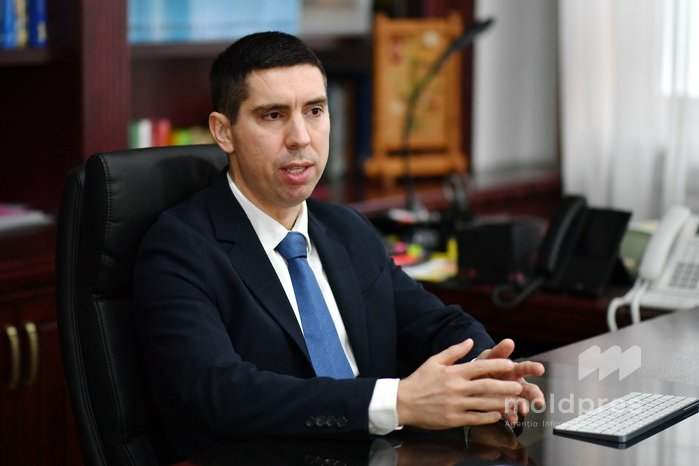
INTERVIEW MOLDPRES // Deputy Prime Minister on Ukraine Peace Agreement: No discussion about Moldova can take place without Chișinău's participation
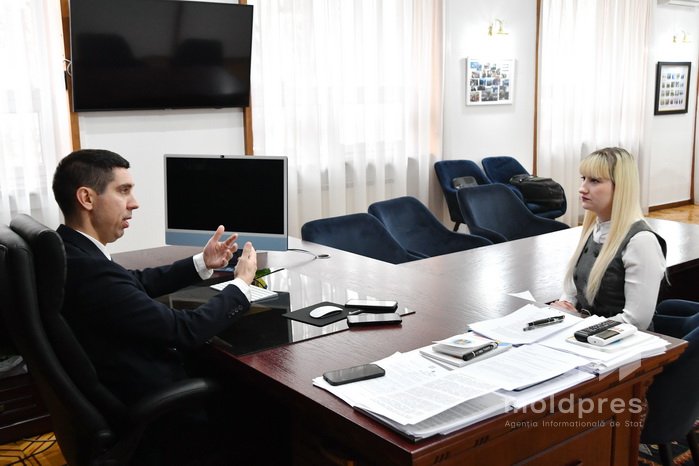
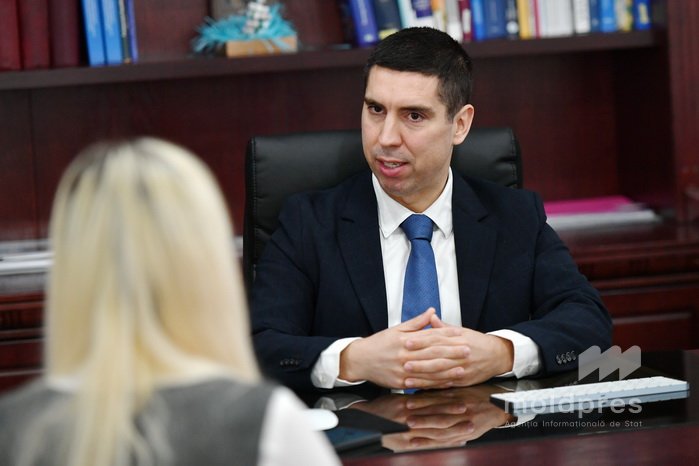
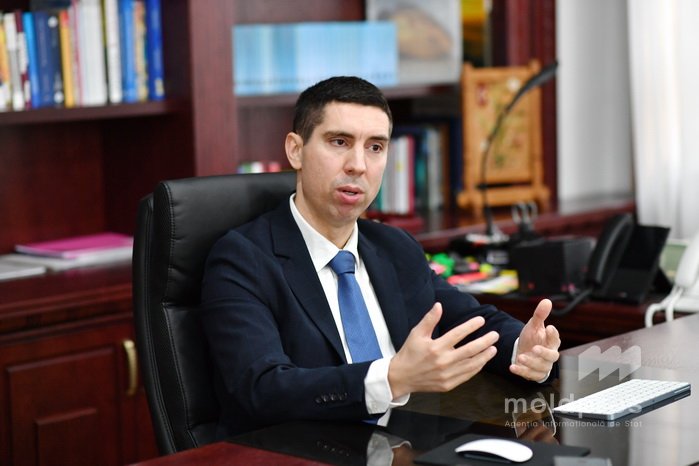
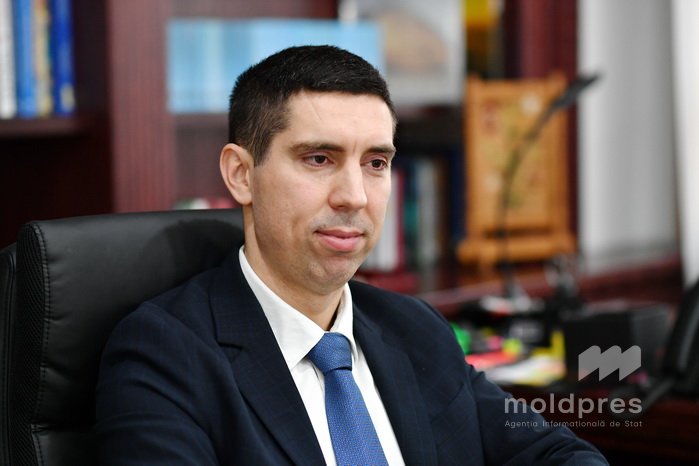
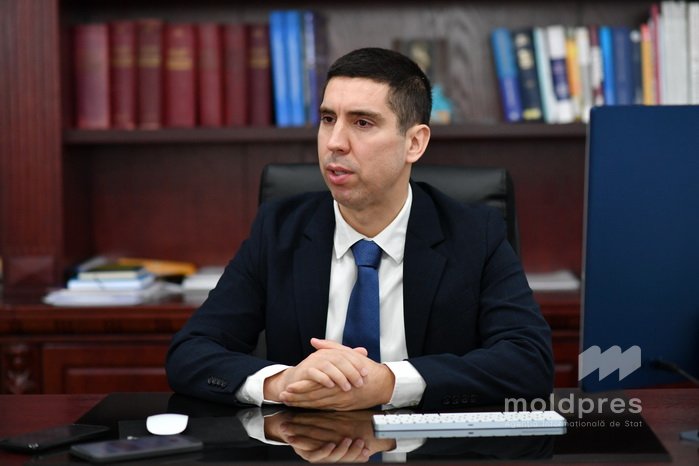
Deputy Prime Minister, Minister of Foreign Affairs Mihai Popșoi gave an exclusive interview to the State News Agency MOLDPRES. He talked about priorities in the foreign policy, developments in joining the European Union, the relations and support provided by the EU and the USA, cooperation projects with Romania, and the role of the Republic of Moldova in establishing peace in Ukraine.

MOLDPRES: The Republic of Moldova received the green light from the 27 EU member states to start technical talks on the first negotiation chapters. What concrete steps follow after the positive evaluations of the European Commission regarding Moldova's European path? How does Chișinău harness its candidate country status to speed up EU accession negotiations?

Mihai Popșoi: The fact that the Republic of Moldova manages to advance, even informally, in the negotiation process for EU accession is a very positive moment. We hope that soon the other three clusters will also be opened so that we can advance in all chapters. Subsequently, when we reach the point where there is a readiness to officially open negotiations, we can advance quickly. Deputy Prime Minister Cristina Gherasimov also spoke about this and proposed that the opening and closing of chapters be done at a faster pace.

It is an important moment; the negotiation process is advancing, as seen in the enlargement report published by the European Commission. Moldova made the greatest progress compared to other candidate countries in the past year. The leap made by our country is proof of good organization and efficient work in the Government. We will continue to make efforts on all fronts to advance, in order to complete all processes in due time.

Regarding the benefits we are obtaining in the meantime, our citizens know about the Single Euro Payments Area (SEPA) program. The agreement entered into force in October, and people already feel, on their own pockets, that the current transaction costs between Moldovan banks and European banks have significantly decreased. This decision benefits both citizens and legal entities.

Also, starting next year, we will all enjoy 'roaming at home' - the elimination or reduction of roaming charges - we will be able to communicate with family members who are abroad and with economic agents with whom we have partnerships abroad. This will greatly facilitate communication, the foundation of maintaining close relationships between people and economic agents. It's a very positive decision at both the citizen and economic level. Such initiatives will continue, as Moldova wishes to be part of European projects and programs, without waiting for accession.

MOLDPRES: Following Prime Minister Alexandru Munteanu's visit to Romania, the desire to support strategic cooperation between Chișinău and Bucharest governments was reiterated. How do you assess the current level of relations between Moldova and Romania, in the context of the recent visit to Chișinău by Romanian Foreign Minister Oana Țoiu and what concrete results did this visit bring?

Mihai Popșoi: I am always pleased to host Minister Oana Țoiu. She attended the annual meeting of Moldova's diplomacy in Chișinău. I was honored to be invited to Romania's diplomacy meeting. This demonstrates an extremely close relationship with Romania.

Romania is Moldova's most important partner, a friendly state. The brotherhood between the two banks of the Prut is well known, but recently the basis of our cooperation has not only been this special relationship, based on common language, history, tradition, but this relationship is also translated into major infrastructure projects that bring benefits to citizens on both sides of the Prut. These projects anchor Moldova in the European energy and road infrastructure system. This has a positive economic impact for both Moldova and Romania, and advancing these projects is our strategic objective, as well as implementing programs made possible by €100 million support offered by Romania to Moldova.

The relations between the two states are felt through renovated kindergartens, school buses enjoyed by our children, the support Romania provides for the reconstruction of cultural landmarks in Moldova, and the aid given to our farmers in difficult situations.

This relationship of trust, this strategic partnership we have with Romania, provides a solid foundation on which we will undoubtedly build Moldova's European future. Romania is the main ally and promoter of Moldova in all European capitals, not just in European institutions in Brussels. Therefore, we are very pleased to have this special relationship and are extremely grateful to Romania, Romanian citizens, and the state leadership for this partnership and all that stems from this special relationship.

MOLDPRES: To what extent can potential negotiations or a peace agreement regarding Ukraine directly or indirectly involve Moldova? Is there a risk that Moldova will be included in international discussions without Chișinău's participation?

Mihai Popșoi: There is no such risk. We are making efforts to ensure that no discussion about Moldova can take place without Chișinău's participation. We have ensured this both in Washington and in European capitals.

All our partners understand very well that, in the context of discussions about Moldova, it is absolutely imperative that the country is represented and be part of these discussions. It's important politically, for sovereignty, but also practically, because otherwise, we cannot rely on the success of the process. Moldova has an active diplomacy, and thanks to these efforts, we are ensured that in the processes that will occur, the national interest of Moldova will be considered.

We are confident that the peace agreement, which we hope will be signed as soon as possible, will create favorable circumstances for Moldova, and these post-war circumstances will provide a significant impetus for economic development in our country. We are willing to continue serving as a hub, a logistic center for the reconstruction of Ukraine. We have been and continue to be a strong partner for Ukraine, providing humanitarian aid and hosting a large number of Ukrainian refugees.

Moreover, we have supported wheat exports when the Black Sea and the port of Odessa were blocked. We will continue to provide this support. We want peace to return to Ukrainian lands and our region; undoubtedly, Ukrainian citizens and Ukraine's leadership desire this. However, the process is complex, given the complexity of the war, its extremely painful impact, its duration over time, and the destruction that has occurred. We are confident and hope greatly that the new year will be a year of peace, because the past four years have had a profound wartime imprint, both on a humanitarian and economic level. Surely everyone desires peace, a lasting and sustainable peace.

MOLDPRES: Our country signed on 16 December the Convention on establishment of the International Claims Commission for Ukraine, which is an important mechanism for documenting abuses and ensuring compensations in the context of the losses suffered by Ukraine. What role will Moldova, alongside partner countries, play in this process?

Mihai Popșoi: Moldova, along with over 30 other countries, signed this convention. Previously, the damage registry was set. In the first stage, in Lviv, the International Tribunal concerning crimes of aggression was created. Now there is an entire mechanism, formed by these three pillars, to reduce or eliminate the perception of impunity that some might enjoy.

This mechanism will serve to hold accountable those who have committed aggression crimes, those who have caused huge damage and destruction in Ukraine. This mechanism is extremely important for a country like Moldova, which is guided by international law, so that international law is the main ally of small states with modest resources like Moldova.

Therefore, we were honored to facilitate this process, especially since we are also in the position of chairing the Council of Europe - a great honor and responsibility for the next six months. As Chairman of the Committee of Ministers of the Council of Europe, I was honored to be able to facilitate and promote such decisions on our agenda, which are also in Moldova's interest.

This mechanism involves strengthening international law, strengthening an international order based on law, on the power of law and not on the power of strength, as is happening more frequently. Establishing these mechanisms, which reduce the perception of impunity for aggressors, is a success for the international community.

MOLDPRES: The Ministry of Foreign Affairs from Chișinău officially notified the Foreign Ministry of Moscow about the closure of the Russian Cultural Center. Thus, the institution is expected to cease its activity six months after the notification. Following the action, have you received a response from the Moscow authorities?

Mihai Popșoi: The notification does not necessarily require a response. There is a clear decision, which cannot be appealed or challenged. The 1998 agreement provides for its non-renewal and notification, at least half a year before the expiration date, about non-renewal, which results in the nullity and cessation of the legal effects of the document.

Unfortunately, those who negotiated and signed the agreement did not foresee other ways to unilaterally terminate the document. The only means of termination is non-renewal. Thus, the process took so long. Some citizens were rightfully perplexed about why this process took so long once a political decision was made in response to Russia's unfriendly actions towards Moldova.

Not once, drones, including explosive drones, have crossed Moldova's airspace, and some have even fallen. The decision to close the center was made following an incident where an explosive drone fell about a kilometer from people’s homes in the south of the country. Thus, these diplomatic decisions to defend our sovereignty and territorial integrity fit perfectly within the framework international law offers.

After making this decision, all the necessary legal and diplomatic steps have been taken. We respect our state's signature, despite having certain reservations about the content of this agreement. Nevertheless, once concluded, and its legal effects assumed, we had to go through all stages in strict compliance with international law.

The Russian side has been notified, and probably by the end of June - early July, when the current agreement's provisions expire, it will not be renewed, meaning the end of the document's legal effects. After this term expires, the center will no longer have a legal basis to operate in Moldova.

The notification was sent recently. There's still time until summer. Certainly, we will receive a response, but the decision is made, and according to international law, the other side must comply with these provisions, in strict accordance with what was assumed by both parties.

MOLDPRES: The Ministry of Foreign Affairs has alerted Moldovan citizens in Russia about some legislative changes regarding residence permit or Russian citizenship application. In this context, certain categories of foreigners could be required to sign a military service contract or provide a certificate of unfitness for military service. What is Kremlin regime pursuing with these legislative changes, and what should Moldovans know to not become victims of the new provisions?

Mihai Popșoi: The risk for Moldovan citizens and other foreign citizens residing in Russia to be drawn into the war machine and sent to the front increases. Various legal tricks are used when citizens come to arrange certain documents. Therefore, we urge our citizens to be cautious and, as far as they can, to return home where they are safe, as we have seen more than one case in Russia where, under the guise of processing documents, people are suggested or even compelled to sign military service contracts, which present extremely high risks.

Our citizens must be vigilant, be attentive to what they are offered to sign, and not sign anything that could endanger their lives and health. The best thing would be for them to find solutions to return home. In recent years, we have seen an increase in identity documents requests from Moldovan citizens in Russia. Some of them gave up their passports and even Moldovan citizenship, but now they are returning to ensure safety. Moldovan citizenship offers the safety and capacity to return home and not get caught in the ordeal that, unfortunately, many people have ended up in.

The number of Moldovan citizens in Russia has been dramatically declining since February 2022. We observe this decrease not through consular data from Russia, because it will take time to see this decrease, but we notice it through the number of citizens returning home or registered consularly in European countries. In France, Germany, the United Kingdom, and Sweden, a growth in the number of our citizens coming in from Russia can be observed.

Another clear indicator is the voter turnout in Russia, which has historically been very low compared to the number of citizens there. This year, in Moscow, where there were two polling stations with 10,000 ballots, only 4,200 citizens showed up to vote.

Thus, the number of Moldovan citizens in Russia is in a continuous decline, both from the perspective of the war and from the perspective of the war's consequences or the economic situation. Our compatriots have always been sensitive to worsening situations and economic conditions and have sought better opportunities where they exist.

MOLDPRES: What is the current relationship between Moldova and the United States? The US has not yet delegated a new ambassador to our country. Can we speak of the same strategic partnership between the US and Moldova as before? You recently visited the US; what did you discuss with American officials?

Mihai Popșoi: The visit to the US was extremely productive. I had a series of meetings in Congress, with senators and members of the House of Representatives. The Congress's support for Moldova was very clear from both sides of the political spectrum. We have close friends of our country both among the Republican Party and the Democratic Party. The support is also reflected in prioritizing Moldova in US foreign policy. This was clearly evident in the decision to provide financial support for Moldova's energy anchoring in the European area, through Romania, so that American investments in Romania and Ukraine, in the energy field, can safely and easily cross Moldova.

Our country is part of the United States' priorities when it comes to energy security in our region. This extremely generous support, which is a long-term investment in energy security in the Black Sea region, is proof of extremely close and trustworthy relations. This was confirmed at high-level meetings at the State Department, the White House, and the Supreme Security Council.

This partnership is also evident in the cooperation we have with the US on several levels. The US is a trusted partner when it comes to security and defense cooperation, in the field of cybersecurity, where they help us strengthen our capabilities. The fact that Moldova has withstood the avalanche of interference and cyber attacks, especially in the electoral context, is also proof of the strong support we have from the US and other European partners. Thus, during the visit, we obtained very clear support from the US Congress, the State Department, and the Supreme Security Council at the White House. We will continue to work to grow this partnership with the US.

In the area of international sanctions cooperation, we discussed with the US Treasury about implementing international sanctions. We greatly appreciated the United States' support in sanctioning entities that have engaged in destabilizing Moldova, have repeatedly tried to introduce massive sums of money into our political system to destabilize and derail the democratic process; the sanctions imposed by the United States on these entities, individuals, and legal entities have had an impact and reduced the momentum of these actors to engage in illegal processes in our country. Thus, the US is a firm partner in all aspects related to strengthening Moldova's sovereignty and security and is making long-term investments in energy security in our region.

We also had visits outside of Washington, with our community in Chicago, in North Carolina, with whom we have had a partnership for 25 years, and Elaine Marshall is a notable personality when it comes to this partnership. Over the years, there have been dozens of humanitarian, cultural, educational, health and public administration projects, and the partnership with the North Carolina National Guard, which has had dozens of joint events with the National Army.

In Chicago, we work very hard to attract as many compatriots with solid financial capital to invest in Moldova. This is already happening. We have created fiscal and legal conditions to facilitate these investments and will work to convince as many citizens to contribute to Moldova's economic development, as there is increasingly more trust among our diaspora citizens in Moldova's political stability and improvements in the justice sector. We need to further improve the investment climate, but progress is visible, and our citizens confirm this.

We will also continue to work to maintain this close bridge between our diaspora citizens, offering them not only opportunities to invest at home but also cultural projects to maintain this close relationship between our communities at home and abroad. It is a great joy to see how dear it is to our diaspora citizens to preserve traditions, national dress, folklore, and customs during holidays. Similarly, it is a great joy to see the sparkle in our diaspora children's eyes when they speak Romanian, even if they are in the US or Germany.

We must facilitate and encourage the creation of diaspora organizations in host countries to ease the institutional relationship and better help our citizens abroad. We also work to provide more opportunities both for those at home and those in the diaspora by signing Social Protection and Driver's License Recognition agreements. This will continue next year so that our diaspora feels the support of Moldova wherever they are, but at the same time, we encourage them every time to return home.

MOLDPRES: Authorities have announced the official launch of the eConsulat platform, which will allow Moldovan citizens abroad to access various documents online. Which diplomatic missions offer the service, and what types of documents can be processed through this platform?

Mihai Popșoi: In the pilot phase, the platform is available at the following diplomatic missions: the Embassy of Moldova in Ukraine, Canada, Greece, Cyprus, the United Arab Emirates; the Embassy of Moldova in the Kingdom of Spain and the Consulate General in Barcelona; the Permanent Mission of Moldova to the UN in Geneva; the Consulate General in Iași and Istanbul; the Consulate General in Sacramento (USA).

After completing the testing phase, we will see what went well and where we need to intervene so that after launching in all countries, especially where there is a large diaspora, there are no difficulties. All our citizens will be able to benefit from the opportunities offered by the eConsulat project after we complete the testing period. Thus, most consular services will be obtainable remotely, except for those requiring physical presence, either for biometric data collection, to sign a proxy, or to authenticate certain data. Simultaneously, in countries where well-established processes involve using an electronic signature, we can propose solutions and reduce the number of visits to the consulate to a minimum, digitizing and providing the entire spectrum of consular services remotely.

eConsulat is a significant advantage for our diaspora citizens, and we will work so they can access services as comfortably as possible. This is not simple, considering the number of our citizens abroad is about a million, while the number of employees in consular services is about 60 - in relation to a million citizens. Meanwhile, internally, we have about two and a half million citizens in relation to several thousand public servants within the Agency for Public Services, notarial service, and other local public administration institutions that provide the same services. Nevertheless, we manage to do this, and according to some evaluations by our citizens, we are doing well. Where there are certain difficulties, we improve processes so that our citizens receive the best services in the shortest time possible, as is only natural.

MOLDPRES: In recent months, several diplomatic missions have opened in foreign countries, facilitating citizens' access to services, and favoring economic and diplomatic relations. In which states do you plan to open new embassies? Which countries show interest in Moldova and intend to open diplomatic missions in Chișinău?

Mihai Popșoi: We have opened general consulates in Chicago and Sacramento. It is a great achievement for our diplomacy, as this aspiration has been around for decades and has not been achieved. We have now obtained support from the Trump administration to open two consulates simultaneously, which does not happen very often, even for much larger states than Moldova. This decision is evidence of the solid partnership we have with the USA.

We want to continue to grow the number of consular offices, first of all, to offer services and to build bridges with our diaspora. We wish to open more embassies, depending on the financial possibilities we will have next year and in the years to come. Economically, we would like a presence in Egypt, a country with great potential for our exports.

South Korea would be a huge opportunity to obtain development support, technological support, to achieve investments, and promote exports. It would be beneficial to increase our presence also within the European Union, where there are several countries where we do not have a diplomatic presence and hold accreditations cumulatively. At this stage, given the budget constraints we have, we have decided to transfer a unit from our embassy in The Hague, which also covers Denmark, to Copenhagen, even if it will formally be part of our embassy in The Hague, but physically will be in Copenhagen and will work to facilitate our relationship with Denmark.

The same applies to a unit within the Stockholm embassy, which will be present physically in Oslo to facilitate our relationship with Norway, which is extremely important for us. This is the first stage so that in the future, hoping for bigger financial possibilities, we can open an embassy office in Denmark and Norway. We wish to be present in Finland and other states where we do not have diplomatic presence, in the Balkans, but our ambitions and financial possibilities don’t necessarily coincide, so we need to prioritize and efficiently allocate our resources, and certainly, in the coming years, we will increase our level of representation in the region.

We must be more ambitious in the coming years. I propose to have positions inclosed in the law regarding the diplomatic service - non-resident ambassadors. This means having ambassadors here in the central, but covering regions such as North Africa or Africa, Latin America, or a certain country - Brazil or Argentina, Australia or Southeast Asia, Indonesia, Philippines - where we have no presence. These non-resident ambassadors, stationed in Chișinău, can travel once or twice a year to these states, creating contacts and bridges we lack, but opportunities are vast. That's why I said we need to be more ambitious and capitalize on Moldova's national interests both economically and politically. Likewise, it is important to establish contacts with our citizens from there.

In parallel, I am pleased that partner states are opening embassies in Chișinău. This year, the embassies' offices of Norway, Israel, Spain, and Greece were inaugurated. We are in the process and following to see the opening of Ireland's embassy, followed by India's and Estonia's embassies.

We desired this process to continue and are working hard for that, and the results are visible. The number of embassies opening in Chișinău is constantly increasing, denoting an increased interest from these states towards Moldova. It's a great honor for us, but also an enormous responsibility, so we will continue to ensure this positive trend and make sure that Moldova has as many friends around the world and that these friendships solidify in the interest of Moldovan citizens.

Mr. Deputy Prime Minister Mihai Popșoi, thank you for the interview.

Reporter: Ala Ciobanu.
 Facebook
 Instagram
 X/Twitter
 Telegram
MOLDPRES INTERVIEW // Customs Service Director: Moldova has necessary experience to contribute to development of European customs system
MOLDPRES INTERVIEW // ANSC Director: We make sure that path of public money to hospitals, schools or infrastructure fair and transparent
MOLDPRES INTERVIEW // Vice President of Romanian Academy says academic, research environment of Moldova advanced, can be efficiently integrated into European, international structures
MOLDPRES INTERVIEW // Rector of University from Romanian city says if someone overturns your history, national identity, it means you don’t have enough knowledge
MOLDPRES INTERVIEW // Director of South Regional Development Agency says Agency creating better living conditions, easier life for thousands of residents
MOLDPRES INTERVIEW // Lithuanian Ambassador about prospects of Moldova’s EU accession: If you make things real, they will become achievable
MOLDPRES INTERVIEW // Moldovan finance minister says government aims to modernize financial system for benefit of businesses, citizens
MOLDPRES INTERVIEW // Ambassador of State of Qatar to Moldova: We are working to improve ways of attracting Qatari investors to Moldovan market
MOLDPRES INTERVIEW // President of Moldova's Chamber of Commerce and Industry says country must use opportunities provided by European integration to attract investments, become competitive
MOLDPRES Interview // Minister of Internal Affairs: Interior Ministry applies European security standards and is ready to advance in EU accession process
MOLDPRES INTERVIEW // Moldovan energy minister says foremost interest citizens to have secure energy at affordable prices
Moldovan justice minister says, according to European Commission’s Report, Moldova made greatest progress among EU candidate states, including in justice field
INTERVIEW MOLDPRES // Moldovan defense minister says Russia's war in Ukraine highlighted vulnerability of defense sector, need of building strong, prepared, resilient army to current challenges
INTERVIEW WITH MOLDPRES // Deputy PM says wants Moldova where a child from any village has same opportunities as a child from Chisinau
Moldovan Prime Minister in talks with Ukrainian President
Prime Minister's message of appreciation for Ukraine: Your resistance allows us to live in peace
Anti-Corruption Prosecutor Vadim Prisacari fails external evaluation
Technical-military cooperation agreement between Moldova and Ukraine signed in Kyiv
 National Bank of Moldova
Moldovan Prime Minister in talks with Ukrainian President
Prime Minister following meeting with Ukrainian counterpart: Every day Ukrainians defend their cities, families and freedom, they also contribute to security of Moldova
Speech by Prime Minister following meeting with Ukrainian counterpart
Prime Minister attends Kyiv International Economic Forum
Prime Minister's speech at Kyiv International Economic Forum

Speech by Prime Minister following meeting with Ukrainian counterpart
Moldova's European path and regional security discussed by Foreign Ministers of Moldova and Cyprus
Republic of Moldova fully covered electricity consumption on October 19–25
Romania’s Prime Minister to visit Chișinău on Tuesday
VIDEO // Ukrainian citizen illegally crossed border into Moldova by motorized paraglider and requested asylum
Powered paraglider illegally entered airspace of the Republic of Moldova
Republic of Moldova to promote tourism offering at WTM London 2026
Republic of Moldova and Cyprus seek to deepen interparliamentary cooperation
Prime Minister attends Kyiv International Economic Forum
Prime Minister's speech at Kyiv International Economic Forum
Moldovan parliament speaker, Metropolitan of Moldova Vladimir discuss spiritual values, society's unity
Moldovan Education Ministry introduces mandatory training to prevent plagiarism, fraud at universities
Foreign affairs minister of Moldova, President of Cyprus discuss strengthening Moldovan-Cypriot relations, Moldova’s European agenda
VIDEO // Moldovan PM in Kyiv says Moldova reconfirms firm support for Ukraine
Online services for submitting, issuing permits restored after cyberattacks in Moldova
Chisinau Airport to operate direct flights to 61 destinations during next winter season
Receive the latest news directly to your email

Receive the latest news directly to your email