
VIDEO // Moldovan government prepares emergency measures for farmers as farmers protest
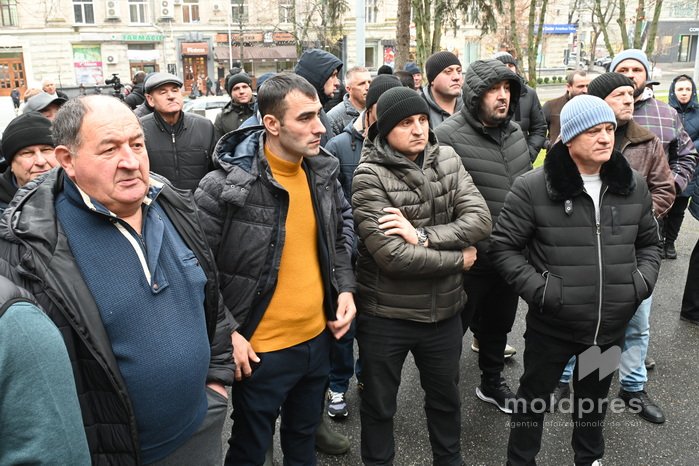
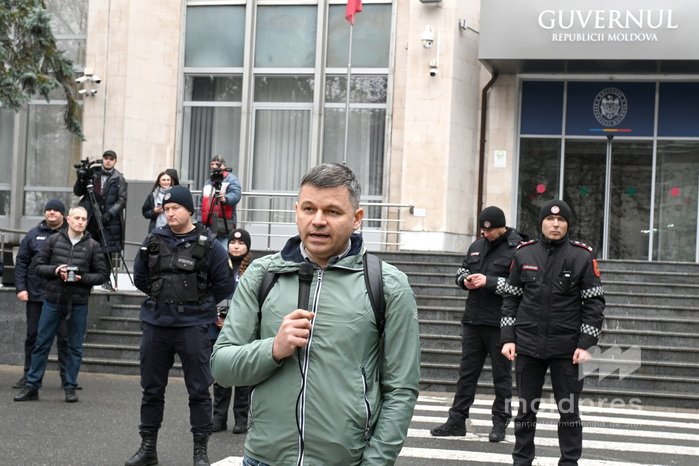
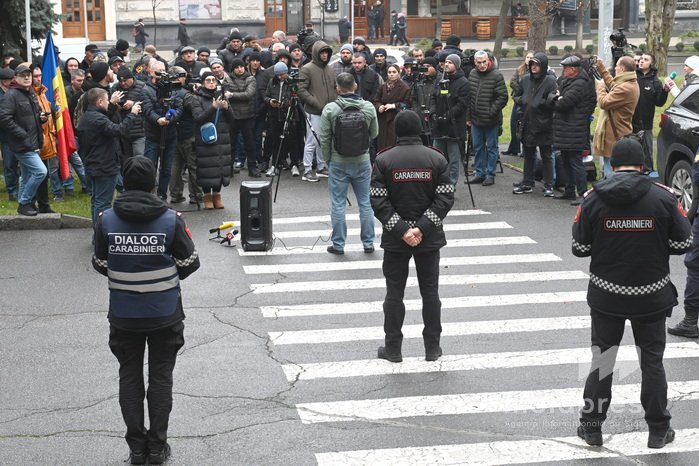
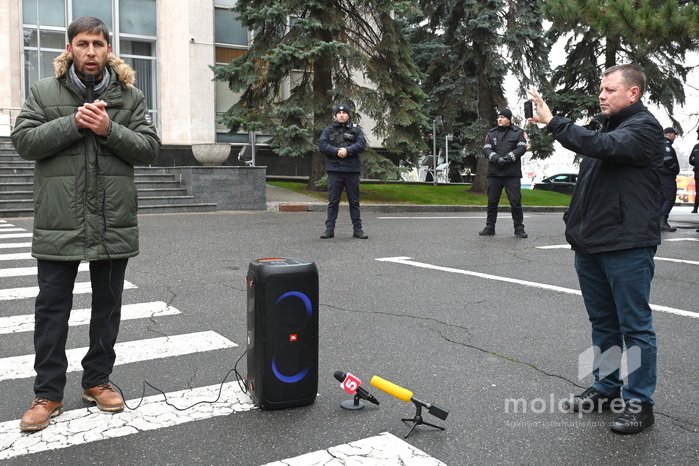
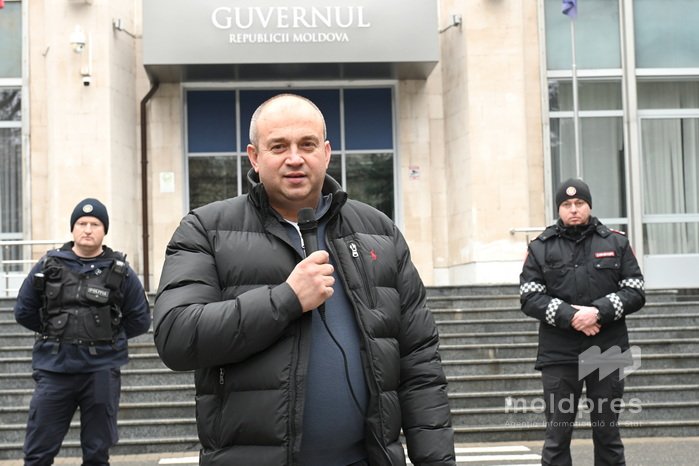
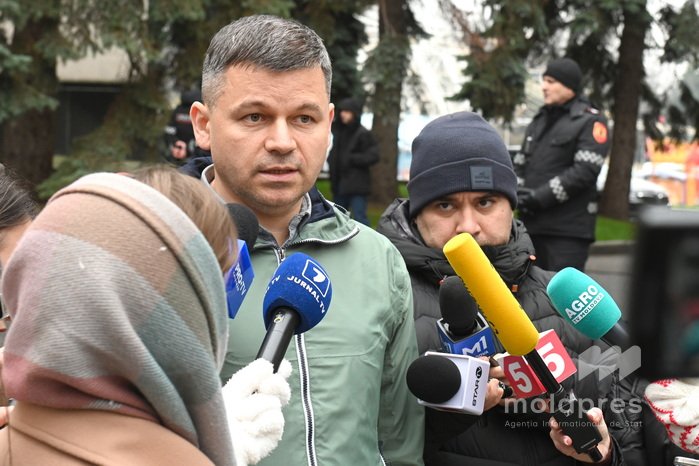
The authorities are identifying solutions to farmers' problems. Minister of Agriculture and Food Industry Ludmila Catlabuga has said that she held extensive discussions with farmers and that a draft was to be adopted to reduce debt pressure and stop foreclosures on vulnerable farmers. Farmers, who gathered at a protest outside the government building, warn that agriculture is in a "disastrous situation" and demand urgent interventions on behalf of the authorities.

The protest’s organizers point out that numerous agricultural producers have entered technical bankruptcy and financial pressures are increasing with forced executions, blocked financing, and accumulated state debts to the sector.

Farmers demand three main measures on behalf of the government: applying a moratorium on foreclosures for farmers in temporary payment incapacity; implementing real financing mechanisms, including effective refund of due VAT, reimbursement of diesel excise, granting the 628 million lei from the subsidy fund as payment per hectare; canceling the Agricultural Chambers Law, which they consider "abusively adopted".


The protesters say they feel ignored and lack survival tools in a devastating agricultural year. They state that while imports dominate the market, local producers are marginalized, including through the way domestic products are displayed in large stores.

"Farmers' Force accuses the authorities of "inertia and lack of response to the agricultural crisis." According to farmers, the state currently owes over 1.3 billion lei only from subsidies, an amount that might exceed 3 billion by the end of the year. At least 2.4 billion lei in unreturned VAT to farmers is added to these.

Agricultural producers claim the December 10 protest is an alarm signal and a demand for real and urgent dialogue. They warn that the situation could escalate, if measures are not quickly adopted to prevent chain bankruptcies of farms in the country.

The Government's Position and Ongoing Measures

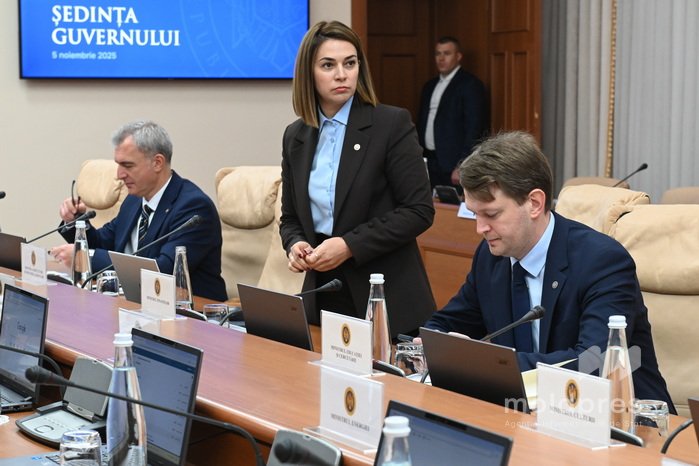
For her part, Minister of Agriculture and Food Industry Ludmila Catlabuga in a statement made before the today's government meeting, said that the institution was already working on concrete solutions. The minister noted that she had held extensive discussions with farmers and a draft law is to be promoted to reduce debt pressure and stop foreclosures on vulnerable farmers.


"I worked with some of them side by side, for two weeks. We had discussions on individual cases and developed a draft law that will support farmers. The document must go through all procedures. We know this law will not cancel debts, but we want to stop executions," the minister specified.

Besides this draft, the government has announced in recent weeks other support directions for the agricultural sector, such as:

accelerating the refund process of outstanding VAT,

supplementing resources for the National Agricultural Development Fund,

expanding guarantee programs for agricultural loans,

initiating discussions with development partners for additional funds for farmers affected by drought.

What Support Farmers Receive in 2025

• Subsidies and direct/post-investment/complementary payments

In March 2025, the Agency for Intervention and Payments for Agriculture (AIPA) authorized payments of 165.05 million lei to farmers, representing approximately 10 per cent of the annual budget of the subsidy fund. The mechanisms included complementary payments, advance payments, post-investments, and direct payments in the livestock sector.

In May 2025, farmers received total subsidies of 182.26 million lei, aimed among other things at investments (machinery, irrigation, perennial crops), beekeeping, farm modernization, as well as covering some current expenses.

In June 2025, payments of 133.68 million lei were authorized, of which over 56 million lei for complementary subsidies — including insurance premiums for animals and crops, irrigation incentives, accessing investment loans, etc.

Also, in the period June 9–13, 2025, AIPA directed another 41.84 million lei for complementary subsidies, post-investments, and rural development projects.

• New subsidy calls and financing opportunities

As of October 1, 2025, AIPA opened a new call for subsidies, valid until December 1. It provides funding for production, processing and marketing projects in the plant, viticultural, and livestock sectors. It includes advance payments for starting or modernizing agricultural activities.

The programmes cover investments in farms, modernization of operations, purchase of machinery, equipment, development of agricultural or rural infrastructure.

• Improving support framework and strategic planning

At the end of 2024, the government approved a draft law regulating the financing, management and monitoring of agricultural policies — to create a coherent, integrated, and compatible framework with European standards. The National Agriculture and Rural Development Fund (FNDAMR) for 2025 is projected at 1.7 billion lei.

The new law provides direct support for farmers, as well as support for farms’ modernization, rural infrastructure, innovation, consultancy and sustainable agricultural development.

• External support and digitalization for agriculture and rural areas

In November 2025, the European Union and the United Nations Development Program (UNDP) launched a 3-million-euro project aimed at strengthening agricultural governance and creating jobs in rural areas. The project includes the development of a National Digital Farmers Registry and support tools for vulnerable farmers.

• What These Mean for Farmers

Farmers can benefit from immediate financial aid (subsidies, post-investment payments, direct payments) that reduce operational risk and support investments.

Access to funding is facilitated through periodic AIPA calls, with the possibility to submit applications until December 2025.

There is a modernized legal framework for support and monitoring, bringing predictability and transparency in the sector.

Support programmes are not just for large farms — they also target small/micro farmers, including beekeeping, viticulture, plant agriculture, young farmers or women.

Digitalization and rural development initiatives supported by the EU/UNDP strengthen institutional infrastructure and provide long-term perspectives for development of agriculture.
 Facebook
 Instagram
 X/Twitter
 Telegram
VIDEO // Moldovan National Roads Administration's update: winter driving conditions on national roads; restrictions for heavy transport on more routes
Goods exports increased by 6.4 percent in 2025
Public Property Agency says procedures of expropriation for land of future U.S. Embassy in Moldova almost completed
VIDEO // Chișinău International Airport: snowfall and blizzards disrupt flights as snow removal equipment operates continuously
Naval maneuvers in Giurgiulesti Port of Moldova temporarily suspended over adverse weather conditions
Energy Minister: No significant adjustment to electricity tariff
Railway of Moldova enterprise enters reorganization: assets to be evaluated before company is split into two entities
UPDATE 10:50 // Traffic of heavy vehicles temporarily suspended on Căușeni – Anenii Noi route
Direct flights from Chișinău to Korea
Facilities for Moldovans returning to live at home: Government-approved decision
Moldelectrica enterprise to be reorganized
Moldova and Korea strengthen bilateral economic cooperation: agreement signed in Chișinău
VIDEO // Work continues on Moldova's largest water main: central region’s water supply project moves forward
All consumers affected by 15–16 February glaze ice reconnected to power grid
PHOTO // Moldovan parliament's building illuminated in colors of Ukrainian flag
Call to the parliament of Romania: two academicians call for adoption of law on branch of Romanian of Academy in Chisinau
Moldovan president has meeting with delegation of Denmark's parliament
PHOTO // Support worth 20 million euros on behalf of Denmark; Moldova to strengthen defense sector, mechanisms to counter disinformation
Support for export promotion: Bridge Export Programme, with budget of 60 million lei, launched in Chisinau
Road workers of Moldova to carry out extensive repair works on national routes as soon as weather conditions allow
Stolen Billion file: former leader of Moldovan Democratic Party appears before court, makes statements on case
 National Bank of Moldova
Moldovan president has meeting with delegation of Denmark's parliament
Moldovan deputy PM for reintegration has meeting with special envoy of Ukraine's Foreign Affairs Ministry
Moldovan deputy PM for reintegration meets members of Danish parliament's foreign policy committee
Prime Minister at FIRST Tech Challenge Moldova: Young people who choose to create, experiment and work for their ideas - strongest investment in future of Moldova
Consultations on local public administration reform: reform vision discussed in another nine districts of Moldova

Women made up majority of voters at last two parliamentary elections; Moldovan Central Electoral Commission notes increase in turnout
Republic of Moldova could become hub in Ukraine’s reconstruction process
AUDIO // Five people detained after dozens of searches in case of embezzlement of infrastructure funds
Prime Minister at FIRST Tech Challenge Moldova: Young people who choose to create, experiment and work for their ideas - strongest investment in future of Moldova
Deputy Prime Minister to pay working visits to Switzerland and Austria
Presidency issues clarifications on pardon of convict and subsequent revocation of pardon decree
CNA conducts over 40 searches at multiple town halls, economic operator in case involving embezzlement of infrastructure funds
Members of Foreign Affairs Committee of Seimas of Lithuania on visit to Moldova
Orthodox Christians enter Easter Fast
VIDEO, PHOTO // Discover Moldova with #MOLDPRES: Văleni village, Cahul, promoted as European rural tourism destination
Thousands of students from Moldova convey messages of solidarity to children in Ukraine through campaign, Letter can replace hug
VIDEO // Moldovan and Ukrainian authorities dismantle criminal group planning assassinations in Ukraine
Republic of Moldova becomes European indoor archery champion
Accurate information matters: Government and Police platforms for verified news
Branch of Romanian Academy to be set up in Chișinău
Moldovan police announce detention of another suspect in case of planned assassinations in Ukraine
Receive the latest news directly to your email

Receive the latest news directly to your email