
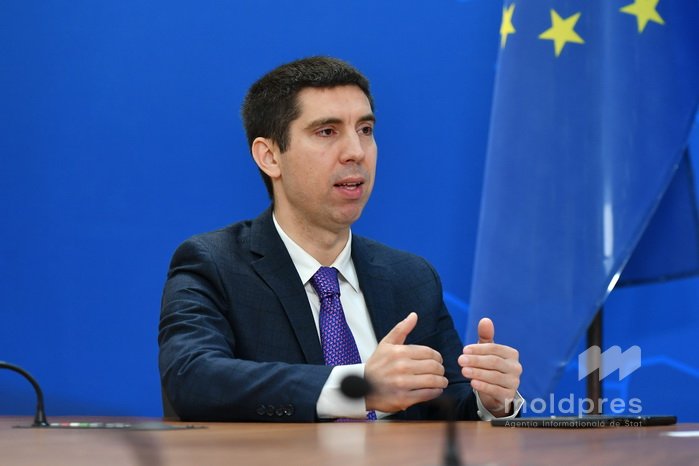
MOLDPRES INTERVIEW // Deputy Prime Minister: Moldova took full advantage of presidency of Council of Europe, mandate that strengthened country’s international profile
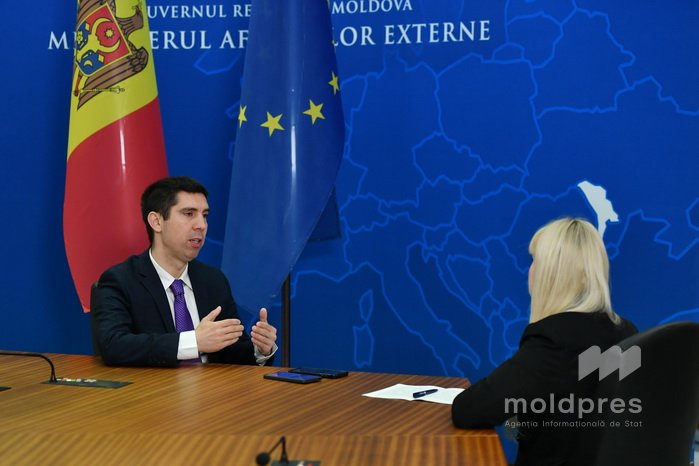
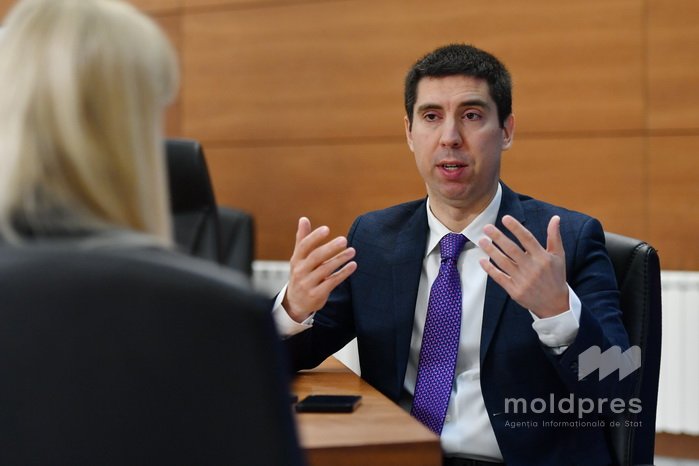
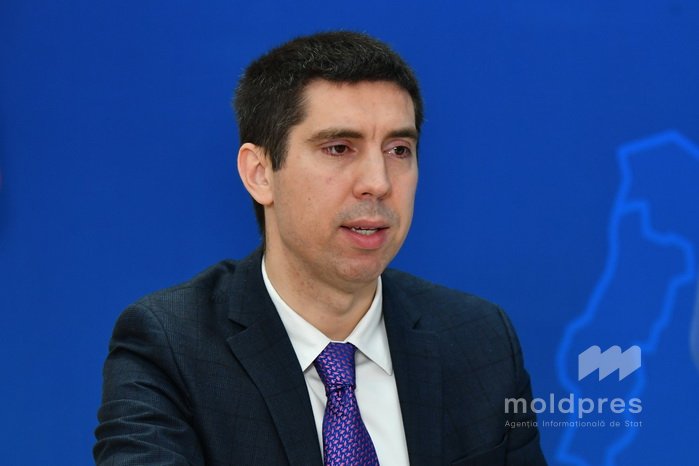
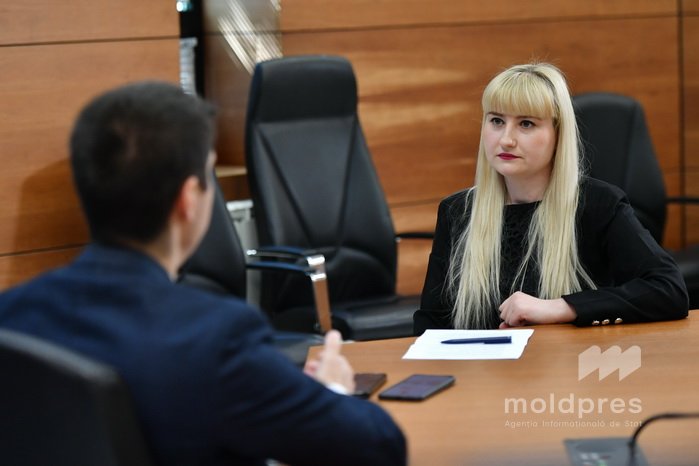
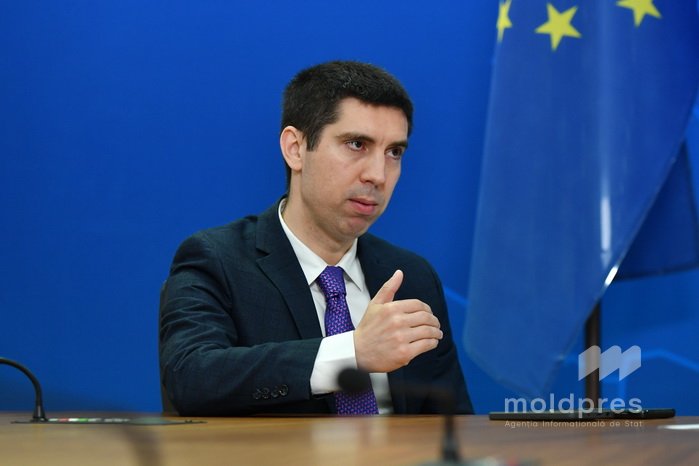
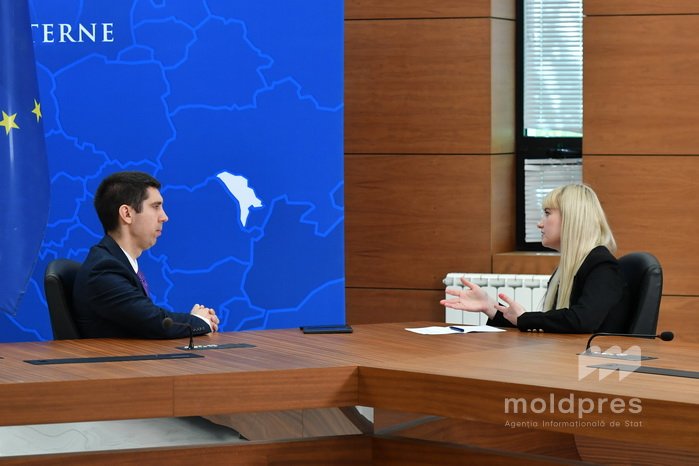
Deputy Prime Minister, Minister of Foreign Affairs Mihai Popșoi gave an exclusive interview to MOLDPRES State News Agency, in which he spoke about the results of the Republic of Moldova’s presidency of the Committee of Ministers of the Council of Europe, its impact on the European integration process and regional security challenges. The mandate concludes with the Ministerial Session of the Committee of Ministers of the Council of Europe, which will be held on May 14–15 in Chișinău and will bring together officials from 50 states, including members from five observer countries, and over 60 official delegations.
The minister referred to combating disinformation and foreign interference, strengthening the rule of law, relations with European partners and the prospects for the Republic of Moldova to exit the monitoring procedure of the Parliamentary Assembly of the Council of Europe.
MOLDPRES: Between 14 November 2025 and 15 May 2026, the Republic of Moldova holds the presidency of the Committee of Ministers of the Council of Europe. This is the second mandate carried out by our country since joining the Council of Europe – the first was held 23 years ago. What events were carried out under the Moldovan presidency and what impact did they have on society?
Mihai Popșoi: Indeed, the Republic of Moldova is in its second presidency within the Council of Europe. The first was carried out a long time ago, and since then things have changed significantly. The Republic of Moldova has fully harnessed this presidency through a series of events, including the event dedicated to the Social Charter, which took place in Chișinău in March.
A number of events were organized that align with our country’s priorities, whether we are talking about promoting human rights, the rights of children and women, combating domestic violence or countering disinformation.
A lot of events took place both in Chișinău and Strasbourg, in order to promote the agenda of the Republic of Moldova. Given the feedback we received from participants and the leadership of the organization, these events had an impact and contributed to promoting the agenda of strengthening democracy in Europe, which is the foundation of the Council of Europe's activity.
We know very well that all activities aimed at strengthening national and international legislation in the field of human rights, promoting social rights, strengthening the institution of the European Court of Human Rights and implementing its decisions, including with regard to the Russian Federation, have a highly tangible impact on strengthening the protection of the fundamental rights of our citizens.
We are also talking about those decisions that concern the Russian Federation, including the Catan case, which clearly establishes the effective control exercised by the Russian Federation over the Transnistrian region. The applicability of these decisions is part of promoting the interests of the Republic of Moldova on the international stage, so as to ensure that our country defends and promotes its interests, protects its citizens and that those who violate these rights are held accountable.
MOLDPRES: The Republic of Moldova is in an active process of accession to the European Union, a decisive stage for our country. How does the activity within the Council of Europe and the status of member of this pan‑European organization influence the European integration?Mihai Popșoi: The projects implemented in the Republic of Moldova in the context of our membership in the Council of Europe are complementary to the processes we are carrying out on our path to joining the European Union.
In fact, a whole range of conventions, regulations and decisions of the Council of Europe help to facilitate the European agenda of strengthening the rule of law, democracy and fundamental freedoms.
This relationship is symbiotic and, thanks to the close partnership we have maintained so far with the Council of Europe, as well as the action plans implemented over the years, which have strengthened state institutions in the Republic of Moldova, law enforcement, the protection of fundamental rights, civil society and press freedom, we have obtained benefits that now help us advance at a faster pace on our European integration path.
The Council of Europe has always served as an important pillar of democratic processes at the European level. The European Union has relied, to some extent, on its institutional expertise, helping Council of Europe member states that are also EU candidate countries to align their human rights and rule‑of‑law standards with the acquis communautaire and Copenhagen criteria.
Moreover, when you have the opportunity to host in Chișinău a large number of foreign ministers and state secretaries responsible for European integration and European affairs, you have a unique opportunity to promote the reforms and progress made by the Republic of Moldova and to discuss and convince these partners of the imperative need for our country to move forward in the European integration.
MOLDPRES: On 14 and 15 May this year, the Republic of Moldova will host the Ministerial Session of the Committee of Ministers of the Council of Europe, which marks the end of our country’s presidency of the organization. Officials from 46 states, including members from five observer countries, and over 60 official delegations are expected to Chișinău. What topics will be on the discussion agenda?Mihai Popșoi: This is a ministerial meeting in the format of foreign ministers or, in some cases, state secretaries from the respective countries. In our case, the discussions will focus on several important topics. I refer to: combating disinformation, malign interference and foreign meddling, including in the information space. This is an important and relevant topic for all member states of the Council of Europe.
At the same time, we will also talk about migration, a sensitive subject for many states, which has an impact on social cohesion, economic processes and political processes, and therefore requires a highly responsible approach.
Issues related to strengthening the international mechanism for holding the Russian Federation accountable for the crime of aggression against Ukraine will certainly be addressed as well. An international tribunal for the crime of aggression has already been created.
The Republic of Moldova has played an active role in this regard. We can also refer to the Commission for Claims and the Register of Damage – all these three institutional pillars were created under the aegis of the Council of Europe, which once again proves how relevant this organization is and how it sets standards of international law not only on the European continent but also throughout the world.
We will also discuss the Pact for Democracy, an idea promoted by the Secretary General of the Council of Europe, Alain Berset, as well as the classic agenda, which is extremely important for us: promoting the rights of children and young people, promoting women’s rights, combating domestic violence and strengthening the institutions of the Council of Europe, whether we are talking about the European Court of Human Rights, the Venice Commission or the Congress of Local and Regional Authorities. All these institutions are very important for our country.
In addition, there will be several working groups that will discuss topics at the center of attention of the member states and of the organization itself. I will also have bilateral meetings. Other colleagues will likely also make use of this opportunity to hold discussions.
Regrettably, time is not sufficient to take advantage of all opportunities and respond to all requests, but we will make efforts to hold as many bilateral meetings as possible in order to fully capitalize on this unique opportunity, when the hospitality of the Republic of Moldova is in the spotlight and our country manages not only to promote its political and diplomatic agenda, but also its cultural agenda.
Thus, in the context of hosting these almost 60 delegations, there will also be a cultural event that will highlight and demonstrate to all our guests that the Republic of Moldova is a European state and our culture is eminently European. Therefore, this opportunity will be fully used to showcase all that is most beautiful in the Republic of Moldova.
In this context, organizing this event is a great honor for our country, but also an enormous responsibility. We are firmly convinced that the meeting will be organized at the highest level, given the experience that the Republic of Moldova already has in organizing important events.
We will certainly make full use of this opportunity and of the openness of our friends towards the Republic of Moldova to promote our agenda not only in the context of the Council of Europe, but also in the context of European integration, which is a national priority and our strategic direction.
Considering that most of our guests will be decision‑makers from European Union member states, we will ensure that we also facilitate progress in this direction. The Republic of Moldova has no reservations towards anyone. We have excellent relations with all countries that treat us with consideration and respect our sovereignty and territorial integrity.
Thanks to our diplomacy, over the years we have managed to build relations of cooperation, friendship and good understanding with absolutely everyone, except some states that, for more than four years, have continued to destroy human lives, infrastructure and places of worship.
This is the harsh reality we live in, and such large‑scale events bring diplomacy back to the forefront once again, because any conflict, no matter how bloody, ultimately ends up being negotiated by diplomats.
We hope that these horrors committed by the Russian Federation in Ukraine will cease, but we can say with a high degree of certainty that the impact of these atrocities will last for a long period.
MOLDPRES: Foreign interference and disinformation are among the greatest challenges. How do you assess the progress made by the Republic of Moldova in combating these phenomena? What role do European partners, state institutions, media and civil society play in strengthening national resilience?Mihai Popșoi: The Republic of Moldova has become more resilient. We have strengthened our institutional capacities. This is confirmed both by our citizens and by our European partners.
Despite huge efforts by states that do not wish us well, the Republic of Moldova has managed to withstand them. This is the result of social cohesion, solidarity within our society and the efforts made not only by state institutions but also by civil society and the press.
We remember the extraordinary investigations conducted by journalists in the Republic of Moldova to inform citizens as transparently and accurately as possible about the complex processes our country is going through.
Certainly, international partners have helped us strengthen institutions through major reforms in the field of the rule of law, strengthening capacities to combat the illegal financing of election campaigns and the illicit introduction of funds into the Republic of Moldova, whether through bank transactions or crypto transactions.
Thanks to the support of our European and American partners, we have strengthened these capacities, and law‑enforcement institutions and civil society have become stronger and more resilient.
However, we still have a lot of work to do. We cannot say that all problems have been solved. The challenges will continue, but we are pleased that we have managed to overcome the difficulties and hybrid attacks to which our country has been and continues to be subjected.
MOLDPRES: Do you foresee the signing of any documents during the Ministerial Session? What more specifically do you have in mind?Mihai Popșoi: The documents currently being finalized are to be examined in order to see to what extent there will be consensus for their signing. The decision belongs to the member states.
The Republic of Moldova, as host country, has the obligation to mediate the process of identifying consensus on the documents on the Council of Europe’s agenda. To the extent that an agreement is reached and it is considered that certain documents are ready for signing, this will occur and will be widely publicized.
There are a number of projects under way that I cannot yet announce. They concern areas such as human rights, malign interference, migration and the file on the Russian Federation’s aggression against Ukraine.
There are also several documents in the drafting process that will highlight the presidency of the Republic of Moldova and the agenda that we have promoted and continue to promote, an agenda that is primarily in the interest of our country and our citizens.
Likewise, at the Palace of the Republic, the presidency will be handed over to Monaco. This is a traditional ceremony, part of the protocol for transferring the presidency. Just as we took over the presidency from Malta in November, we will now hand it over to Monaco. It is a standard but beautiful procedure that is part of the Council of Europe’s long‑standing tradition.
Each state holding the presidency of the Committee of Ministers is free to introduce its own agenda and initiatives, but many of them have continuity, since in six months it may not be possible to finalize certain long‑term documents or processes.
When we talk about broad areas, whether it is about protecting human rights or strengthening institutions, these are long‑term processes, and each member state leaves its own contribution and imprint in consolidating these goals.
MOLDPRES: The Republic of Moldova became a member of the Council of Europe on 13 July 1995. How do you assess the transformations the country has undergone during this period? What are the chances of exiting the monitoring procedure of the Parliamentary Assembly of the Council of Europe?Mihai Popșoi: Indeed, a year ago we celebrated 30 years of the Republic of Moldova’s participation in the Council of Europe.
Over these years there have been both ups and downs. The Republic of Moldova has experienced more flourishing and less flourishing periods from a democratic perspective.
It is clear that the institution of the Council of Europe and the member states have always stood by us and helped us progress and reach the moment we are in now, when we have a credible prospect of moving to the next stage, that of post‑monitoring.
This would not only confirm the progress made by the Republic of Moldova, but would also serve as a platform for recognizing these achievements in the context of our European integration.
Certainly, my colleagues from the Ministry of Foreign Affairs, those in Parliament who work within the Parliamentary Assembly of the Council of Europe (PACE), as well as all other state institutions involved, whether we are talking about the Ministry of Justice or other institutions, are working to advance in their respective areas so that the Republic of Moldova can move beyond this stage, which has lasted, we must admit, quite a long time.
We would have liked to move to the post‑monitoring stage 10, 15 or 20 years ago. Unfortunately, that was not the case, but now we have this chance and we hope that in the next year we will achieve this progress.
As I was saying, this depends on fruitful cooperation among all relevant institutions and, of course, on a positive assessment by our colleagues in PACE’s monitoring committees.
MOLDPRES: The Republic of Moldova will soon be visited by the Council of Europe’s co‑rapporteurs for a new report on our country. What achievements will we present to them?Mihai Popșoi: The Republic of Moldova has made significant progress in recent years. A multitude of laws adopted derive both from our commitments to the Council of Europe and from our European integration agenda.
These are laws that strengthen human rights in our country, provide more transparency and seek to reform the justice system.
Where there are certain uncertainties, they are consulted with the Venice Commission. That is why this relationship is very close and we learn from the Council of Europe’s experience, since many states have already gone through the trajectory we are on and have implemented many of the reforms we are implementing now.
This exchange of experience is extremely valuable, but we must also acknowledge that the Republic of Moldova is reaching a point where it can share its own experience with other states, whether we are talking about combating foreign interference, strengthening the rule of law or protecting fundamental freedoms and press freedom.
A few days ago, we received good news from the organization Reporters Without Borders, where the Republic of Moldova climbed significantly in the ranking, becoming the country with the best score in Eastern Europe.
This honors us but also makes us more accountable to continue working shoulder to shoulder – state institutions, civil society and media outlets – in order to move even further ahead, because this is in the direct interest of our society.
Our European integration agenda fits very well with the commitments we have undertaken vis‑à‑vis the Council of Europe, because they are often comparable and complementary objectives. I am referring to strengthening rule‑of‑law institutions, combating malign influence, combating illicit financing of election campaigns, ensuring fair competition in the electoral process, media freedom or citizens’ fundamental rights – all these agendas are complementary.
The successes we have achieved in implementing these projects, in the context of the action plan for accession to the European Union, align very well with the action plan we have with the Council of Europe and help us move beyond the monitoring stage in which we find ourselves.
We very much hope that this will happen in the near future so that the Republic of Moldova can clearly state that it is no longer under monitoring and that it has moved beyond this stage in its history.
Thank you for the interview.
Reporter: Ala Ciobanu
 Facebook
 Instagram
 X/Twitter
 Telegram
MOLDPRES INTERVIEW // Rector of University from Romanian city says if someone overturns your history, national identity, it means you don’t have enough knowledge
MOLDPRES INTERVIEW // Director of South Regional Development Agency says Agency creating better living conditions, easier life for thousands of residents
MOLDPRES INTERVIEW // Lithuanian Ambassador about prospects of Moldova’s EU accession: If you make things real, they will become achievable
MOLDPRES INTERVIEW // Moldovan finance minister says government aims to modernize financial system for benefit of businesses, citizens
MOLDPRES INTERVIEW // Ambassador of State of Qatar to Moldova: We are working to improve ways of attracting Qatari investors to Moldovan market
MOLDPRES INTERVIEW // President of Moldova's Chamber of Commerce and Industry says country must use opportunities provided by European integration to attract investments, become competitive
MOLDPRES Interview // Minister of Internal Affairs: Interior Ministry applies European security standards and is ready to advance in EU accession process
MOLDPRES INTERVIEW // Moldovan energy minister says foremost interest citizens to have secure energy at affordable prices
Moldovan justice minister says, according to European Commission’s Report, Moldova made greatest progress among EU candidate states, including in justice field
INTERVIEW MOLDPRES // Moldovan defense minister says Russia's war in Ukraine highlighted vulnerability of defense sector, need of building strong, prepared, resilient army to current challenges
INTERVIEW WITH MOLDPRES // Deputy PM says wants Moldova where a child from any village has same opportunities as a child from Chisinau
INTERVIEW MOLDPRES // Deputy Prime Minister on Ukraine Peace Agreement: No discussion about Moldova can take place without Chișinău's participation
INTERVIEW MOLDPRES // Moldovan agriculture and food industry minister says European integration fundamentally changes way leadership supports agriculture
INTERVIEW MOLDPRES // Romania's Ambassador in Chisinau says Moldova to never be alone in its efforts, Romania to stand by its side
Moldovan president, U.S. senator discuss Moldovan-American cooperation, Moldova’s role in regional security
Director of Konrad Adenauer Foundation Office in Moldova says dialogue within Security Forum must turn into concrete actions
Head of NATO Liaison Office in Chisinau says Security Forum generates valuable ideas, due to help Moldova become more resilient, safer
Moldovan PM tells business people government willing to build Europe’s most entrepreneur-friendly country
Foreign Affairs Ministry's state secretary says Moldova firmly committed to path toward EU, determined to be part of safer Europe
Railway of Moldova enterprise to increase freight transport tariffs by 15 per cent as of November 1
Moldovan PM attends enlarged meeting of Administrative Council of Congress of Local Authorities of Moldova
 National Bank of Moldova
Moldovan president, U.S. senator discuss Moldovan-American cooperation, Moldova’s role in regional security
Moldovan PM tells business people government willing to build Europe’s most entrepreneur-friendly country
Environmental protection experts discuss critical hydrological situation in Dniester River basin
Moldovan PM attends enlarged meeting of Administrative Council of Congress of Local Authorities of Moldova
Moldovan deputy PM for reintegration has meeting with Lithuanian officials

Eight violations of Moldova’s Airspace recorded in recent days; five cause explosions on ground
Moldova Security Forum 2026 // Moldovan president's adviser on national defence and security says Russia’s strategy not aimed only at winning elections, but at undermining trust in democracy
Moldovan deputy PM for reintegration has meeting with Lithuanian officials
Foreign affairs minister says Moldova ready to open next four EU negotiation clusters
VIDEO // Intelligence and Security Service chief, at Moldova Security Forum 2026, says money replaced ideology in attempts to destabilize Moldova
Moldovan president has meeting with NATO Deputy Secretary General
Moldova Security Forum 2026 // NATO Deputy Secretary General says strong, stable, resilient Moldova contributes to stability, resilience on NATO’s border
Elections in Gagauzia: 83 candidates registered for Popular Assembly
European Commissioner for Defence and Space says Moldova can count on EU's support in security, defence
Moldova Security Forum 2026 // Moldovan official says resilience not defined only by preventing Shocks, but also by systemic capacity to maintain core functions
Moldovan president says local power must be in mayor’s office
Moldova must accelerate investments under Growth Plan; EU Ambassador explains conditions for funding
DOC // New general structure, staffing of Moldova's National Army enter into force
EU Ambassador to Moldova says elections in Gagauzia must be free, democratic, without foreign interference
EU seeks solutions to support Moldova in energy crisis, to mobilize other donors
EU supports government’s intention to conclude accession negotiations in 2028; European Union's Ambassador: “Two more clusters will be opened soon”
Receive the latest news directly to your email

Receive the latest news directly to your email