
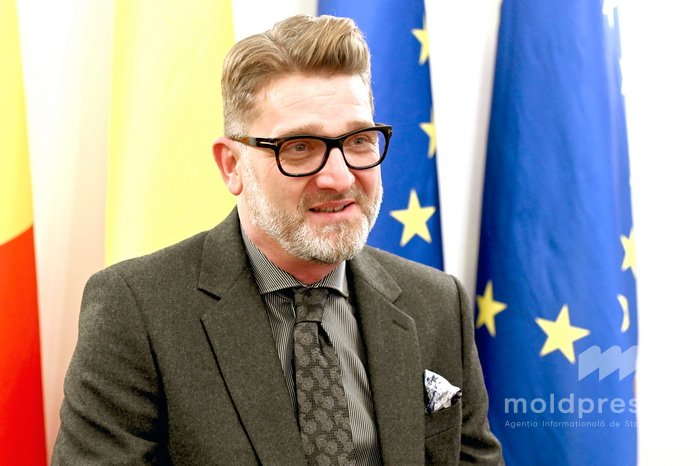
INTERVIEW MOLDPRES // Romania's Ambassador in Chisinau says Moldova to never be alone in its efforts, Romania to stand by its side
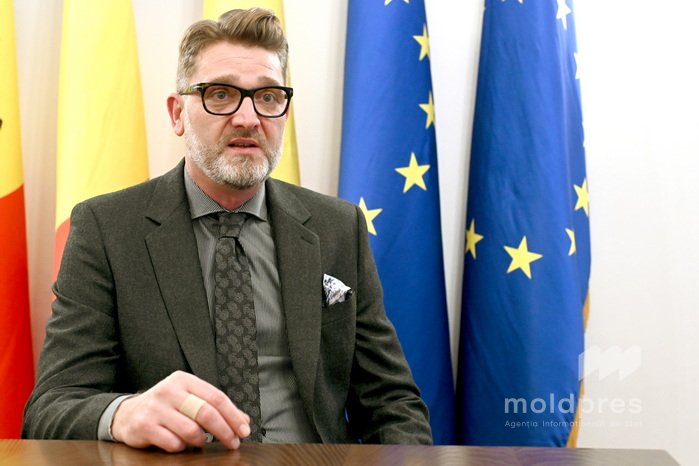
Romania stays the most active and vocal supporter of Moldova at the European level, and this will not change. Thanks to its own merits, Moldova is ready to start accession negotiations on clusters 1, 2, and 6, and Bucharest supports advancing on this component as quickly as possible. His Excellency, Cristian-Leon Turcanu, Romania's Extraordinary and Plenipotentiary Ambassador to Moldova, has made statements to this effect in an exclusive interview with the MOLDPRES Agency, on the occasion of Romania's National Day, marked on December 1.

Cristian-Leon Turcanu emphasized that Romania was ready to support the new Moldovan government by continuing and expanding experience exchange projects, as well as by advancing transport and energy interconnections, aiming to bring Moldova closer to the European Union and the Common Market.

MOLDPRES: Mr. Ambassador, in the past year, Moldova has made notable progress on its European path, reflected in the EU Enlargement Report. The target of 2028 for the signing of the EU Accession Treaty is considered ambitious, but possible. From Romania's perspective, how realistic is this objective, and what role can Bucharest play in accelerating this process?

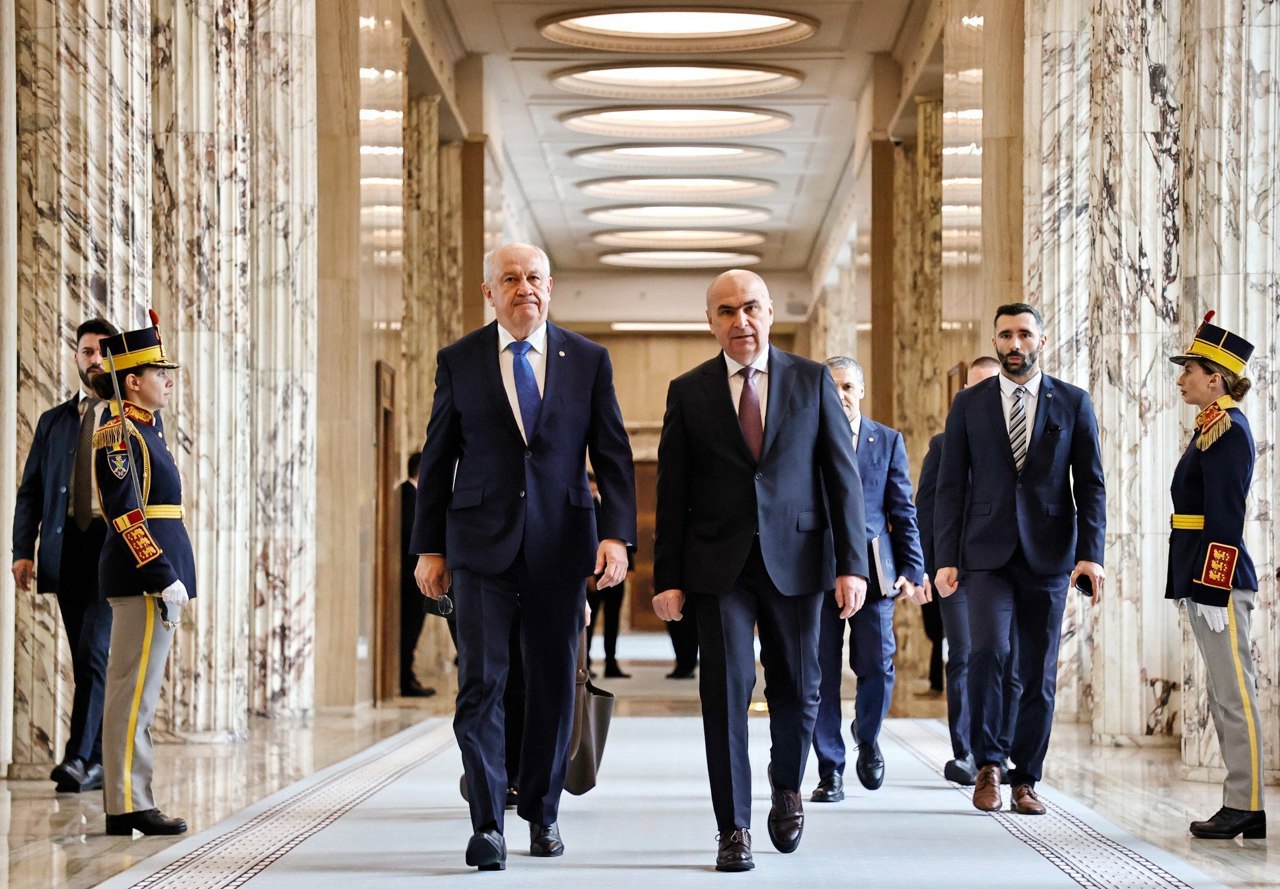
Cristian-Leon Turcanu: The advancement of Moldova's European integration process is a central foreign policy objective for Romania, and we will continue to work towards achieving it in full cooperation and coordination with the new government of Moldova. Prime Minister Alexandru Munteanu's visit to Bucharest on November 13, 2025, was a good opportunity to discuss, at the highest political levels, the actions we can take together for the rapid implementation of necessary reforms.

Romania is ready to assist the new government, by continuing and boosting experience exchange projects, and through ongoing interconnection in transport and energy areas, due to integrate Moldova more deeply into the European Union and Common Market space. Diplomatically, Romania is the most active and vocal supporter of Moldova at the European level, and this will not change.

In recent years, Moldova has made truly exceptional progress in its European integration process, particularly through unprecedented political willingness and capacity to implement necessary reforms. They have been appreciated by European institutions and member states, generating genuine sympathy for Moldova. Moreover, the expectations of European partners towards Moldova have grown, which can only please us.

The European Commission recognized all these advances in the latest enlargement process report, published on November 4, 2025. Based strictly on its own merits, Moldova is ready to begin accession negotiations on clusters 1, 2, and 6. Romania supports advancing as quickly as possible in this area, where Moldova will be evaluated on its own merits. Returning to your question, as many EU officials have noted, 2028 is a tangible goal.

The integration process is quite complex, and Romania's support for the sustainable progression of this process stays firm. European integration of Moldova represents the best guarantee for security and prosperity for its citizens. At the same time, it is a fulfillment of the bilateral strategic partnership and a crowning of many years of diplomatic activity for both Moldova and Romania.

MOLDPRES: Premier Alexandru Munteanu chose Bucharest for his first official visit abroad. What is the significance of this gesture, and what messages does it convey in the context of the bilateral relations?

Cristian-Leon Turcanu: I would like to emphasize that Prime Minister Alexandru Munteanu's decision to make his first official visit to Romania continues the recent tradition of high-level contacts, which Romania truly values. It is, at the same time, the clearest evidence that the new Moldovan government recognizes the strategic value of the relationship with Romania, Moldova's closest and most stable partner, as well as its most active supporter in its European integration. The visit once again proved that Romania is not just a diplomatic option, but a top ally with shared priorities, values and strategic goals.

The political, diplomatic and sectoral dialogue between Romania and Moldova is at the highest level in recent history. We currently have very close and dynamic cooperation at all levels of the bilateral agenda, with constant official and working meetings and concrete projects benefiting the citizens.


MOLDPRES: What stage are we at regarding Moldova's interconnection with the European energy system? What strategic projects supported by Romania are expected to be completed soon?


Cristian-Leon Turcanu: Moldova has made remarkable progress in the energy field. These advances are also recognized by the European Commission in the latest enlargement report from November 4, 2025.

We must look at things in perspective: Moldova was in a state of total energy dependency on the Russian Federation, but today it sources exclusively from the European free market and can choose its energy suppliers. Diversifying supply sources is a real achievement based on political vision, with enormous benefits for Moldova.

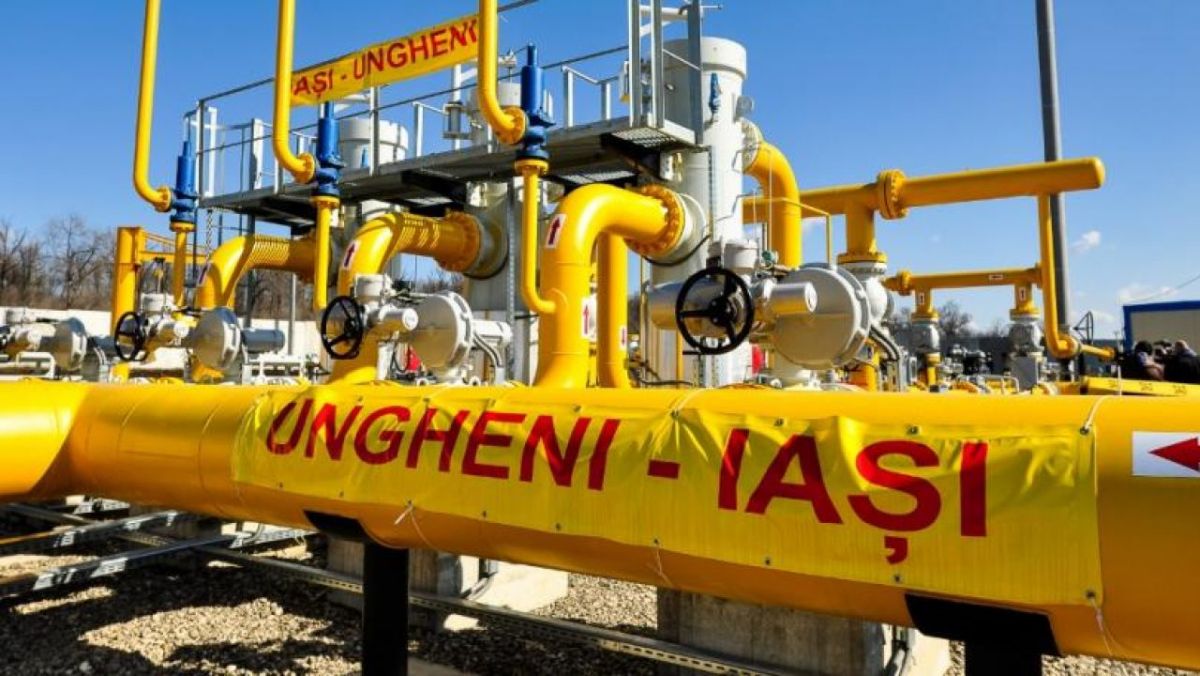
Bilateral cooperation with Romania has been an element of this new reality. The importance of building interconnection infrastructure with the European Union space through Romania must be emphasized, as it played a crucial role in ensuring the current level of Moldova's energy security. I am specifically thinking about the role of the Iasi-Ungheni-Chisinau gas pipeline in avoiding Moldova's energy vulnerability following the Russian Federation's cutoff of gas supply. Also, Moldova takes full advantage of Romania's natural gas storage capacities, in order to secure the necessary reserve for the cold season.

From the point of view of electricity supply, connecting Moldova to the ENTSO-E system and free access to electricity producers in the European Union, within transfer capacity limits, brought stability and predictability.

Today, Moldova is no longer dependent on electricity produced at the Kuchurgan  thermal power plant and has managed to replace it with electricity purchased from the free market, especially from Romania. Moreover, Romania has supported Moldovan authorities' efforts to source electricity from other sources, including through price cap introduction for purchases from Romanian producers.

In general terms, Moldova has also made significant legislative steps towards convergence with the European Union regarding the energy market.

The physical interconnection of Moldova's electricity grid with the European Union’s one through Romania must be consolidated for the benefit of the citizens on this bank of the Prut River. Therefore, a priority on the bilateral agenda is the construction of the 400 kV overhead power lines Suceava-Balt and Gutinas – Straseni, which will complete the already existing Isaccea – Vulcanesti  interconnection. These interconnection projects represent a central objective in the energy field for both Romania and Moldova, being mentioned in the new Moldovan government's governing programme. Although these are large infrastructure projects that, by their very nature, require significant efforts, I am optimistic about the possibility of their completion in the medium term through concerted joint actions.

MOLDPRES: Union Highway, bridges over the Prut, railway connections - how will these infrastructure projects influence mobility and economic integration between the two states?


Cristian-Leon Turcanu: First of all, I would like to point out that developing connections with Romania in the transport sector is a central aspect of Moldova's European integration process, given that, currently, Moldova's direct access to the European Union Single Market can be achieved only through Romania. Essentially, Moldova cannot fully benefit from its relationship with the European Union and the economic opportunities without being well connected to its transport network through Romania. Therefore, at the bilateral level, we treat strategic transport projects as an integral part of our joint efforts for Moldova's European integration.

However, beyond the very important aspects related to European integration, developing transport infrastructure between Romania and Moldova is essential, as Romania is Moldova's main trading partner. Realistically, the impact of transport infrastructure on economic development increases in proportion to the scale of bilateral trade. Hence, we expect the economic benefits resulting from medium and long-term strengthening of interconnections between Romania and Moldova's transport systems to be substantial, aiding its sustainable economic development.

We also desire and expect that the completion of strategic infrastructure projects will streamline traffic between Romania and Moldova, reducing waiting times at border crossing points and thus generating a tangible, concrete benefit for citizens' lives and businesses on both banks of the Prut River.


MOLDPRES: Parallel to preparing for EU accession, Moldova faces security challenges resulting from the Ukraine war. How does Romania contribute to strengthening resilience and protecting Moldova, in this context?


Cristian-Leon Turcanu: The Russian Federation's illegal invasion against Ukraine has generated multiple consequences for Moldova on various fronts: economic, commercial, energy, social, etc.

From the perspective of Moldova's security, authorities continue to face hybrid actions on behalf of the Russian Federation. Essentially, we can notice a large-scale, continuous and evolving hybrid attack on Moldova. This problem is, of course, broader, present in the European Union as well, but Moldova is the most exposed to such actions. Moldova is at the forefront regarding exposure to Russian Federation's hybrid attacks. This was absolutely obvious during the electoral processes organized in 2024, and more recently, at this year's parliamentary elections.

Therefore, Moldova receives consistent, coordinated and continuous support from all international partners. Romania is making sustained efforts, both bilaterally and multilaterally, in order to provide and mobilize support for strengthening Moldova's resilience.

The results achieved so far in some areas have been very good. At this year's parliamentary elections, we saw that Moldova's authorities adapted to the Russian Federation's hybrid instruments and organized the elections professionally, successfully protecting the democratic process, despite the hybrid attack it was subjected to. We can say that the way the recent parliamentary elections were conducted proves that Moldova is making significant steps toward strengthening resilience.

In the energy sector, the Russian Federation attempted to use gas as a hybrid pressure tool on Moldova, but this action failed, because Moldova, with support from Romania and other international partners, managed to eliminate energy dependency on the Russian Federation.

There is still much to be done, and by nature, hybrid threats require continuous vigilance, especially regarding specific hybrid instruments, such as cyber-attacks. There is no moment when you reach an optimal level of resilience. Continuous preparation is needed for all scenarios.

At the same time, Romania actively supports Moldova in the defense field, through expertise, training, and modernization programs.

Through various cooperation instruments for development, Bucharest will continue to support the Moldovan authorities in strengthening technical and institutional readiness to counter hybrid actions with the strategic common goal: maintaining Moldova stable, secure and firmly anchored in the European security architecture.


MOLDPRES: Romania continues to support education in Moldova through scholarships, donations and investments in school infrastructure. What initiatives are you considering for expanding this support?


Cristian-Leon Turcanu: We consider that the investments we make in Moldova's education system are investments in its social and economic future.

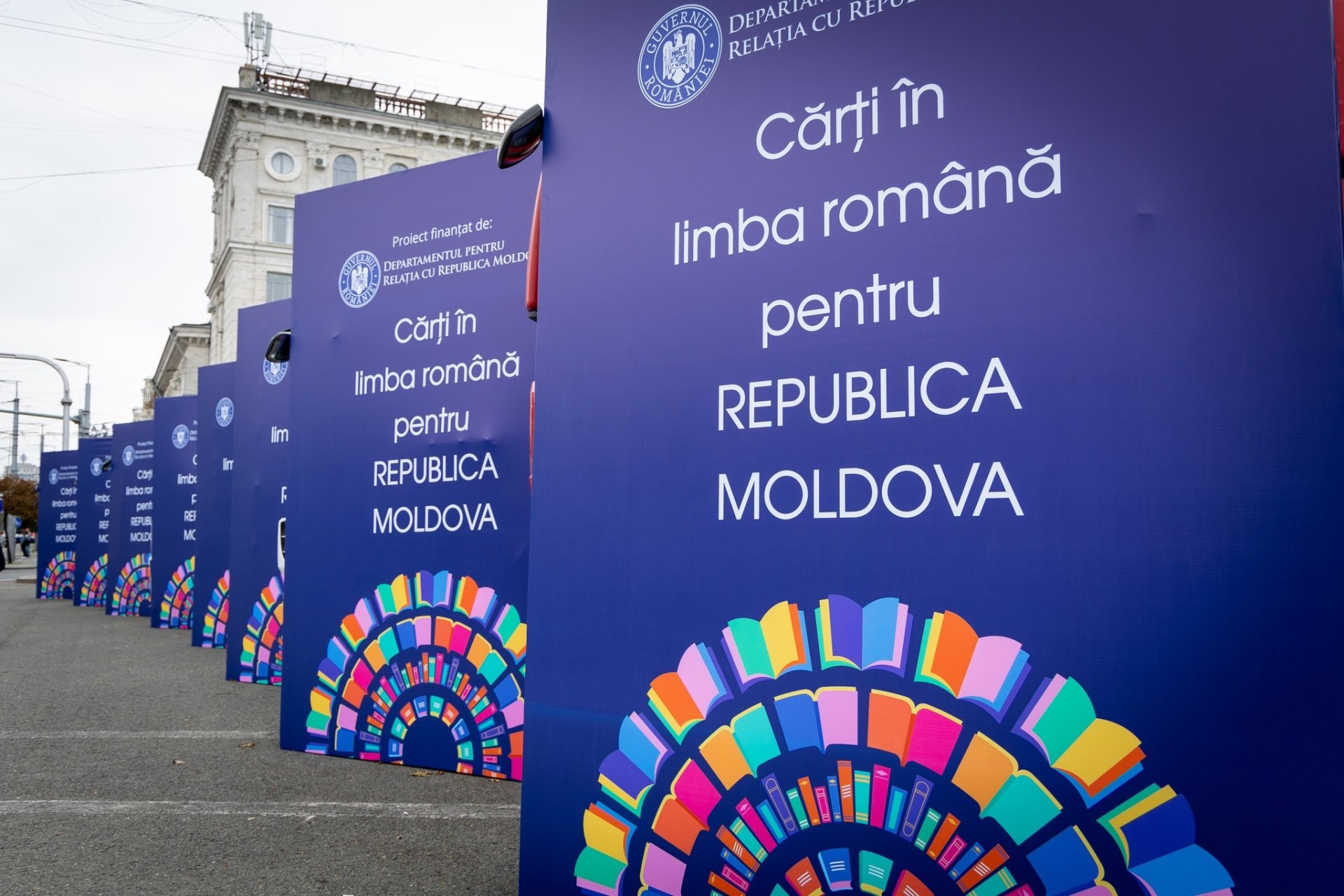
As you rightly pointed out, in addition to scholarships for Moldovan young people studying in Romania, we have many educational projects conducted directly in Moldova. Among them, I would like to mention projects funded by the Department for Relations with Moldova, including donation of hundreds of thousands of Romanian books to libraries, projects for equipping and renovating educational institutions, direct support for students through the Preschool and Schoolboy's Box programme, etc.

Also useful for Moldovan education development are extensions of Romanian universities, offering Moldovan youths the opportunity to access quality education and get diplomas recognized at the European level from home.

Starting last year, at the Embassy's initiative, we are conducting Romanian language learning programmes for teachers and students of Moldova. This year alone, hundreds of teachers and students from schools teaching in minority languages in Moldova participated in these courses organized by seven host universities in Romania (Timisoara, Oradea, Brasov, Cluj, Iasi, Suceava and Galati), and we wish to continue the project in the future.

The non-reimbursable aid of 100 million euros provided by Romania through the 2022 agreement was another source of financing for education projects. In 2023, the Romanian government approved funding of approximately four million euros for the purchase of school buses, and in 2024, funding was approved for the full reconstruction of the student dormitory No. 3 of the B.P. Hasdeu State University of Cahul, a project underway.

We have very active cooperation at the ministry and agency level dealing with education and research in Romania and Moldova. In particular, I want to highlight the funding of joint research projects for researchers on both banks of the Prut River, a representative element for the importance we attach to the bilateral agenda in this field. This year, 62 joint projects were selected for funding, with a total budget of 10 million euros, of which 8 million represents funding from Romania.

Therefore, we are confident that the dialogue at the sectoral and technical level, which aims, among other things, to identify new areas of cooperation based on Moldova's current needs and requests received from Chisinau authorities, will continue to generate useful projects for Moldova's citizens. Romania is fully open to implementing such projects in the future.

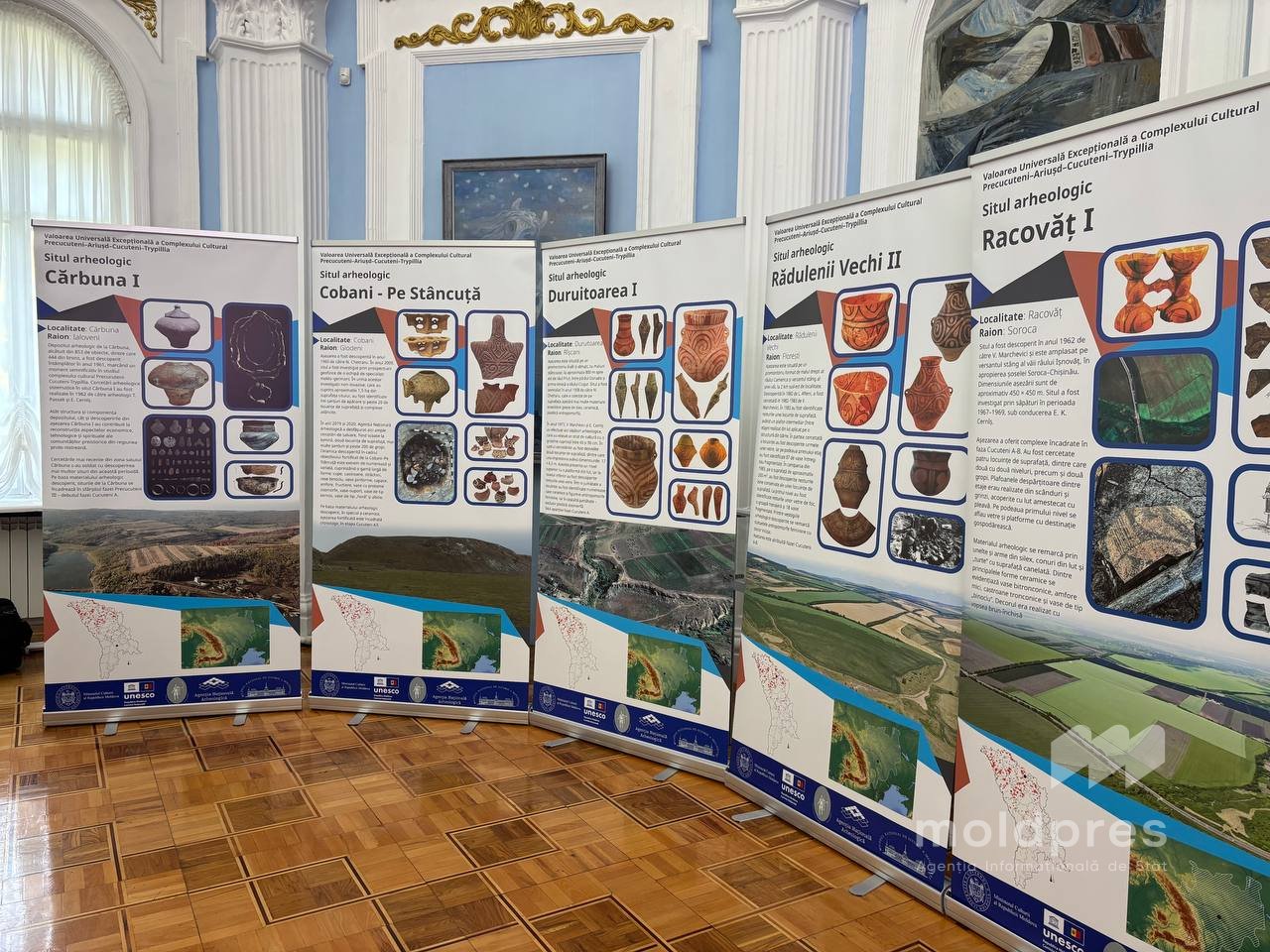
MOLDPRES: In September 2025, Romania, Moldova, and Ukraine signed a memorandum for promoting the Cucuteni-Trypillia heritage at UNESCO. Can this initiative become a regional model of cultural and diplomatic cooperation?

Cristian-Leon Turcanu: Firstly, I believe it is important to emphasize that our cultural heritage and common heritage represent the foundational base of the European construction.

Precisely within this framework of closeness and intertwining of history in this space, the Memorandum of Understanding was signed in Chișinău on September 18, 2025, regarding the joint nomination for inclusion on the UNESCO World Heritage List of the transnational property "Precucuteni-Ariușd-Cucuteni-Trypillia."

Without a doubt, the document represents a model of regional cooperation, opening the way for recognizing and promoting the universal value of this important, unique European civilization.

Last but not least, it is important that the document also provides the necessary tools to protect the heritage specific to this culturally valuable complex, by including it on the UNESCO World Heritage List. The joint effort of the scientific communities of Romania, Moldova and Ukraine is undoubtedly a regional cooperation model that can be replicated in various other domains.


MOLDPRES: You travel frequently through Moldova and speak with citizens. What do you talk about and what message do you convey to Moldova's citizens as they enter a new stage of the European integration process?


Cristian-Leon Turcanu: Moldova has progressed greatly on its European path in recent years. It is an achievement based on massive support on behalf of the entire society, manifested through voting in multiple electoral processes.

In dialogue with authorities, civil society, or citizens of Moldova, I have always emphasized the deep reality that the European Union is the only viable option for ensuring security and prosperity. Romania's example in this regard is eloquent.

In essence, the European Union's operation model centers on valuing, protecting, and ensuring citizens’ prosperity. For Moldova, the European integration process will entail reforms for citizens’ protection, jobs’ creation and ensuring equal opportunities for all society members.

It will also bring necessary investments for economic development and, at the same time, provides Moldova's citizens with the tools to freely develop their businesses in a safe and fair environment, based on clear laws applied equitably.

The European Union and its legislation offer economic predictability and security.

Of course, Moldova will have to work diligently to implement reforms and European legislation. This process has never been quick or easy, but it offers Moldova the opportunity to grow to meet its citizens' wishes.

During this process, it is important that citizens do not lose hope and confidence. European integration is earned on merit, and Moldova's perseverance and desire to be part of the large European family will matter greatly for achieving this goal.

I want to emphasize that Moldova will never be alone in its efforts. Romania will be by its side, as it always has been, based on the special relationship that binds us and the bilateral strategic partnership.


MOLDPRES: Your Excellency, Mr. Cristian-Leon Turcanu, extraordinary and plenipotentiary Ambassador of Romania to Moldova, thank you for your willingness to give us an interview.

 Facebook
 Instagram
 X/Twitter
 Telegram
MOLDPRES INTERVIEW // Lithuanian Ambassador about prospects of Moldova’s EU accession: If you make things real, they will become achievable
MOLDPRES INTERVIEW // Moldovan finance minister says government aims to modernize financial system for benefit of businesses, citizens
MOLDPRES INTERVIEW // Ambassador of State of Qatar to Moldova: We are working to improve ways of attracting Qatari investors to Moldovan market
MOLDPRES INTERVIEW // President of Moldova's Chamber of Commerce and Industry says country must use opportunities provided by European integration to attract investments, become competitive
MOLDPRES Interview // Minister of Internal Affairs: Interior Ministry applies European security standards and is ready to advance in EU accession process
MOLDPRES INTERVIEW // Moldovan energy minister says foremost interest citizens to have secure energy at affordable prices
Moldovan justice minister says, according to European Commission’s Report, Moldova made greatest progress among EU candidate states, including in justice field
INTERVIEW MOLDPRES // Moldovan defense minister says Russia's war in Ukraine highlighted vulnerability of defense sector, need of building strong, prepared, resilient army to current challenges
INTERVIEW WITH MOLDPRES // Deputy PM says wants Moldova where a child from any village has same opportunities as a child from Chisinau
INTERVIEW MOLDPRES // Deputy Prime Minister on Ukraine Peace Agreement: No discussion about Moldova can take place without Chișinău's participation
INTERVIEW MOLDPRES // Moldovan agriculture and food industry minister says European integration fundamentally changes way leadership supports agriculture
MOLDPRES INTERVIEW // Romanian culture minister says culture adds value, rebuilds trust
MOLDPRES interview // IGP head: Russia whether through Ilan Shor or other means to constantly try to find ways to create disorder and destabilization
MOLDPRES interview // Minister of Internal Affairs: Moldova experiencing wave of concerted attacks from abroad and supported by criminal groups
Moldovan parliament approves establishment of state of emergency in energy, hydrological sectors for 60 days
Moldovan PM responds to opposition MPs on cutting fuel excise duty, value-added tax
New director at Teleradio-Moldova Company: Ecaterina Cheptanaru wins competition
Moldovan parliament speaker explains need for state of emergency
Moldovan-American sectoral cooperation discussed at Moldova's Defense Ministry
Moldovan energy minister gives explanations on how Transnistrian region to be supplied with energy resources during next cold season
Moldovan PM says situation on Dniester must not be turned into subject of political speculation
 National Bank of Moldova
Moldovan PM says government must have necessary tools before crises materialize
Moldovan parliament declares nationwide state of emergency in energy, hydrological sectors for 60 days
Moldovan PM, European Commission official discuss accelerating growth plan projects
Moldovan PM's speech at parliament's plenary meeting on establishment of emergency state
Moldovan president, delegation of Czech senators discuss Moldova’s European path, bilateral cooperation

Moldovan PM presents draft law establishing state of emergency in parliament
Moldovan government negotiates direct contracts with major gas producers; PM makes clarifications
Moldovan PM says over 620,000 households might benefit from energy compensation during this season
Moldovan PM's speech at parliament's plenary meeting on establishment of emergency state
LIVE // Moldovan PM in parliament: government calls for establishing state of emergency in energy, hydrological sectors
Moldova, Austria strengthen cooperation; Moldovan parliament speaker meets new Austrian ambassador
Bypass road of over 7 km to be built in Cimislia town of Moldova under a 43.3 million-euros-worth contract
Moldovan president, delegation of Czech senators discuss Moldova’s European path, bilateral cooperation
Moldova establishes diplomatic relations with Togo
Energocom company's leadership rules to give up part of salary payments, postpone string of investments, with estimated savings of 17.5 million lei
Moldova's Foreign Minister discusses expanding bilateral cooperation with Chilean and Tunisian counterparts in New York
Czech Senator: Moldova belongs at European table and is part of European project
Environment Minister on Dniester situation: Water reserves three times lower than discharges, situation worsened
Energy Minister on declaring state of emergency: We must be prepared to act quickly
Council of Europe Office to UN inaugurated in New York
Government improves financing mechanism for regional and local development projects
Receive the latest news directly to your email

Receive the latest news directly to your email