
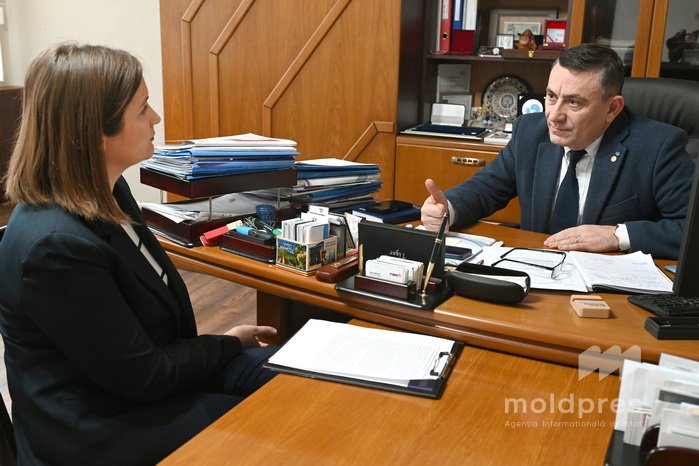
MOLDPRES INTERVIEW // President of Moldova's Chamber of Commerce and Industry says country must use opportunities provided by European integration to attract investments, become competitive
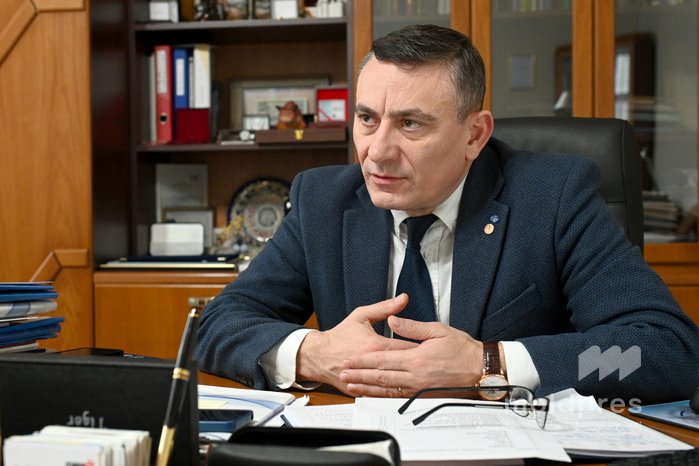
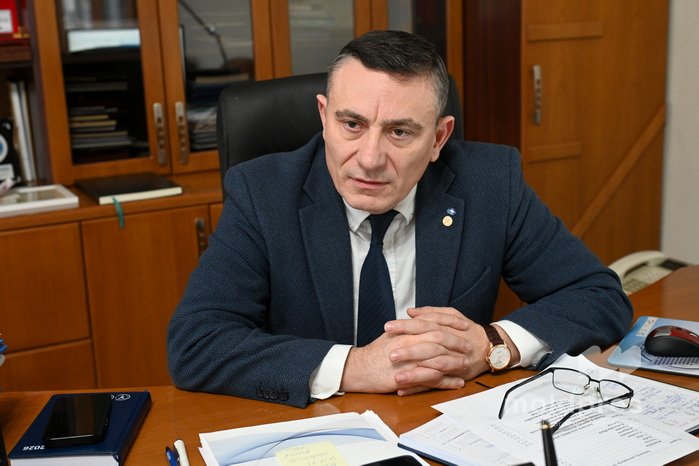
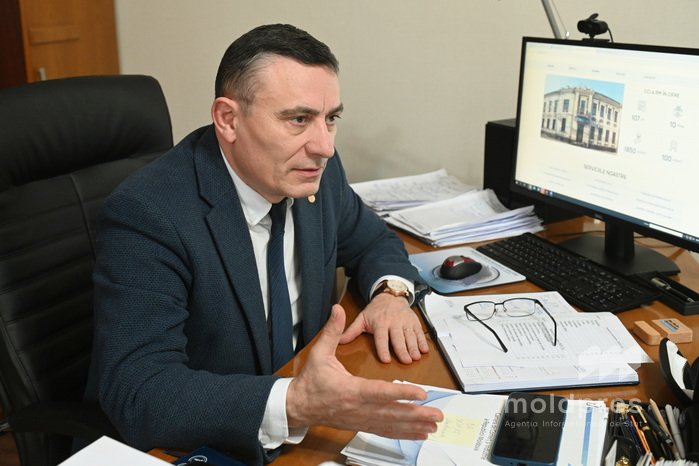
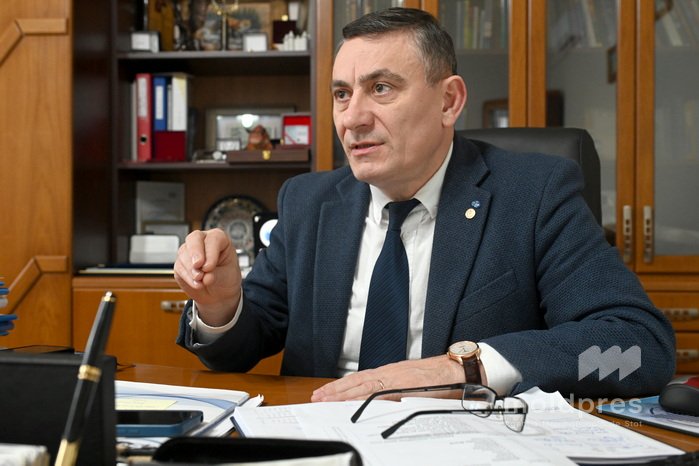
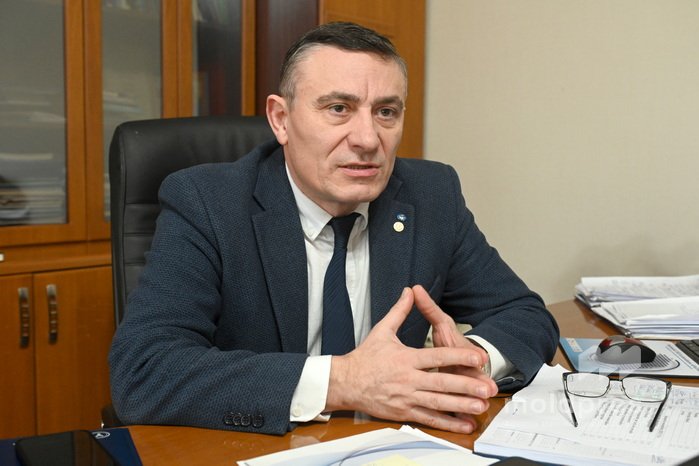
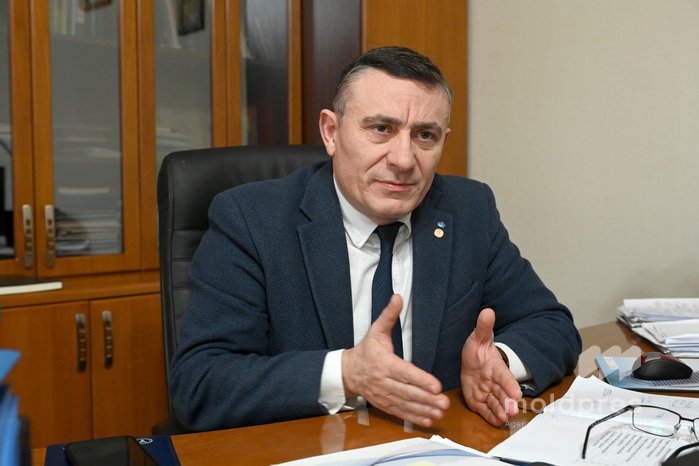
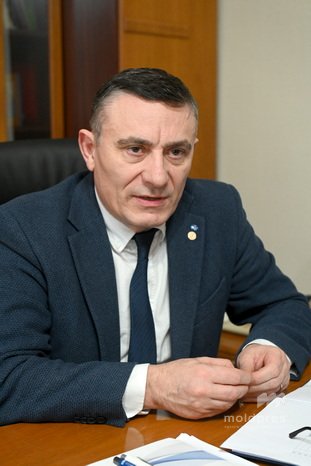
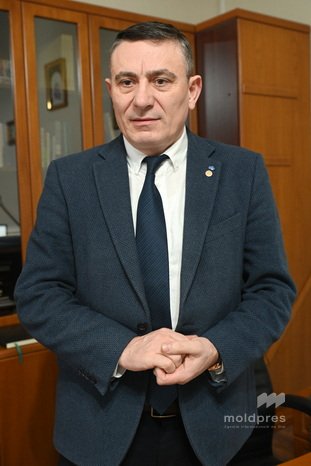
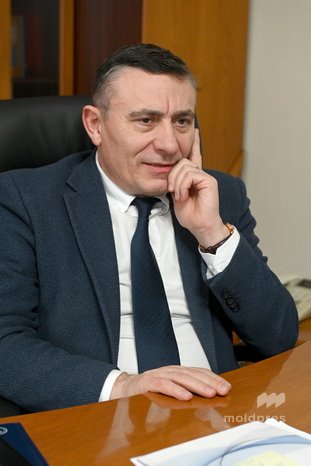
Moldova must use the opportunities provided by the European integration process, in order to attract investment and become more competitive. Despite the existing challenges, it is very important to stay united, consolidate our efforts and move things forward in all sectors of the national economy, by increasing exports and diversifying markets. President of Moldova’s Chamber of Commerce and Industry Sergiu Harea has made statements to this effect in an exclusive interview given with MOLDPRES.

MOLDPRES: The exhibition year 2026 traditionally starts with the Made in Moldova Exhibition, which will take place on 11–15 February and is organized by the Chamber of Commerce and Industry under the patronage of the government. It is a good opportunity to review the results of the past year and promote local producers. What defines this year’s edition and what new elements have the organizers prepared?

Sergiu Harea: The year 2026 marks the 23rd edition of the Made in Moldova Exhibition – the largest exhibition of domestic products held in Moldova. It is organized by the Chamber of Commerce and Industry under the patronage of the government. We have 2,800 square meters of exhibition space in two pavilions of the Moldexpo Center and 300 square meters in the outdoor area.

This year, we will have around 400 participating companies, although the number of applications exceeded 800. The vast majority are small and medium-sized enterprises. We estimate that there will be over 60,000 visitors, both of the country and from abroad.

Through the Investments Agency and the Organization for Entrepreneurship Development (ODA), part of the costs for the rented area and the participation fee paid by entrepreneurs will be covered.

The main priority of our work and of the Made in Moldova exhibition is to support and promote domestic producers. The Chamber of Commerce and Industry will continue to do this in the future, because local businesses are developing, and exhibition activities are the best tool for promoting local products and services. I am sure we will see positive results. Last year, following the exhibition, about 80 contracts were signed between our producers and their partners.

At this year’s edition, unlike previous years, we have two invited countries – strategic trade partners of Moldova: Romania and Ukraine. We are providing them the opportunity to present their country, their activities and their priority sectors.

For the first time, the exhibition will be linked to the global Enterprise Europe Network platform, which will allow the organization of international B2B meetings and access to partners in over 60 countries, thus facilitating the expansion of Moldovan companies to foreign markets. It is a network where you can enter commercial offers and requests for tens or even hundreds of thousands of potential customers. So, we can connect local producers with consumers outside the country.

For the 2026 edition, we are coming with a new exhibition design, through which we also want to promote online trade in local products, which we did not have before.

The exhibition will also include a business forum, with the participation of about 400 companies from Moldova, Romania, Latvia, Ukraine and Serbia. It will take place at the Palace of the Republic on 12 February and will include bilateral meetings. At the same time, the exhibition’s business programme includes more activities dedicated to dual education, which we will promote among companies. We have activities related to women in business, as well as cooperation between the business environment and central and local public authorities.

In addition, the exhibition will include an artistic programme. Practically on all days there will be performances by folk ensembles from more districts of the country.

MOLDPRES: The CCI organizes various actions to promote local products, both in the country and abroad. What additional measures do you think are needed, in order to increase the competitiveness of Moldovan products on foreign markets and raise exports? Which economic sectors have the greatest growth and export potential in the coming years?

Sergiu Harea: To be competitive, we need three factors: a well-trained workforce, high-quality raw materials and modern equipment. These factors allow us to have a final product that is competitive in both price and quality.

Unfortunately, in recent years, more factors, such as the pandemic, the outbreak of war and rising energy prices, have affected the final product, both in terms of price and quality. Logistics costs and inflation came on top of that. Also, the level of investment was lower. State aid launched by the authorities has supported economic agents. As a result of these joint efforts, we now see an increase in exports.

In order to further increase exports, we must invest in labor productivity, technologies and training of workforce. They will lead to greater competitiveness of our products.

Besides, the promotion of local products and producers is equally important. This can be done through different mechanisms – exhibitions, fairs, business forums – and through the dedicated work of those representing the business environment.

It is important to engage economic diplomacy as much as possible, develop it and raise it to the level of a state policy. It needs to have two main components: export promotion and investment attraction. Furthermore, we must bring major investors into the country.

It is also necessary to create a budget, a separate fund for export promotion. In this regard, last year, through the Investments Agency and at the CCI’s initiative, we managed to create export promotion funds and more events of this type have emerged.

As for the countries with the greatest export potential, these are EU member states and Turkey, as well as Middle Eastern countries, such as the United Arab Emirates.

Romania is the top destination for Moldovan exports (about 3 per cent of the total), followed by Turkey (9.35 per cent), Italy, Ukraine, Germany, Bulgaria, Poland, the Russian Federation and Greece.

Exports to EFTA countries have great potential. In the context, last year we organized a mission to promote domestic producers in Norway, and this year we will go to Switzerland.

The products with the largest share in the export structure are electrical machinery and equipment, seeds, vegetables and fruits, cereals, clothing and accessories, alcoholic beverages, furniture, fats and oils. In addition, there is an impressive increase in the export of services, especially in the IT sector.

We aim to promote support measures for the business environment, such as state aid and other programmes, so that we have greater investment in processing, to turn raw materials into finished products with high added value. We need to diversify what we export, both in terms of goods and services and tariff positions, and we also need to diversify markets.

MOLDPRES: What are the main challenges currently faced by the business environment of Moldova and what actions is the Chamber of Commerce and Industry implementing to help entrepreneurs overcome them?

Sergiu Harea: I will refer to more major challenges: the war in Ukraine, global economic instability, regional security challenges that create certain uncertainties, and energy prices. Another challenge is the shortage of labor.

As a chamber institution, for 2026 we have proposed a very ambitious plan consisting of about 200 actions, based on 10 core pillars. We will organize about 50 exhibitions and fairs in the country and abroad, under the brand, Moldova Presents. We will carry out a string of economic missions to promote our producers abroad. The first will be in Germany in the near future, followed by France and Switzerland.

We will also invest in the digitalization of services, so that all our services are in digital format, compared to the current level of about 90 percent provided online.

At the same time, we will promote alternative dispute resolution mechanisms. We will also continue the public–private dialogue, in order to discuss the main challenges faced by entrepreneurs and find solutions.

We will continue supporting industrial development and will organize the third edition of the Pro-Industry Platform. We will further promote the industrialization programme and the state aid program, because if we want to have exports, then we must have industrial products.

Workforce training stays a constant priority for us. In this regard, we plan to expand dual education.

MOLDPRES: What concrete opportunities do you see for attracting foreign investment to Moldova in the coming years and for making the country more attractive to investors?

Sergiu Harea: Attracting investment is a very important element for our further development. We are advancing along the European path, which brings more opportunities, as well as investments, including in infrastructure. We will have to capitalize on them quickly and efficiently.

A draft law on investment attraction, prepared by the Ministry of Economic Development and Digitization, is currently under discussion, and we will have a dialogue to understand what kind of investment we want to attract, how we convince investors to come to Moldova and what we offer these investors to make them choose our country for expanding their activities.

We must invest in the tourism industry, especially in rural and authentic tourism. We must attract investment in the processing industry, in order to export finished products with high added value instead of raw materials. Another important area is investment in the development of irrigation infrastructure to increase agricultural productivity.

MOLDPRES: A highly qualified workforce also plays an important role in this process. What is the situation in this regard and how can we ensure a balance between the need to create new jobs, to maintain them and to motivate people to stay and work at home, so that the country is supplied with professionals in vital fields?

Sergiu Harea: First of all, we must create infrastructure and conditions for people to stay at home, to create businesses in the regions, to develop industrial parks and platforms there. A good example in this respect is the municipality of Ungheni. People there are not leaving. Why? Because it is a free economic zone that was later transformed into an industrial park. There are jobs, good infrastructure and good conditions. People live in good conditions and do not want to leave.

This is what we need to develop across the country. We must develop and replicate such models nationwide.

In addition, educational institutions must train the specialists who are in demand on the labor market. Here, dual education is the most relevant instrument. If you train a professional at a company, 80 per cent of those enrolled in this form of education remain to work at the enterprise and become experienced professionals in the fields in which they studied.

MOLDPRES: As for the dual education, figures show that, in recent years, the number of young people who have opted for this type of studies has increased by 70 percent, from 1,000 people in 2023 to 1,700 in 2025. The authorities intend for this number to continue to grow. What measures do you think are necessary to achieve this goal?

Sergiu Harea: Indeed, in recent years, dual education has experienced quick development. The concept is now being implemented in universities as well. We need to continue in the same direction, because we need a qualified workforce and specialists trained inside companies.

Dual education means 30 per cent of the time spent in the educational institution and 70 per cent at the company. The main pillar of dual education is the master instructor. We must train master instructors and prepare companies to be able to receive young people who will learn at the company. The CCI is currently implementing a programme under which we are training 30 master instructors for 30 enterprises. These are new enterprises included in the dual education system. We must increase the number of such companies. At the same time, we must involve as many vocational schools and colleges as possible in this process, and the incentives offered by the state for dual education must continue.

Young people are already choosing dual education because they study, work and earn money. So, they gain competences, have a job and money in their pocket.

MOLDPRES: In recent years, the authorities have significantly simplified the way of starting and managing businesses by implementing more packages aimed at reducing bureaucracy. Nevertheless, many early-stage entrepreneurs say they still face difficulties. What is your message for them?

Sergiu Harea: Our message for entrepreneurs is simple: we are going through a very difficult period marked by multiple challenges. But precisely under these conditions, it is very important to be united, to consolidate our efforts and to move things forward in all sectors of the national economy.

We must use the opportunities provided by the European integration process and by our accession to more free trade agreements, in order to attract investment and become more competitive.

It is equally important to come up with well-founded ideas and solutions to make the existing business development framework more efficient, so that we have more people, including young people, who want to start businesses in Moldova.

Our accession to the European Union will create many opportunities which must be used to develop businesses in Moldova. When these opportunities are fully capitalized on, we will also see situations where our citizens return home.

MOLDPRES: Moldova is progressing rapidly in the European integration process and, along with this process, new opportunities are opening up through access to pre-accession funds. What solutions does the Chamber of Commerce and Industry propose to support local entrepreneurs in preparing to access this funding?

Sergiu Harea: I have had more meetings with Marta Kos, the European Commissioner for Enlargement, during which she said that we must be prepared to access these pre-accession funds.

Through Eurochambres, we have put forward an initiative to launch a project supported by the European Commission, that would help us teach entrepreneurs and our associations how to apply for these pre-accession funds.

This will be possible once our negotiations are officially opened and will allow us, through Eurochambres, to learn from the experience of Romania, Slovenia and other countries that have gone through these stages and benefited from pre-accession funds.

But until then, it is important to do our homework, to learn so that we can make use of the opportunities offered to us.

Mr. Sergiu Harea, thank you for the interview.

Reporter: Natalia Sandu
 Facebook
 Instagram
 X/Twitter
 Telegram
MOLDPRES INTERVIEW // ANSC Director: We make sure that path of public money to hospitals, schools or infrastructure fair and transparent
MOLDPRES INTERVIEW // Vice President of Romanian Academy says academic, research environment of Moldova advanced, can be efficiently integrated into European, international structures
MOLDPRES INTERVIEW // Rector of University from Romanian city says if someone overturns your history, national identity, it means you don’t have enough knowledge
MOLDPRES INTERVIEW // Director of South Regional Development Agency says Agency creating better living conditions, easier life for thousands of residents
MOLDPRES INTERVIEW // Lithuanian Ambassador about prospects of Moldova’s EU accession: If you make things real, they will become achievable
MOLDPRES INTERVIEW // Moldovan finance minister says government aims to modernize financial system for benefit of businesses, citizens
MOLDPRES INTERVIEW // Ambassador of State of Qatar to Moldova: We are working to improve ways of attracting Qatari investors to Moldovan market
MOLDPRES Interview // Minister of Internal Affairs: Interior Ministry applies European security standards and is ready to advance in EU accession process
MOLDPRES INTERVIEW // Moldovan energy minister says foremost interest citizens to have secure energy at affordable prices
Moldovan justice minister says, according to European Commission’s Report, Moldova made greatest progress among EU candidate states, including in justice field
INTERVIEW MOLDPRES // Moldovan defense minister says Russia's war in Ukraine highlighted vulnerability of defense sector, need of building strong, prepared, resilient army to current challenges
INTERVIEW WITH MOLDPRES // Deputy PM says wants Moldova where a child from any village has same opportunities as a child from Chisinau
INTERVIEW MOLDPRES // Deputy Prime Minister on Ukraine Peace Agreement: No discussion about Moldova can take place without Chișinău's participation
INTERVIEW MOLDPRES // Moldovan agriculture and food industry minister says European integration fundamentally changes way leadership supports agriculture
Cooperation between Moldova, International IDEA discussed in Chisinau
Moldovan president to visit Hungary
Moldova's parliament speaker calls on Moldovan, Ukrainian border authorities to find solutions to prevent incidents on Dniester
Moldovan foreign affairs minister meets Argentina’s Ambassador
 National Bank of Moldova
Summary of Moldovan parliament's plenary meeting held on October 22, 2026
Balti city mayor to be assisted by own cabinet; Moldovan parliament passes relevant draft in first reading
Moldovan MPs vote on draft on tax, customs facilities for import of 24 musical instruments meant for national collection of musical instruments
Moldovan parliament votes in first reading: construction of Straseni–Gutinas power line, modernization of Straseni substation to be declared of national public utility
Access to education, quality public services in focus during visits by secretary general for reintegration to Tiraspol, Bender, Varnita

Access to education, quality public services in focus during visits by secretary general for reintegration to Tiraspol, Bender, Varnita
Romania's new PM to pay first visit to Chisinau on October 27
Moldovan parliament adopts fiscal, customs policy package for 2027
Moldovan government's deputy secretary general says Moldova’s European path runs through country's villages, benefits of reforms must be felt locally
Cooperation between Moldova, International IDEA discussed in Chisinau
Moldovan president to visit Hungary
Adopted by parliament: taxi platforms to be required to process payments through financial institutions licenced in Moldova
Access to cadastral information extended to more categories of individuals, institutions in Moldova
Persons with disabilities since childhood to be able to combine disability, survivor’s pensions; Moldovan parliament adopts relevant draft
Works for modernization of district heating systems from Chisinau, Balti declared to be of national public interest
Moldova's parliament speaker calls on Moldovan, Ukrainian border authorities to find solutions to prevent incidents on Dniester
Moldovan foreign affairs minister meets Argentina’s Ambassador
PHOTO GALLERY // Moldova Team for Dakar 2026 Youth Olympic Games officially presented
Moldovan parliament speaker announces solutions to protect personal data, control payments after journalistic investigation into taxi platform
Speaker after Constitutional Court’s decision in von Hebel case: We will amend law where necessary
Environmental impact, energy efficiency made mandatory when purchasing vehicles with public funds in Moldova
Receive the latest news directly to your email

Receive the latest news directly to your email