
MOLDPRES INTERVIEW // Slovak Ambassador: Moldova deserves to be part of EU in near future. It can complete accession process by 2030
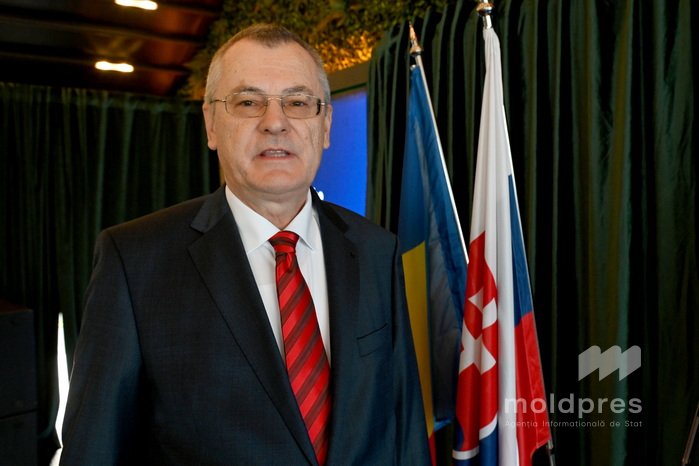
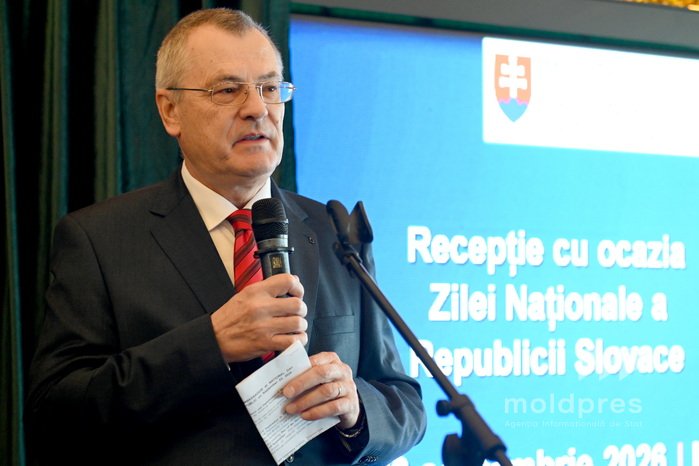
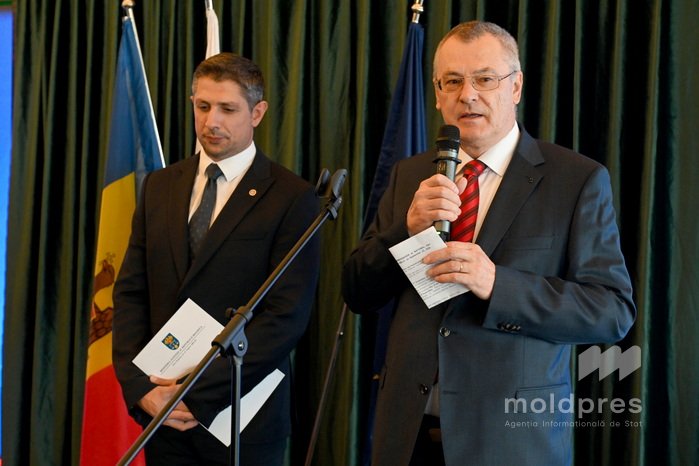
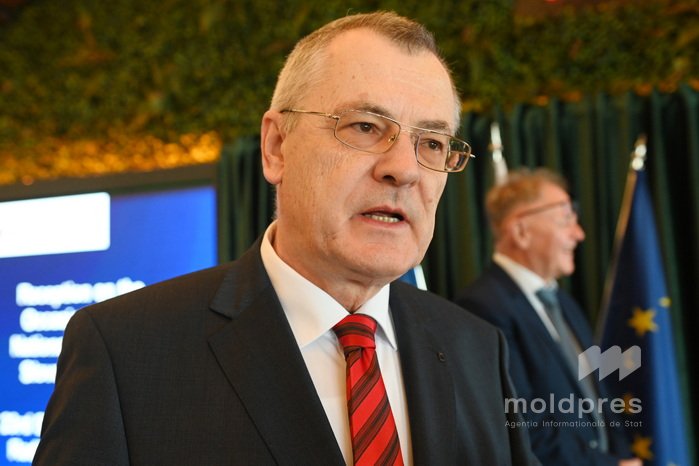
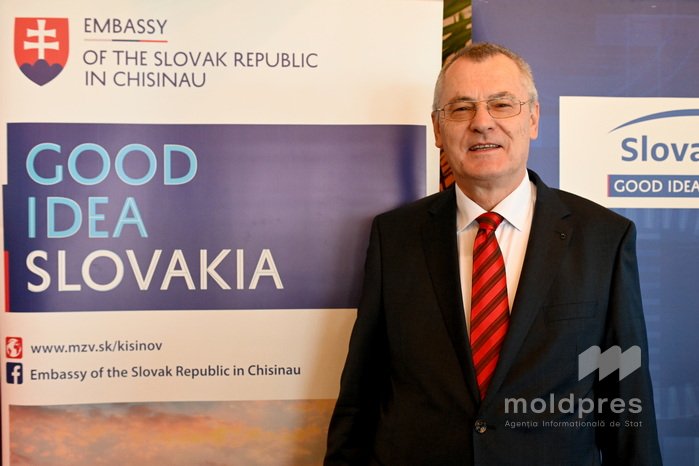
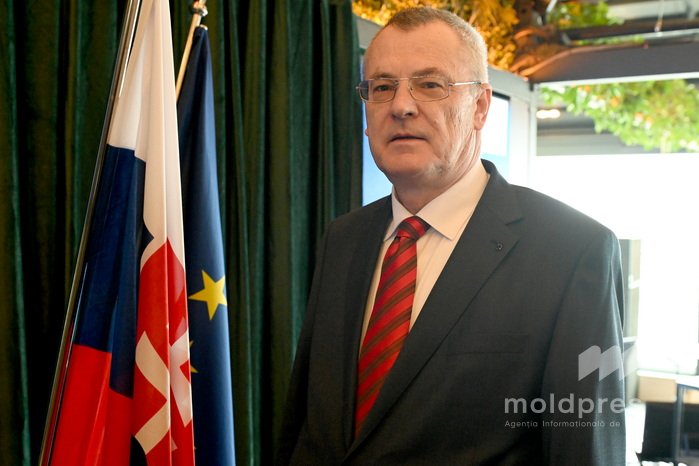
The Slovak Republic celebrated its National Day, and on Wednesday evening, Ambassador of Slovakia to the Republic of Moldova Pavol Ivan hosted a reception dedicated to the occasion. In an exclusive interview with MOLDPRES, the ambassador spoke about relations between the two countries, Slovakia’s support for the Republic of Moldova’s European path, and the experience that Bratislava is ready to share in the accession to the European Union.
Pavol Ivan stressed that Slovakia has consistently supported the European aspirations of the Republic of Moldova and is supporting the accession process by sharing its expertise and practical experience gained during its own European integration. The ambassador believes that the Republic of Moldova can complete the accession process by 2030, noting, however, that this objective depends first and foremost on the quality and consistency of reforms implemented at the national level.
“Moldova deserves to become part of the EU in the near future,” Pavol Ivan said.
The diplomat also highlighted the prospects for even closer cooperation between Chișinău and Bratislava following the Republic of Moldova’s accession to the European Union. According to the ambassador, the partnership between the two countries could expand into areas such as economic development, innovation, education and agriculture.
“Our shared goal is a prosperous, secure and united Europe,” Pavol Ivan said.
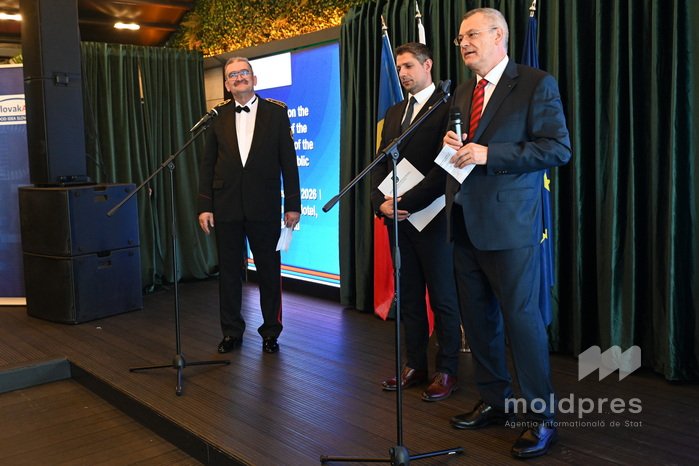
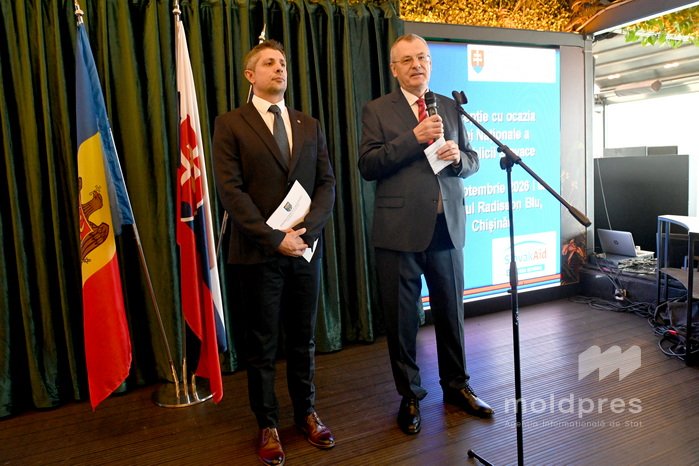
MOLDPRES: Your Excellency, our interview is taking place on National Day of the Slovak Republic. What does this day mean for Slovak citizens everywhere, and what message would you like to convey to the public in the Republic of Moldova on this festive occasion?Pavol Ivan: Yes indeed. On Wednesday 23rd of September I and my wife hosted official reception on the occasion of the National day of the Slovak Republic – Constitution Day.
It was actually on 1 September 1992 that the Slovak National Council adopted the new Constitution which four months later became Basic Law of the newly born independent state: Slovak Republic with capital city of Bratislava (after split of the former Czechoslovakia).
As we organized our reception together with Defence Attaché office accredited in the Republic of Moldova, we were pleased to mark another important milestone in the history of Slovakia: Day of the Slovak Armed forces which is celebrated every year on September 22.
Our National Day holds deep significance for the Slovak people. It reflects the aspirations of generations of Slovaks who, over many years and even centuries, strived for freedom, self-determination, and the right to shape their own future.
The establishment of an independent Slovak state fulfilled a long-standing national dream to govern our own affairs and take responsibility for our country's development.
At the same time it is important for every young and democratic country to be responsible, constructive and active partner towards international community and especially with our/your neighbours.
On this festive opportunity I would like to say that it is a short period for my country and also for your country – Republic of Moldova as we successfully build our independent state for 34 respectively 35 years only.
Moldova people last month celebrated 35th Anniversary of its independence.
On this occasion Slovak President congratulated President of the Republic of Moldova and in his message wished all the best for your country and for all Moldovans especially successful social-economic development, well-being, peace and stability.
MOLDPRES: The Republic of Moldova is currently in the midst of negotiations for accession to the European Union. From Bratislava’s perspective, what are the priority reforms that Chișinău needs to speed up in the near future, and what does Slovakia’s support in this process entail in practical terms?Pavol Ivan: I think Moldovan Government and your authorities know very well which are current most important and relevant priorities in this respect.
They are well-known from negotiations, discussions with EU/European Commission and have been reflected in respective EU public reports.
From my point of view the most relevant are social-economic reforms, modernization of Moldovan Industry and Agricultural Sector and of course continuation of Judiciary reforms as for successful accession is imperative to have efficient rule of law and respect to democratic values and Copenhagen criteria.
In connection with Integration and Accession process of the Republic of Moldova I wish to point out that Slovakia supports Moldova’s EU accession process by sharing its practical experience and expertise from EU integration.
Through the EU’s TAIEX programme, Slovak experts in intellectual property, public finance and statistics exchanged know-how with their Moldovan counterparts in Chisinau, while representatives of Moldova’s State Agency on Intellectual Property (AGEPI) also took part in a study visit to Slovakia.
Slovakia and Spain are currently jointly implementing an EU Twinning project aimed at strengthening the capacity of Moldova’s State Labour Inspectorate and supporting the country’s alignment with EU labour standards.
Furthermore, Slovakia together with Germany, Lithuania and Latvia implement another EU Twinning project focused on modernising public financial management and financial control.
SlovakAid, in partnership with Expertise France and CzechAid, have launched an EU Delegated Cooperation project aimed at improving Moldova’s access to the EU Single Market and advancing the reform of state-owned enterprises, supporting the country’s broader EU integration agenda.
Moldova deserves to be part of the EU in near future.
It depends on your work at home, especially on quality and consistency of Moldovan reforms.
I think that Republic of Moldova is able to implement them in time and to complete its accession stage by 2030.
Further process will also depend on the whole EU enlargement process and how the EU will be ready for a new member states in the new financial period (2028-2034).
MOLDPRES: Slovakia has already made the transition from candidate country to member state of the European Union. What is the most important lesson from the negotiation period you can share with Chișinău authorities, particularly regarding the reform of public administration and the judiciary, as well as the strengthening of institutional capacity to effectively absorb European funds?Pavol Ivan: The political, social-economic transformation and related several reforms were successfully made in Slovakia two decades ago. That was important for entry of Slovakia to the European Union.
Slovakia became full member of the EU on 1st of May 2004. We are part of the EU for over 22 years.
The most important lessons from Slovakia´s accession to the EU is to know that the whole society, country was seeking and wanted to join EU and to be integrated in EU common market and joint space of democracy, rule of law and single market.
Today Slovakia belongs to those EU 27 member states which are incorporated within Schengen area and also having EURO as its own currency (since 2009).
Therefore integration and accession process together with negotiations in 6 clusters (33 chapters) demands responsible, professional approach and sufficient patience.
Some of the chapters might be particularly challenging and not easy for Moldovan experts and negotiators in order to conclude them and at the same time to protect the interests of the Moldovan economy, farmers, winemakers and producers.
Your Government and Deputy Prime Minister office for EU integration so far are doing their work and job very good.
Moldova already opened two clusters and is ready to open the other four clusters.
All EU member countries and especially those from Central and Eastern Europe assisting Moldova in accession and integration process by different means including transfer of our expertise and experience.
Sharing and applying them by your experts, Moldova may avoid to repeat some mistakes which were made by my country and maybe others.
MOLDPRES: In light of the war in Ukraine and incidents involving the region’s airspace, security has become an absolute priority. In what specific areas can Slovakia offer expertise and support to the Republic of Moldova to strengthen its resilience and national security?Pavol Ivan: Slovakia as a EU and NATO member is fully committed in supporting national sovereignty, territorial integrity and independence of the Republic of Moldova.
We contribute to the several programs and projects implemented and or to be fulfilled for Moldova including through European Peace Facility instrument.
On bilateral basis we also looking for areas and possible joint activities through Interior and Defence ministries as well.
Deputy Prime Minister and Minister of Defence of the Slovak Republic, Robert Kaliňák, paid an official bilateral visit to the Republic of Moldova on 25-26 May 2026.
During his visit, he held meetings with then Prime Minister Alexandru Munteanu and Minister of Defence Anatolie Nosatîi, focusing on bilateral defence cooperation, regional security, and Moldova’s European integration agenda.
MOLDPRES: How do you currently assess bilateral trade, and which sectors of the Moldovan economy do you believe have the greatest potential to attract Slovak investment in the coming period?Pavol Ivan: Economic relations between Slovakia and Moldova have been developing steadily in recent years.
The mutual bilateral trade more than tripled between 2021 and 2025, reaching a record turnover of EUR 227 millions in 2024 and remained at a high level of EUR 223 millions in 2025.
Our bilateral trade is increasingly focused on industrial products with higher added value.
Slovak exports to Moldova consist mainly of machinery and electrical equipment, vehicles, and textile products.
Imports from Moldova are dominated by machinery and electrical equipment, particularly cables, wires and transformers, which account for nearly 80% of total imports from Moldova.
The untapped potential for future collaboration between our countries lies in automotive industry, agriculture sector, water and waste management, energy efficiency and renewable energy domains.
In March this year, Bratislava hosted the Slovak-Moldovan Business Forum alongside the state visit of Moldovan President Maia Sandu to Slovakia, bringing together political leaders and business representatives from both countries.
The event featured addresses by both Slovak and Moldovan Presidents as well as the respective economic ministers.
With nearly 30 Moldovan companies participating, the forum created valuable opportunities for new partnerships and business contacts.
The event demonstrated the growing interest in strengthening economic ties and the potential to generate further growth in bilateral trade.
Cooperation memoranda were also signed between Invest Moldova and its Slovak counterpart SARIO, as well as between the Chambers of Commerce and Industry of the Republic of Moldova and the Republic of Slovakia.
In addition, the Interministerial Consultative Council between the Ministries of Economy of Slovakia and Moldova serves as an important platform for regular dialogue for bilateral economic cooperation.
One of priorities of my diplomatic Mission and Embassy´s activities is and remains – bilateral official development program (ODA) and concrete assistance to Moldova infrastructure, city/village regional development (from Soroca up to Taraclia and Gagauzia in South, from Nisporeni and Calarasi to Criuleni).
Moldova has been SlovakAid priority partner country since 2014.
Slovakia provides development assistance through grant schemes, financial contributions and Small Grants projects aimed at supporting local communities and regional development.
Over the years, Slovakia has implemented the projects focused on afforestation and sustainable forest management in cooperation with Moldsilva and the ICAS Institute for Forestry Research and Management Planning.
Slovakia has also been actively supporting Moldova's efforts to improve energy efficiency.
For example, we provided a financial contribution of 375,000 EUR to the Ministry of Energy of the Republic of Moldova to support energy-efficiency measures through the thermal insulation of the tallest residential building in the city of Balti.
In addition, two secondary schools in northern Moldova underwent thermal renovation to reduce energy consumption.
In the area of water supply, the project “Sustainable Drinking Water for Bălți” has recently been initiated, which involves the replacement of three outdated water pumping units to ensure a stable drinking water supply for Balti residents.
Through its Small Grants scheme, Slovakia supports regional development across Moldova, particularly in the fields of education, healthcare, environmental protection and community development.
MOLDPRES: How do you see the future of the partnership between Chișinău and Bratislava within the European family and how has the daily life of Slovak citizens specifically changed since your country’s accession to the European Union?Pavol Ivan: Slovakia has consistently supported Moldova’s European aspirations and will continue to share its experience from the accession process and EU membership.
Our shared goal is a prosperous, secure, and united Europe.
Looking ahead, I see potential for even deeper cooperation between Slovakia and Moldova within the European family.
Once Moldova becomes a member of the European Union, our partnership can expand further, particularly in the areas of economic development, innovation, education, and agriculture sector.
For Moldovans is not a secret that entry of any country into the EU brings several tangible benefits and helping a new member states to develop their economies, to improve infrastructure and to modernize their industries.
At the same time it gives new opportunities for business community, for students and universities for joint projects and for mutually beneficial exchanges and establish a new cooperation ties between countries, nations and regions.
Daily life is not going to change immediately after entry of any country into the EU.
It depends on active and consistent work of the government, private business sector and on synergy of the main sectors of the society.
Positive clear improvement of daily life and concrete results will be visible gradually not at once, but after some period.
MOLDPRES: What message would you like to convey to the citizens of the Republic of Moldova, after spending more than four years in our country?Pavol Ivan: Together with my wife we spent 4 years and 7 months in your beautiful country. For this period Chisinau has become our second home city. My diplomatic Mission – assignment in Moldova is coming to an end. My mandate will finish at the end of next month. I would like to take this opportunity to thank all our Moldovan friends and partners for close, excellent and fruitful cooperation and for friendly communication.
We enjoyed our stay in Moldova and we will miss many interesting places in Chisinau and in the regions. When we return home to Slovakia, to Bratislava, we will remain true friends of Moldova. We highly appreciate the Moldovan friendship, hospitality, tolerance and positive spirit.
I wish Moldova and Moldovan people every success on your European path, for successful development of your country at home and keeping Moldovan spirit and national identity within the European family of free and democratic nations.
The Republic of Moldova and the Slovak Republic established diplomatic relations on 16 February 1993, and since then bilateral cooperation has developed across several areas, including political, economic, European integration and security. Slovakia, a member of the European Union and NATO, supports the Republic of Moldova’s European path and shares its experience gained through the process of accession and European integration. Every year, on 1 September, Slovakia celebrates Constitution Day, a national holiday commemorating the adoption of the Constitution of the Slovak Republic by the Slovak National Council in 1992.
 Facebook
 Instagram
 X/Twitter
 Telegram
MOLDPRES INTERVIEW // Lithuanian Ambassador about prospects of Moldova’s EU accession: If you make things real, they will become achievable
MOLDPRES INTERVIEW // Moldovan finance minister says government aims to modernize financial system for benefit of businesses, citizens
MOLDPRES INTERVIEW // Ambassador of State of Qatar to Moldova: We are working to improve ways of attracting Qatari investors to Moldovan market
MOLDPRES INTERVIEW // President of Moldova's Chamber of Commerce and Industry says country must use opportunities provided by European integration to attract investments, become competitive
MOLDPRES Interview // Minister of Internal Affairs: Interior Ministry applies European security standards and is ready to advance in EU accession process
MOLDPRES INTERVIEW // Moldovan energy minister says foremost interest citizens to have secure energy at affordable prices
Moldovan justice minister says, according to European Commission’s Report, Moldova made greatest progress among EU candidate states, including in justice field
INTERVIEW MOLDPRES // Moldovan defense minister says Russia's war in Ukraine highlighted vulnerability of defense sector, need of building strong, prepared, resilient army to current challenges
INTERVIEW WITH MOLDPRES // Deputy PM says wants Moldova where a child from any village has same opportunities as a child from Chisinau
INTERVIEW MOLDPRES // Deputy Prime Minister on Ukraine Peace Agreement: No discussion about Moldova can take place without Chișinău's participation
INTERVIEW MOLDPRES // Moldovan agriculture and food industry minister says European integration fundamentally changes way leadership supports agriculture
INTERVIEW MOLDPRES // Romania's Ambassador in Chisinau says Moldova to never be alone in its efforts, Romania to stand by its side
MOLDPRES INTERVIEW // Romanian culture minister says culture adds value, rebuilds trust
MOLDPRES interview // IGP head: Russia whether through Ilan Shor or other means to constantly try to find ways to create disorder and destabilization
MOLDPRES INTERVIEW // Slovak Ambassador: Moldova deserves to be part of EU in near future. It can complete accession process by 2030
VIDEO // Russia tried to destabilize our country and spent hundreds of millions of dollars for this purpose. Moldova resisted, Prime Minister says
More than 50 UN member states called on Russia for complete, immediate and unconditional ceasefire in Ukraine
VIDEO // Prime Minister - interview with CNN: We welcome United States involved in energy support projects for Moldova
Moldovan parliament speaker says Russia triggers tensions, seeks to sow fear by unauthorized overflights of airspace
Moldova discusses strengthening airspace protection capabilities with Romania and Ukraine, Speaker says
Republic of Moldova reaffirms commitment to refugee protection at UN meeting dedicated to 1951 Convention
 National Bank of Moldova
Moldovan president's speech at ceremony marking 80th anniversary of founding of State University of Moldova, centenary of Romanian university education in Bessarabia
Parliament votes, in first reading, on legislative measures to strengthen independence of National Bank of Moldova in line with European standards
Moldovan parliament adopts legislative amendments to make procedure for selecting, appointing candidates for position of Constitutional Court judge more transparent
Medical, pharmaceutical qualifications got in EU to be able to be recognized in Moldova; parliament adopts draft law
Caps for foreign exchange operations without National Bank's authorization to increase gradually; Moldovan parliament passes draft in second reading

Parliament votes, in first reading, on legislative measures to strengthen independence of National Bank of Moldova in line with European standards
Moldovan parliament adopts legislative amendments to make procedure for selecting, appointing candidates for position of Constitutional Court judge more transparent
Medical, pharmaceutical qualifications got in EU to be able to be recognized in Moldova; parliament adopts draft law
Caps for foreign exchange operations without National Bank's authorization to increase gradually; Moldovan parliament passes draft in second reading
Enhanced protection for persons targeted by abusive lawsuits: Moldovan parliament votes on anti-SLAPP legislative package in second reading
Drone found in Florești had onboard camera, features specific to Gerbera type
Emotional moment in Parliament: six children opened plenary session with special sign language performance
Republic of Moldova and UNESCO to strengthen cooperation in education, culture and combating information manipulation
Foreign Ministry deems violation of airspace by Russian drones inadmissible
Draft decisions with environmental impact compiled in new section on EcoContact
Speaker condemns drone incidents recorded this morning
President condemns violation of Moldova’s airspace by Russian drones: Russia’s war puts all of Europe at risk
Deputy Prime Minister at Crimea Platform Summit: Russia’s aggression affects security and stability of all Europe
Moldovan, Norwegian Prime Ministers approach bilateral partnership
Corneliu Dudnic, Alexandr Stoianoglo file documents to run for office of Gagauzia's bashkan
Judicial reform, rule of law in focus of discussions between Moldovan president, new Head of Council of Europe Office
Receive the latest news directly to your email

Receive the latest news directly to your email