

MOLDPRES INTERVIEW // ANSC Director: We make sure that path of public money to hospitals, schools or infrastructure fair and transparent
The mechanism for resolving complaints in the public procurement is becoming an essential element for ensuring transparency and the efficient use of public funds, in the context of the broad reforms launched in recent years and our country’s path toward European integration. As of 1 April 2026, a new law will enter into force, changing the way complaints submitted by economic operators are examined, by introducing modernized procedures and rules aligned with European Union standards.
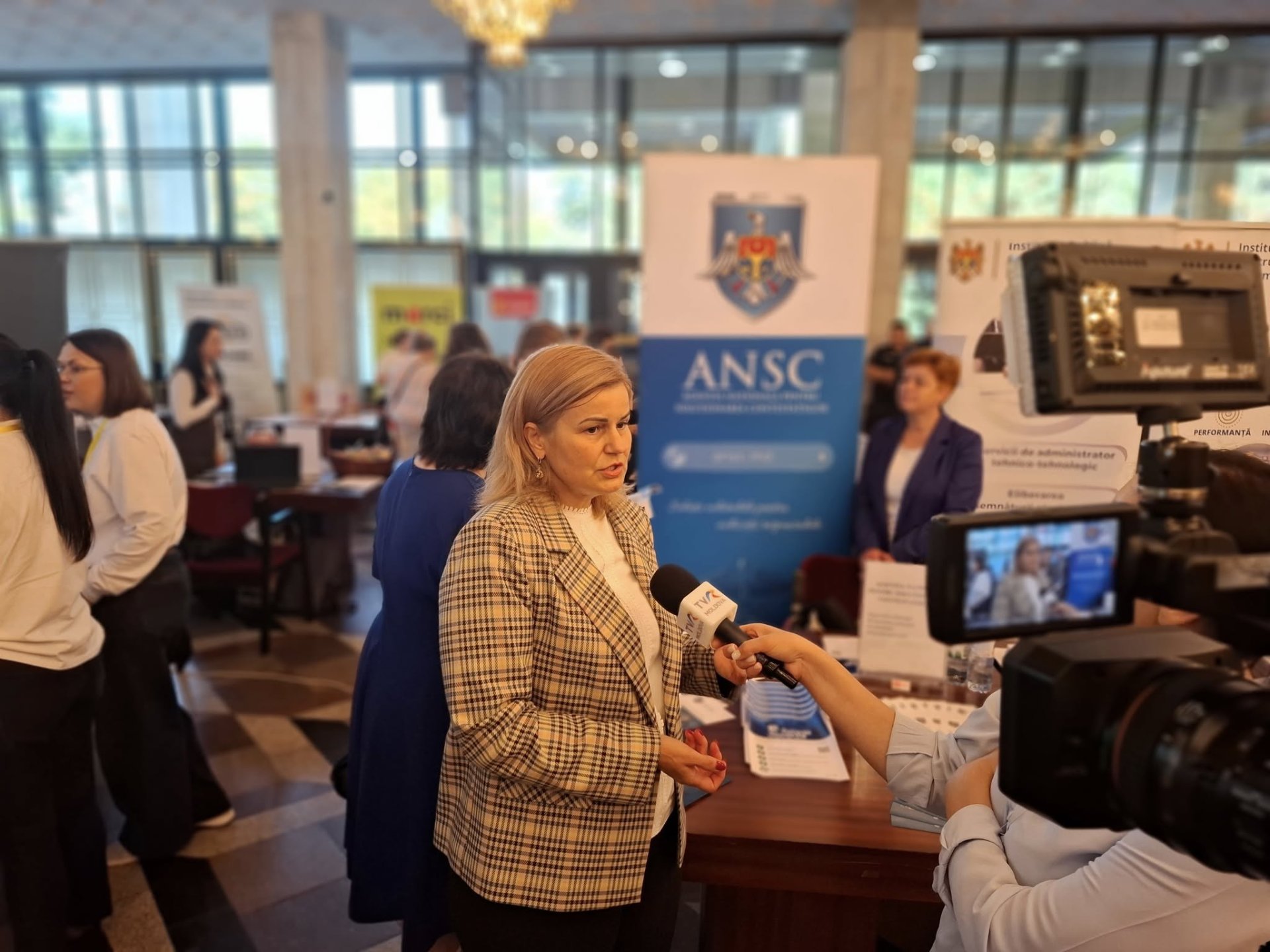
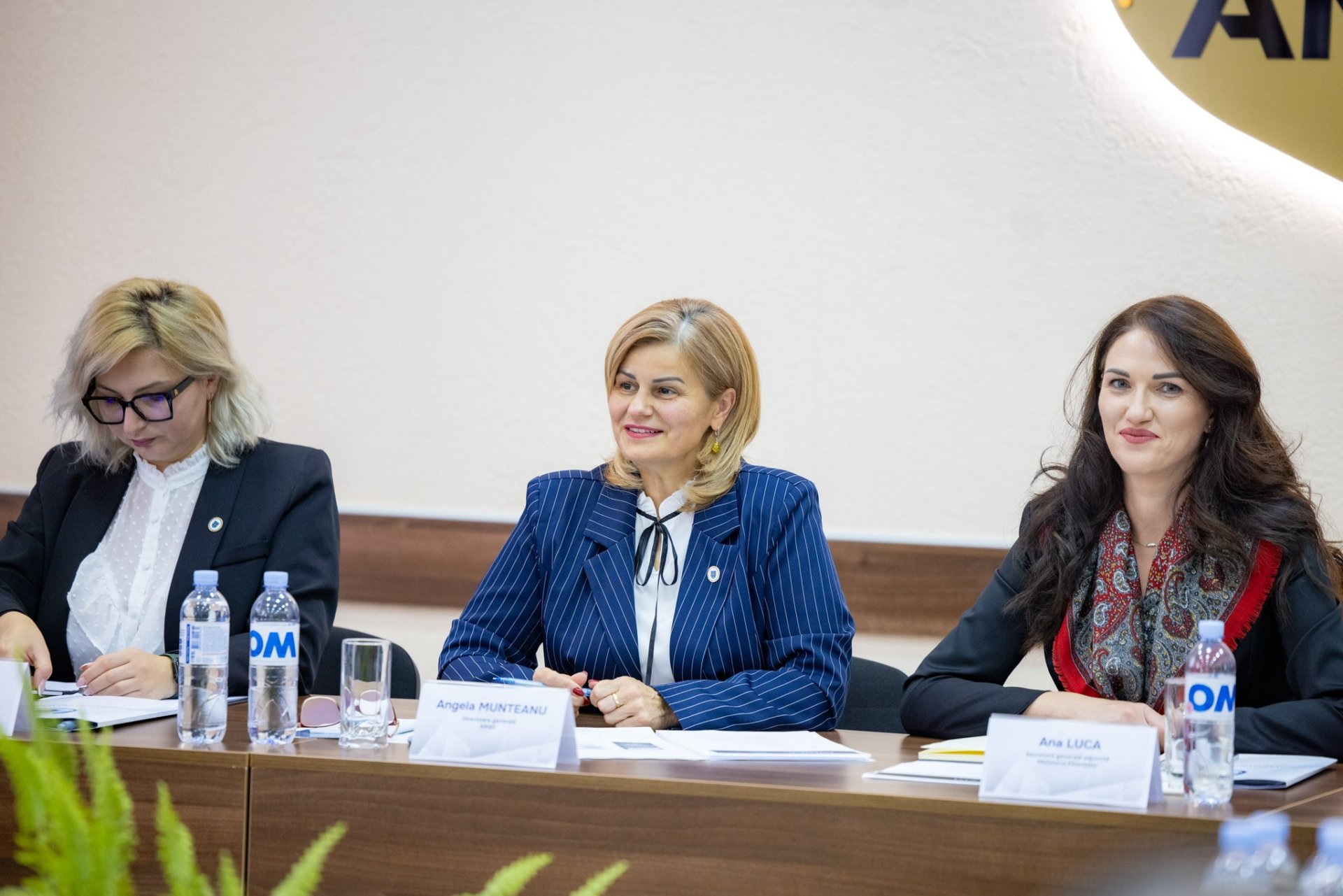
In an interview given to MOLDPRES, Director General of the National Agency for Settlement of Complaints (ANSC) Angela Munteanu explained the main legislative changes to be introduced, the evolution of complaints in recent years, the most frequent irregularities identified in public procurement procedures, as well as the financial impact of the institution’s activity and ANSC’s strategic objectives for the coming period.
MOLDPRES: New rules for resolving complaints in public procurement will be applied starting 1 April. What are the main changes that will be implemented?
Angela Munteanu: ANSC is the institution to which any economic operator who participates in a tender and believes that its rights have been infringed may turn. In practice, we ensure that the path from the public budget to hospitals, schools or infrastructure is a fair and transparent one. Our activity lies at the intersection of good governance, public finance and case law, playing an important role in maintaining a healthy investment climate. In more than nine years of activity, we have proven to be a pillar of integrity, and now, with the country’s EU accession path, our mission gains an even more pronounced strategic dimension.
Indeed, as of 1 April 2026, the Law on Remedies and Means of Redress in the Award of Public Procurement, Sectoral and Concession Contracts will enter into force. This legal act is a fundamental pillar for modernizing the system and aligns the Republic of Moldova with European standards. For the first time since our establishment, we will operate within a dedicated, modern and coherent normative framework, which confirms our role as an autonomous and independent authority. The change of our name to the National Authority for the Settlement of Complaints (ANSC) comes along with a profound transformation of the way we operate.
The reform brings important structural changes: the position of adviser will become that of member, and cases will be resolved by specially constituted panels appointed for fixed terms. To guarantee absolute impartiality, we are implementing the mechanism of “random allocation of complaints”, a system inspired by judicial practice, which removes any subjective factor. It is not just a change of name, but a redefinition of our activity through which we protect the rights of economic operators.
This redefinition of the way we work is coupled with increased predictability of deadlines: complaints will be resolved within 20 days for public and sectoral procurement and 35 days for concessions. A major benefit is the introduction of an 11-day “standstill” period between the designation of the winner and the signing of the contract, giving participants the necessary 10 days to identify possible errors and submit complaints. Through these new rules, ANSC becomes a more agile partner for the business environment, providing a legal framework adapted to current transparency and open-governance requirements.
MOLDPRES: The National Agency for Settlement of Complaints has the mission of promptly and impartially resolving complaints submitted by economic operators participating in public procurement, contributing to the proper use of public funds. What measures is the Agency taking to ensure transparency in the examination of complaints?
Angela Munteanu: Transparency is not a slogan, but a way of working. Over the last year, we have evolved from simple legal compliance to a proactive communication strategy on all levels. One indicator of the success of this approach is the significant decrease in the number of formal requests for access to information – from 24 in 2024 to just 5 in 2025. This decrease does not indicate low public interest, but rather that information of public interest is already provided ex officio, in open format. We have turned our website (www.ansc.md) into a reference tool, where we systematically publish not only decisions but also the meeting agenda, activity reports and monthly infographics that translate technical data into information accessible to the general public.
A constant dimension of our transparency is the organization of open meetings. Although the law provides for written procedure, we encourage the participation of the parties so that they can present their arguments before the members of the decision-making panel. In 2025, we organized more than 160 such public meetings, ensuring an authentic adversarial process and eliminating any perception of “closed doors”.
ANSC’s transparency is multidirectional: we are predictable for economic operators, open to civil society through data access, and credible to international partners. Internally, we have strengthened this dialogue through active cooperation with civil society and the business community, organizing roundtables that allow us to receive direct feedback. We have launched new tools such as the monthly Newsletter and quarterly Information Bulletins, which explain complex cases in simple language. The effectiveness of these actions is confirmed by the fact that, in 2025, we did not register any sanction or decision challenged for non-compliance with the Law on Transparency in the Decision-Making Process.At the international level, ANSC has consolidated its profile as a trusted partner. We are honored to participate as an observer in the International Network of Public Procurement Review Bodies. This presence, together with the strategic partnership with the National Council for the Settlement of Complaints of Romania, facilitates the exchange of expertise in the application of European directives and the case law of the Court of Justice of the EU. This affiliation allows us to import global best practices and to offer a dispute resolution process aligned with international integrity standards.
On the eve of our 10th anniversary, which we will mark in December this year, we aim to move to a higher level of transparency by fully digitizing the decision-making flow. Our goal is for every stage of a complaint to be monitored in real time, eliminating any room for opacity and giving society a digital “magnifying glass” over how public money is protected.MOLDPRES: How has the number and typology of complaints submitted to the National Agency for Settlement of Complaints evolved in recent years, and what trends do you observe in this regard?
Angela Munteanu: A retrospective analysis of the last three years shows us an interesting dynamic in the complaint resolution system. While in 2023 we registered 1,012 complaints, 2024 saw an increase to 1,245 cases, and in 2025 the total number slightly eased to 1,206 complaints. This decrease does not indicate a decline in economic activity, but rather an improvement in the quality of tender documentation and the bids submitted.
A major structural change was triggered by the introduction of the state fee for filing a complaint, in June 2025. Initially, the fee amounted to 0.5% of the value of the entire procedure, and starting from February 2026 we witnessed a refinement of the legislation aimed at ensuring more equitable access to justice. Thus, currently, for complaints concerning the evaluation results of bids, in procedures divided into lots, the fee is calculated only in relation to the contested lot or group of lots, being capped between a minimum of 1,500 lei and a maximum of 50,000 lei. If the complaint concerns the tender documentation, the fee is still calculated from the estimated value of the entire procedure, just as it is calculated for complaints regarding procedures not divided into lots. It is essential to mention that payment of the fee is one of the mandatory conditions for ANSC to accept the complaint for examination, and the fee must be paid within a maximum of three days from the date of submission.
Our comparative data are telling regarding the impact of this measure on the health of the procurement system: while in the first half of 2025 we recorded a monthly average of 131 complaints, after the implementation of the fee, in the second half of the year this average dropped to about 72 cases per month. This economic filter has not restricted the right to defense but has discouraged “blocking complaints” that unjustifiably delayed vital public projects. Economic operators have become much more selective and professional, focusing on reporting substantial legal violations, which gives greater weight and relevance to each case examined by ANSC.
As for typology, complaints against the results of procurement procedures remain dominant, accounting consistently for over 85–90% of all cases in the last three years. However, we are seeing a trend towards increasing technical complexity of the files. Although the raw number has decreased, the effort required for examination has increased, as current disputes concern extremely specific technical details, especially in the fields of construction and medical equipment, where the financial and social stakes are crucial.The efficiency of our dispute-resolution mechanism has visibly improved over this period. While in 2023 and 2024 deadlines were often under pressure due to the large volume of cases, in 2025 we managed to reach an average time for resolution on the merits of 18.3 working days. Moreover, the proportion of complaints resolved within a period not exceeding 18 days reached 40.78%. These figures confirm that the institution has managed to turn the quantitative decrease in cases into a qualitative leap in speed and decisional accuracy.
At the same time, the quality of our decision-making is confirmed by judicial review: of the 962 decisions adopted in 2024, only 37 were challenged in court, and in only two of these cases were the operators’ claims upheld. The same rigor was maintained in 2025, when, out of a total of 1,128 decisions, only 46 reached the courts; the judiciary upheld the soundness of our decisions in almost all cases, with only two exceptions where the claims were admitted. This consistent trend not only attests to the legality and quality of ANSC’s decisions, but also plays a key role in consolidating a uniform and predictable judicial practice in the field of public procurement in the Republic of Moldova.
MOLDPRES: Which sectors are most frequently targeted in the complaints submitted by economic operators participating in public procurement, and what is the value of these procurements?
Angela Munteanu: The financial impact of our activity is of national proportions. Over our nine years of activity, the total value of procurement procedures that have passed through ANSC’s filter amounts to 45.9 billion lei. In 2025 alone, the estimated value of contested procedures amounted to approximately 8.8 billion lei, which represents a considerable share of the state budget and of the external assistance received by the Republic of Moldova.
The sectors most frequently contested year after year are those with a direct impact on citizens’ quality of life. At the top are construction works (including public works and finishing works) and the procurement of medical equipment. These two categories generated, in 2025, more than 47.5% of the total number of complaints and accounted for approximately 57.5% of the financial value of the contested procedures. For example, the estimated value of contested construction projects in 2025 exceeded 2.1 billion lei, while the segment of medical equipment concerned procedures worth more than 2.6 billion lei.
Other sectors frequently found in our analyses include the procurement of furniture, petroleum products and transport services. It is evident that where the financial stakes are higher, competition – and implicitly the willingness to contest – is also fiercer. This demonstrates the immense responsibility we bear in protecting public money. Our mission is to ensure that these billions of lei are turned into properly equipped hospitals and roads built to quality standards, guaranteeing that the award process remains immune to any attempt to favor hidden interests.
MOLDPRES: What are the most common mistakes or non‑compliances you identify in contested public procurement procedures?
Angela Munteanu: The majority of disputes concern the results of procurement procedures, more precisely the way in which contracting authorities evaluate bids. We often identify situations where winning bids are accepted even though they do not meet all mandatory technical specifications, or, conversely, situations where economic operators are disqualified on unjustified or minor grounds, which unduly restricts fair competition.
Another important category of non‑compliances concerns the tender documentation. Here, “mistakes” often appear in the form of restrictive requirements inserted into the specifications, which seem to be “tailor‑made” for a certain manufacturer or supplier. ANSC intervenes promptly to remove these barriers, ensuring equal access to public resources for all participants.
We also identify errors in the application of award criteria and ambiguities in technical specifications that leave room for subjective interpretation. Through our decisions, we not only correct an administrative act, but also provide a set of benchmarks for the future. When we admit a complaint, we order mandatory remedial measures – such as the re‑evaluation of bids, cancellation of the procedure or modification of documentation – thereby restoring legality within a short timeframe and preventing the inefficient use of public money.
Beyond our role in adjudication, we maintain a permanent dialogue with the business environment and contracting authorities through ANSC’s active participation in seminars and training sessions, where we explain best practices to prevent procedural errors and ensure an efficient procurement process.
MOLDPRES: How do you currently assess the efficiency of the mechanism for resolving complaints in the field of public procurement, what challenges does ANSC face in this process, and what solutions do you see for improving the public procurement system in the Republic of Moldova?Angela Munteanu: Current efficiency is high, relative to the huge workload. In 2025, we managed to maintain an average resolution time of 18.35 working days, staying within the legal limit. In certain periods, thanks to internal optimizations, we were able to resolve cases in as little as 14 days. The main challenge remains the technical complexity of the cases – our team has to examine specifications from various fields such as construction, medicine, IT, food, infrastructure, in order to issue thoroughly reasoned decisions.
Another administrative challenge was the proper management of the state fee. Our solution was to fully digitize the process of verifying payments, thereby reducing bureaucratic time. Moreover, as of 23 January 2026, we have implemented new measures for refunding the fee in cases where complaints are not examined on the merits. This ensures a fair process for economic operators whose cases are returned for procedural reasons or who decide to withdraw their complaints and resort to voluntary remedial action.
To improve the system in the long term, I believe the solution lies in the continuous professionalization of contracting authorities, strengthening ANSC’s institutional capacities and fully digitizing the complaint workflow. We aim for a system in which everything – from filing to final decision – is automated and interconnected with the MTender procurement platform through the future ANSC Information System. This full transparency will significantly reduce integrity risks and increase the speed of implementation of vital public projects for the country.
MOLDPRES: What are ANSC’s medium‑ and long‑term objectives, and what reforms do you consider necessary to strengthen confidence in the complaint‑resolution system?
Angela Munteanu: Our objectives for the 2026–2028 period are clearly set out in the new Strategic Development Program, which places major emphasis on functional modernization and process digitalization. In the medium term, the top priority is the full implementation of the new Law on Remedies and Means of Redress and the operationalization of the Automated Information System. This tool will enable real‑time monitoring of key performance indicators via a transparency platform, providing the public and stakeholders with a clear picture of the speed and quality of our decisions.
In the long term, we aim to consolidate ANSC as a model institution in the region, by standardizing internal procedures and ensuring a consistent decision‑making practice. A central pillar of our strategy is to stimulate competition by reducing “opportunity costs” – that is, eliminating prolonged blockages in public investments. By resolving disputes quickly, we accelerate the implementation of infrastructure and modernization projects, ensuring that each public leu is directed to economic operators offering the best value for money, thus preventing flawed procurements.
The reforms needed to strengthen confidence in the public procurement system concern not only improving complaint‑resolution mechanisms but also establishing an effective framework for monitoring the enforcement of ANSC decisions. In this regard, we aim to develop a clear institutional mechanism for tracking how contracting authorities and economic operators implement the measures ordered by the Agency’s decisions, so that these decisions produce real effects in procurement procedures.
Implementing such a mechanism will help hold all actors accountable – both contracting authorities, in terms of complying with the remedial measures ordered, and economic operators, in exercising their right to challenge in good faith. At the same time, we intend to move from predominantly reactive monitoring to one oriented toward the real impact on the efficient use of public funds, including through an institutional performance evaluation planned for the coming period.
This systemic evaluation will allow us to identify any dysfunctions, adjust existing institutional tools and strengthen ANSC’s role as an authority that not only resolves disputes in public procurement, but also ensures the effective observance of its decisions and actively contributes to good governance and the responsible use of public resources, thereby generating a positive impact on the economic environment.
Our vision is to consolidate a public procurement system in which trust is underpinned by integrity, professionalism and the consistent application of procedural rules. Ten years after its establishment, ANSC remains an essential pillar in ensuring that public procurement procedures are carried out correctly, transparently and without discrimination, in accordance with the principles of the law.
We aim for society’s and the business community’s trust to be based on thoroughly reasoned decisions capable of ensuring full observance of fair‑competition rules and consolidating a predictable procedural framework. Through this commitment, ANSC reaffirms its essential role in maintaining balance and fairness in the public contract award process, becoming a catalyst for a healthy, competitive economic climate aligned with European standards in the Republic of Moldova.
Reporter: Natalia Sandu.
 Facebook
 Instagram
 X/Twitter
 Telegram
MOLDPRES INTERVIEW // Vice President of Romanian Academy says academic, research environment of Moldova advanced, can be efficiently integrated into European, international structures
MOLDPRES INTERVIEW // Rector of University from Romanian city says if someone overturns your history, national identity, it means you don’t have enough knowledge
MOLDPRES INTERVIEW // Director of South Regional Development Agency says Agency creating better living conditions, easier life for thousands of residents
MOLDPRES INTERVIEW // Lithuanian Ambassador about prospects of Moldova’s EU accession: If you make things real, they will become achievable
MOLDPRES INTERVIEW // Moldovan finance minister says government aims to modernize financial system for benefit of businesses, citizens
MOLDPRES INTERVIEW // Ambassador of State of Qatar to Moldova: We are working to improve ways of attracting Qatari investors to Moldovan market
MOLDPRES INTERVIEW // President of Moldova's Chamber of Commerce and Industry says country must use opportunities provided by European integration to attract investments, become competitive
MOLDPRES Interview // Minister of Internal Affairs: Interior Ministry applies European security standards and is ready to advance in EU accession process
MOLDPRES INTERVIEW // Moldovan energy minister says foremost interest citizens to have secure energy at affordable prices
Moldovan justice minister says, according to European Commission’s Report, Moldova made greatest progress among EU candidate states, including in justice field
INTERVIEW MOLDPRES // Moldovan defense minister says Russia's war in Ukraine highlighted vulnerability of defense sector, need of building strong, prepared, resilient army to current challenges
INTERVIEW WITH MOLDPRES // Deputy PM says wants Moldova where a child from any village has same opportunities as a child from Chisinau
INTERVIEW MOLDPRES // Deputy Prime Minister on Ukraine Peace Agreement: No discussion about Moldova can take place without Chișinău's participation
INTERVIEW MOLDPRES // Moldovan agriculture and food industry minister says European integration fundamentally changes way leadership supports agriculture
PHOTO // Metropolitan of Bessarabia reaffirms support for Moldova’s European integration at meeting with EU ambassador
VIDEO // Moldovan parliament speaker says once again convinced that Moldova has necessary support on path toward great European family
Moldovan PM visits Chisinau Electrical Substation, in final preparation stage
Moldovan Foreign Affairs Ministry condemns repeated violation of national airspace
Moldovan PM, Ambassador of State of Qatar discuss investments, expanding bilateral economic cooperation
UPDATE // Unmanned aircraft crashes, explodes in field in northern district of Moldova
PHOTO // Third contingent of Moldova's National Army deployed to peacekeeping operation in Bosnia & Herzegovina
 National Bank of Moldova
Moldovan PM visits Chisinau Electrical Substation, in final preparation stage
Moldovan PM, Ambassador of State of Qatar discuss investments, expanding bilateral economic cooperation
Moldovan parliament speaker in Rome has meetings with counterparts from Norway, Lithuania, Armenia
Moldovan parliament's secretary general participates in meeting of secretaries general of parliaments of Council of Europe member states
Speaker held talks with counterparts from Italy, France and Türkiye



ARMENPRESS: Armenia demonstrates its potential by hosting COP17, says FAO official
PHOTO // Third contingent of Moldova's National Army deployed to peacekeeping operation in Bosnia & Herzegovina
PHOTO // Students participating in Moldova Model United Nations project visit Foreign Affairs Ministry
VIDEO // Moldova explores opportunities to import liquefied natural gas from United States
Moldovan government denies “manipulations” regarding plans to establish drone factory in Chisinau
PHOTO // Railway of Moldova enterprise tests new Chisinau–Revaca–Sangera railway route
Moldovan parliament speaker in Rome has meetings with counterparts from Norway, Lithuania, Armenia
Moldova, Armenia to strengthen parliamentary cooperation
Air Operations Center of National Army: number of airspace violations reaches 100 in Moldova
VIDEO // Shepherds' family of Moldova sets national record with 30.7-kilogram cheese
Moldovan parliament's secretary general participates in meeting of secretaries general of parliaments of Council of Europe member states
PHOTO GALLERY // 30.7-kilogram cheese set national record at Moldexpo
PHOTO // Moldovan Radu Budan finishes second in 5,000-kilometer ultramarathon in New York
Moldovan, Lithuanian Speakers discuss support for country's European integration
Government launches in-depth assessment of Yandex Go’s activities in Moldova
Speaker welcomed Norway’s decision to turn mission in Chișinău into full-fledged embassy
Receive the latest news directly to your email

Receive the latest news directly to your email