
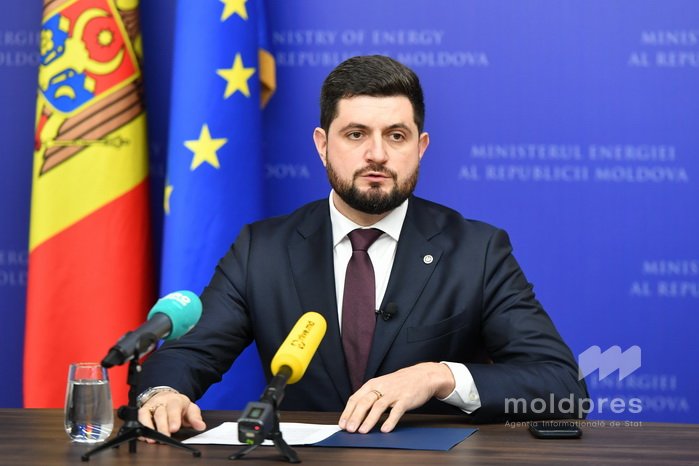
MOLDPRES INTERVIEW // Moldovan energy minister says foremost interest citizens to have secure energy at affordable prices
Moldova a few years ago was entirely dependent on a single gas source, a single supplier and a single supply corridor. Any external decision automatically turned into an internal crisis with a direct impact on citizens. This period has now been overcome. Energy Minister Dorin Junghietu has made statements to this effect in an exclusive interview given with MOLDPRES.

At present, Moldova’s energy market is much more open, connected to European infrastructure and, most importantly, significantly more secure, the official says. This is due, among other things, to the implementation of a comprehensive plan to strengthen energy independence, with the clear goal of eliminating dependence on energy resources from the Russian Federation.

These achievements came in parallel with significant progress made by the country in the process of European integration. Thus, Moldova has carried out substantial transformations, including through the transposition and implementation of the EU acquis in the field of energy, and for the second year in a row, the country is a leader in the Energy Community in implementing European legislation.

Dorin Junghietu also referred to the impact of the regional situation on energy prices. He stressed that “cheap” Russian gas is already history, and the electricity produced at MGRES (Kuchurgan power station) is no longer economically or technically viable. Even locally produced renewable energy is now cheaper. At the same time, Dorin Junghietu underlined that “tariffs did not increase because of internal decisions, but because Russia used energy as a political weapon”.

MOLDPRES: Minister Dorin Junghietu, we are practically in the middle of the heating season. How well prepared was Moldova for winter, in which areas do vulnerabilities still exist and how do you intend to eliminate them?

Dorin Junghietu: Moldova was well prepared for the 2025–2026 heating season. Energocom contracted in advance all necessary gas and, for the first time, created a strategic reserve of 200 million cubic meters, together with other licensed suppliers, in proportion to each one’s market share, covering consumption in the critical winter months.

As regards electricity, we have the capacity to cover 100 per cent of consumption through domestic generation and diversified imports. The right bank of the Dniester is fully supplied with gas,and any potential deliveries to the left bank can  take place only on the basis of official requests and under the existing legal framework.

The transparency of procurements has increased significantly. Energocom operates in line with European rules, and external audits confirm compliance with competitive procedures. Non-transparent contracts from the past have been eliminated and prices are correlated with European indices.

MOLDPRES: To what extent does the regional situation influence energy prices and what strategies does the Energy Ministry have to ensure stable and affordable tariffs for the population and for businesses?

Dorin Junghietu: The Ministry implements policies and does not have the right to intervene in the operational activity of enterprises, and the national Energy Regulatory Agency (ANRE) is responsible for tariffs’ setting. The regional situation is quite complex, as Ukraine has lost a large part of its generation capacity and imports power from the regional market; therefore, as demand has increased, prices have risen too.

Interconnections between Eastern Europe and continental European markets are insufficient, so in our area the price of electricity is higher. However, Energocom does everything possible to find the most competitive prices. The primary interest of the Ministry is that citizens, first of all, have energy, and then that this energy is secure and affordable, while businesses become more competitive, knowing they will face reasonable costs.

MOLDPRES: In recent years, our country has faced deep crises in the energy sector, being dependent on a single source of energy supply and subject to blackmail by the Russian Federation. Can we now say that we have become energy independent, or does Russia still have leverage to blackmail us?

Dorin Junghietu: A few years ago, Moldova was entirely dependent on a single source of gas, a single supplier and a single supply corridor. Any external decision automatically turned into an internal crisis with a direct impact on citizens.

That period has been overcome. Today, the energy market of Moldova is much more open, connected to European infrastructure and, most importantly, much more secure. We have implemented a comprehensive plan to strengthen energy independence, with the clear goal of eliminating dependence on energy resources from the Russian Federation.

The diversification of electricity sources was another essential step. As of 1 January 2025, the right bank of the Dniester has no longer been purchasing electricity from MGRES. Consumption is covered by domestic generation, renewable sources and imports from Romania and sometimes from Ukraine, with around 12 different sources in total, including producers and power exchanges.

Romania is Moldova’s main partner in the natural gas sector. Through Energocom, we purchase gas from European exchanges and through medium- and long-term contracts, ensuring stability and predictability for consumers.

It is important to clarify one point: tariffs did not increase because of internal decisions, but because Russia used energy as a political weapon. In 2021, international prices reached record levels and Gazprom unilaterally reduced deliveries to Moldova. At that time, Energocom, with support from the European Union and EBRD’s (European Bank for Reconstruction and Development) financing, started transparent purchases on exchanges and created strategic stocks.

In addition, Gazprom’s market share in the European Union fell from 45 per cent in 2019 to as little as 7 per cent in 2023. This means there are simply no sufficient volumes of Russian gas that could reach Moldova through intermediaries, contrary to the manipulations promoted by certain political forces.

So-called “cheap” Russian gas is already history, and electricity produced at MGRES is no longer economically or technically viable. Even locally produced renewable energy is now cheaper.

MOLDPRES: Moldova has made remarkable progress in the field of energy, highlighted by the European Commission in its annual Enlargement Report. What are the main areas where further reforms are needed to align Moldova’s energy sector with the standards and requirements of the European Union?

Dorin Junghietu: Indeed, the European Commission’s report confirms that Moldova has carried out substantial transformations, including through the transposition and implementation of the EU acquis in the energy field, which represents major progress in the process of accession to the European Union. The Commission’s 2025 report assesses reforms under Chapter 15 – Energy as having made “very good progress,” and the energy sector’s preparedness for accession as being between “moderate and good”. These ratings place energy among the leading chapters in the accession process.

In recent years, we have managed to eliminate dependence on the thermal power plant of the Transnistrian region and to switch to purchasing electricity on regional markets, especially from Romania. At the same time, natural gas is purchased from producers in Romania and on European exchanges. Special attention has been paid to gas stocks, which have increased from 15 per cent of consumption to 20 per cent of consumption, including 50 million cubic meters of security gas stocks stored in Romania and Ukraine. Through measures to diversify electricity and natural gas sources, we fully covered Moldova’s consumption in the winters of 2023–2024 and 2024–2025, when we faced crises triggered by the Russian Federation.

The European Commission appreciated the amendments to the Natural Gas Law, which provide for the mandatory storage of a gas volume equivalent to at least 15 per cent of the average annual consumption plus the security stock, as well as the concrete steps taken towards liberalizing the gas market. The process of gradually reducing public service obligations for large industrial consumers, initiated in October, will be completed by 1 April 2026, in line with ANRE’s decisions.

Another important achievement is the completion of the unbundling of natural gas transmission and supply activities, in accordance with the EU’s Third Energy Package. In addition, the Electricity Law was adopted, aligned with the EU package on electricity market integration, and the Fiscal Code was harmonized with European legislation through the introduction of the reverse charge mechanism for electricity and natural gas.

The report also highlights progress in the field of renewable energy, including the organization of tenders for major investments in solar and wind capacities – over 300 MW in total, taking into account the successfully completed tender in 2025 and the one in 2026 – as well as the integration of energy storage components, an essential element for system’s security.

The Commission also welcomed changes in the legislative framework on Energy Union governance and the approval of the Integrated National Energy and Climate Plan, which sets a clear direction for economy-wide decarbonization.

In the field of energy efficiency, the National Center for Sustainable Energy has reached maturity and is successfully implementing national programmes aimed at reducing energy consumption in buildings, through three products targeting the residential sector, and through the EcoVoucher programme, which allowed citizens, especially the vulnerable, to save about 20 million lei in 2025 on electricity invoices, by using new, more efficient household appliances.

Of course, the next stage involves accelerating energy infrastructure projects, strengthening institutional capacities and achieving full integration into the European energy market. The fact that, for the second year in a row, Moldova is the leader in the Energy Community in implementing European legislation shows that the chosen direction is the right one and that we can advance with the support of our European partners.

MOLDPRES: How is cooperation between Moldova and Romania evolving with a view to connecting our country to the European energy system? What joint projects are being implemented by the two states and what direct benefits will they bring to citizens?

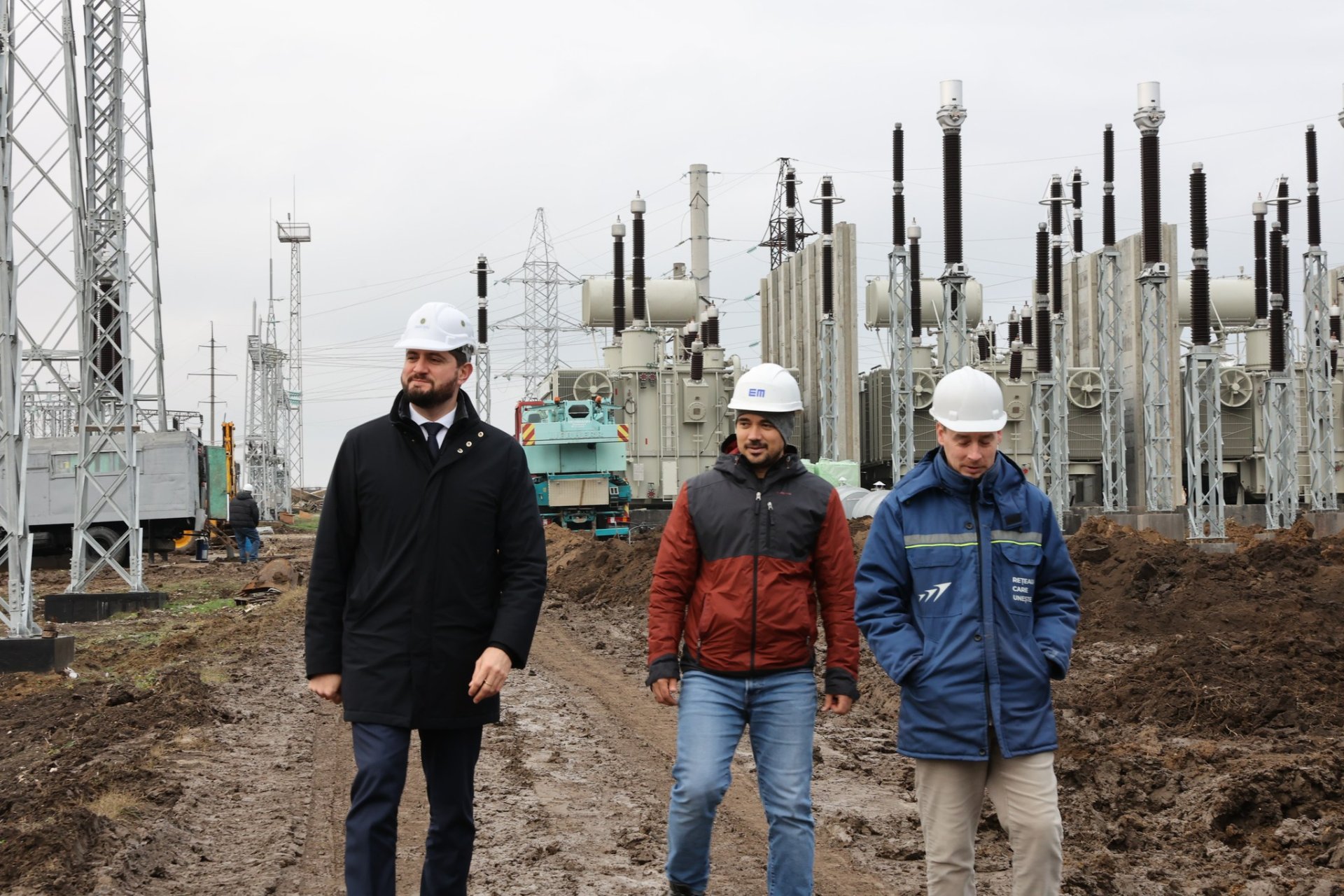
Dorin Junghietu: The cooperation with Romania is strategic and extremely solid. The Vulcanesti–Chisinau power line is almost ready to be put into operation and will directly connect Moldova to Romania’s energy system and to the ENTSO-E network, providing stability and security in crisis situations.

We are moving forward in parallel with the Balti–Suceava and Straseni–Gutinas projects, which will enhance exchange capacity and strengthen our integration into the European energy market. The Iasi–Ungheni–Chisinau gas pipeline is operating at full capacity and is the backbone of our security in the gas sector.

Integration into the Vertical Gas Corridor gives us access to alternative sources from the Caspian region, to liquefied natural gas from Greece and even from the United States of America. The fact that Moldova was among the first states to use this corridor confirms our role as a solid regional partner and even a provider of security.

MOLDPRES: The European Union has provided substantial support of 1.9 billion euros for the development of our country. Part of this money is earmarked for projects in the energy sector. What are these projects and have you already managed to make use of the planned resources?

Dorin Junghietu: The 1.9 billion euros support provided by the European Union through the Growth Plan for Moldova is structured into two distinct but complementary components. The first component is the reform plan, which includes clear conditionalities assumed by Moldova in relation to the European Union. In the energy sector, last year 14 key reforms fell due.

Of these, 3 reforms were completed ahead of schedule, and 9 were carried out according to the agreed timetable. For the moment, it is difficult to estimate the exact financial contribution allocated to the energy sector, as we are in the phase where the European Commission is validating the completion of reforms. After this confirmation, the financial resources will be able to be fully utilized.

The second component is the investment plan, which is dynamic and can be adjusted according to the country’s real priorities and developments in the sector. As far as energy is concerned, this plan provides for major investments in infrastructure. A concrete example is the modernization and development of electricity networks, where investments of around 200 million euros are planned to modernize the infrastructure managed by Moldelectrica. These investments are essential to enhancing energy security, integrating renewable sources, and improving interconnection with the European energy market.

In short, the Growth Plan is not just a source of funding, but a strategic tool that links structural reforms to concrete investments aimed at making Moldova’s energy system more modern and better integrated into the European market.

MOLDPRES: The capacity to generate electricity from renewable sources has grown steadily in recent years and, on certain days, these sources have fully covered domestic consumption. However, this also brings new challenges. How does the Energy Ministry intend to further increase the share of green energy while managing the emerging challenges?

Dorin Junghietu: The year 2025 marked an acceleration of the green transition. Moldova is approaching 1,000 MW of installed renewable capacity, a result that proves the sector’s attractiveness for investors.

At the same time, this growth requires the development of storage and flexibility capacities. Therefore, new tenders for renewable energy also include storage components, which are essential for the stability of the energy system. This involves 170 MW of allocated wind generation capacity, with an obligation to invest in associated energy storage capacity, and the price will be set through auction, without exceeding the ceiling of 1.44 lei/kWh approved by ANRE.

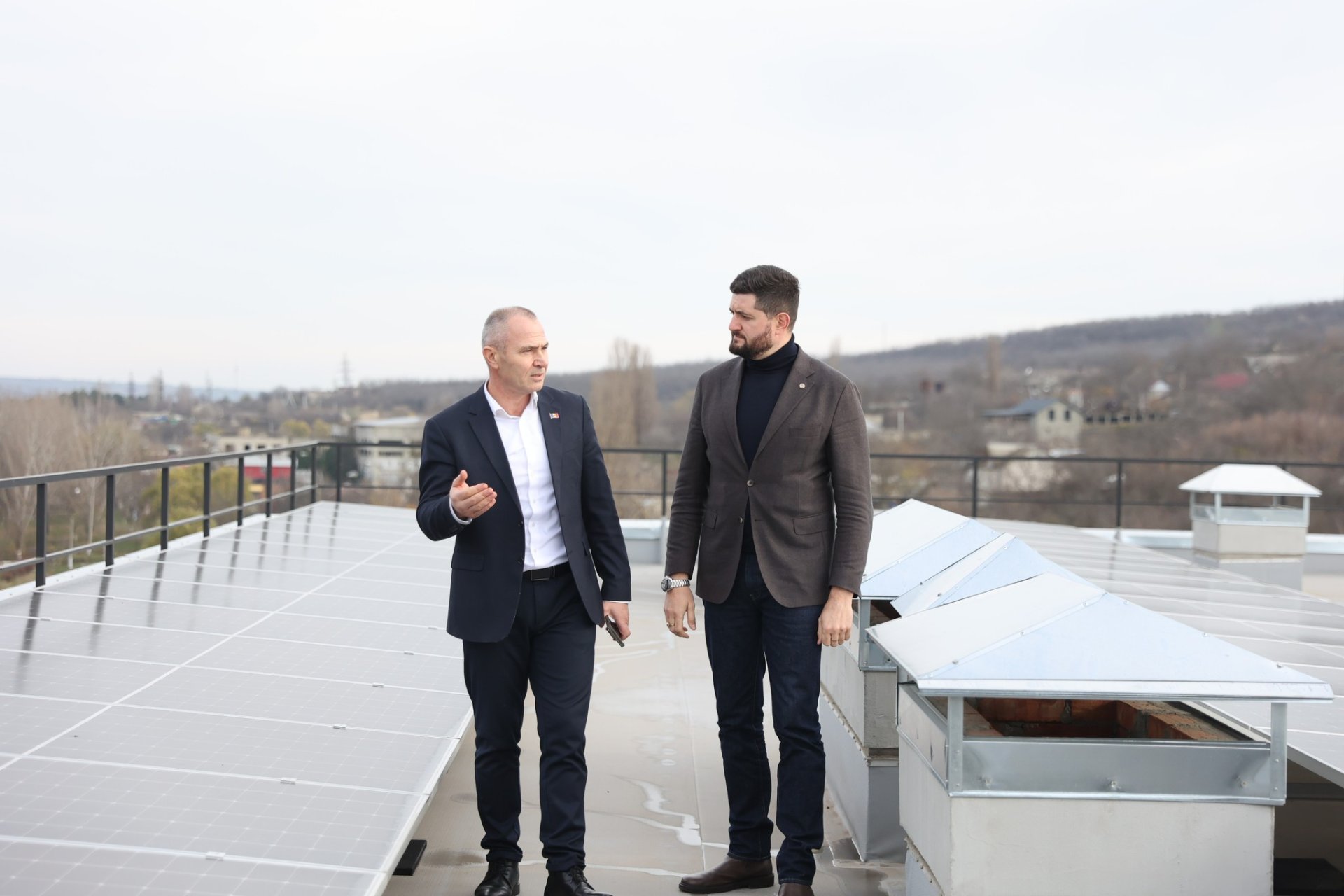
A concrete example is the project implemented with the support of the government of Italy and the United Nations Development Programme (UNDP), through which three district hospitals of Straseni, Cimislia and Anenii Noi benefit from photovoltaic panels and storage systems. These investments will produce more than 500 MWh of green energy annually and will reduce CO₂ emissions by approximately 237 tons per year, while providing energy security for medical institutions. In addition, these hospitals have been equipped with electricity storage systems of over 220 kWh.

According to market estimates, private investments are planned this year for the installation of around 200 MW of battery storage capacity, which will allow us to integrate more renewable energy into the grid and use it more efficiently.

MOLDPRES: What are the main actions and reforms implemented in the energy sector in 2025, and what priorities have you set for 2026, in order to ensure the country’s energy security?

Dorin Junghietu: The year 2025 marked a stage of maturity for the energy sector of Moldova, through structural reforms that strengthened market’s functioning, security of supply and the transition to clean energy. A historic milestone was the launch of the Electricity Market Operator, OPEM, and in December the first transactions took place on the Day-Ahead Market and the Intraday Market. This marked the effective entry of Moldova into a new model of electricity market functioning, based on European rules, transparency and competition, where the exchange will provide price signals based on supply and demand.

Also in 2025, the role of the state-owned company Energocom was strengthened, as it took over the supply of natural gas for about 830,000 consumers. This strategic decision was essential to ensuring continuity of supply and protecting citizens from risks similar to those faced during the 2022 energy crisis.

Another important pillar was energy efficiency, where investments made in 2025 translate directly into lower invoices for citizens. Projects were launched to modernize schools, hospitals, residential blocks and district heating systems, in line with Moldova’s commitment to improve the energy efficiency of 0.8 per cent of the total building stock each year. This year, we will place greater emphasis on building implementation capacity for energy efficiency projects, in order to ensure efficient use of government and development partners’ funds.

Looking ahead to 2026, our priorities focus on continuing to strengthen energy security in a system with an increasingly high share of renewable sources. One of the main challenges is the accelerated deployment of electricity storage systems and flexible balancing capacities.

Another major direction for 2026 is the continued transposition and implementation of the remaining European energy legislation, including the legal framework on mandatory oil product stocks – a complex package with significant investment implications for both the state and market operators.

Last but not least, in 2026 we will continue to encourage innovation in the energy sector. Moldova has recently approved the first project under the Energy Sandbox, aimed at testing vehicle-to-grid (V2G) technology. Moldova is the first country in the region to launch such a controlled regulatory framework, allowing the testing of innovative technologies and business models – from storage and smart grids to green mobility – in safe and flexible conditions, promoting full alignment with the European Union’s energy market.

Minister Dorin Junghietu, thank you for your availability to give us this interview.

Reporter: Natalia Sandu
 Facebook
 Instagram
 X/Twitter
 Telegram
MOLDPRES INTERVIEW // Vice President of Romanian Academy says academic, research environment of Moldova advanced, can be efficiently integrated into European, international structures
MOLDPRES INTERVIEW // Rector of University from Romanian city says if someone overturns your history, national identity, it means you don’t have enough knowledge
MOLDPRES INTERVIEW // Director of South Regional Development Agency says Agency creating better living conditions, easier life for thousands of residents
MOLDPRES INTERVIEW // Lithuanian Ambassador about prospects of Moldova’s EU accession: If you make things real, they will become achievable
MOLDPRES INTERVIEW // Moldovan finance minister says government aims to modernize financial system for benefit of businesses, citizens
MOLDPRES INTERVIEW // Ambassador of State of Qatar to Moldova: We are working to improve ways of attracting Qatari investors to Moldovan market
MOLDPRES INTERVIEW // President of Moldova's Chamber of Commerce and Industry says country must use opportunities provided by European integration to attract investments, become competitive
MOLDPRES Interview // Minister of Internal Affairs: Interior Ministry applies European security standards and is ready to advance in EU accession process
Moldovan justice minister says, according to European Commission’s Report, Moldova made greatest progress among EU candidate states, including in justice field
INTERVIEW MOLDPRES // Moldovan defense minister says Russia's war in Ukraine highlighted vulnerability of defense sector, need of building strong, prepared, resilient army to current challenges
INTERVIEW WITH MOLDPRES // Deputy PM says wants Moldova where a child from any village has same opportunities as a child from Chisinau
INTERVIEW MOLDPRES // Deputy Prime Minister on Ukraine Peace Agreement: No discussion about Moldova can take place without Chișinău's participation
INTERVIEW MOLDPRES // Moldovan agriculture and food industry minister says European integration fundamentally changes way leadership supports agriculture
INTERVIEW MOLDPRES // Romania's Ambassador in Chisinau says Moldova to never be alone in its efforts, Romania to stand by its side
VIDEO // Moldovan president in Helsinki says war reaching territory of Moldova; Finnish head of state: ''Moldova’s place is in the EU”
Moldova does not rule out expelling Russia’s Ambassador after drone incidents; Moldovan parliament speaker says everything possible
Moldovan PM meets Ambassador of Azerbaijan
PHOTO // Energy Minister presents investors with objectives of Energy Strategy 2050: Energy directly influences companies’ competitiveness
MOLDPRES INTERVIEW // Moldexpo Exhibition Centre on threshold of major transformation; director Zinaida Popa: “Business must meet and create connections”
Speaker: Administrative-territorial reform must ensure predictable transfer of powers and resources
Environment Ministry announces stabilization of Dniester water level near Cosăuți station
 National Bank of Moldova
Moldovan PM meets Ambassador of Azerbaijan
Press statements by President Maia Sandu in Helsinki
Moldova's regulatory framework for irrigation, drainage infrastructure updated to facilitate investments in agriculture
Fruiting of horticultural plantations to be established according to clearer criteria in Moldova
Moldova transposes European rules, conditions governing activities in postal communications sector into national legislation

Moldova's Civil Code amended to strengthen legal framework applicable to commercial agency relationships
Speaker: Administrative-territorial reform must ensure predictable transfer of powers and resources
Five vehicles donated in Ungheni and Căușeni for cultural, sports and charitable activities, exempt from import duties
Environment Ministry announces stabilization of Dniester water level near Cosăuți station
Foreign Minister receives new U.S. Ambassador: We want to further strengthen and develop partnership
National legislation on direct taxation and excise duty calculation to be aligned with European Union rules
Foreign Minister at opening of Honorary Consuls’ Meeting: Moldova made clear and irreversible choice to join European Union
Teachers from Moldova applauded in Parliament
Over 100 producers expected at 25th edition of National Wine Day
Moldova seeks to attract more freight to TRACECA corridor and proposes facilities for carriers
VIDEO // Moldovan president to attend Security Forum
Three water pumps from state reserves made available to Apă-Canal Chișinău
Government delivers three more pumps to Apă-Canal Chișinău for water intake from Dniester
Energy Minister: Gas prices in Moldova not highest in Europe
PHOTO // About 145 people enrolled in just three weeks at University of Third Age
Energocom company of Moldova estimates gas price for October at 76.35 euros/MWh
Receive the latest news directly to your email

Receive the latest news directly to your email