
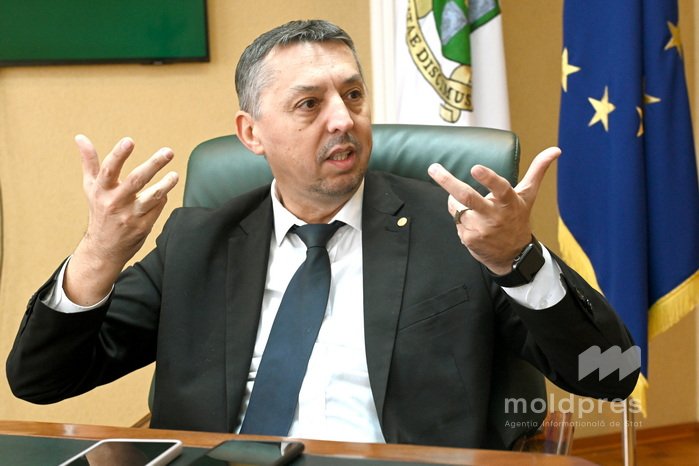
MOLDPRES INTERVIEW // Rector of University from Romanian city says if someone overturns your history, national identity, it means you don’t have enough knowledge
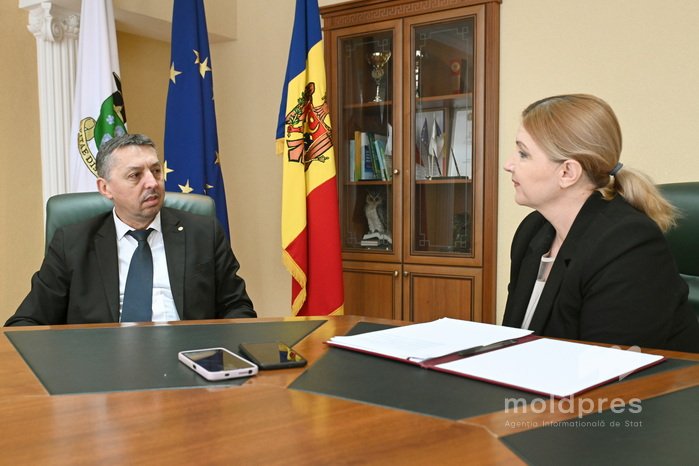
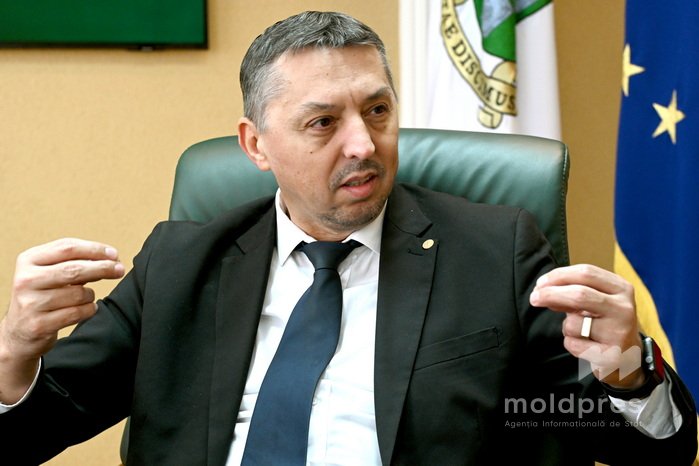
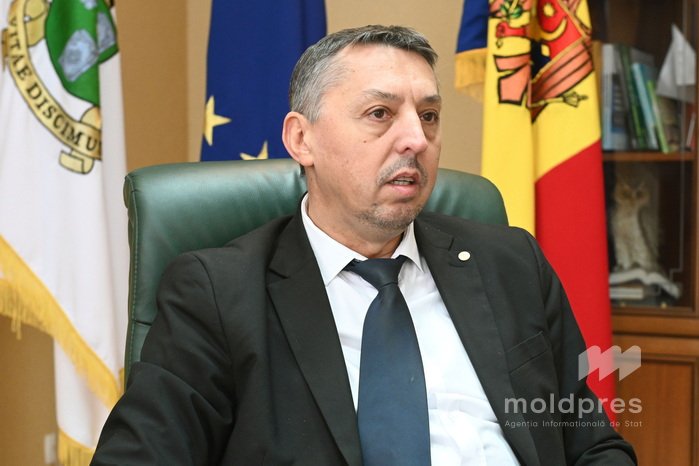
Pseudoscience is a major problem for modern societies and people are vulnerable to such influences. Rector of Babes-Bolyai University of Cluj-Napoca, Romania, professor, PhD, corresponding member of the Romanian Academy and former education minister of Romania Daniel-Ovidiu David has made statements to this effect in an exclusive interview given with MOLDPRES.
“If someone overturns your narrative about the history of your state and about national identity, it means you don’t have enough knowledge of history,” the rector says, emphasizing that a well-informed society is more difficult to be manipulated.
In his view, if we want to build a knowledge-based society, scientific psychology must be a fundamental reference point.
“Our mind is not built primarily to search for truth, but to search for meaning and significance,” notes Daniel David, warning that this characteristic makes people vulnerable to pseudoscience.
The rector believes that the accelerated changes in society require a deep reform of the education system.
“Education must change, because the world is changing. Old paradigms and rules are collapsing and education must adapt,” he states, advocating for the modernization of curricula and teaching methods.
The former education and research minister of Romania also conveyed a message to students, researchers and the entire academic community:
“An educated person is less vulnerable to manipulation.”
The university professor delivered a lecture at the Moldova State University on the topic, Scientific vs. Pseudoscientific Psychology: Implications for Everyday Life, and took part in a public debate dedicated to a knowledge-based society.
MOLDPRES: How did you perceive the dialogue with the students and teaching staff at the Moldova State University? What impressed you the most during the lecture you gave in Chisinau?Daniel-Ovidiu David: They seemed to me genuinely interested in the topic and came in large numbers. There was interaction, they asked questions, they challenged ideas. I felt as if I were in Romania, in the best academic circles. I met people keen to find out what we had to say.
In general, pseudoscience is a major problem for modern societies. In 2000, I was in the United States, when the internet was beginning to be democratized and social networks were gaining momentum. Democratic states believed this would be the tool through which autocracies would fall, because people would have access to knowledge and science would penetrate closed societies. Unfortunately, what happened later was that, also due to an insufficiently active presence of science in the public space – the internet itself is not to blame – pseudoscience spread much more powerfully. Today, we are overwhelmed by this phenomenon. Pseudoscience actually endangers the work of democratic societies.
MOLDPRES: The topic of scientific psychology versus pseudoscience is increasingly present in the public space. Why do you consider this debate so current and important for society, including for the academic environment of Moldova?
Daniel-Ovidiu David: Pseudoscience has penetrated social networks massively, and psychology is one of the affected areas. In this field, things are very serious, because pseudoscience in psychology has a direct impact on health. There is pseudoscience in other areas as well – and it is not good there either – but when we talk about health, quality of life, illness or even a person’s life, the consequences become extremely serious. Approaches emerge that endanger your health, take your money and can cause real harm.
In general, pseudoscience has a negative impact on modern societies. Young people influenced by pseudoscience become more vulnerable to conspiracy theories and manipulation and, at the same time, are less prepared for integration into the social and economic environment, because they have not developed basic skills. If you end up believing nonsense, it means you don’t sufficiently master physics, chemistry or other fundamental disciplines.
If someone overturns your narrative about the history of your state and your national identity, it means you don’t have enough knowledge of history. If you had learned history, language, culture, geography, chemistry and biology, you could not be manipulated so easily through conspiracy theories and narratives.
MOLDPRES: What are the three essential ideas or messages you wanted to convey in the lecture you gave at USM?Daniel-Ovidiu David: The first message is that, if we want to build a knowledge-based society, scientific psychology must be the benchmark.
The second is that other perspectives are seductive, because they work like attractive stories; they provide meaning and significance, but do not provide truth. Scientific psychology offers truth and can also provide meaning and significance, but sometimes it is not presented in a sufficiently attractive way. Pseudoscientific approaches provide meaning and significance, but not truth – and this is precisely why they can become very attractive. At that point, you risk becoming their prisoner.
The third message is that people are vulnerable to pseudoscience. Our mind is not built primarily to search for truth, but to search for meaning and significance.
Therefore, my recommendation was clear: when you have important questions, turn to experts. The fact that you read and have access to information does not mean you possess knowledge. Knowledge means information plus assigning a truth value and this process requires different levels of expertise.
Ask the experts. People today are more emancipated, but they no longer consult specialists, sometimes they no longer know how to listen and they confuse opinion with knowledge. They end up believing that their own opinion is equivalent to truth. An educated person must distinguish between these levels.
MOLDPRES: The Babes-Bolyai University (UBB) has a strong international orientation. How do you assess the current cooperation between UBB and higher education institutions of Moldova, and what development directions do you see for future scientific collaboration?Daniel-Ovidiu David: Our cooperation focuses mainly on the field of mental health. I have been coming to Chisinau for years to train psychotherapists. There are also research collaborations, especially with the university in Cluj.
Naturally, universities of Moldova have closer ties with the ones of Iasi – Alexandru Ioan Cuza University – and with other geographically close centers. I know there is good cooperation with the University of Bucharest as well, especially in the educational component. Cluj has so far had more intense collaboration in research, development and innovation, but we are open to expanding cooperation on the educational dimension too, if there is interest.
MOLDPRES: From the perspective of your experience as a former education minister of Romania, how do you assess the progress of the university system of Moldova in the process of modernization and alignment with European standards?
Daniel-Ovidiu David: I was minister for one year. I made more official visits – to the United States, to Switzerland and twice to Moldova. I was particularly keen to come to Moldova. The USA represents an important personal connection for me, Moldova has a special significance, and in Switzerland I was interested in the dual education model, a benchmark for vocational education.
At discussions in Chisinau with the education and research minister, I found that we are facing similar problems. Education must change, because the world is changing. Old paradigms and rules are collapsing, and education must adapt. However, the process is difficult, because education is an inertial system and changes are often accompanied by controversy.
I met a minister who is aware of these transformations and we are cooperating. There is a cooperation protocol that will probably be implemented soon. For example, we have an online library with lessons for lower secondary education – teachers who teach through video materials, with access to additional resources – which could also be used by schools of Moldova.
MOLDPRES: Is Moldovan society ready to change paradigms?Daniel-Ovidiu David: If we are talking about paradigm shifts in education and science, I don’t think so. I see what is happening in Romania as well – our system is not ready either.
MOLDPRES: How should we prepare?
Daniel-Ovidiu David: It is a difficult process. Sometimes, if you don’t already have a new paradigm when the world is changing, you lose. You need leaders who are willing to assume change, including public criticism and attacks.
For example, we discussed the fact that a teacher can no longer specialize exclusively in a very narrow field, given that the number of schools and children is decreasing. In order to fulfill their workload, a teacher ends up teaching in more schools. In Western or Nordic countries, such as Finland, teachers are trained for broader curricular areas. For instance, a science teacher can teach both physics and chemistry at lower secondary level. This is a paradigm shift: teachers remain qualified, but within a broader framework that allows them to carry out their activity in a single school.
Another change would be for teachers not only to transmit knowledge, but also the way in which that knowledge is generated. At university we do this: we teach the content, but also explain how it was constructed, how it was discovered. In high school or lower secondary education, we often limit ourselves to information. That is not enough. Pupils must also understand the mechanisms of science, in order to become citizens of a knowledge-based society and to be less vulnerable to manipulation and pseudoscience.
MOLDPRES: What is your first impression of the education system of Moldova?
Daniel-Ovidiu David: You have, as we do, both strengths and weaknesses. There are very good universities and a significant number of international students, especially in the field of medicine. The State University is a strong institution. At the same time, the system is fragmented. In rural areas, pre-university education faces difficulties, there is a shortage of qualified teachers, the number of children is decreasing and the curriculum needs modernization.
MOLDPRES: What message would you send to young researchers and students of Moldova who want to pursue a career in psychology or scientific research, in a context marked by the expansion of unverified information?
Daniel-Ovidiu David: An educated person is less vulnerable to manipulation. Knowledge is democratized today, but you must go beyond the local textbook. Psychology textbooks are international and accessible online – read them. Take part in international conferences.
Do your undergraduate studies in Moldova – the Faculty of Psychology is good – and possibly plan specializations abroad, including in Romania, at master’s, PhD or postdoctoral level, depending on your interests. At bachelor’s level, it does not make sense to go to a Western university, unless you are determined to stay there. During your bachelor’s degree, you can benefit from mobility through the Erasmus Programme. Later, if you want a specialization that is not sufficiently developed here, you can go abroad. Then you will decide whether to stay or return to your country.
MOLDPRES: Mr. Rector, thank you for the interview and for your willingness to share these ideas with our readers.Daniel-Ovidiu David is a Romanian academic, specialist in clinical psychology and cognitive sciences, adjunct professor at the Icahn School of Medicine at Mount Sinai in New York and director of research at the Albert Ellis Institute (USA).
In 2020, he was elected for the first time as rector of Babes-Bolyai University, and at the beginning of 2024, he was re-elected for a five-year term (until 2029), getting over 90 per cent of the votes of the academic community. Since 2022, he has been a corresponding member of the Romanian Academy and of Academia Europaea, president of the Romanian Psychologists’ Association and vice-president of the Danube Rectors' Conference. He has been included among the top 2 per cent most cited scientists in the world in his field.
Between 23 December 2024 and 14 January 2026, Daniel David was minister of education and research in the government of Romania, during which time he temporarily suspended his mandate as rector of UBB, in order to exercise his governmental role.
The rector of Babes-Bolyai University (UBB) from Cluj-Napoca, Professor Daniel David, PhD, corresponding member of the Romanian Academy and former education minister of Romania, delivered a public lecture titled, Scientific vs. Pseudoscientific Psychology: Implications for Everyday Life, at the Moldovan State University on February 17.


 Facebook
 Instagram
 X/Twitter
 Telegram
MOLDPRES INTERVIEW // Vice President of Romanian Academy says academic, research environment of Moldova advanced, can be efficiently integrated into European, international structures
MOLDPRES INTERVIEW // Director of South Regional Development Agency says Agency creating better living conditions, easier life for thousands of residents
MOLDPRES INTERVIEW // Lithuanian Ambassador about prospects of Moldova’s EU accession: If you make things real, they will become achievable
MOLDPRES INTERVIEW // Moldovan finance minister says government aims to modernize financial system for benefit of businesses, citizens
MOLDPRES INTERVIEW // Ambassador of State of Qatar to Moldova: We are working to improve ways of attracting Qatari investors to Moldovan market
MOLDPRES INTERVIEW // President of Moldova's Chamber of Commerce and Industry says country must use opportunities provided by European integration to attract investments, become competitive
MOLDPRES Interview // Minister of Internal Affairs: Interior Ministry applies European security standards and is ready to advance in EU accession process
MOLDPRES INTERVIEW // Moldovan energy minister says foremost interest citizens to have secure energy at affordable prices
Moldovan justice minister says, according to European Commission’s Report, Moldova made greatest progress among EU candidate states, including in justice field
INTERVIEW MOLDPRES // Moldovan defense minister says Russia's war in Ukraine highlighted vulnerability of defense sector, need of building strong, prepared, resilient army to current challenges
INTERVIEW WITH MOLDPRES // Deputy PM says wants Moldova where a child from any village has same opportunities as a child from Chisinau
INTERVIEW MOLDPRES // Deputy Prime Minister on Ukraine Peace Agreement: No discussion about Moldova can take place without Chișinău's participation
INTERVIEW MOLDPRES // Moldovan agriculture and food industry minister says European integration fundamentally changes way leadership supports agriculture
INTERVIEW MOLDPRES // Romania's Ambassador in Chisinau says Moldova to never be alone in its efforts, Romania to stand by its side
VIDEO // President: Priority for Moldova in defense is improving air defense
EcoVoucher Programme: More than 3,300 families replaced old appliances with energy-efficient equipment
VIDEO // President: Our domestic agenda involves preparing Moldova to sign EU accession treaty by late 2028
Nicu Popescu: More functional and enlarged European Union, which also includes Moldova in everyone’s interest
Speaker: Modernizing National Army and adapting defense capabilities to new security realities require updating strategic documents
Moldovan president, U.S. senator discuss Moldovan-American cooperation, Moldova’s role in regional security
Director of Konrad Adenauer Foundation Office in Moldova says dialogue within Security Forum must turn into concrete actions
 National Bank of Moldova
Moldovan president, U.S. senator discuss Moldovan-American cooperation, Moldova’s role in regional security
Moldovan PM tells business people government willing to build Europe’s most entrepreneur-friendly country
Environmental protection experts discuss critical hydrological situation in Dniester River basin
Moldovan PM attends enlarged meeting of Administrative Council of Congress of Local Authorities of Moldova
Moldovan deputy PM for reintegration has meeting with Lithuanian officials

Moldovan PM tells business people government willing to build Europe’s most entrepreneur-friendly country
Foreign Affairs Ministry's state secretary says Moldova firmly committed to path toward EU, determined to be part of safer Europe
Environmental protection experts discuss critical hydrological situation in Dniester River basin
Railway of Moldova enterprise to increase freight transport tariffs by 15 per cent as of November 1
Moldovan PM attends enlarged meeting of Administrative Council of Congress of Local Authorities of Moldova
Hydrological situation of Dniester River, rehabilitation of Bender wastewater treatment plant discussed by experts from both banks
Moldova's Diaspora children can enroll in free Romanian language courses
Eight violations of Moldova’s Airspace recorded in recent days; five cause explosions on ground
Moldova Security Forum 2026 // Moldovan president's adviser on national defence and security says Russia’s strategy not aimed only at winning elections, but at undermining trust in democracy
Moldovan deputy PM for reintegration has meeting with Lithuanian officials
Foreign affairs minister says Moldova ready to open next four EU negotiation clusters
VIDEO // Intelligence and Security Service chief, at Moldova Security Forum 2026, says money replaced ideology in attempts to destabilize Moldova
Moldovan president has meeting with NATO Deputy Secretary General
Moldova Security Forum 2026 // NATO Deputy Secretary General says strong, stable, resilient Moldova contributes to stability, resilience on NATO’s border
Elections in Gagauzia: 83 candidates registered for Popular Assembly
European Commissioner for Defence and Space says Moldova can count on EU's support in security, defence
Receive the latest news directly to your email

Receive the latest news directly to your email