
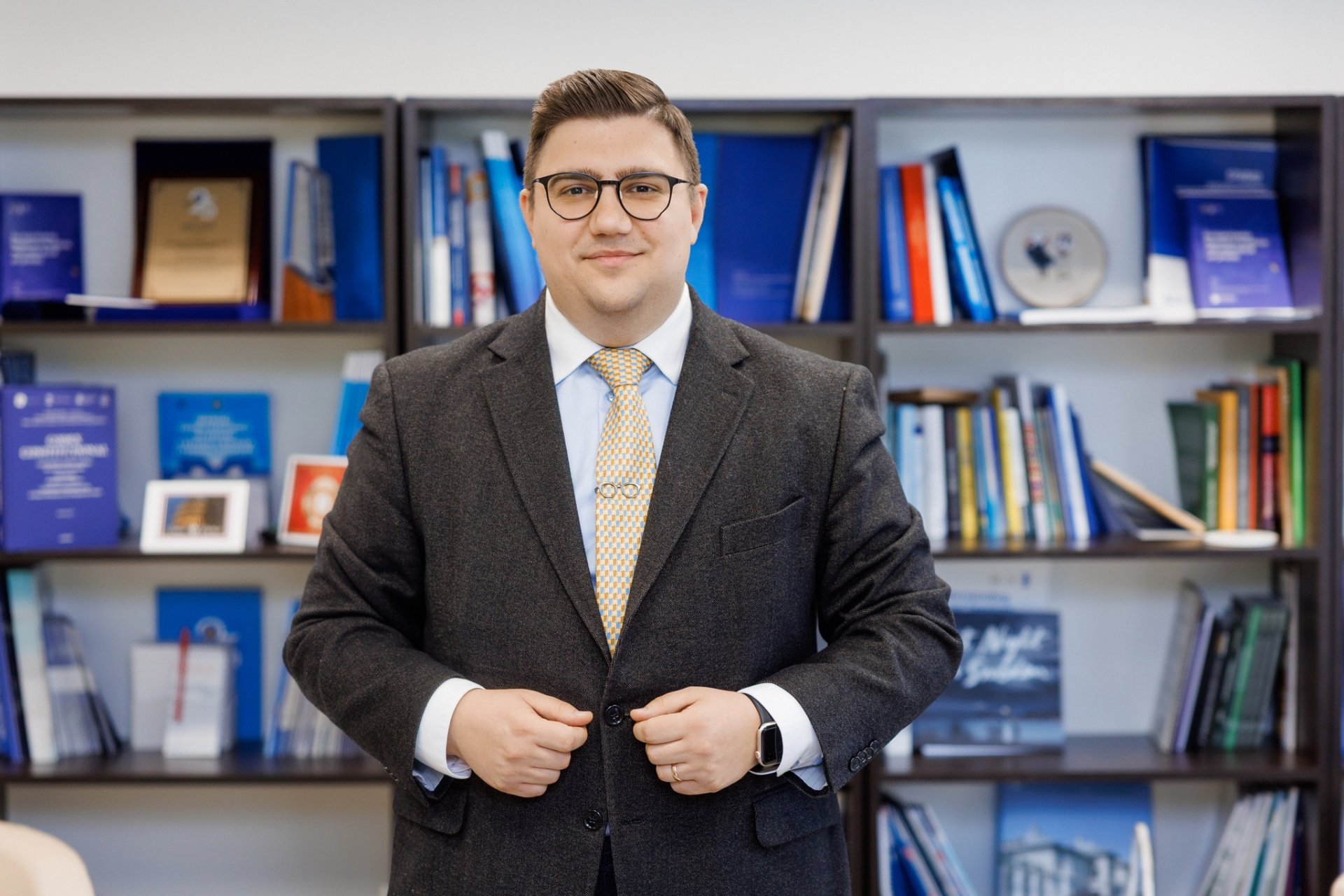
Daniel Vodă explains Moldova’s stakes in Coalition of Willing for Ukraine
Moldova’s decision to join Coalition of the Willing in support of Ukraine is an important one from geopolitical, security, and economic perspectives, says Daniel Vodă, associate expert at the Institute for European Policies and Reforms. He presents five arguments in favor of this decision, stressing that the platform brings together EU member states and non-EU countries, as well as global partners, and that for Moldova it is crucial to sit at a table where its own future is implicitly being discussed.

According to the expert, first and foremost, participation in this format reflects current geopolitical realities.

“Europe is assuming an increasingly important role in Ukraine’s security, and decisions are discussed in such flexible formats. By taking part, Moldova is at the table where the region’s future is discussed, which means our own future as well. We gain access to information, to coordination, and to real discussions about security. It is the difference between watching things from the outside and being part of them,” explained Daniel Vodă.

Another argument is the concrete contribution that Moldova can offer, especially in the field of demining. Moldovan sappers are well trained, and in the context of Ukraine’s reconstruction, this area will become essential for people’s safety and for economic recovery.

“We are talking about people’s safety, about returning to a normal life, about reconstruction. Here Moldova can contribute directly. We are not just participating, we are providing concrete help,” the expert noted.

He also highlighted the importance of cooperation in modern technologies, especially drones, which have proven their usefulness in security, as well as in agriculture and civil interventions. By participating in such initiatives, the Republic of Moldova can quickly adopt best practices and develop its own capacities.

In addition, joining the coalition is seen as a step that strengthens state sovereignty. According to Vodă, the Republic of Moldova acts based on its own interests and is developing cooperation with Ukraine in several areas, in a manner similar to certain neutral European states.

“It is building its security step by step and is developing cooperation with Ukraine: from training, to defense industry and information sharing. This means a mature, well-planned approach. Neutral countries like Ireland or Austria are doing the same,” Vodă emphasized.

Lastly, there is also an economic argument. Ukraine’s stability directly affects the security and economy of the Republic of Moldova.

“A stable Ukraine means fewer risks for our economy, investments, and infrastructure. Taking part in such formats also means strengthening our external position,” the expert said.

Daniel Vodă also underlined the need for broader domestic communication regarding this decision, including in Parliament, in order to ensure transparency and reduce the space for misinterpretation or disinformation.

President Maia Sandu announced at a press conference held in March that the Republic of Moldova is joining the Coalition of the Willing for Ukraine. The platform brings together states that want to help Ukraine. Most are from the European Union, such as France, Germany, Romania, Poland, and Bulgaria, as well as countries outside the EU, such as Norway and the United Kingdom – some of them NATO members. The group also includes global partners such as Canada, Australia, and Japan.

At the European Union summit held in Brussels on 19–20 March, the leaders of the 27 member states said in the final document on Ukraine, that “the EU stands ready to contribute to providing Ukraine with solid and credible security commitments, in particular through the Coalition of the Willing and in cooperation with the United States.” The contribution of the EU and its member states, the document further notes, “will be based on their respective competences and capabilities and will be consistent with international law.”

Maia Sandu said that for the Republic of Moldova, it is important to be part of this effort alongside EU member states and other candidate countries.
 Facebook
 Instagram
 X/Twitter
 Telegram
Localities that initiated voluntary amalgamation are to finalize necessary procedures during August
Deputy Prime Minister on visit of Afghan delegation: Visa issuance procedures fully respected. No violations of legal provisions found
Five localities in Drochia merge into single town hall: voluntary amalgamation supported by over 28 million lei in Government incentives
Court of Appeal Centre orders restriction of Republican Party “Heart of Moldova” for one year
Moldovan electoral body to propose that Constitutional Court validate parliamentary mandate from PAS list
Parliament examined 60 draft laws and adopted 52 acts in July
Prime Minister about visit of Afghan delegation: Moldova does not recognize Taliban government. Approving this visit was an error of assessment and institutional coordination
Moldovan foreign affairs minister visits Kyiv Pechersk Lavra, condemns Russia’s attacks on Ukraine’s cultural heritage
Moldovan foreign affairs minister has meeting with Ukrainian counterpart
VIDEO // Moldovan foreign affairs minister, president of Ukraine discuss managing hydrological situation in Dniester River basin, joint projects in infrastructure, energy
VIDEO // Moldovan foreign affairs minister says Moldova made its choice, joined Ukraine
Moldovan parliament speaker says leadership's ambition to have better report of European Commission in 2026
Moldovan Foreign Affairs Ministry provides clarifications on visit of Afghan Agriculture Ministry's delegation to Chisinau
PHOTO // Deputy Prime Minister paid tribute in Kyiv to those who fell for Ukraine’s freedom: This war must end
Diaspora Days // Story about Moldova told through colors
Air alert in Ukraine: Traffic on Maiaki–Udobnoe bridge suspended
BTA: Trend of Falling Water Levels in the Danube Persists, Hydrological Situation Remains Difficult
VIDEO // Călărași forms largest voluntary amalgamation cluster in Moldova
 National Bank of Moldova
Prime Minister at Festival in Sipoteni: Government will work so that every village, every community and all Moldovans can prosper
Prime Minister and Turkish Ambassador approach prospects for Moldovan-Turkish cooperation
Prime Minister in talks with Italy’s Ambassador
Moldovan, Belgian Prime Ministers discussed European path of country
Secretary General of Government at Diaspora Forum: We need each of you to build stronger communities

Diaspora Forum // “The Seven Wonders of Moldova” – project aiming to bring diaspora children closer to country of origin
Diaspora Forum // Moldova promoted in Switzerland through tourism, investment and exports
PHOTO // Moldova and Ukraine strengthen customs cooperation for border security and European integration
Prime Minister and Turkish Ambassador approach prospects for Moldovan-Turkish cooperation
Prime Minister in talks with Italy’s Ambassador
Moldovan, Belgian Prime Ministers discussed European path of country
Secretary General of Government at Diaspora Forum: We need each of you to build stronger communities
Diaspora children to benefit from new measures to support integration into education system of Moldova
Prime Minister at Diaspora Forum: We must restore people’s optimism and confidence that Moldova is moving in right direction
ARMENPRESS // EU membership referendum in Armenia not possible at this stage, Pashinyan says
VIDEO // Over 450 town halls decided to merge voluntarily and will receive investment funds
Deputy Prime Minister at Diaspora Forum: Each of you is an ambassador of our country and contributes to promoting image of Moldova
Prime Minister at Diaspora Forum: We must improve people’s lives and restart engines of economy
PHOTO GALLERY // Diaspora at home: Images from largest gathering of Moldovans from abroad
Strengthening Moldovan-Swedish partnership discussed by Prime Minister and Sweden’s Ambassador
Prime Minister’s message to diaspora citizens: I encourage you to contribute to development of Moldova
Receive the latest news directly to your email

Receive the latest news directly to your email