
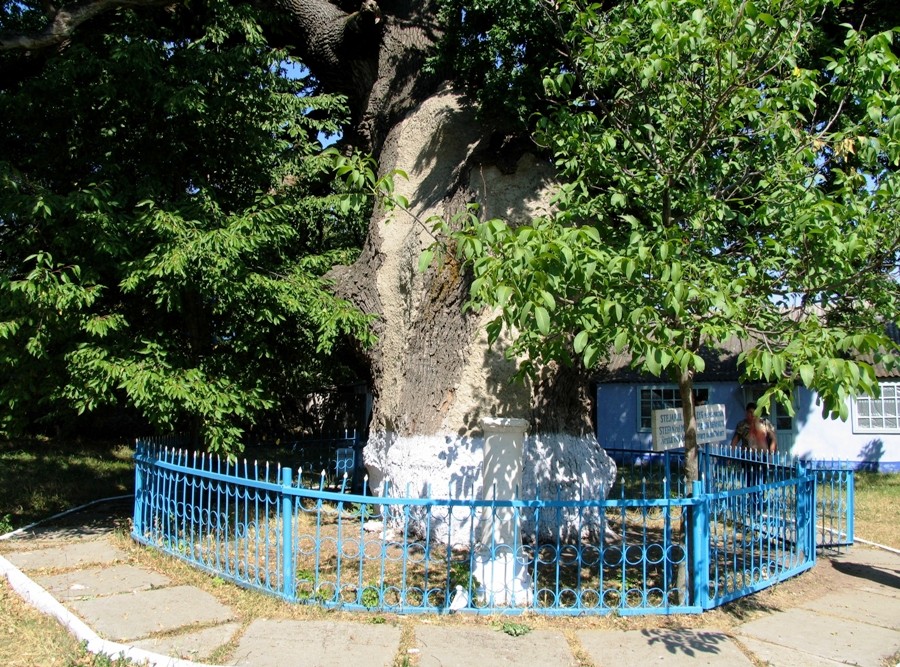
Discover Moldova with #MOLDPRES: In Cobilea, Soldanesti district, centuries-old oak, little church with roots in era of Stephen the Great
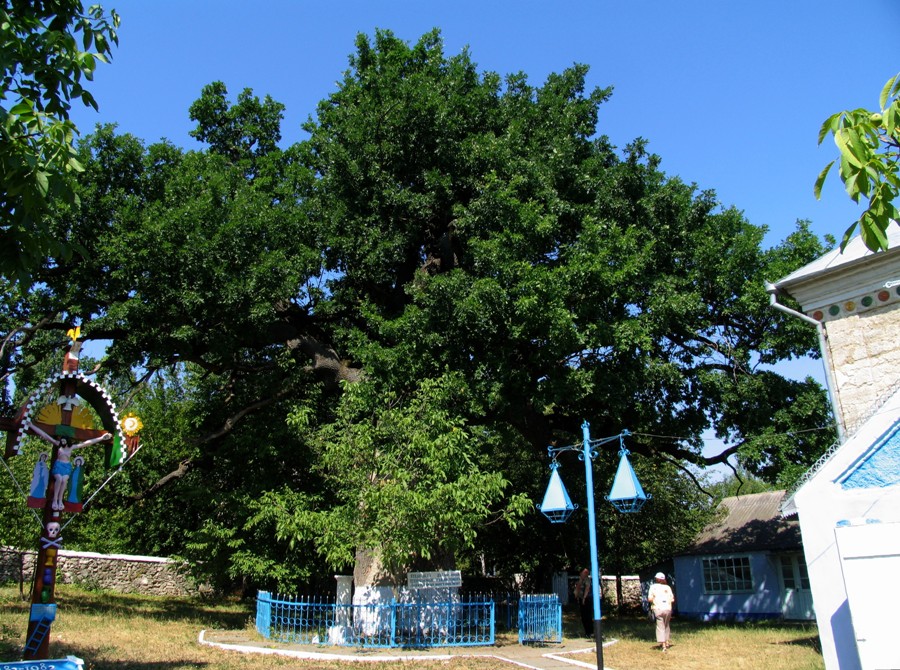
In the northeast region of Moldova, within the perimeter of the village of Cobilea, one of the most discreet yet valuable natural and cultural heritage landmarks in the region lies: the ensemble made up of the centuries-old oak tree and the nearby historic little church. The place does not impress through architectural monumentality, but through the symbolic density and historical stratification it concentrates.

The oak of Cobilea is considered one of the oldest documented trees in the Moldovan area. According to the inscriptions on the local information board, it has been mentioned in sources since the year 1456, which places it chronologically before the beginning of the reign of Stephen the Great (1457–1504).

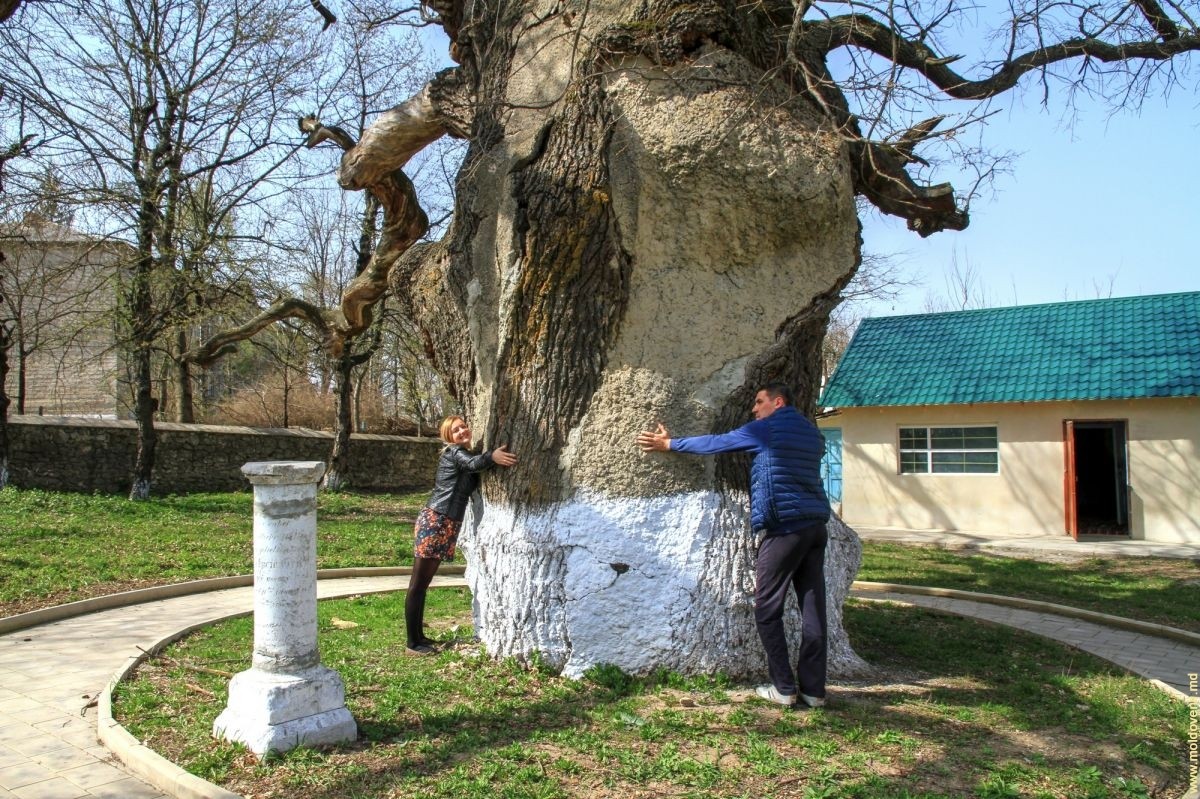
From a dendrological perspective, such specimens are extremely rare, not only because of their age, but also due to their size and resilience to climatic and biological factors. The historical context of the place is completed by oral tradition, which links the oak to a military episode attributed to Stephen the Great.

According to legend, after a victorious confrontation against the Tatars in the proximity of the current village, the voivode ordered the construction of a church, in line with his well-documented practice of marking victories through religious edifices. In this case, the construction was a small-scale one—a diminutive church built right next to the oak, suggesting either a specific votive character or an intermediate stop along a military or commercial route.

From a geographical standpoint, the site holds strategic relevance. The Cobilea area was located on one of the movement routes toward the Dniester crossing points, especially toward Vadul Rascov, a place historically known for commercial and military crossings. This positioning explains the frequent princely presence in the region, mentioned in local traditions.

An additional point of interest lies in the traditional construction techniques attributed to the little church. Popular accounts indicate the use of organic materials, such as egg white, in the mortar composition—a practice sporadically encountered in East European medieval architecture, used to increase the cohesion and durability of the structure.

The oak itself is associated with a natural episode that contributed to the development of a new legendary layer. A lightning strike is said to have split a massive branch, creating a cavity of considerable size. During periods of invasion, locals are believed to have used this hollow to hide valuable objects belonging to the church, later sealing the entrance for protection.

The absence of subsequent verifications has fueled the hypothesis of a possible yet-unexplored treasure. From a tourism perspective, the site has distinct potential through the combination of natural heritage (centuries-old tree), built heritage (historic little church), and intangible heritage (legends, oral traditions). It is a relevant example of a “slow tourism” destination, suitable for visitors interested in authenticity, tranquility and contextual exploration, rather than conventional tourist attractions.

Relatively easy access and the lack of excessive commercialization preserve the authentic character of the place. For sustainable tourism development, minimal interventions in informational infrastructure and conservation would be appropriate, without altering the natural balance and historical atmosphere. Overall, Cobilea provides a valuable case study of how natural and historical elements can coexist and generate local identity, forming a point of interest for cultural, educational and ecological tourism.
 Facebook
 Instagram
 X/Twitter
 Telegram
Discover Moldova with #MOLDPRES: Men’s caroling groups, tradition, spirituality at Palanca, Calarasi district
Discover Moldova with #MOLDPRES: Old Style Christmas, between traditions, customs and meanings
Discover Moldova with #MOLDPRES: Take Home from Moldova – authentic presents, memories from Moldova
VIDEO // Roman, early medieval archaeological artifacts to be exhibited at museum in southern Moldova
PHOTO // Tourist destinations from northern Moldova highlighted through Heart of Moldova tour
PHOTO, VIDEO // Discover Moldova with #MOLDPRES: Wine Vernissage 2025 - where tradition, excellence, tourism meet under sign of Moldovan wine
Moldova promoted in Vogue Polska: spectacular appearance putting country on map of inspiring destinations
PHOTO, VIDEO // Discover Moldova with #MOLDPRES: 'Wheel of Time' – a cultural and tasty journey, part of cross-border gastronomic route
PHOTO, VIDEO // Discover Moldova with #MOLDPRES: Gate of the Nation, where traditions come to life
PHOTO, VIDEO // Discover Moldova with #MOLDPRES: Mircești winery – 'Little Tuscany' of Ungheni, bridge between tradition, wine, tourism like in Europe
Discover Moldova with #MOLDPRES: Casa din Luncă - a haven of peace and tradition in heart of Old Orhei
Discover Moldova with #MOLDPRES: “At Tanti Masha's”: tradition, family recipes, tourist experiences and community on Romania-Moldova Gastronomic Route
PHOTO // Moldovan Wines conquer Switzerland at EXPOVINA 2025 in Zürich
Discover Moldova with #MOLDPRES: from vineyards to hospitality. how authentic wine, tourism experiences were promoted at World Wine Tourism Day 2025
Judicial reform, rule of law in focus of discussions between Moldovan president, new Head of Council of Europe Office
Moldovan parliament's standing bureau approves agenda for September 24 plenary meeting
Energocom company of Moldova requests gas prices' adjustment after 42-per cent rise in European quotations
Moldova, Mongolia abolish visa requirements for holders of diplomatic, service passports
Vulcănești–Chișinău Power Line: defective equipment at Chișinău substation repaired
DOC // Moldova has new media law
DOC // Decision on declaring state of emergency in energy and hydrological sectors published in Official Journal
 National Bank of Moldova
Judicial reform, rule of law in focus of discussions between Moldovan president, new Head of Council of Europe Office
Moldovan parliament's standing bureau approves agenda for September 24 plenary meeting
Topics considered at meetings of Moldovan parliament's standing commissions on September 23, 2026
New opportunities for professional development, salary supplements for employees in Moldova's social assistance system
Parliament to ratify new agreement between Moldova and Romania on strategic transport infrastructure

Civil protection and fire protection to be regulated by rules aligned with European standards
Clearer, more visible health warnings on tobacco products' packaging in Moldova
Vulcănești–Chișinău Power Line: defective equipment at Chișinău substation repaired
DOC // Moldova has new media law
DOC // Decision on declaring state of emergency in energy and hydrological sectors published in Official Journal
Legal framework for integration of foreigners in Moldova to be strengthened
National legislation on electronic evidence to be aligned with international standards
Energy communities: clearer rules for establishment and registration
VIDEO // Officials and international experts present opportunities for Moldova’s organic agriculture in Chisinau at Southeast European Conference
Modernization works for district heating systems in Chișinău and Bălți to be declared matter of national public utility
Obtaining permits and approvals for renewable energy production to be simplified
StratCom analyzes main vulnerabilities of regional information environment ahead of elections in Gagauzia
Parliament to examine legislative measures to strengthen NBM independence in line with European standards
PHOTO GALLERY // Journey through Northern Moldova through MOLDPRES lens
Prime Minister visits New York: bilateral meetings and address to plenary of UN General Assembly
Moldova and Kazakhstan strengthen cooperation
Receive the latest news directly to your email

Receive the latest news directly to your email