
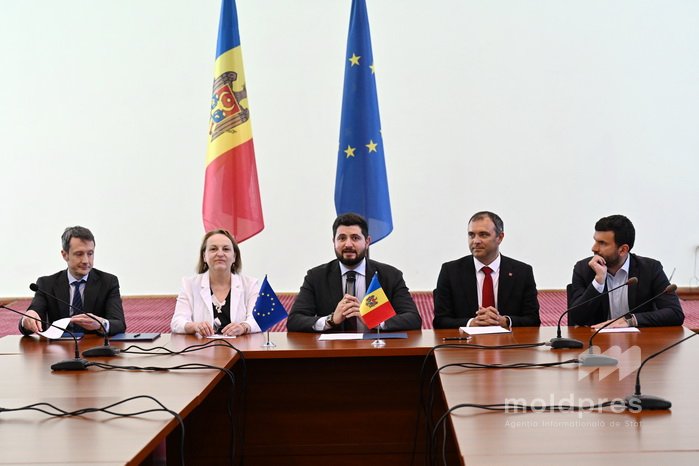
Contract for construction of Balti–Suceava electricity line signed in Chisinau; Moldovan energy minister says investment strengthens independence, resilience of country's power system
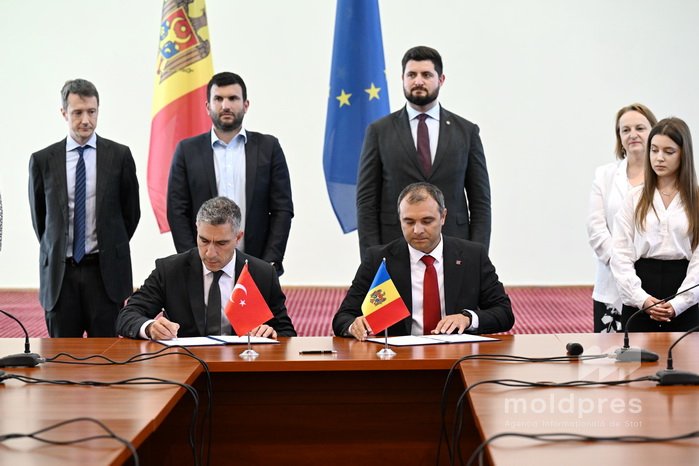
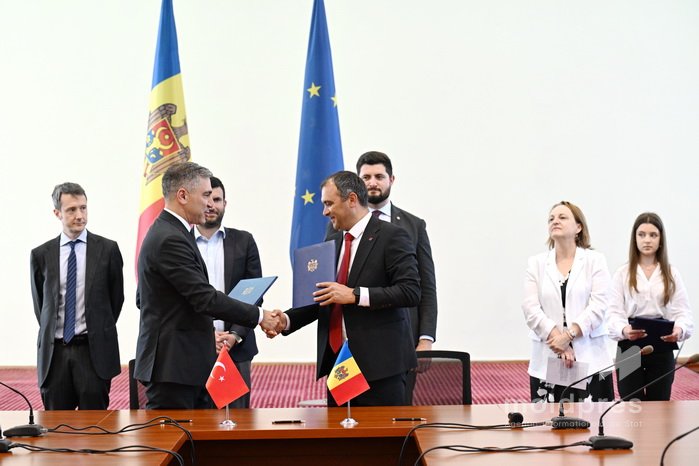
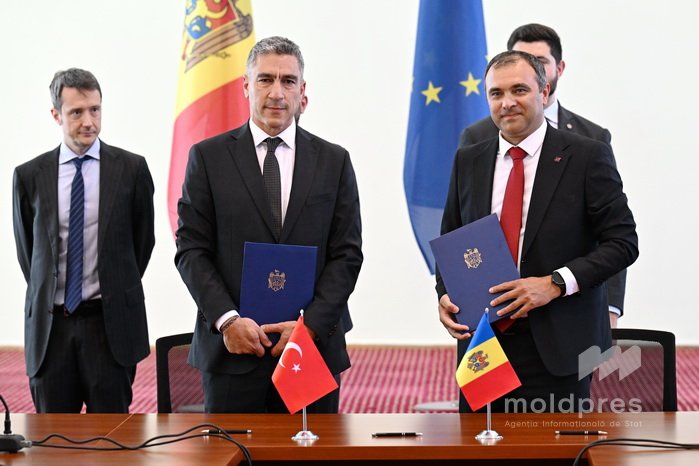
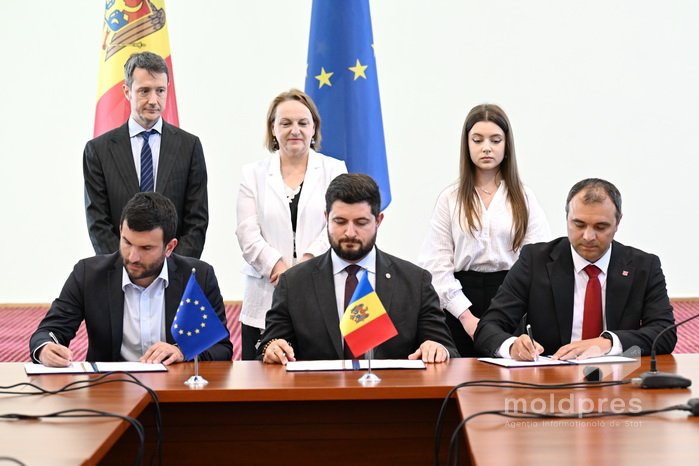
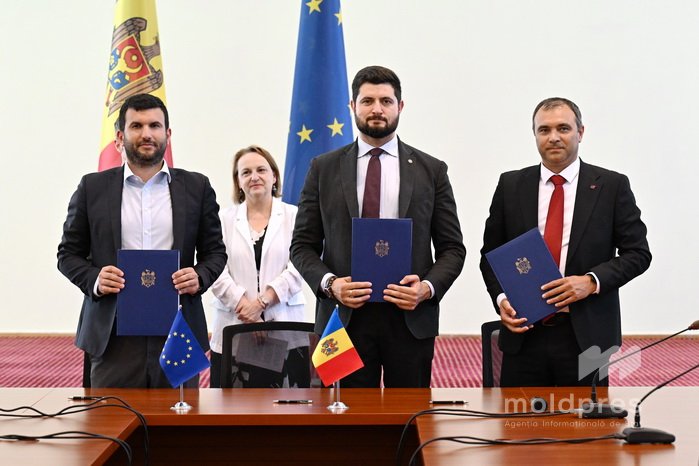
Moldova is taking a new step in strengthening its energy security by signing today, in Chisinau, the contract for the design and construction of the 400 kV Balti–Suceava overhead power line. The project will create the second power interconnection with Romania and will contribute to integrating the national power system into the European market.

At the same ceremony, the Energy Ministry of Moldova, the state-owned enterprise Moldelectrica and the European Bank for Reconstruction and Development (EBRD) signed the Grant Agreement for the implementation of the project titled, Interconnection of the electricity networks between Moldova and Romania, Phase II, which provides for the construction of the Balti-Suceava overhead line.

The new 400 kV overhead power line will have a length of approximately 45 km on the territory of Moldova and will cross 12 rural localities in the districts of Glodeni, Falesti, Balti and Rascani. The energy infrastructure to be built will be an essential component of the future electricity transmission link between Moldova and Romania, contributing to increasing cross-border electricity exchange capacity and strengthening the security of operation of the National Power System.

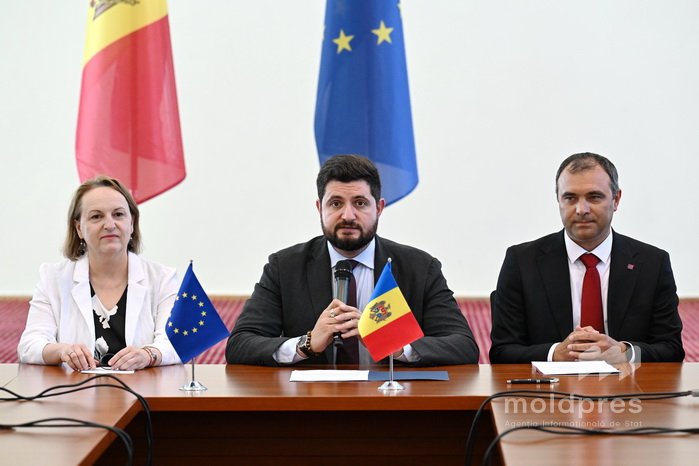
Energy Minister Dorin Junghietu said that the Balti–Suceava power line was a strategic project for the country and an investment that consolidates the independence and resilience of Moldova’s power system.

“Today, we mark an important moment for the energy security and European path of Moldova. The signing of the contract for the construction of the Balti–Suceava power line means that we are moving from plans and financing to the actual implementation of a strategic project. It is an investment that strengthens the independence and resilience of our power system. In recent years, Moldova has learned, perhaps better than anyone, that energy security cannot be built on dependencies. It is built through interconnections, investments and integration with the European energy market,” said Dorin Junghietu.

The energy minister also said that Moldova was currently developing three 400 kV power lines that will definitively change the energy map of the country.

“Vulcanesti–Chisinau is the line of energy independence, as it allows us to transport electricity from Romania and from the European market to any point of the country. Balti–Suceava is what we call the ‘Line of Resilience’. It will increase interconnection capacity with the north of the country, diversify supply routes and make our energy system safer and more flexible in the face of any challenges. And Straseni–Gutinas will become the ‘Line of Freedom’, strengthening our connection with the European Union through a new strategic corridor. These three projects are not just kilometers of conductors and high-voltage pylons. They mean more competition on the energy market, more options for consumers, better conditions for investment and deeper integration into the European energy market,” Minister Junghietu said.

For the implementation of the project, the European Union will provide a grant of 15.4 million euros. Ambassador of the European Union to Chisinau Iwona Piórko noted that the Balti–Suceava Line was a major infrastructure project and an investment in the energy security of Moldova, in its resilience and in its European future.

“The European Union is proud to support this project of national importance with a grant of 15.4 million euros. Together with the European Bank for Reconstruction and Development (EBRD) and the European Investment Bank (EIB), we are investing in real benefits for people’s lives. It is not just about cables, but about people, stability and a shared future. Every new connection with the European energy market means more security for citizens, more opportunities for businesses and reduced vulnerability to external pressure. By signing the contract for the design and construction of the Balti–Suceava overhead power line, we are taking another decisive step in strengthening the energy future of Moldova,” the official concluded.

The EU grant of 15.4 million euros is complemented by loans of 30.8 million euros each, provided by the EBRD and the EIB, bringing the total value of the project to 77 million euros.

Giuseppe Grimaldi, Head of the EBRD office in Moldova, emphasized that this project was an essential step in strengthening the energy security of Moldova, reducing its dependence on a single supply source and advancing its integration with the European electricity market.

“By providing a grant of 15.4 million euros, the European Union is covering approximately 20 per cent of the total cost of the project. The financing provided by the European Union complements the support of the EBRD, which will also support the modernization of the internal electricity transmission network in Moldova, including substations and essential equipment. This will improve the reliability of the system and allow the integration of additional power generation capacity from renewable sources. The contribution of the European Union complements the parallel financing provided by the EBRD and the EIB, each providing loans of 30.8 million euros, bringing the total value of the project to almost 77 million euros,” Giuseppe Grimaldi continued.

Alberto Carlei, Head of the EIB Representation in Moldova, pointed out that the Balti–Suceava interconnection was more than just a transmission line: it is strategic infrastructure for Moldova, which will contribute to the country’s integration into the European electricity market, to strengthening energy resilience and will bring benefits to citizens and businesses of Moldova.

The implementation of the project will involve the construction of the infrastructure associated with a 400 kV transmission line, including foundations for pylons, steel structures, conductors, insulators, protection and grounding systems, as well as the integration of the new infrastructure into the operational architecture of the transmission network operated by the state-owned enterprise Moldelectrica. In parallel, all activities required to ensure compliance with the technical, environmental and safety requirements applicable to strategic energy infrastructure projects will be carried out.

Sergiu Carmanschi, General Director of Moldelectrica enterprise, said that for Moldelectrica, this project means strengthening the national electricity transmission network and increasing cross-border electricity transfer capacity.

“The signing of the grant agreement and the contract for the design, supply and construction of the 400 kV Balti–Suceava overhead power line is an essential step in implementing the second interconnection with Romania, one of Moldova’s strategic priority projects for interconnection with the European power system. Moldelectrica is fully committed to implementing this strategic investment professionally and efficiently, and in line with the highest technical standards,” Sergiu Carmanschi underlined.

The 400 kV Balti–Suceava overhead line is a key element in the development and modernization of the electricity transmission network of Moldova. Once completed, it will increase the degree of interconnection with the Continental European Power System (ENTSO-E), enhance the operational flexibility of the network and create additional conditions for the development of commercial electricity exchanges on the regional market.

Balti–Suceava is the second of three 400 kV power lines to be built to strengthen interconnection with ENTSO-E’s continental European power system. The first is the Vulcanesti–Chișinău power line, the second is the Balti–Suceava line, expected to be completed in 2027, and the third is the Straseni–Gutinas power line, planned for completion around 2030.

The project, Interconnection of the electricity networks between Moldova and Romania, Phase II, is implemented by Moldova’s Energy Ministry through the state-owned enterprise Moldelectrica and is financed by the European Bank for Reconstruction and Development (EBRD), the European Investment Bank (EIB) and the European Union’s Neighbourhood Investment Platform.

The total value of the project is approximately 77 million euros, including a 15.4 million euros on behalf of the EU. The project covers the construction of the 400 kV Balti–Suceava overhead power line and the modernization of the Balti substation.
 Facebook
 Instagram
 X/Twitter
 Telegram
Moldovan PM says government, farmers to work together on solutions to help farmers grow businesses
Investments in modernization of 20 schools, ten medical institutions: financial support provided by EU, European Investment Bank
Public sector pay system to be reformed
Minister of Finance: Impact of VAT reform will not exceed 200 lei per month for 80% of citizens
Parliament speaker says phone scams coordinated from outside Moldova; authorities consider solutions to identify fraudulent calls
USA, Moldova advance Liberty Line project; Moldovan PM says interest of American investors growing
Moldova joins two international maritime conventions
Voted by parliament: legislation on administration, use of public roads to be aligned with EU standards in Moldova
Moldovan parliament adopts new facilities for setting electric energy storage systems
Moldovan parliament speaker says single value-added tax would reduce tax optimization, compensations to go directly to citizens
Moldova's Public Property Agency orders investigation at MoldATSA, suspends enterprise's director from duty
Parliament introduces new rules on minimum wage assessment and adjustment
Deputy Prime Minister presented Moldova’s infrastructure investment opportunities in Greece
Payment service providers to be required to inform consumers about applied fees
Moldovan parliament establishes mechanism for identifying prepaid mobile service users: SIM cards to be able to be activated only based on identity document
First meeting of Moldova – European Union Subcommittee on public administration reform held in Chisinau
Contract for construction of Balti–Suceava electricity line signed in Chisinau; Moldovan energy minister says investment strengthens independence, resilience of country's power system
Moldovan parliament speaker explains salary reform: “Ending disparities between institutions and setting a clear salary hierarchy”
Moldova strengthens energy security: Parliament approves creation of emergency petroleum product stocks
President: Government should not rush with tax reform. Draft must be revised before approval
European Commissioner for Environment expected on first visit to Moldova
 National Bank of Moldova
First meeting of Moldova – European Union Subcommittee on public administration reform held in Chisinau
Moldovan PM, top European bank's president hold dialogue on strategic investments, support for Moldova's European path
Moldovan PM has meeting with Estonian counterpart
Moldovan deputy PM for reintegration has meeting with OSCE High Commissioner on National Minorities
Moldovan PM meets Ukrainian counterpart

Who does Maia Sandu see as President after her?
President: Withdrawal of Russian troops from Transnistria remains priority in dialogue with European partners
Moldovan president says scandal at MoldATSA very serious case, requires inspections at other enterprises too
Moldovan PM, top European bank's president hold dialogue on strategic investments, support for Moldova's European path
Moldovan PM has meeting with Estonian counterpart
Moldovan deputy PM for reintegration has meeting with OSCE High Commissioner on National Minorities
Moldovan PM meets Ukrainian counterpart
Around 120 people with disabilities in residential care to gain access to community-based living in Moldova
Deputy PM for reintegration has meeting with Chargé d’Affaires of United States in Moldova
BTA: Eurovision 2026 Winner Dara Joins Tourism Ministry Campaign to Promote Bulgaria
Salaries of employees from Moldova's social assistance system to be increased; Labour minister: “An important step in recognizing their work”
DOC // Moldovan Energy Ministry publishes memorandum on construction of ~100 MW gas‑fired power plant
Moldovan president meets Board of Directors of European Bank for Reconstruction and Development
Incident in south-east Moldova district during farmers’ protests: MP allegedly deliberately blocks road, hits police officer with tractor
Chisinau hosts first-ever Postal Workers’ March of Moldova, Romania
Traffic blocked in more regions of Moldova amid farmers’ protests; police direct circulation, recommend alternative routes
Receive the latest news directly to your email

Receive the latest news directly to your email