
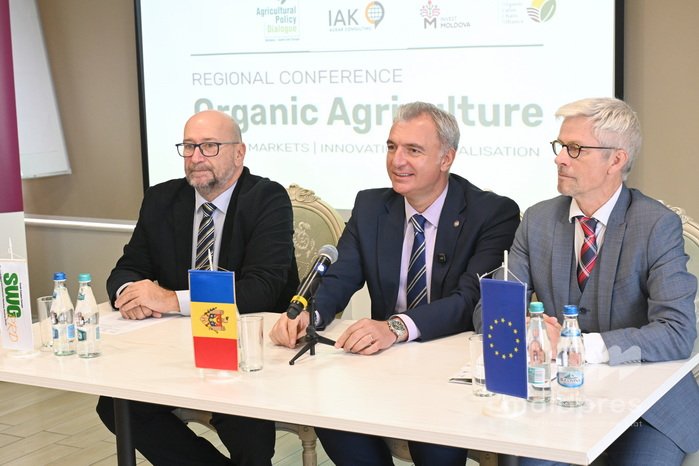
VIDEO // Officials and international experts present opportunities for Moldova’s organic agriculture in Chisinau at Southeast European Conference
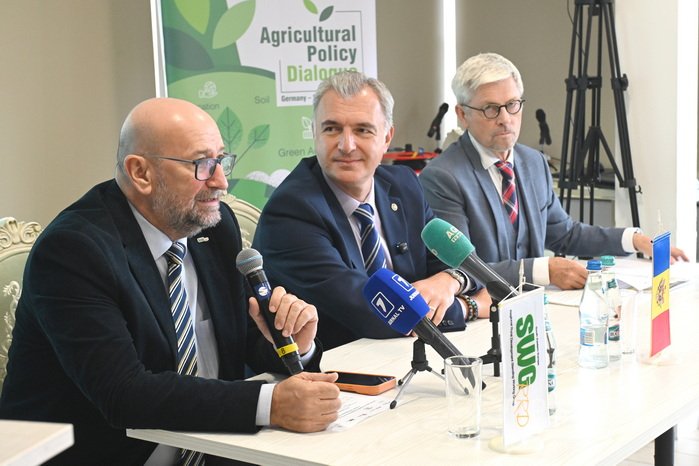
The Republic of Moldova became the region’s center of debate on sustainable agriculture today, hosting the Southeast European Conference on Organic Markets. The regional event, dedicated to strengthening local producers’ access to the European single market, is organized by a consortium of international and national partners, including SWG RRD, the Research Institute of Organic Agriculture (FiBL), EOCC, Invest Moldova Agency and the Moldova Organic Value Chain Alliance (MOVCA).

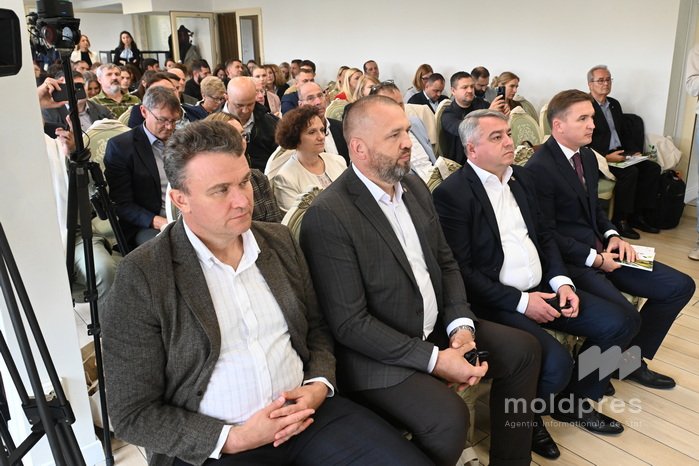
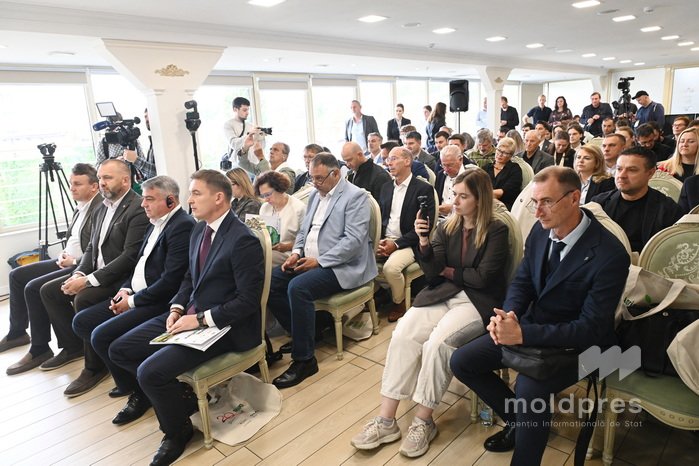
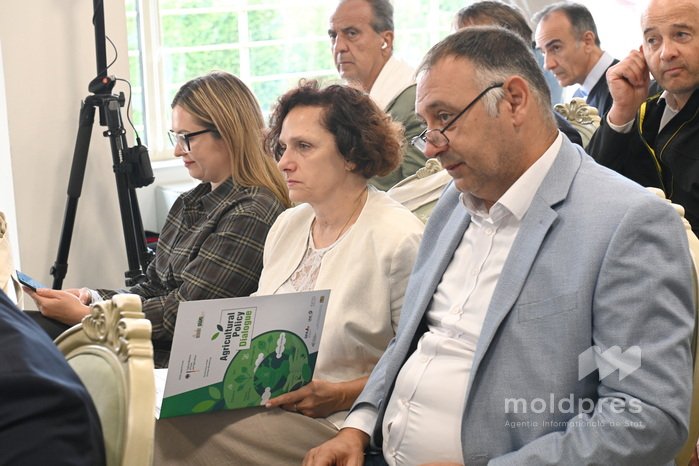
The forum brings together senior officials from the Government of the Republic of Moldova, representatives of Germany’s Federal Ministry of Agriculture, delegates of the European Commission, as well as representatives of professional organizations such as IFOAM Organics Europe, certification bodies, importers, and farmers from across the region.

The conference program focuses on analyzing consumer trends in Europe, adapting to new EU regulations, and harnessing export opportunities for organic products from Eastern Europe.


During the opening session, representatives of the Government in Chisinau emphasized that the transition to green agriculture is not only an environmental requirement, but also an essential strategy for economic growth and alignment with European Union standards.


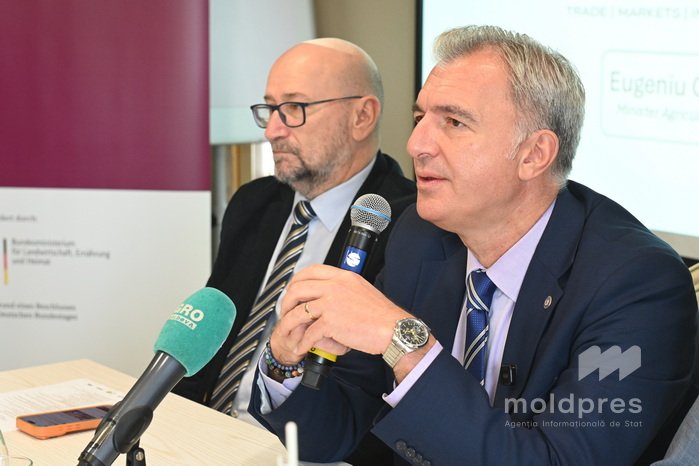
„I would like to thank all international partners, as well as representatives of the European Union and Germany, for the valuable assistance provided to the Ministry of Agriculture and Food Industry. Our country’s growth is ensured by the food industry and the agricultural sector, which remains among the top three main engines of economic development, alongside the information technology sector. We are in the era of artificial intelligence and digitalization, and agriculture is also under the umbrella of these profound transformations. Organic agriculture is being strongly promoted in Moldova, but to continue growing, we need the ongoing support of development partners, as well as an exchange of knowledge and experience,” Minister of Agriculture and Food Industry (MAIA) Eugeniu Osmochescu said.


„We will be guided by the principle that we must go «through difficulties to the stars» in order to join the European Union family. With EU-allocated budgets of more than 1.5 billion euros, we look forward to aligning ourselves with European standards, accessing pre-accession funds, and following the Union’s economic agenda. By taking these technical and legislative steps, we achieve tangible results with a direct impact on economic growth,” the official said.

Osmochescu also mentioned his visits to organic farmers across the country, emphasizing that direct dialogue between local producers and experts from EU member states creates genuine opportunities for attracting new investments.

Standardizing and harmonizing legislation with the new European Regulation on organic production (EU Regulation 2018/848) is a mandatory condition for removing trade barriers.


„It is a great pleasure to be in Chisinau. Organic agriculture must be strictly guided by the European Union’s regulatory framework, and the role of governments is to provide the necessary legislative framework so that imports and exports can be promoted transparently and safely. National legislation must be aligned with EU Regulation 2018/848, and authorities must guarantee quality control throughout the entire value chain. However, organic agriculture requires a holistic approach. We are talking about business, but also about healthy food and balanced diets. During the discussions held in Chisinau, I asked a rhetorical question: «Why are we exporting our health?» We must also develop domestic markets in parallel. The local population must be informed about the benefits of organic products, while local distribution channels and the tourism sector – which is growing in the Western Balkans and throughout the region – must be fully leveraged to promote these products,” said Boban Ilic, Secretary General of the Regional Rural Development Standing Working Group (SWG).


For their part, German partners highlighted the support they provide to countries in South-Eastern Europe and the Black Sea region in the process of aligning with the single market, emphasizing that the support offered is not paternalistic, but based on equal partnership.


„The complexity of the regulatory framework and international standards requires complete market transparency. Organic legislation is not simple, but once Moldova and other countries in the region align their regulatory frameworks with the European one, the doors to international markets will definitely open. In Germany, over the past three years, we have redirected our strategic focus by developing a new export strategy in which organic products represent the most important component. In these uncertain times, ensuring high-quality food products turns organic production into a strategic asset. Through our programs, such as the International Organic Trade Network, we do not act as mentors, but as partners. We learn from one another, exchange ideas, and have been building this collaborative network for more than 30 years,” said Thomas Zebunke, Director of Agriculture at Germany’s Federal Ministry of Agriculture, Food and Regional Identity (BMLEH).


One of the highlights of the conference is the panel dedicated to strengthening organic exports to the EU single market. During the panel, successful companies from Eastern Europe present their case studies, openly discussing logistical challenges, strict certification requirements, and the financial opportunities generated by the growing demand for organic food across Europe.

The conference continues throughout the day with thematic working sessions and round tables aimed at generating concrete proposals for next year’s agricultural budgets and policies.

The organic agriculture sector in the Republic of Moldova is undergoing an extensive process of modernization and alignment with European Union standards. At present, more than 150 certified organic producers are registered in the country, managing an agricultural area of approximately 30,000 hectares. Moldova’s organic export portfolio is dominated by cereals, oilseeds, walnuts, grapes, and dried fruit, with Germany, the Netherlands, Italy, and Austria serving as the main European destinations.

The transition to sustainable agriculture is supported by the state and international development partners. By updating the national regulatory framework and harmonizing it with EU Regulation 2018/848, the authorities aim to simplify certification procedures, eliminate tariff and non-tariff barriers, and expand direct subsidy measures for farmers undergoing the conversion period.

The Moldova Organic Value Chain Alliance (MOVCA) together with continuing education platforms such as the Organic Farmers’ School plays a central role in strengthening this ecosystem. These initiatives directly contribute to increasing the competitiveness of domestic products, protecting the soil, and effectively integrating Moldovan producers into the European single market.
 Facebook
 Instagram
 X/Twitter
 Telegram
VIDEO // This year’s National Wine Day to bring together more than 110 producers in central Chișinău
DOC // Law on crypto-asset market published in Official Journal and enters into force
Natural gas prices on European exchange continue to rise; energy minister says international energy crises directly affect Moldova
Government approves ratification of agreement on construction of bridge over Prut River and first highway section in Moldova
Modernization works for district heating systems of Chisinau, Balti cities to be declared projects of national public utility
Companies from both banks of Dniester explore Romanian market to identify new opportunities for business expansion
VIDEO // Consumers to be able to compare natural gas and electricity suppliers’ offers in one place
Implementation of Growth Plan advances; Moldovan government prepares new package of projects to attract investments worth 2 billion euros
Grants worth over one million euros to develop Moldova’s innovation ecosystem with EU support
Convergence fund for Transnistrian region expected to finance infrastructure, education and public services
Application of national tax regime to goods from Transnistrian region enters new stage
Parliament votes in first reading on broad package of tax and customs amendments
Iași–Ungheni railway line to be rehabilitated and electrified
Moldovan Railways prepares new investments to strengthen railway connection to Giurgiulesti Port
VIDEO // Officials and international experts present opportunities for Moldova’s organic agriculture in Chisinau at Southeast European Conference
StratCom analyzes main vulnerabilities of regional information environment ahead of elections in Gagauzia
Parliament to examine legislative measures to strengthen NBM independence in line with European standards
PHOTO GALLERY // Journey through Northern Moldova through MOLDPRES lens
 National Bank of Moldova
Parliament to ratify new agreement between Moldova and Romania on strategic transport infrastructure
Civil protection and fire protection to be regulated by rules aligned with European standards
Legal framework for integration of foreigners in Moldova to be strengthened
National legislation on electronic evidence to be aligned with international standards
Energy communities: clearer rules for establishment and registration

Obtaining permits and approvals for renewable energy production to be simplified
StratCom analyzes main vulnerabilities of regional information environment ahead of elections in Gagauzia
Parliament to examine legislative measures to strengthen NBM independence in line with European standards
PHOTO GALLERY // Journey through Northern Moldova through MOLDPRES lens
Prime Minister visits New York: bilateral meetings and address to plenary of UN General Assembly
Moldova and Kazakhstan strengthen cooperation
Moldovan and Romanian lawmakers to discuss cooperation in education
Moldovan PM says government must have necessary tools before crises materialize
Moldovan parliament approves establishment of state of emergency in energy, hydrological sectors for 60 days
Moldovan parliament declares nationwide state of emergency in energy, hydrological sectors for 60 days
Moldovan PM responds to opposition MPs on cutting fuel excise duty, value-added tax
Moldovan PM, European Commission official discuss accelerating growth plan projects
New director at Teleradio-Moldova Company: Ecaterina Cheptanaru wins competition
Moldovan parliament speaker explains need for state of emergency
Moldovan-American sectoral cooperation discussed at Moldova's Defense Ministry
Moldovan energy minister gives explanations on how Transnistrian region to be supplied with energy resources during next cold season
Receive the latest news directly to your email

Receive the latest news directly to your email