
ARMENPRESS:EU eyes Synopsys Armenia model for chip design training
The European Union is looking to Armenia’s chip design education ecosystem as a potential model for training the next generation of specialists. Built over more than 20 years through the efforts of Synopsys Armenia, the program has drawn EU interest amid growing demand for semiconductor workforce.

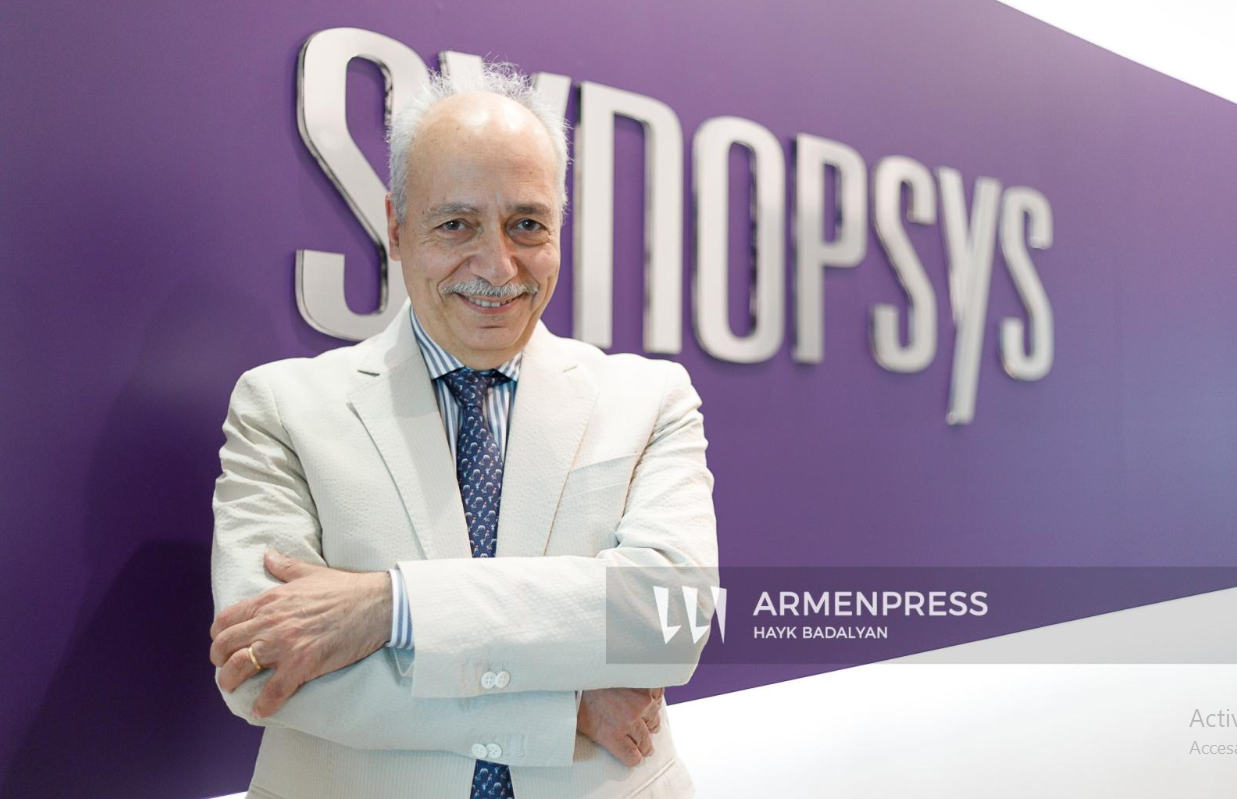
Dr. Yervant Zorian, President of Synopsys Armenia, told Armenpress that the Armenian program could serve as a foundation for training new specialists in a number of European countries. According to the company president, Armenia’s experience will help European countries train chip design specialists, a profession that is in steady global demand.

On 5 May 2026, at the first EU–Armenia Summit, six Letters of Intent were handed over by the EU to key Armenian companies and foundations. Synopsys Armenia is one of those six, with the partnership focusing on strengthening semiconductor skills and links between education and industry, benefiting both Armenia and the European Union’s competitiveness.

These six Letters of Intent reflect the growing engagement between the EU and Armenian stakeholders. They show that the partnership is already translating into concrete cooperation and opportunities for citizens and economies, laying the groundwork for future collaboration.

Asked about the timeframe for the cooperation and its details, Dr. Zorian said:

“In general, the European Union has supported Armenia through various programs for many years. In this case, however, an effort has been made to identify initiatives through which Armenia can contribute to Europe. One such initiative is Synopsys Armenia’s university education program, through which we train specialists in chip design,” Zorian said.

The Synopsys Armenia Educational Department (SAED) offers advanced education for Bachelor’s and Master’s programs in “IC Design” and “EDA” specializations, as well as PhD programs in “Automated Systems” and “Microelectronics and Nanoelectronics”.

According to Dr. Zorian, chip design is currently a field of global importance, where there is a shortage of specialists almost everywhere—from the United States to Japan, China, and Europe. In Armenia, an educational program in this field has been running for more than 20 years, and it has developed a well-established system for training specialists.

“The European Union has seen the effectiveness of this program and is interested in applying it in its own countries as well. Today, various initiatives are being implemented in the United States, Canada, and Europe to develop the chip design sector. It is necessary to increase the number of chip design specialists, and in this context, Synopsys Armenia can support EU member states by sharing its experience and educational model,” he noted.

No specific timelines have yet been set, as implementation must be coordinated with various countries. However, negotiations are already underway with several states regarding the introduction of the Armenian educational program in their training centers.

He clarified that the initiative is aimed primarily not at universities, but at training centers where professionals who already hold higher education degrees will study. The courses will last an average of four to six months.

“A significant part of Synopsys Armenia’s program is based on the company’s technological solutions, software tools, and intellectual property. These will be provided to the new training centers that will be established in European countries,” he said.

Dr. Zorian explained that the chip creation process consists of two main stages: design and manufacturing. In the first stage, chip architects and designers develop solutions for AI, the automotive industry, robotics, and other fields. In the second stage, those designs are transformed into actual semiconductor products.

“Today, nearly all smart devices we use—phones, watches, glasses, and many other technologies—are based on chips. That is why the world needs more chip designers, and our educational program is specifically aimed at training such specialists,” he emphasized.

According to him, about 150 new specialists graduate from the program in Armenia each year. The number of applicants exceeds available places several times, allowing the selection of the best candidates.

Speaking about the future of the sector, Dr. Zorian noted that technological development will be largely driven by chips.

“Artificial intelligence, robotics, and almost all intelligent systems of the future are based on chips. Armenia has been developing this field for about 25 years and today already has a large professional community and highly qualified specialists. We can not only be useful to Europe but also continue strengthening Armenia’s position as one of the leading centers for chip design,” he concluded.
 Facebook
 Instagram
 X/Twitter
 Telegram
BTA: Bulgarians' Trips Abroad Rise 5.5%, Non-residents' Arrivals Up 2.4% in May
Ukraine simplifies citizenship procedure for Moldovans
BTA: Eurovision 2026 Winner Dara Joins Tourism Ministry Campaign to Promote Bulgaria
BTA: Medical University-Sofia Introduces New Bachelor's Programmes for International Students
BTA: Innovation Ministry to Create Advisory Council of Robots
BTA: Chef Nikolay Genchev Takes First Place in National Paella Championship in Burgas
ARMENPRESS: Yerevan officials tease “new format” Vardavar celebrations
BTA: Archaeologists Uncover Earlier Temple Beneath Heracles Sanctuary in Ancient Heraclea Sintica
BTA: Bulgaria Faces Difficult Path to 3% Deficit Target While Preserving Economic Stability, Deputy PM Pekanov Says
ARMENPRESS: EU ministers discuss strengthening Armenia’s resilience and economic diversification
BTA: LIK Issue on Christo and Jeanne-Claude Goes on Show in Paris
ARMENPRESS: EU ministers discuss support for Armenia at Foreign Affairs Council-format meeting
BTA: Bulgarian Armed Forces Hold Exercises to Enhance Interoperability
ARMENPRESS: Armenia to send humanitarian aid to Lebanon via Türkiye
Diaspora Days // Story about Moldova told through colors
Air alert in Ukraine: Traffic on Maiaki–Udobnoe bridge suspended
BTA: Trend of Falling Water Levels in the Danube Persists, Hydrological Situation Remains Difficult
VIDEO // Călărași forms largest voluntary amalgamation cluster in Moldova
 National Bank of Moldova
Prime Minister at Festival in Sipoteni: Government will work so that every village, every community and all Moldovans can prosper
Prime Minister and Turkish Ambassador approach prospects for Moldovan-Turkish cooperation
Prime Minister in talks with Italy’s Ambassador
Moldovan, Belgian Prime Ministers discussed European path of country
Secretary General of Government at Diaspora Forum: We need each of you to build stronger communities

Diaspora Forum // “The Seven Wonders of Moldova” – project aiming to bring diaspora children closer to country of origin
Diaspora Forum // Moldova promoted in Switzerland through tourism, investment and exports
PHOTO // Moldova and Ukraine strengthen customs cooperation for border security and European integration
Prime Minister and Turkish Ambassador approach prospects for Moldovan-Turkish cooperation
Prime Minister in talks with Italy’s Ambassador
Moldovan, Belgian Prime Ministers discussed European path of country
Diaspora children to benefit from new measures to support integration into education system of Moldova
Prime Minister at Diaspora Forum: We must restore people’s optimism and confidence that Moldova is moving in right direction
ARMENPRESS // EU membership referendum in Armenia not possible at this stage, Pashinyan says
VIDEO // Over 450 town halls decided to merge voluntarily and will receive investment funds
Deputy Prime Minister at Diaspora Forum: Each of you is an ambassador of our country and contributes to promoting image of Moldova
Prime Minister at Diaspora Forum: We must improve people’s lives and restart engines of economy
PHOTO GALLERY // Diaspora at home: Images from largest gathering of Moldovans from abroad
Strengthening Moldovan-Swedish partnership discussed by Prime Minister and Sweden’s Ambassador
Prime Minister’s message to diaspora citizens: I encourage you to contribute to development of Moldova
Speaker at Diaspora Forum: Moldova shows through its citizens at home and abroad that it deserves to become part of great European family
Receive the latest news directly to your email

Receive the latest news directly to your email