
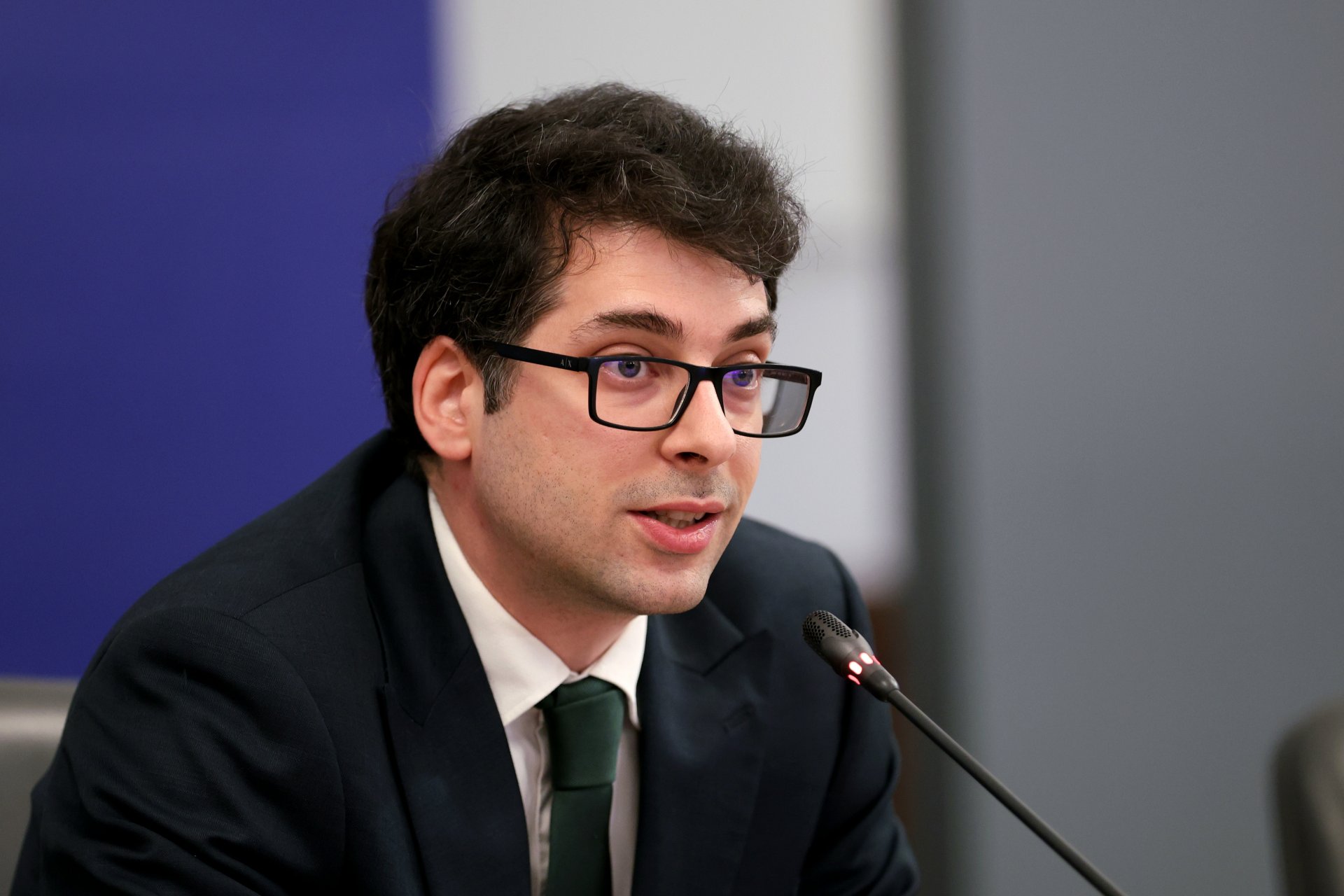
BTA: Bulgaria Faces Difficult Path to 3% Deficit Target While Preserving Economic Stability, Deputy PM Pekanov Says
It is very difficult for Bulgaria to achieve a 3% budget deficit in 2026 without risking excessive pressure on the economy and slowing it down, which would also affect people’s standard of living, Deputy Prime Minister Atanas Pekanov said in a Nova TV interview on Saturday.

Pekanov recalled that Bulgaria is set to receive nearly EUR 1 billion under the fourth payment of the Recovery and Resilience Plan (RRP). He said that until recently Bulgaria had received around 50% of the total allocated funds, and with the upcoming disbursement this share would rise to 68%, while the EU average currently stands at around 75%. Work is continuing on securing the fifth payment, which, according to him, is crucial for the budget and for receiving funds as quickly as possible. His goal, he said, is for Bulgaria to absorb 100% of the funds, although he questioned how realistic this is given delays and the need for still unimplemented reforms.

He warned that there had been a risk of irreversible loss of funds due to the actions of the governing coalition during the Zhelyazkov cabinet period in 2025, when anti-corruption reforms were, in his words, treated as something that could be tailored for political purposes and potentially used against opponents. As a result, Bulgaria faced sanctions and funds from both the second and third payments were withheld, money that could have been lost by May, Pekanov said.

According to the Deputy PM, under the fourth payment there are currently three pending conditions-related disbursements that still need to be released. He stressed that the deadline of August 31, 2026, for implementing all projects under the Recovery and Resilience Plan is binding and cannot be changed. Only measures completed by that date can be reported under the plan, while anything unfinished will not be eligible for reimbursement, according to him.

Pekanov added that, compared to expectations three weeks earlier, when he anticipated Bulgaria would receive around EUR 600 million under this tranche, the actual amount of around EUR 1 billion represents a significantly improved outcome, describing it as a “rescue” of a large portion of the funds.

Pekanov also commented that previous leaderships of the Finance Ministry had allowed liquidity shortages for payments to final beneficiaries, which he said was one of the reasons for the current borrowing.

Regarding Bulgaria’s position on EU sanctions against Russia, Pekanov clarified that the country has not imposed a veto but has instead expressed reservations on certain elements of the proposed next sanctions package. He said that negotiations are ongoing and that any member state seeing potential risks to its economy or energy sector is entitled to raise concerns. Bulgaria, the Deputy PM added, continues to support Ukraine and seeks further partnerships.

On the phase-out of Bulgaria’s coal-fired power plants, Pekanov said the topic had often been subject to speculation. He pointed out that this country had reduced its emissions by 40% compared to 2019 without severe consequences. Between 2030 and 2038, he said, Bulgaria is expected to retain between 1.2 and 1.6 gigawatts of coal capacity as part of its energy system, given global instability, describing it as a sovereign resource that would need to be maintained as a cold reserve. He also suggested that some of the workers currently employed in the sector could be redirected to jobs with longer-term prospects.
 Facebook
 Instagram
 X/Twitter
 Telegram
BTA: Eurovision 2026 Winner Dara Joins Tourism Ministry Campaign to Promote Bulgaria
ARMENPRESS:EU eyes Synopsys Armenia model for chip design training
BTA: Medical University-Sofia Introduces New Bachelor's Programmes for International Students
BTA: Innovation Ministry to Create Advisory Council of Robots
BTA: Chef Nikolay Genchev Takes First Place in National Paella Championship in Burgas
ARMENPRESS: Yerevan officials tease “new format” Vardavar celebrations
BTA: Archaeologists Uncover Earlier Temple Beneath Heracles Sanctuary in Ancient Heraclea Sintica
ARMENPRESS: EU ministers discuss strengthening Armenia’s resilience and economic diversification
BTA: LIK Issue on Christo and Jeanne-Claude Goes on Show in Paris
ARMENPRESS: EU ministers discuss support for Armenia at Foreign Affairs Council-format meeting
BTA: Bulgarian Armed Forces Hold Exercises to Enhance Interoperability
ARMENPRESS: Armenia to send humanitarian aid to Lebanon via Türkiye
BTA: New Marble Statue Fragments Discovered at Ancient Heraclea Sintica
ARMENPRESS: IRI observers: Armenia’s June 7 elections conducted calmly and fairly
Prime Minister at Diaspora Forum: We must restore people’s optimism and confidence that Moldova is moving in right direction
VIDEO // Over 450 town halls decided to merge voluntarily and will receive investment funds
Deputy Prime Minister at Diaspora Forum: Each of you is an ambassador of our country and contributes to promoting image of Moldova
Prime Minister at Diaspora Forum: We must improve people’s lives and restart engines of economy
 National Bank of Moldova
Prime Minister and Turkish Ambassador approach prospects for Moldovan-Turkish cooperation
Prime Minister in talks with Italy’s Ambassador
Moldovan, Belgian Prime Ministers discussed European path of country
Secretary General of Government at Diaspora Forum: We need each of you to build stronger communities
Prime Minister at Diaspora Forum: We must restore people’s optimism and confidence that Moldova is moving in right direction

PHOTO GALLERY // Diaspora at home: Images from largest gathering of Moldovans from abroad
Strengthening Moldovan-Swedish partnership discussed by Prime Minister and Sweden’s Ambassador
Prime Minister’s message to diaspora citizens: I encourage you to contribute to development of Moldova
Speaker at Diaspora Forum: Moldova shows through its citizens at home and abroad that it deserves to become part of great European family
Head of Reintegration Policies Bureau meets with Representatives of Mission of International Committee of Red Cross in Moldova
Diaspora Forum held in Chișinău
VIDEO // Moldelectrica: Final consumers were not affected by damage to Bălți–Dnestrovsk Line
DOC // Strengthening security and cooperation with EU
People’s Assembly of Gagauzia must have full mandate
330 kV Bălți–Dnestrovsk power line severely damaged by natural disasters
Disciplinary sanctions after Taliban delegation’s visit to the Republic of Moldova
Republic of Moldova making progress in European integration process
President explains current energy crisis and urges reduced consumption during peak hours
Energocom: Electricity shortage during peak hours; consumers urged to save energy
Prime Minister held talks with Bulgarian counterpart
Prime Minister: This government’s focus is to moderate rise in real estate prices
Receive the latest news directly to your email

Receive the latest news directly to your email