
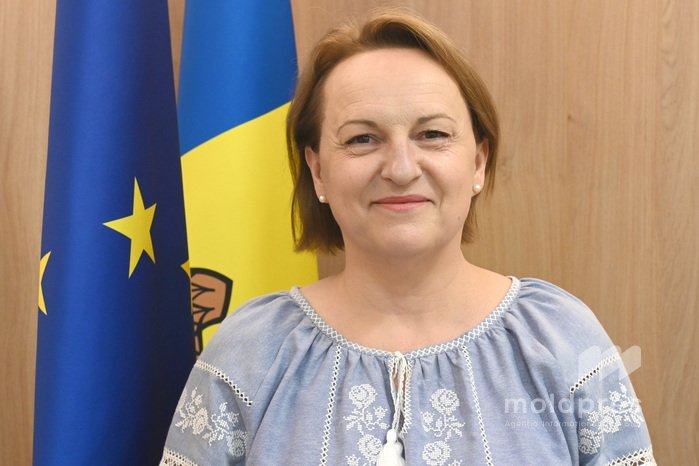
MOLDPRES INTERVIEW // Ambassador Iwona Piorko: ''Moldovans chose the European future and EU is determined to turn this choice into reality''
Marking 35 years of independence, the Republic of Moldova stands at a pivotal moment for its European future. In an exclusive interview given with MOLDPRES, EU Ambassador to Moldova Iwona Piórko discusses the next steps in the accession process and emphasizes that the country is ready to move forward with opening the remaining negotiating clusters.
Addressing Moldova's security in the context of regional and hybrid threats, Iwona Piórko stresses that "Moldova's security is our shared European security."
In a message to citizens on the occasion of Independence Day, the Ambassador reaffirms the EU's support for the country's European choice.
MOLDPRES: On 27 August, the Republic of Moldova marks the 35th anniversary of the proclamation of its independence. Over these 35 years, the country has gone through several phases and geopolitical orientations. Today, European integration is the Republic of Moldova’s strategic objective. How is this European journey viewed in Brussels against a new political and geopolitical backdrop, marked by the war in Ukraine, hybrid threats and profound changes in Europe?Iwona Piórko: First of all - la mulți ani, Republica Moldova! I want to congratulate all citizens of the Republic of Moldova as you celebrate 35 years of independence. This milestone is a testament to your nation’s resilience, determination, and spirit.
Over these 35 years, Moldova has faced complex challenges and went through profound changes. The people of Moldova have also made a strategic choice— to anchor the country’s future in peace, democracy and prosperity, as part of the European Union. And the European Union is committed to helping make that choice a reality.
In June 2022, the European Union granted Moldova candidate status—a historic decision that recognised reforms efforts and commitment to European values. Since then, Moldova’s progress, despite immense geopolitical pressures, has been nothing short of inspiring.
The EU is not just a geographical space or an economic project. It is a community of values, security and solidarity. And Moldova has shown that it belongs in that community.
On this occasion, I would like to address the citizens of the Republic of Moldova: Your aspiration for a better life—free from corruption, free from external coercion, and full of opportunity—is exactly what the European Union stands for. As you celebrate today, know that you are not alone. The EU is your partner, your ally, and your future home.
MOLDPRES: Accession negotiations have entered a substantive phase, and the Republic of Moldova already has two clusters open. How do you assess the pace of the negotiations? How many clusters does Brussels estimate could be opened by the end of this year, and what does the Republic of Moldova need to do to maintain this pace?Iwona Piórko: Moldova has moved from opening accession negotiations to completing the screening process, and now opening two clusters in a remarkably short period of time. All of this is a recognition of the hard work and real progress Moldova has made.
The European Commission’s assessment is clear: the remaining clusters are also ready to be opened. The next step is for Member States to take the necessary decisions, and I can assure you that this will remain high on the EU agenda in the coming months.
In the meantime, no time is lost. Technical work continues at full speed. We are working closely with the Government across all clusters, monitoring and supporting accession-related reforms and preparing Moldova for the next steps.
The Growth Plan and the Reform Agenda provide both the roadmap and the resources to accelerate this work. These reforms are about building a stronger, more prosperous Moldova — and improving people’s lives.
So, the message is clear: keep the political determination, keep delivering reforms, and keep the momentum. Ultimately, this will be what defines the pace of accession. The EU will be there as a reliable partner all the way to membership.
MOLDPRES: Is there a perception in Brussels that, in the current geopolitical context, the Republic of Moldova’s European integration is no longer merely a foreign policy choice, but a prerequisite for the state’s security and survival? In other words, to what extent is the EU today prepared to invest politically, economically and in the security of the Republic of Moldova so that the country can withstand external pressures and see its European journey through to the end?Iwona Piórko: I would put it very simply: Moldova’s security is our common European security.
Your country’s resilience and resolve have been remarkable. Since the beginning of Russia’s full-scale invasion of Ukraine, Moldova has faced massive economic shocks, energy blackmail, disinformation campaigns, cyberattacks, illicit political financing, and attempts at destabilization and electoral interference.
But Moldova stood firm. It remained democratic and stable, and stayed committed to reforms to build a state that delivers for its citizens — a state that Moldovans themselves want and deserve.
And Moldova is not facing these challenges alone. The EU and Member States have been providing support to strengthen resilience. We are supporting Moldova’s energy security, economic development, cybersecurity and capacity to withstand hybrid threats.
And through the Growth Plan, we are investing in the foundations of a stronger economy and a better quality of life. Because resilience is not only about withstanding pressure. It is also about belief in the future.
The Republic of Moldova on August 27 marks 35 years since the proclamation of its independence. Having broken away from the Soviet Union in 1991, the country has covered a complex path toward state’s consolidation and closer ties with the European Union. In June 2022, the Republic of Moldova was granted EU candidate status and is currently conducting accession negotiations.
The Moldovan authorities have set the goal for the Republic of Moldova to become a full member of the European Union by 2030—a process that entails continuing reforms and meeting accession criteria.
 Facebook
 Instagram
 X/Twitter
 Telegram
Changes in Moldovan Government: Eugeniu Osmochescu proposed for Agriculture and Claudiu Năsui for Economy
Speaker invites citizens to events on 35 years of independence
Moldovan president in Kyiv says more air defense for Ukraine means safer sky for Moldova as well
Moldovan parliament speaker says ammunition at Cobasna used by Russia as argument to maintain troops in Transnistrian region
Voted by Moldova's parliament: Electoral Code supplemented with provisions on postal voting, organization of elections in Gagauz autonomy
Moldovan parliament changes rules of work: new provisions for MPs, parliamentary factions
Inga Ionesii assumes office of Moldova's Ambassador to India
Moldova denounces another agreement signed within Commonwealth of Independent States: parliament votes withdrawal from treaty on books and printing
New MPs in faction of Moldova's Action and Solidarity Party: Roman Rosca, Victor Matraguna start work in parliament
Moldovan parliament speaker conveys message on Independence Day of Ukraine
PHOTO // Moldovan parliament hosts exhibition dedicated to Ukraine’s sacred heritage destroyed by war
Prime Minister on Ukraine’s Independence Day: Moldova is and will remain reliable neighbor and steadfast partner of Ukraine
Parliament to convene in solemn session marking 35th anniversary of proclamation of independence
VIDEO // President visits Kyiv on Ukraine’s Independence Day: Moldova lives in peace thanks to courage of Ukrainian people
MOLDPRES INTERVIEW // Ambassador Iwona Piorko: ''Moldovans chose the European future and EU is determined to turn this choice into reality''
Moldovan PM conveys message on Independence Day
King Charles of United Kingdom congratulates Moldova on Independence Day
U.S. Secretary of State congratulates Moldova on 35th anniversary of Independence
VIDEO // Teachers’ salaries to increase by up to 25 per cent as of January 1, 2027; Moldovan education minister announces monthly payments of one thousand lei until then
Aerial object unauthorisedly flies over territory of Moldova via Palanca, exits toward Ukraine
Elections for People’s Assembly of Gagauzia to take place on November 15; Moldovan Central Electoral Commission approves electoral calendar
 National Bank of Moldova
Moldovan president on Independence Day says Moldova's citizens can achieve great things only together
Moldova celebrates 35 years since proclamation of Independence
Moldovan parliament speaker, new Head of Council of Europe Office in Chisinau discuss democratic reforms, European path of Moldova
Moldovan parliament speaker meets Ambassador of Turkey to Moldova, at end of mandate in Chisinau
Moldovan parliament speaker has farewell meeting with Ambassador of Lithuania

Moldovan parliament speaker meets Ambassador of Turkey to Moldova, at end of mandate in Chisinau
ARMENPRESS: Armenia, Iran discuss construction of second bridge over Araks River
Presidents of Moldova, Romania, Ukraine together in Chisinau on Independence Day
DOC // Published in Official Journal of Moldova: new regulations on postal voting, organization of elections in Gagauzia Autonomous Territorial Unit enter into force
Moldovan parliament speaker has farewell meeting with Ambassador of Lithuania
Lithuanian Ambassador to Moldova awarded Order of Honour
Moldovan president has meeting with members of NATO’s Political Committee
Moldovan foreign affairs minister has farewell meeting with Lithuanian Ambassador
All drone flights banned in Chisinau on August 27; warnings of Moldova's Civil Aviation Authority
Moldovan PM, president of Council of International Civil Aviation Organization discuss developing relevant sector in Moldova
“The Independence That Unites Us. Moldova-35.” Metropolitans Antonie, Vladimir open to dialogue between two Orthodox Churches of Moldova
PHOTO GALLERY // Members of Moldova's first parliament return to hall where they voted Declaration of Independence 35 years ago
Fifty nine young people of Moldova complete paid internship programme in public service
Eugeniu Buzatu wins competition for position of general director of Moldova's Energocom company
VIDEO // Moldovan parliament speaker: ''Independence belongs to everyone. Let us enjoy it and protect it”
Signer of Moldova's Declaration of Independence says spirit of national unity, dignity has never fallen
Receive the latest news directly to your email

Receive the latest news directly to your email