
PHOTOS // Story behind legend of Dracula: Irish culture, film from 1931 presented in Chisinau
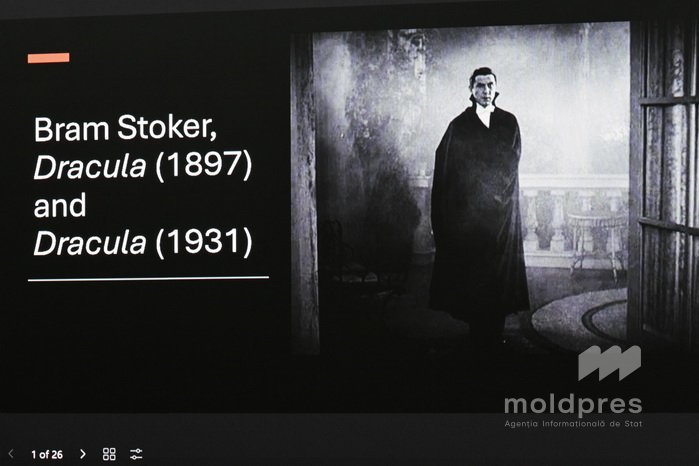
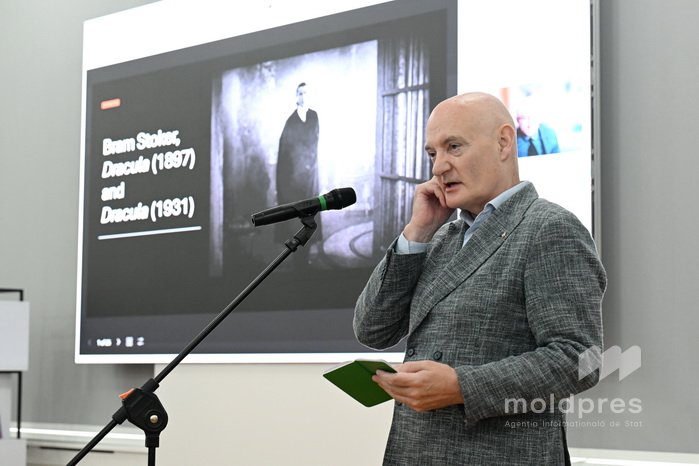
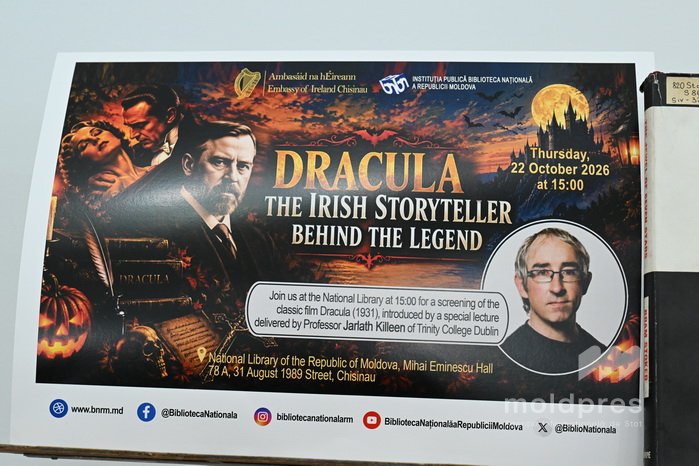
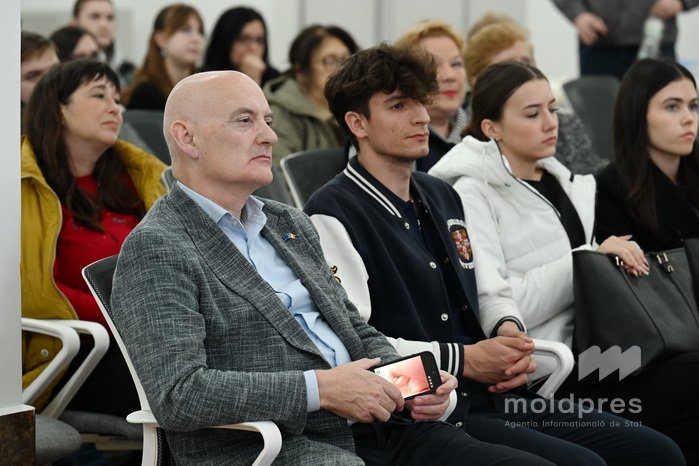
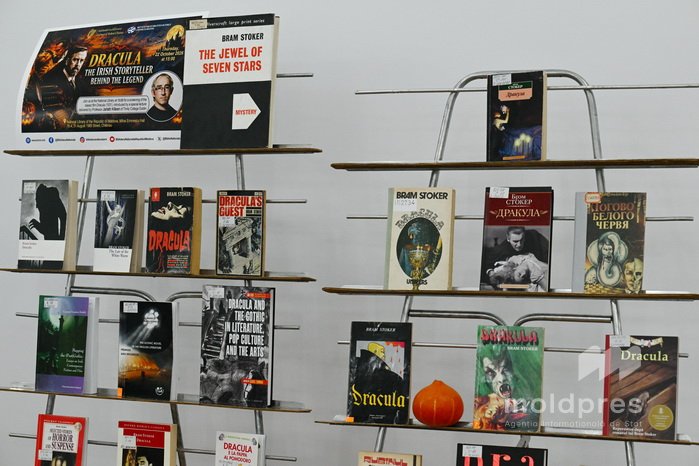
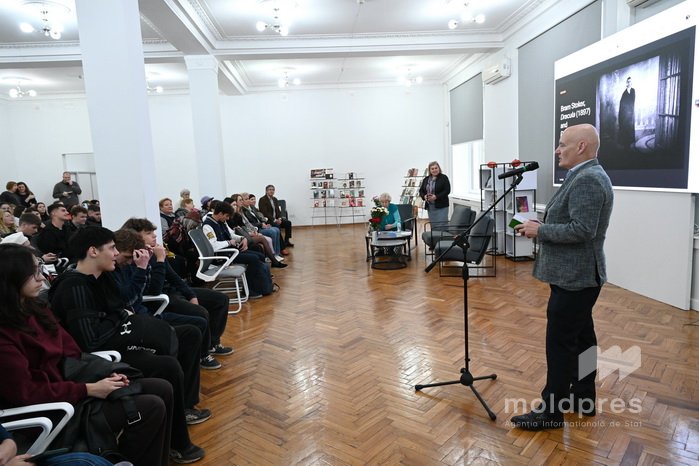
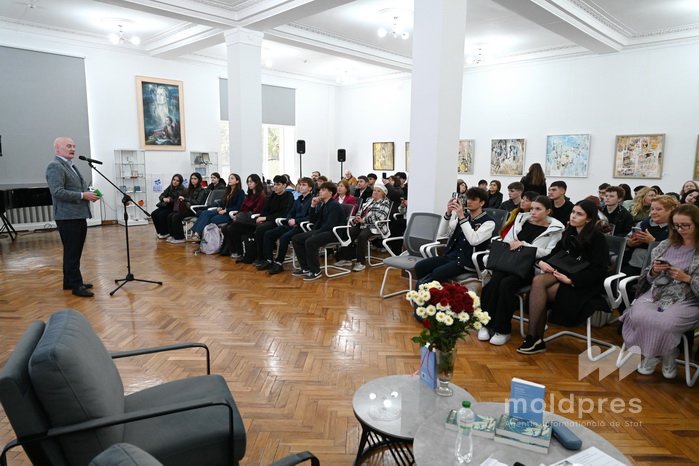
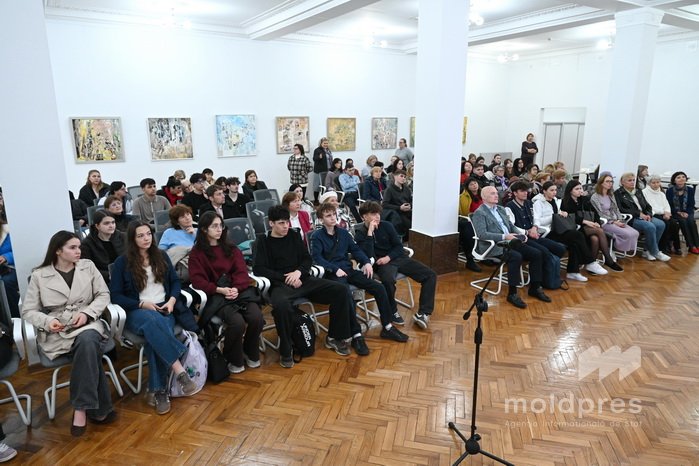
The 1931 film “Dracula” today was screened at the National Library of Moldova (BNRM), as part of the cultural event titled, Dracula: The Irish Storyteller Behind the Legend. Organized in partnership with the Embassy of Ireland in Moldova, the event brought public attention to the connections between Irish culture, Halloween traditions and the legend of Count Dracula, inspired by the novel by Irish writer Bram Stoker.
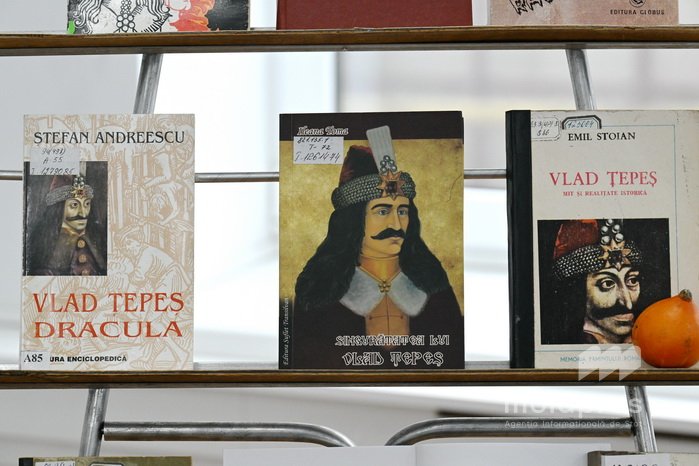
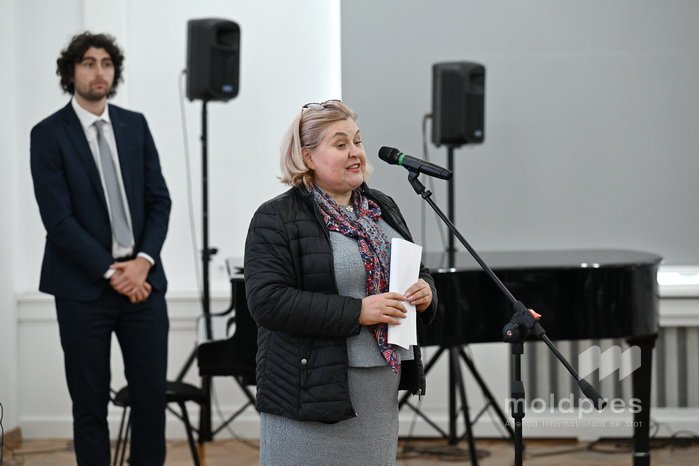
According to the organizers, the event highlighted the influence of Irish culture and traditions on Gothic literature. The characteristics and differences between the historical figure of Vlad the Impaler and the literary figure of Count Dracula were also presented.“We have the opportunity to rediscover our history, the history of Vlad the Impaler, who is associated with the character of Dracula. Vlad the Impaler is an important figure in our shared history with Romania. He is a character who has inspired numerous works of art, has remained present in films and many books, and who truly has connections with the entire European space,” BNRM director Elena Pintilei said.
Ambassador of Ireland to Moldova Myles Geiran highlighted the role of culture in strengthening relations between the two countries, noting that the bilateral ties were supported both by political and economic cooperation and by the large community of Moldovans living in Ireland.“We are here, essentially, to strengthen relations between Ireland and Moldova, which are already very strong, both at the political level and thanks to the large community of Moldovans living in Ireland. However, in addition to the economic and political aspects, culture represents a very important part of our work here. We want to highlight areas with which you are probably already familiar. You may have seen Irish dancers on Europe Day and during Chisinau Day. However, you may not know other aspects of Irish culture, and we aim to bring them to the public’s attention. One of them is Bram Stoker and the novel «Dracula»,” the ambassador said.
The diplomat noted that one of the sources of inspiration for Bram Stoker’s novel was linked to Celtic traditions associated with the Halloween period, which originated largely in Ireland.“During the Celtic period, the end of October and the beginning of November were considered a time of year when our world and the world beyond were very close to one another, and spirits returned among the living. I recently read that the tradition of wearing masks also originated in this belief: people wore masks, so that the spirits visiting them would not be able to recognize them,” Myles Geiran said.
The migration of Irish people to the United States contributed to the spread of these traditions, which evolved over time and later returned to Europe.“Many Irish people left for the United States and took this tradition with them. Over time, it evolved into what you probably know today as Halloween. The tradition later returned to Europe, and beliefs related to this time of year, Halloween, and spirits influenced Bram Stoker as he wrote the novel «Dracula»,” the diplomat said.
The film is part of Ireland’s cinematic heritage, and the screening offers the public of Moldova an opportunity to become familiar with this production.
“This character is also very well described in Irish literature. [...] For the first time, this film featuring the character of Dracula, which was completed in 1931, is being presented in Moldova. It is therefore already part of Ireland’s heritage, and today we have the opportunity to become familiar with this film,” Elena Pintilei said.
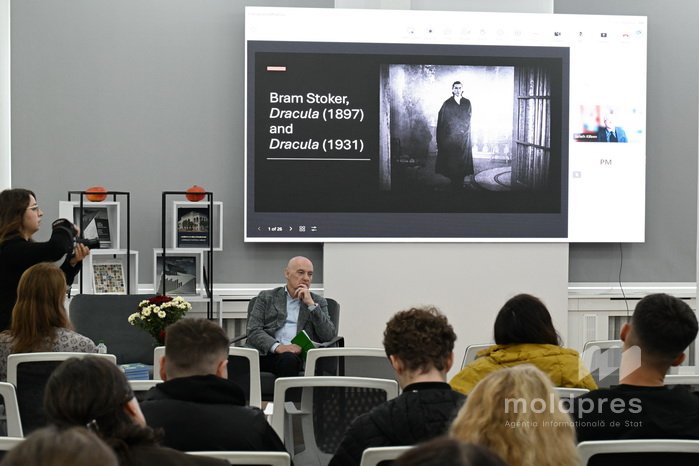
As part of the event, Professor Jarlath Killeen, a specialist in Irish literature at Trinity College Dublin, was invited to provide an online literary and historical context regarding Bram Stoker’s work and the 1931 film adaptation.
Released in 1931, the film “Dracula,” directed by Tod Browning and produced by Universal Pictures, is one of the productions that laid the foundations of sound horror cinema. Inspired by the novel of the same name by Irish writer Bram Stoker, the film stars Bela Lugosi, whose portrayal of Count Dracula became iconic and influenced the representation of vampires in popular culture.
The film stands out through its Gothic atmosphere, dark sets, and subtle use of shadows, helping establish Dracula as one of the best-known characters in the history of cinema.
Although the figure of Count Dracula is frequently associated with Vlad III the Impaler, ruler of Wallachia, the literary character created by Bram Stoker is not a faithful reproduction of the historical figure’s personality.


 Facebook
 Instagram
 X/Twitter
 Telegram
PHOTO GALLERY // ''We are what we love'': Romanian National Theatres meet in Chisinau
Tour of Romania 2026 starts in Chisinau for first time; opening stage takes place entirely in Moldova
Moldova, Greece prepare new projects under Memorandum of cultural cooperation
Maria Bieșu International Opera and Ballet Festival opens in Chișinău
Opera “Lucia di Lammermoor” raises curtain on 34th edition of Maria Biesu International Opera and Ballet Festival in Moldova
Moldova withdraws from Commonwealth of Independent States agreement on exchange of publications between libraries
PHOTO // Well-known Romanian actor, three memorable roles to be screened at Romanian Film Days
Bookfest Chisinau opens its 2026 edition; readers invited to celebrate books for five days
PHOTO GALLERY // Start for Bookfest Chisinau; 30 publishing houses and dozens of cultural events
PHOTO // Rare publications dedicated to Grigore Vieru donated to Parliament Library by poet’s son
VIDEO // EU Ambassador recites poem written by her daughter in Romanian
Romanian Language Day celebrated in Chișinău through Great National Dictation and cultural events
BTA: Javor Gardev’s Production of Euripides’ “The Bacchae” Returns to Athens with Performance at Lycabettus Theatre
PHOTO GALLERY // “Serenades in Butuceni”: Story of concert told through pictures
Cooperation between Moldova, International IDEA discussed in Chisinau
Moldovan president to visit Hungary
Moldova's parliament speaker calls on Moldovan, Ukrainian border authorities to find solutions to prevent incidents on Dniester
Moldovan foreign affairs minister meets Argentina’s Ambassador
 National Bank of Moldova

Summary of Moldovan parliament's plenary meeting held on October 22, 2026
Balti city mayor to be assisted by own cabinet; Moldovan parliament passes relevant draft in first reading
Moldovan MPs vote on draft on tax, customs facilities for import of 24 musical instruments meant for national collection of musical instruments
Moldovan parliament votes in first reading: construction of Straseni–Gutinas power line, modernization of Straseni substation to be declared of national public utility
Access to education, quality public services in focus during visits by secretary general for reintegration to Tiraspol, Bender, Varnita

Access to education, quality public services in focus during visits by secretary general for reintegration to Tiraspol, Bender, Varnita
Romania's new PM to pay first visit to Chisinau on October 27
Moldovan parliament adopts fiscal, customs policy package for 2027
Moldovan government's deputy secretary general says Moldova’s European path runs through country's villages, benefits of reforms must be felt locally
Cooperation between Moldova, International IDEA discussed in Chisinau
Moldovan president to visit Hungary
Adopted by parliament: taxi platforms to be required to process payments through financial institutions licenced in Moldova
Access to cadastral information extended to more categories of individuals, institutions in Moldova
Persons with disabilities since childhood to be able to combine disability, survivor’s pensions; Moldovan parliament adopts relevant draft
Works for modernization of district heating systems from Chisinau, Balti declared to be of national public interest
Moldova's parliament speaker calls on Moldovan, Ukrainian border authorities to find solutions to prevent incidents on Dniester
Moldovan foreign affairs minister meets Argentina’s Ambassador
PHOTO GALLERY // Moldova Team for Dakar 2026 Youth Olympic Games officially presented
Moldovan parliament speaker announces solutions to protect personal data, control payments after journalistic investigation into taxi platform
Speaker after Constitutional Court’s decision in von Hebel case: We will amend law where necessary
Environmental impact, energy efficiency made mandatory when purchasing vehicles with public funds in Moldova
Receive the latest news directly to your email

Receive the latest news directly to your email