
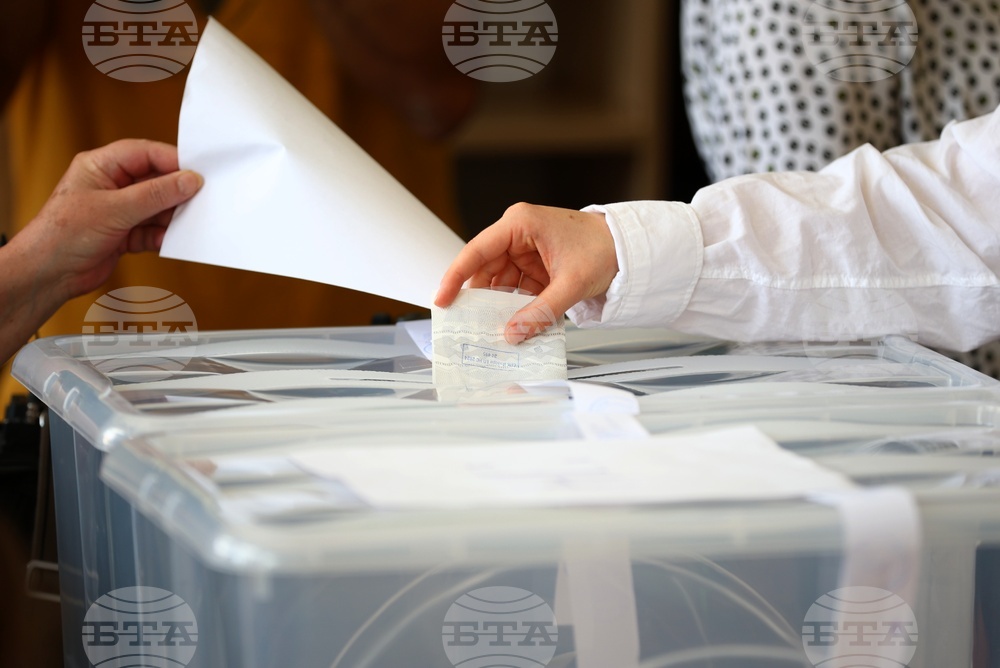
BTA: Parties Spent over EUR 913,000 on Election Campaign Ads, Most in Small Number of Media – Analysis
An analysis of party advertisements during the campaign for the April 19 elections shows the formations running for Parliament spent over EUR 913,000 (excluding VAT) on ads, most of these resources (42.52%) going into online media ads. The parties' ad expenses were concentrated in a limited number of media, mostly TV channels, according to the analysis published by the Institute for Public Environment Development.

The analysis is based on data from the official websites of 38 national and regional media (8 TV channels, 3 radio stations, 11 newspapers, and 16 information sites and agencies).

The formation that spent the most on ads was Progressive Bulgaria (EUR 196,219.42). The remaining top ten spenders were Continue the Change – Democratic Bulgaria (EUR 172,157.23), Vazrazhdane (EUR 163,691.13), GERB-UDF (EUR 61,712.27), BSP – United Left (EUR 55,834.64), MRF (EUR 32,121.63), Velichie (EUR 29,479), and Siyanie (EUR 25,147), Blue Bulgaria (EUR 20,861.43), and the Anti-Corruption Block (EUR 19,074.84).

By media, the biggest share of ad expenses went to online media (42.52%), followed by other TV channels (35.15%), Bulgarian National Television (7.87%), other radio service providers (6.9%), print media (6.44%), and Bulgarian National Radio (1.12%).

The data point to varying approaches in political formations' communication with voters. Traditional media, especially television, remain important, but are used according to party strategies and the current context. Major parties seek national reach and support. Smaller parties, on the other hand, most often use media packages, with oversight of how these funds are spent often remaining minimal. For some participants, media packages are the primary or sole resource in the campaign.

In recent years, there has been a growing preference for online platforms and social media, which offer more affordable prices, longer-form engagement, a lack of moderation, and much easier audience targeting. In the current campaign, however, there has been a slight shift away from this trend due to the ban on political advertising on Meta, the Institute said.
 Facebook
 Instagram
 X/Twitter
 Telegram
BTA: 2026 European Rhythmic Gymnastics Championships to Be Held under New Rules with Record Participation
BTA: Bulgaria Celebrates Day of Holy Brothers Cyril and Methodius, of Bulgarian Alphabet
BTA: Bozhidar Saraboyukov Wins Long Jump Bronze at Diamond League in Xiamen
ARMENPRESS: Armenian police set up cyber lab with U.S. support to fight cybercrime
ARMENPRESS: Armenia and Lithuania sign strategic partnership agreement
BTA: Ahead of Berlin Visit, Bulgarian PM Vows Spending Restraint
ARMENPRESS: Authorities investigate alleged assassination plot against Pashinyan after video surfaces showing armed suspects issuing threats
BTA: Bulgaria's Dara Wins Eurovision 2026
ARMENPRESS: Armenia to host Concours Mondial de Bruxelles international wine competition
BTA: Film Dedicated to Scientist Minko Balkanski's 99th Birthday to Be Screened in France
BTA Releases BG SPA - Health Through Water Catalogue
BTA: Second Giro d'Italia Stage Begins in Burgas as Matteo Moschetti Withdraws from Race
ARMENPRESS: Latvia welcomes Armenia’s EU path
BTA: Bulgarian President, Armenian PM Sign Strategic Partnership Declaration
Administrator of Moldatsa state enterprise of Moldova dismissed
MOLDPRES REPORT // China’s cashless economy lesson: how phone becomes efficient anti‑corruption shield, what Moldova can learn from Beijing
PHOTO // MOLDPRES, 36th anniversary of establishment: successful self-management, European partnerships, record volume of Official Journal's issues in EU accession process
Moldovan parliament speaker to pay official visit to Czech Republic
Moldovan PM says government, farmers to work together on solutions to help farmers grow businesses
Over 60 million euros for modern schools, energy-efficient hospitals in Moldova with support from European Investment Bank, EU
Civil society mobilizes support for Moldova’s EU accession
 National Bank of Moldova
Moldovan PM attends DescOpera Festival
Moldovan parliament speaker to pay official visit to Czech Republic
Moldovan PM has meeting with group of farmers at government
Over 60 million euros for modern schools, energy-efficient hospitals in Moldova with support from European Investment Bank, EU
Deputy PM for reintegration pays tribute to participants in actions to defend independence, territorial integrity of Moldova

Civil society mobilizes support for Moldova’s EU accession
Deputy PM for reintegration pays tribute to participants in actions to defend independence, territorial integrity of Moldova
PHOTO GALLERY // EU, European Investment Bank support modernization of schools, hospitals of Moldova: financing contracts signed in Chisinau
Moldovan foreign affairs minister, head of Romanian Senate's foreign policy committee discuss priorities of Moldova’s European path, joint Moldovan-Romanian projects
Moldova's National Social Insurance House, National Institute of Social Security of Spain to exchange social security forms, data electronically
Investments in modernization of 20 schools, ten medical institutions: financial support provided by EU, European Investment Bank
State Chancellery representatives took part in meetings of Interreg Europe Programme Committees
Reform of pension system for military personnel and special-status officials: retirement age to increase gradually
Annual leave to be expressed in working days: proposed changes by Ministry of Labour and Social Protection
Public sector pay system to be reformed
Feasibility study for Strășeni–Gutinaș Liberty Line completed
Minister of Finance: Impact of VAT reform will not exceed 200 lei per month for 80% of citizens
Parliament speaker says phone scams coordinated from outside Moldova; authorities consider solutions to identify fraudulent calls
USA, Moldova advance Liberty Line project; Moldovan PM says interest of American investors growing
PHOTO GALLERY // Evening dedicated to love poetry at Romanian Literature Museum
Pre-feasibility study for Straseni–Gutinas Liberty Line power line completed; PM says partnership with United States delivers concrete results for Moldova's energy security
Receive the latest news directly to your email

Receive the latest news directly to your email