
BTA: Bulgarian News Agency Marks Path From Telegraph to AI Era
The Bulgarian News Agency (BTA) has charted how its news distribution evolved from Morse telegraph bulletins in 1898 to today’s multi-platform feeds, in an archival overview.

Along the way, it moved from radiotelegraph and telex to full computerization and internet-based services, and it is now bringing in AI tools for faster sorting, classification and visualization, while journalists continue to verify facts and shape context.

BTA’s history was shaped not only by the number of bulletins it issued and events it covered, but also by how news reached readers and subscribers. The evolution from the telegraph to 21st-century, multi-platform editions reflects how technological advances transformed BTA’s operations and the very format of the news.

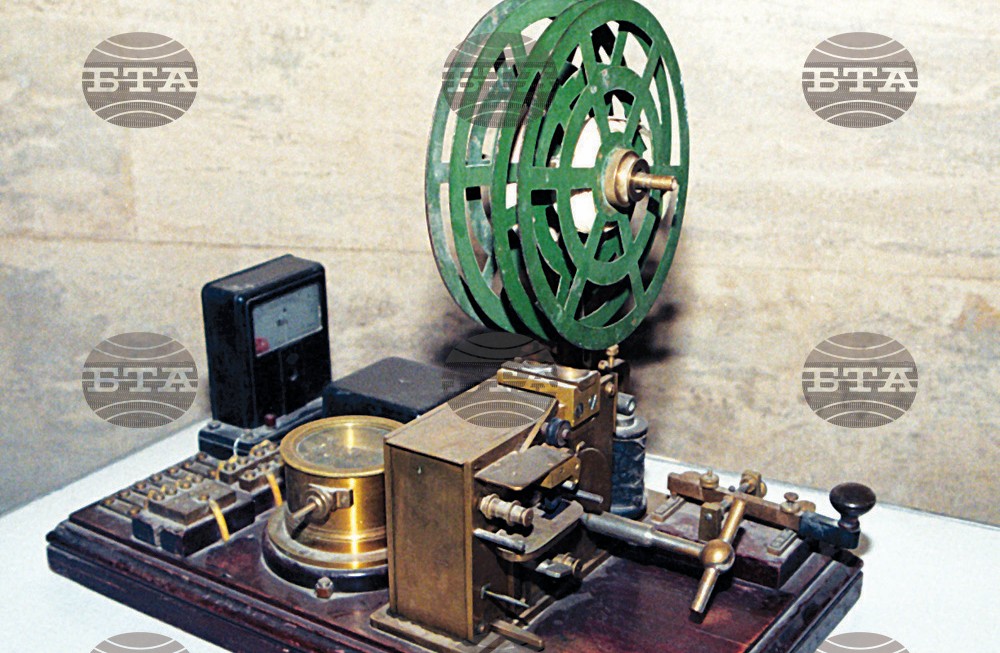
BTA’s first bulletins were issued at the end of the 19th century, on February 16, 1898, and transmitted via Morse telegraph. Until 1928, news arrived by the same means, and decoding and publication typically lagged by about a day. By 1926–1928, the bulletins were already published in three daily editions, morning, noon, and evening, and news was also transmitted by radiotelegraph. It was received by ear and written down by hand, a process that demanded meticulous transcription and verification. One notable incident underscored the need for faster delivery.

In 1928, a report from the French agency Havas reached BTA by telegraph with a one-day delay, while journalist Spas Ikonomov relayed it earlier through personal contacts, causing a major stir. This push for speed accelerated the shift from telegraph to radiotelegraph reception of foreign agencies’ feeds.

A revolution in communications came in 1932 with the introduction of Siemens-Hell self-writing radio receivers. The next major milestone followed in 1957, when all links switched to radioteletype and telex enabled simultaneous transmission and reception of information between headquarters and correspondent offices. Telex remained the primary tool until the late 1980s, while electronic technologies were gradually introduced to improve efficiency.

After 1990, BTA underwent full computerization. All editorial desks and correspondent offices were equipped with personal computers: IBM Aptiva desktops and IBM ThinkPad laptops. The systems ran MS-DOS 6.x or early versions of Windows, enabling simultaneous text editing, monitoring of foreign news agencies, and transmission of completed copy to the distribution transmitters. In 1997–1998, the computerization of the agency’s regional correspondent offices was completed, primarily to accelerate the flow of information and reduce communications costs.

In parallel, BTA developed its own NewsNet network, enabling the simultaneous receipt of text and photo feeds from multiple offices and automated image processing. News from international agencies was received via satellite receivers, and the old telegraph channel was gradually phased out.

At the beginning of the 21st century, BTA adopted internet-based technologies, delivering text and photo feeds to subscribers in real time. New software platforms enabled the integration of domestic and international sources, image processing, and pre-press preparation across multiple distribution channels.

In recent years, BTA has operated in a multi-platform environment, delivering news simultaneously in text, video, infographics, and on social networks, tailored to different devices and audience needs. Teams have been integrating AI tools to speed up the sorting, classification, and visualization of information. At the same time, the human factor has remained central: journalists verify facts, set the editorial focus, and add analytical context. AI is used as a supporting tool that enhances the efficiency and accessibility of news without replacing professional judgement.

This marked a new chapter not only in the Agency’s technological development, but also in its intellectual life. For the first time, an almost unlimited readership gained direct access to BTA’s information, and BTA could address its audience directly with news, analysis, commentary, and round-ups in Bulgarian and English. Feeds, archives, reference resources, and analytical content reached readers without intermediaries, enabling feedback and opening new opportunities for engagement with society.

From the first telegraph bulletin in 1898 to today’s multi-platform feeds, technology has transformed the form, speed, and accessibility of news. Yet the name Bulgarian News Agency [Bulgarian Telegraph Agency being the literal translation from Bulgarian] has remained unchanged, a reminder of the era when the telegraph was the main channel for transmitting information and of the origins of BTA’s name.
 Facebook
 Instagram
 X/Twitter
 Telegram
BTA: Borislav Sarafov Resigns as Acting Prosecutor General
ARMENPRES: Armenian Prime Minister meets NATO Secretary General’s Special Representative
BTA: Central Election Commission: Based on 100% of Tally Sheets, Progressive Bulgaria Wins with 44.6%, GERB-UDF Second with 13.4%
ARMENPRESS: Armenia to restrict drone, private flights during EU summit
BTA: Between AI and Regulation: Will Autonomous Vehicles Soon Appear On Bulgarian Streets?
BTA: Bulgarian Literature Has Become Increasingly Visible on International Stage - Deputy Culture Minister Stoyanov
BTA: Seminar for Bulgarian Language Teachers Held at Gagauzia's Comrat State University
BTA: FIG President Morinari Watanabe Opens Rhythmic Gymnastics World Cup in Sofia
BTA: Bulgarian Gymnasts Win Two Titles, Four Medals at Aphrodite Cup in Athens
BTA: Bulgaria Represented at ProWein International Wine Fair in Dusseldorf
BTA Presents English-Language Publications at London Book Fair
BTA: Martenitsa: Bulgarians Celebrate Spring with Centuries-Old Tradition
BTA: Bears Arriving in Belitsa from Argentina Adapting Well to New Home
New EU entry rules become operational crossing points Moldova as of March 2
Education Week culminates with national university fair: Moldovan PM says lyceum graduates should be proud of country
Moldovan president conveys congratulatory message to renowned Romanian filmmaker
Moldova showcases investment advantages in Shanghai: 30 major Chinese companies interested in country’s market
Moldovan parliament speaker says Ukraine presently needs strong international solidarity
Wine of Moldova conquers Chinese market: network of 400 stores, skyscraper promotion campaigns in Shanghai, Shenzhen
Moldovan president says massive attack on Kyiv of May 23-24 night war crime
Moldovan PM condemns Russian attacks on Ukraine
 National Bank of Moldova
PM attends Study in Moldova event
Moldovan PM attends inauguration of National Tennis Center
Moldovan PM visits settlements hit by heavy rains, flash floods from central district
Moldovan president has phone conversations with European leaders, to advance EU accession negotiations
Voluntary amalgamation of mayoralties in Moldova: 608 decisions approved by local councils

Moldovan president celebrates birthday
BTA: Bozhidar Saraboyukov Wins Long Jump Bronze at Diamond League in Xiamen
Moldovan PM attends inauguration of National Tennis Center
Moldovan PM visits settlements hit by heavy rains, flash floods from central district
Increased traffic at border in Moldova: authorities take measures to streamline traffic, come up with recommendations for travelers
PHOTO // Moldovan PM visits areas hit by torrential rains
VIDEO // Moldovan authorities step up operations amid torrential rains: over three thousand emergencies registered by 112 Service
Moldovan president calls for continuous efforts to address aftermath of heavy rains: authorities to assess damage, provide support where needed
European Night of Museums marked in Moldova: all museum institutions open doors with free entrance
Superior Council of Prosecutors comments on procedure of external evaluation of Moldova's Prosecutor General: decision adopted based on verified materials
PHOTO GALLERY // Reception dedicated to Azerbaijan’s Independence Day, captured by MOLDPRES
Azerbaijan, Moldova deepen partnership: messages of cooperation, mutual trust conveyed at reception in Chisinau
Rail traffic resumes after torrential rains in Moldova; trains continue moving to Chisinau
Energy Ministry announces emergency disconnections of 400 kV power lines; consumers stay supplied with electricity in Moldova
PHOTO // New opportunities for agricultural cooperation in Italy; Moldovan agriculture minister visits Agri-Food Center in Rome, company in region
Ambassador of Moldova to Norway presents letters of credence to His Majesty King Harald V
Receive the latest news directly to your email

Receive the latest news directly to your email