
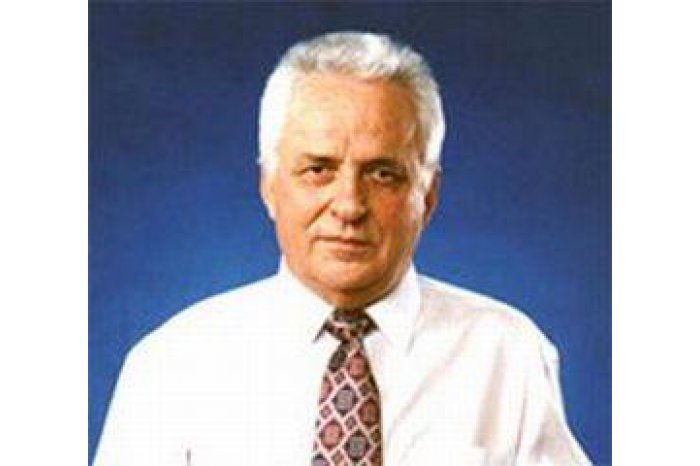
25-31 May 1990. Moldova's parliament approves new concept on government, elects Mircea Druc as prime minister
The last week of May 1990 was marked by sustained efforts for setting up a new-type government, essentially different from the previous ones, which were fully led by the communist party. The removal of the article from Constitution on the leading role of the ‘’single party’’ opened the way to a courageous reform of the executive body and its fitting into the principles of the rule of law state.
Two laws on the government were presented in parliament. The first one was put forward by the incumbent prime minister Petru Pascari. The one other – by MP Mircea Druc. The latter has earlier had several articles in the media, which triggered admiration for the innovating attitude. Things were going towards a contradictory discussion on the two drafts submitted.
In Moldova, just as in the entire Soviet Union, there was a big deficit of experience and knowledge on the separation of powers, the government’s relations with other power branches, role of the political parties in the society. Soon, some of the jurists learned that, in western democracies, once a new parliament comes, the cabinet must resign. Immediately, the Pascari government left and the only draft law which could be discussed was the one of Mircea Druc.
The draft put forward, if we regard it through the light of the current situation, had serious gaps; yet, for that time, it was really reform-oriented. It was reading about the transition to the market economy, agrarian reform, local self-administration and other things widely discussed in the Soviet media at that time.
Nevertheless, the draft law put forward to the parliament also contained obsolete things and they represented an expression of Soviet-type reminiscences, which were strongly hitting the politicians’ mentality. Just in the list of ministries, we could see an old concept of administration according to the branch principle. The first article contained a provision which glaringly undermined the principles of powers’ separation; yet, the MPs, in their wish to keep everything under control, were pretending that they did not notice this.  That’s what the first paragraph of the Article 2 of the law on government was envisaging: ‘’In the Moldovan Soviet Socialist Republic (RSSM), the executive power is exercised by the republic’s government. The government is the supreme body of the state administration and is subordinated to the Supreme Soviet of RSSM.’’ Or taking into account the principle of state powers’ separation, the executive body could by no means be subordinated to another power. The balance of the three powers categorically does not allow this. The mechanism of government’s creation was implying the  approval of the programme and composition in parliament; which by no means signifies subordination.
Beyond more inconveniences, the law on government was one of the most radical ones in the post-Soviet area, as it was described by the then international media. The overwhelming majority of the lawmakers were enthusiastic. Maybe this enthusiasm was shared also by Parliament Speaker Mircea Snegur, who was to put forward the candidacy of the future prime minister.
On the voting day, unlike other tense moments in the parliament, everything went like clockwork. Mircea Druc was a good orator and, sometime, a clever populist. He delighted the lawmakers, who wanted to share the burden of power with the government as soon as possible. All present MPs voted for the candidature of Druc, except for General Yakovlev, the commander of the Odessa military district, who abstained from voting.
The first thing done by the fresh PM Mircea Druc, when he entered his office, was to remove the direct phone line with the first secretary of the communist party (PCM), Petru Lucinschi. This was a symbolical action, which meant the full loss of the PCM’s influence on the government. Moreover, Druc reminded the ministers that the government was de-politicized and most members left the communist party or suspended the capacity of PCM member. This was a beginning which laid foundations of much deeper processes, which later on were called de-communization and de-Sovietization.
In the government, an intense work started for preparing the draft laws due to ensure the transition to the market economy. The Economics Ministry started working out the package of laws and decisions on the de-nationalization and privatization. Along with the competent parliamentary commission, the Agriculture Ministry was laying foundations of a future Land Code, which was stipulating the land’s switch to private property. The Justice Ministry was creating the ground for the edification of a multi-party system and elaboration of a new Electoral Code. The Education and Culture Ministries laid the legal foundations for the elimination of the Soviet ideology from schools and culture institutions.
Mircea Druc was undoubtedly a patriot and a well-intended man. Yet, his character was dominated by romanticism and emotional outbreaks, inadequate for the head of a government. He soon created more fiends among his ideological adversaries and just one year later, an agrarian and communist coalition dismissed the first prime minister of the post-communist age.
Nevertheless, the reforms underway were far-reaching. As the U.S. Department of State put it in the spring of 1992, the actions undertaken in 1990-1991 turned Moldova into ‘’a locomotive of reforms in the post-Soviet area.’’ This notwithstanding, dark clouds appeared at the horizon. A revenge of the conservative forces and a war in the country’s eastern districts, unleashed by the breakaway forces, came next. The road towards a real independence was quite difficult and full of spectacular overthrows.
Chisinau, 24 May /MOLDPRES/.
 Facebook
 Instagram
 X/Twitter
 Telegram
13 July 1995. Moldova becomes member of Council of Europe
Maria Cebotari, golden voice of Bessarabia
2 July 2014. Moldovan Parliament ratifies Association Agreement with European Union
23 June 1990. Parliament adopts Declaration on Sovereignty of Moldova
4 June 1991. National Bank is set up, a fundamental instrument for Moldova's economic development
Serghei Lazo, legendary name that needs to be rehabilitated
6 May 1990. The Flowers Bridge - a gate opened to a new world
Ion Suruceanu, archaeologist, curator of European stature
27 April 1990. Moldova's parliament adopts state flag - Tricolour
17 April 1990. First democratically elected parliament of Moldova starts working
7 April 2009. Large, devastating, very strange protest takes place in Chisinau
24 March 2005 - Moldovan parliament adopts Declaration on European Integration of Moldova
Paul Gore, the greatest heraldist and last knight of Bessarabia
11 March 2011 - Joe Biden to Chisinau
USM students to benefit from internships at Krakow University of Economics
Speaker on opposition’s initiative to suspend head of state: Maia Sandu was elected President by nearly 1 million citizens, who called for and expect us to become EU member state
Prime Minister urges Moldovan companies to prepare for and harness economic opportunities generated by Ukraine’s reconstruction
Presidency, following opposition initiative to suspend head of state: Maia Sandu won trust of more than 930,000 citizens to preserve peace and European path
Prime Minister and Norway’s Ambassador approach strengthening Moldovan-Norwegian relations, continuing joint projects
President about hydrological crisis: We now all have one responsibility: to ensure that people have tap water
AGERPRES INTERVIEW // Moldovan PM: “We are major energy importers; every external shock worsens the situation”
 National Bank of Moldova
Prime Minister urges Moldovan companies to prepare for and harness economic opportunities generated by Ukraine’s reconstruction
Prime Minister and Norway’s Ambassador approach strengthening Moldovan-Norwegian relations, continuing joint projects
Deputy Premier: Reintegration must be based on gradual rapprochement of two banks of Dniester
European expertise for modernizing professional training in public administration
Solutions to maintain water supply discussed at Prime Minister’s meeting with relevant authorities

More than 1,000 people participated in activities dedicated to parliamentary openness in September
Moldova supports international efforts to return Ukrainian children
VIDEO // Cultural voucher for young people to increase to 2,000 lei and be usable for sports
Former MP to stand trial for illegal financing of Victory/Pobeda Bloc and money laundering
Moldova, Canada to strengthen cooperation in security and trade
Moldovan PM has dialogue with Romanian investors
Moldovan president condemns Russia’s latest attacks on Ukraine: “Russia must answer for its crimes”
Moldovan PM, SITA company's representatives discuss investment opportunities in Moldova
Moldovan PM has phone conversation with Austrian chancellor
New U.S. Ambassador to Moldova Joseph Mark Burkhalter presents copies of credentials
Deputy PM for reintegration has meeting with Ambassador of Kingdom of Netherlands to Moldova
PHOTO GALLERY // Romanian football legend Adrian Mutu has emotional meeting with young footballers in Chisinau
Pupil of Moldova wins silver medal at Balkan Olympiad in Informatics for Juniors
PHOTO // Moldova requests EU's support for Ungheni–Chisinau railway, Iasi–Ungheni–Chisinau highway
“Parliament through children’s eyes”: pupils of Moldova express vision of democracy through art
ARMENPRESS: Newly elected authorities have received a clear mandate from the people - PACE report on Armenia
Receive the latest news directly to your email

Receive the latest news directly to your email