
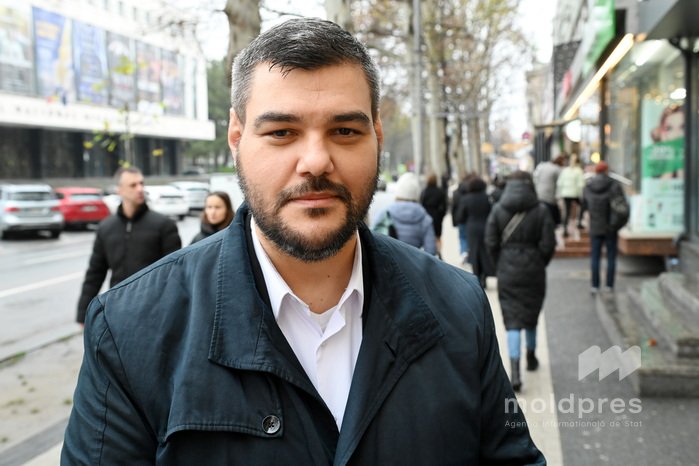
Political analyst says consequences of peace agreement could be positive or risky for Moldova
The duration of the war in Ukraine cannot be estimated precisely, and the prospects for a peace agreement remain uncertain, says Romanian political analyst Mihai Isac. Asked by MOLDPRES, the expert pointed out that the evolution of the conflict depended on the military balance of forces, the economic capacity of the sides involved, external support and, above all, the political decisions taken in Moscow and Kyiv.

“The European path of Moldova must be protected, including from the perspective of international law”

MOLDPRES: How much longer will the war last? How close is a peace agreement and what consequences would it have for Moldova?

Mihai Isac: No one can give a fixed timeframe for the end of this war, because its duration depends on the balance of military forces, the economic capacity of the sides, external support and the political decisions taken in Moscow and Kyiv.

It is far too early to talk about peace or even a ceasefire. Moscow is deploying hybrid diplomacy tactics meant to block any real negotiation that could lead at least to a temporary cessation of hostilities.

What can be said, based on recent facts, is that there is an intensification of negotiation formats, but without a clear leap towards an agreement. Four years after the large-scale invasion, official sources have reported that a new round of Ukraine–Russia–US talks could take place at the end of the week, following previous meetings in Abu Dhabi and Geneva, a sign that there is a “process,” but not necessarily a “solution.”

The talks in Geneva did not produce visible progress and the political context in the EU remains complicated, including through internal blockages on some files related to support for Ukraine. Russia’s tactic of delaying negotiations, as well as its absurd demands is blocking the entire process.

How close the peace is? It depends on what we understand by peace. A temporary armistice or a freezing of the front may be easier to get than a durable agreement with real guarantees, verification mechanisms and solutions for the occupied territories. The institutional European voice has also been cautious. A spokesperson for the European Commission said that the EU did not see tangible signs that Russia is seriously committed to peace, citing, among other things, the fact that attacks continue. It is important that any peace formula provide real security guarantees to Ukraine and to the entire continent.

The danger of a “Russian peace” in Ukraine, a peace that would give Moscow a respite for rearmament and the preparation of a new massive attack against another state, must be avoided at all costs.

We also see the absurdity of Russia’s demand to hold elections without offering guarantees for the security of candidates or voters in Ukraine. Nor are there any guarantees regarding the possibility for millions of Ukrainian refugees or Ukrainian citizens in territories illegally occupied by Moscow to participate in elections.

For Moldova, the consequences of an agreement could be positive or risky, depending on its quality. A solid agreement with credible guarantees and deterrence would reduce the risk of regional escalation, lower psychological pressure and stabilize the economy, including the energy sector, since geopolitical uncertainty is one of the factors keeping costs high. By contrast, an agreement concluded in haste or a frozen conflict without guarantees could exponentially increase the vulnerability of Moldova. Such a situation would leave Russia with military and political leverage in the region, maintain the risk of cross‑border incidents, such as the ones involving drones, and encourage the hybrid war waged by Moscow’s intelligence services.

The existence of the illegal military occupation regime in Transnistria complicates any security equation in the region. In social terms, any prolongation of the conflict also means prolonging the situation of refugees, and Moldova is already hosting tens of thousands of people under a protection regime that has been extended until 2027.

The Moldovan authorities should be present, as far as possible, in any negotiation format, in order to prevent some side‑agreements reached in the context of negotiations on Ukraine from becoming binding for Moldova.

We can talk about the possible imposition of an official status for the Russian language, excessive autonomy for certain regions based on ethnic criteria, or the granting of a privileged status to the local branch of the Russian Orthodox Patriarchate.

Moldova must intensify its efforts to present its own security needs to partner states, taking into account the possibility of adopting and implementing special security guarantees for Moldova, with the involvement of partner states. The European path of Moldova must be protected, including from the perspective of the international law.
 Facebook
 Instagram
 X/Twitter
 Telegram
Four years since start of Russian invasion of Ukraine: Ambassador Paun Rohovei: Ukrainian people have shown extraordinary unity and resilience
PHOTO // Support worth 20 million euros on behalf of Denmark; Moldova to strengthen defense sector, mechanisms to counter disinformation
Women made up majority of voters at last two parliamentary elections; Moldovan Central Electoral Commission notes increase in turnout
Deputy Prime Minister to pay working visits to Switzerland and Austria
Presidency issues clarifications on pardon of convict and subsequent revocation of pardon decree
Members of Foreign Affairs Committee of Seimas of Lithuania on visit to Moldova
Constitutional Court President at opening of 2026 Judicial Year: As long as constitutional review functions freely and independently, democratic balance in country remains protected
Danish MPs to visit Chisinau Parliament early next week
PM welcomes EU’s intention to demand Russia withdraw troops from Transnistrian region as part of possible peace deal in Ukraine
Moldovan PM to present report in parliament
Simple motion against Moldova's energy minister fails
BTA: Ambassadors of Bulgaria, EU to Moldova Discuss EU Integration and Regional Development During Visit to Taraclia
PHOTO // Moldovan electoral authorities discuss process of organizing parliamentary elections
Moldovan parliament speaker says reform of local public administration must be carried out in next autumn, there is no time to wait
Political analyst says consequences of peace agreement could be positive or risky for Moldova
Moldovan deputy PM in Brussels says Moldova-EU cooperation continues to be strengthened, with significant results in various fields
VIDEO // Moldovan government proposes new law due to give citizens more rights in decision‑making process
Moldovan parliament to hold plenary meeting on February 26; interior minister to present report to MPs
Moldova’s digital progress, shared priorities discussed by deputy PM with European Commission’s Executive Vice-President
Harsher penalties for sexual abuse of minors in Moldova; justice minister says protecting children requires coordinated effort
DOC // Citizenship of Moldova withdrawn for officials of unconstitutional structures of Tiraspol, for persons who fought in 1992 on side of breakaway forces
 National Bank of Moldova
Interns of 5th edition take part in workshop to consolidate internship experience in Moldova
DOC // Citizenship of Moldova withdrawn for officials of unconstitutional structures of Tiraspol, for persons who fought in 1992 on side of breakaway forces
Working meeting of political representatives in negotiation process for Transnistrian settlement to take place in Tiraspol on February 26
Road Fund 2026: In addition to road maintenance and repair, funds earmarked for equipping quality control laboratory
Faster emergency response: New equipment rules for Internal Affairs structures

VIDEO // Agriculture minister says Moldova not denouncing trade agreements with Commonwealth of Independent States, agri‑food exports reorient themselves towards EU
Moldovan foreign affairs minister has talks with UN High Commissioner for Human Rights
Family members of Moldovan diplomats working in Ukraine to be able to take up employment
VIDEO // Imports of poultry meat from Ukraine gradually resumed: Moldovan Agriculture Ministry imposes strict food safety conditions
Moldovan energy minister at Transatlantic Gas Security Summit says partnership with USA essential for strengthening energy security in Central, Eastern Europe
Moldovan government's secretary general says cabinet plans to visit each district to discuss how strong mayoralties can be built for developed localities
Single reporting platform on implementation of public policies and reforms set by Government
Moldovan PM makes statements on government's priorities, expectations concerning implementation of project in roads' sector
Activity of Zoos to be regulated by new law
Saskia de Vries concludes activity within Prosecutors’ Evaluation Commission
Moldova to receive about 6.6 million lei to support refugees from Ukraine
Deputy Prime Minister at Human Rights Council: Respect for fundamental rights and freedoms must remain at core of any international arrangements
Road Fund 2026 implemented
Finance Minister about VAT rate in HORECA sector: It is too early to say what rate will be
PHOTO GALLERY // Premiere of documentary War Road 2: From Heart to Heart, about solidarity and courage
Convict Nicolai Andrei Șepeli to return to serving prison sentence after revocation of pardon decree
Receive the latest news directly to your email

Receive the latest news directly to your email