
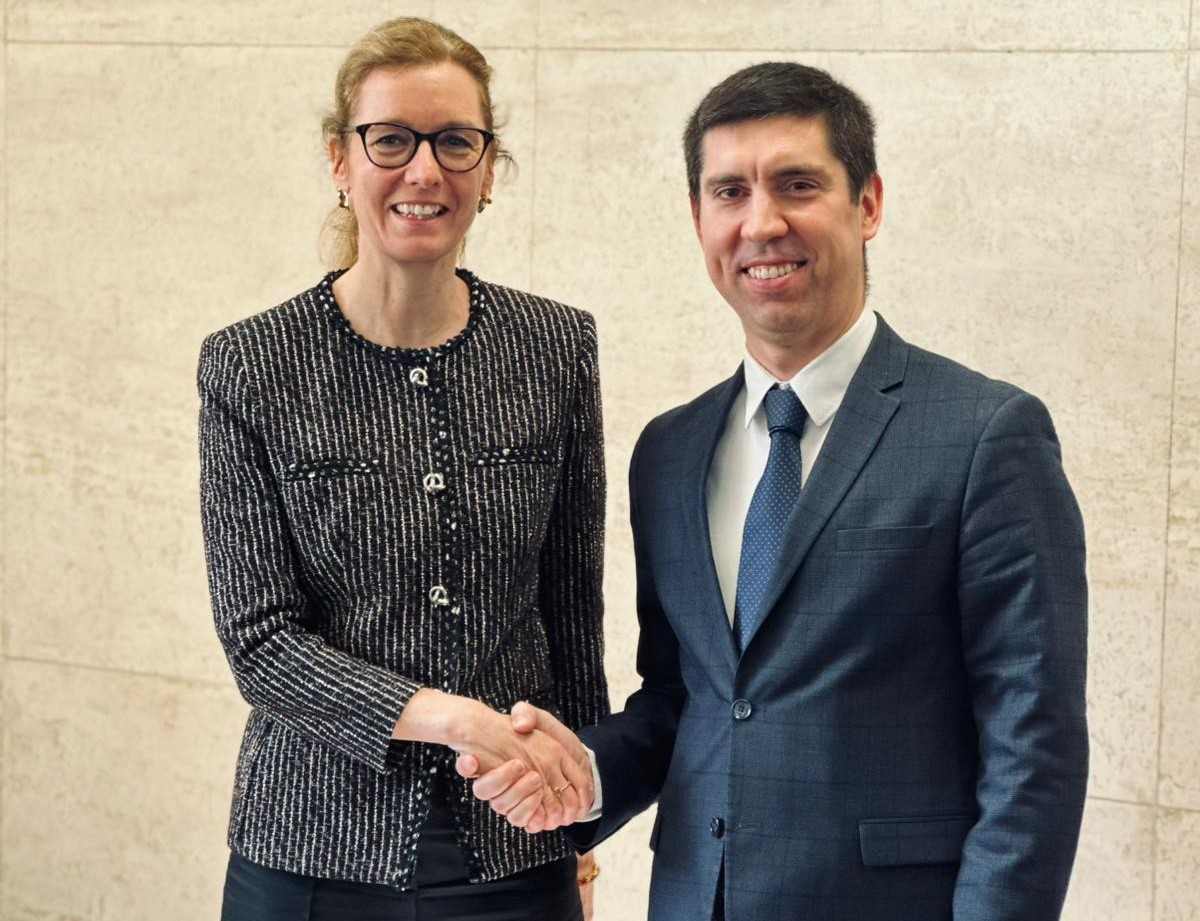
Relations between Moldova and Liechtenstein on agenda of foreign ministers’ talks
Deputy Prime Minister, Minister of Foreign Affairs Mihai Popșoi held a meeting on Tuesday with Deputy Prime Minister Sabine Monauni, Minister of Foreign Affairs of the Principality of Liechtenstein. The discussions focused on strengthening bilateral dialogue and deepening political and sectoral cooperation between the two states.

The two officials pointed out the positive dynamics of Moldovan–Liechtenstein relations in recent years and expressed the willingness to continue cooperation in areas of common interest.

A central topic on the agenda was the entry into force, on 1 April 2025, of the Free Trade Agreement between the Republic of Moldova and the European Free Trade Association. The sides analyzed the economic prospects generated by this agreement and underlined the shared interest in supporting the business environment in both states in order to harness new trade opportunities. Issues related to the avoidance of double taxation were also discussed.

During the meeting, Popșoi thanked the Liechtenstein Development Service for its support. According to the data presented, over the last 17 years the institution has contributed to the implementation in the Republic of Moldova of projects worth about 20 million euros, in areas such as education, vocational training, support for young people, and social services.

The two officials also reviewed the priorities of Moldova’s Presidency of the Council of Europe, in the context of its mandate at the Committee of Ministers. The Moldovan minister invited his counterpart to participate in the ministerial session to be held in Chișinău in May.

Liechtenstein is a member of the European Free Trade Association, alongside Iceland, Norway and Switzerland. The Free Trade Agreement between the Republic of Moldova and EFTA aims to facilitate trade and diversify export markets for Moldovan producers, in the context of strengthening economic relations with European states outside the European Union.
 Facebook
 Instagram
 X/Twitter
 Telegram
Moldovan parliament concludes spring–summer session; parliament speaker extraordinary meeting to be held on August 24
Defence procurement to have new rules aligned with EU standards in Moldova
Harsher penalties for human traffickers in Moldova: parliament eliminates possibility of suspending sentences in severe cases
Moldova aligns employment rules with EU standards: new rights for unemployed, cross-border workers
Convicted persons to no longer escape punishment in Moldova: parliament tightens rules, expands electronic monitoring
Voted by Moldovan parliament: tougher penalties, prison for promoting illegal substances on social media
Moldova's Electoral Code amended in first reading: new rules for elections in Gagauzia
Moldovan parliament ratifies, in first reading, Council of Europe Convention on Co-Production of Audiovisual Works in Form of Series
Expert comments on stakes of Moldovan PM's first visit to Bucharest
Moldovan, Irish PMs discuss European path of Moldova
Moldovan PM in Bucharest: “Let us take Moldova where it belongs, into the European Union”
Romania reaffirms support for Moldova; Romanian PM, after meeting with Moldovan counterpart, says Romania to continue to be main supporter of Moldova at EU level
Moldovan president condemns Russia’s attacks on Ukraine
LIVE // Moldovan PM, Romanian counterpart hold joint news conference in Bucharest
Moldovan electoral body to propose that Constitutional Court validate parliamentary mandate from PAS list
Parliament examined 60 draft laws and adopted 52 acts in July
Moldova to develop new credit guarantee instrument for investments in energy storage systems
Energocom continues gas procurement for next cold season
 National Bank of Moldova
President met with participants of APEX Maths Chișinău
Safety of bridges, operation of vehicle registration offices and accreditation of driving schools discussed at meeting of transport experts from both banks of Dniester River
Government to provide 6.5 billion lei to amalgamated localities
Moldovan president meets Latvia’s Foreign Affairs Minister
Moldovan president awards Order of Honour to Ambassador of the Netherlands, at end of mandate

Government to provide 6.5 billion lei to amalgamated localities
Ana Revenco resigns as head of Center for Strategic Communication and Countering Disinformation
City halls that chose voluntary amalgamation will receive over 6.5 billion lei
Water and sewerage prices increase in Chișinău
DOC // Published in Official Journal - Moldova to create Information System for Monitoring Medicine Stocks
DOC // Aneta Gonța officially takes over as head of Audiovisual Council
Moldovan foreign affairs minister visits Kyiv Pechersk Lavra, condemns Russia’s attacks on Ukraine’s cultural heritage
Mayoralties with fewer than 3,000 inhabitants to undergo normative amalgamation; Moldovan parliament speaker says reform must be completed in next autumn
Moldovan foreign affairs minister has meeting with Ukrainian counterpart
VIDEO // Moldovan foreign affairs minister, president of Ukraine discuss managing hydrological situation in Dniester River basin, joint projects in infrastructure, energy
VIDEO // Moldovan foreign affairs minister says Moldova made its choice, joined Ukraine
Moldovan president meets Latvia’s Foreign Affairs Minister
Moldovan president awards Order of Honour to Ambassador of the Netherlands, at end of mandate
PHOTO GALLERY // Diaspora Days: stories, books, art that preserve connection with Moldova
Moldovan PM has talks with Latvia’s Foreign Affairs Minister
PHOTO // Customs, border authorities of Moldova, Romania establish new measures to ease traffic at the Leuseni–Albita crossing point
Receive the latest news directly to your email

Receive the latest news directly to your email