
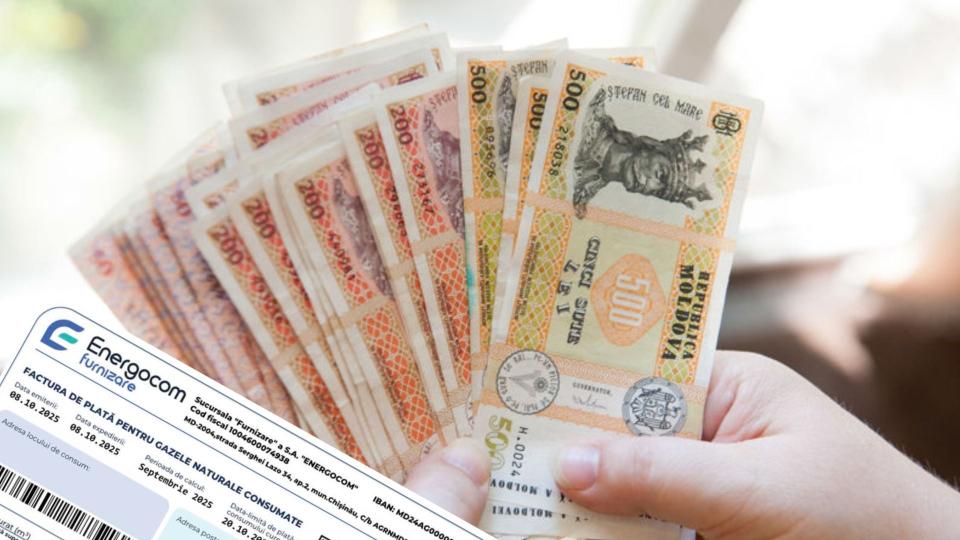
Moldovan finance minister says cold-season compensation might be covered by savings from public spending's optimization
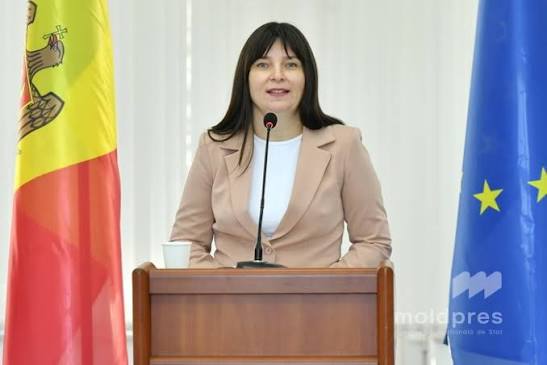
Authorities are looking for resources to finance the compensation payments provided to the population during the cold season, and one of the solutions under consideration is redirecting money saved through the optimization of public spending. At the Cutia Neagră (Black Box) programme, broadcast on TV8 channel, Finance Minister Victoria Belous said that the authorities were analyzing each category of expenditure, in order to identify resources that can be used to support citizens.
According to the minister, providing compensation is a priority amid the energy crisis and rising prices. Approximately 500 million lei are needed for a single month of this support, while funding sources for next year have not yet been definitively established.
„Covering or granting allowances for the cold season, these compensations, represents something we consider very important, as many citizens need support during this cold period, taking into account the energy crisis we are going through and rising prices,” Victoria Belous said.
The minister noted that the authorities were awaiting responses from external partners regarding the possibility of receiving financial support.
„Our partners are considering the matter, and we hope they will soon provide a clear answer regarding the amount, whether they will offer us assistance, and in what form. Nevertheless, we expect some positive responses. We are awaiting their answers,” Victoria Belous said.
At the same time, the Finance Ministry is examining next year’s state budget revenues and expenditures, in order to identify resources to cover priority needs.
Reductions in procurement, repairs and eventsTo free up budgetary resources, ministries and other institutions funded from the state budget have been instructed to review their expenditures and eliminate the ones that are not indispensable. According to Victoria Belous, there is no single reduction rate applied to all institutions, as the potential for savings differs depending on each institution’s needs and legal obligations.
The measures under consideration include limiting purchases of furniture and computer equipment, carrying out repairs only when necessary, reducing transportation and fuel expenses, as well as reviewing budgets allocated for events and other activities that have not been officially approved or are not considered priorities.
„We are examining every expenditure item and asking ourselves whether we can do without certain expenses,” the minister said.
A smaller budget for concerts is planned for next year, while the purchase of vehicles is expected to be carried out only in urgent cases. At the same time, institutions are reassessing the need for certain services and information systems, including in the context of technological developments that may change how activities are conducted.
The optimization measures concern institutions funded from the state budget, including ministries, the parliament, and the Presidency. Local public authorities manage their budgets independently, Belous noted.
Hiring and bonuses under review
Another area of savings concerns personnel expenses. According to the minister, more institutions have been instructed to develop staff reduction plans, but the measures do not automatically involve dismissing employees. First and foremost, the authorities are trying not to lift the moratorium on vacant positions and are reassessing the need for each new employment.
The options under consideration include avoiding the extension of employment contracts after employees reach retirement age, where possible, and reviewing institutional structures as part of reorganizations. The granting of annual and one-time bonuses in the public sector is also being analyzed.
Victoria Belous said that some ministries have already abandoned planned employments, but she did not provide a consolidated figure for the savings achieved. The minister explained that reorganizations take time, because they involve drafting and approving new structures, as well as consultations.
The minister emphasized that the spending optimization exercise would continue during the preparation of next year’s budget, with the authorities prioritizing expenditures considered essential.
Energy compensation will also be provided during the 2026–2027 cold season for five months, from November to March. Registration for the government’s Ajutor la contor (Meter Help) programme will start on November 2 on the www. compensatii.gov.md platform, while applications may also be submitted with the help of social workers or specialists from the Unified Service Provision Centers (CUPS).
The authorities estimate that approximately 2.5 billion lei will be needed to pay energy compensation. Finance Minister Victoria Belous has earlier said that the optimal budget for this programme could reach 3–3.2 billion lei, which would allow greater support to be provided to a larger number of citizens. The government is currently seeking additional sources of funding, including grants from external partners.
During the previous season, approximately 620,000 households received support, while for this winter, the authorities estimate that the number of beneficiaries could increase to around 670,000 households.
The amount of compensation will be determined individually, based on each family’s energy vulnerability, while the final number of beneficiaries will also depend on the available financial resources.

 Facebook
 Instagram
 X/Twitter
 Telegram
PM invites Ukrainian companies to invest in Moldova
Moldova could serve as platform for Ukrainian businesses expanding into Romanian market
Republic of Moldova fully covered electricity consumption on October 19–25
Chisinau Airport to operate direct flights to 61 destinations during next winter season
START Enterprise: Moldovans might launch businesses from their phones, without prior approvals
Facilitated access to EU market: European Investment Bank provides 150 million euros to modernize agri-food sector through Moldova's Orchard II programme
National Bank of Moldova simplifies foreign exchange rules: transfers, investments of up to 100,000 euros without authorization
CHINA EXPO – Christmas Sale to be held for first time at Moldexpo on December 17
State Secretary for Reintegration: Revenue from taxes imposed in Transnistrian region will return to population through Convergence Fund
Grant to strengthen cybersecurity: Republic of Moldova to receive $1.2 million in U.S. support
PHOTO GALLERY // Moldova to receive $1.2 million U.S. grant to strengthen cybersecurity
Voted in first reading // More enterprises could benefit from SME support programs
Energy Minister at Energy Transition Agenda Conference: Moldova’s energy future is European, and regional integration path through which we can build it more quickly and efficiently
EU market absorbs 69.9 million euros in Moldovan IT exports in first quarter of 2026
Moldovan finance minister provides details on new salary law: which employees to benefit from largest pay increases
Moldovan defense minister goes to Bucharest: meeting with Romanian counterpart, signing of military cooperation agreement
Moldovan finance minister says cold-season compensation might be covered by savings from public spending's optimization
Technical-Military agreement with Ukraine: Moldovan defense minister debunks false claims, explains under what conditions document to be published
PM, industry representatives discuss development of medical tourism in Moldova
VIDEO // Moldovan PM says Energocom company bought two million cubic meters of gas from Ukraine at price lower than on spot market
BUILDING MOLDOVA // Authorities accelerate preparations for construction of Chisinau bypass road
 National Bank of Moldova

PM, industry representatives discuss development of medical tourism in Moldova
Summary of Moldovan parliament's plenary meeting of October 29, 2026
Moldovan president revokes Moldova's citizenship from three individuals
Moldovan parliament approves, in first reading, denunciation of two agreements with Commonwealth of Independent States that were not implemented
Moldovan PM, at Building Moldova event: ''A European country is not declared, it is built''

VIDEO // Moldovan parliament speaker says farmers need solutions, not politicians who speak on their behalf
Summary of Moldovan parliament's plenary meeting of October 29, 2026
Moldovan president revokes Moldova's citizenship from three individuals
BUILDING MOLDOVA // Deputy PM says more than 95 per cent of Moldova’s settlements set to have access to tap water by 2030
Moldovan parliament approves, in first reading, denunciation of two agreements with Commonwealth of Independent States that were not implemented
Moldovan PM, at Building Moldova event: ''A European country is not declared, it is built''
BUILDING MOLDOVA // Moldova to have center for collection, processing of special waste
Chisinau Electrical Substation enters inspection stage ahead of energization
BUILDING MOLDOVA // Ten health centers to be renovated, endowed with modern equipment in Moldova
Moldovan parliament speaker explains why he met Metropolitans of Bessarabia, Moldova: “There must be good cooperation between the two Metropolitan Sees”
Licensing of cereal and oilseed imports extended by late 2026
UPDATE // Heavy cross-border traffic at Leușeni Border Crossing Point eased
BUILDING MOLDOVA // New runway and terminal at Chișinău Airport
Over 2,400 students from 31 countries admitted to Moldova’s universities
Moldova to strengthen integrity of electoral processes by joining International IDEA
New guide set with Sweden’s support explains investigation of pollution, poaching and illegal logging
Receive the latest news directly to your email

Receive the latest news directly to your email