
New guide set with Sweden’s support explains investigation of pollution, poaching and illegal logging
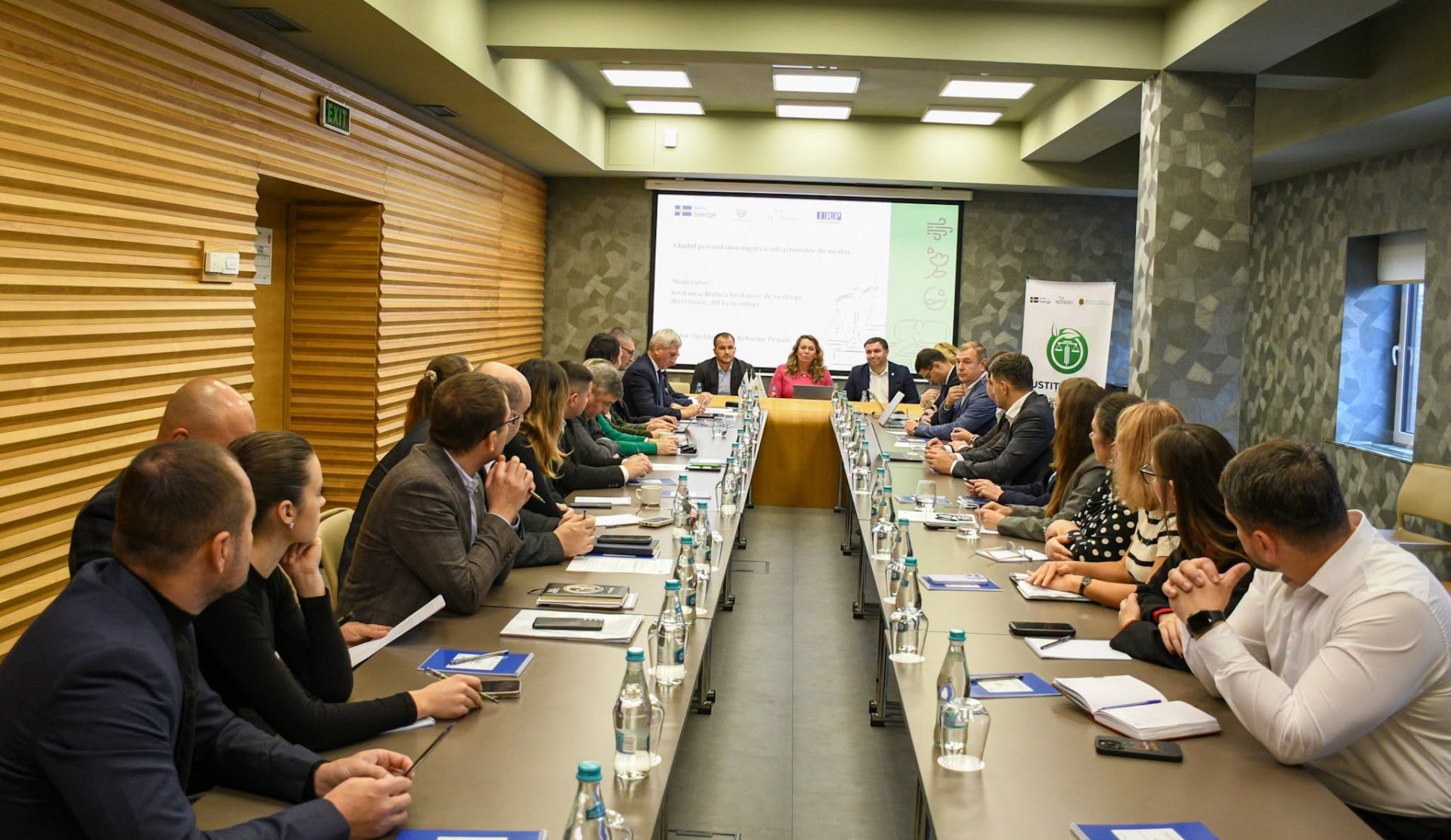
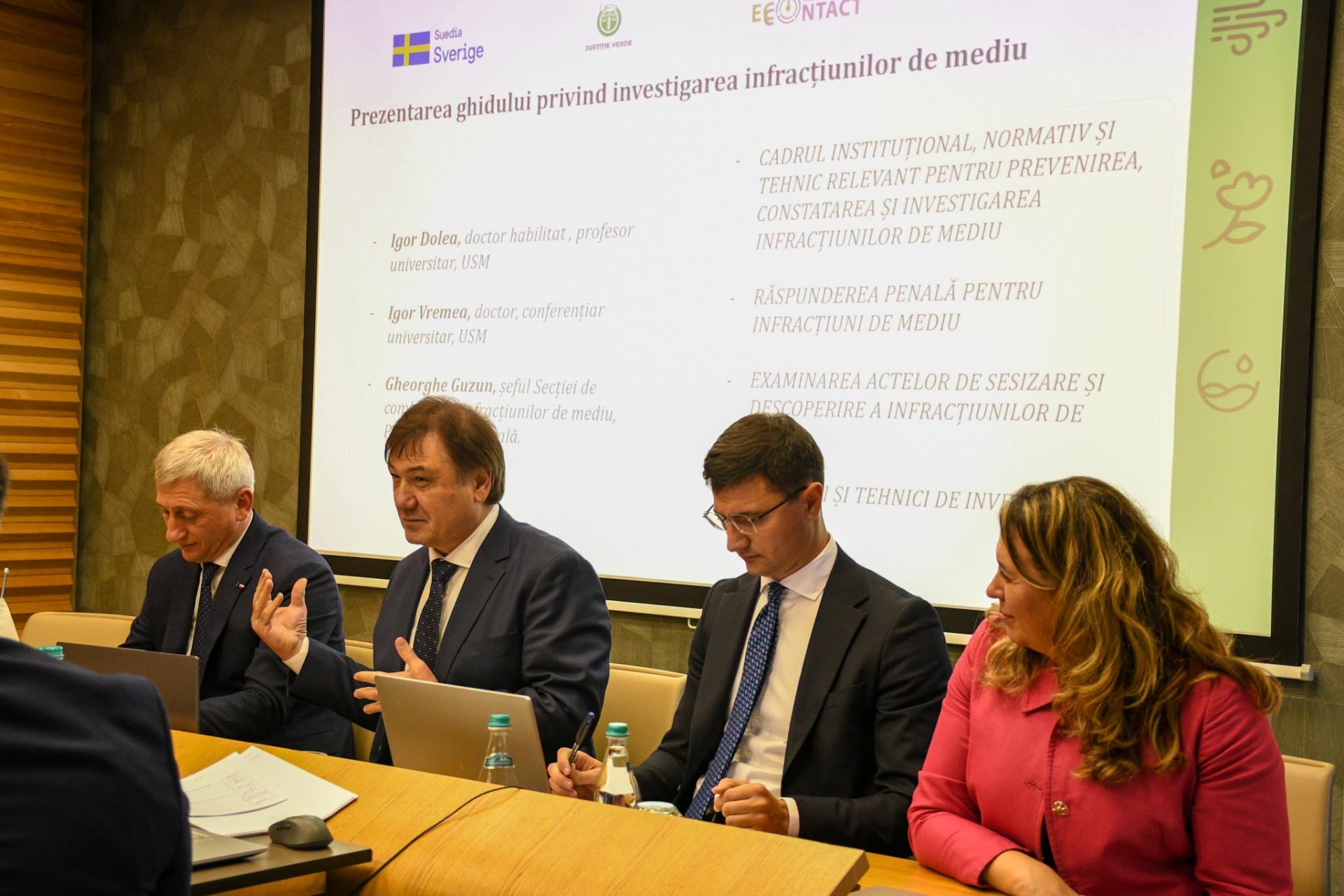
Prosecutors and criminal investigation officers will be able to use a guide containing practical recommendations for investigating environmental crimes, establishing the liability of those involved and recovering the damage caused. The draft document was presented and discussed on October 28 in Chisinau, during a roundtable attended by representatives of institutions in the fields of justice and environmental protection.

The guide was developed by the Institute for Penal Reform in collaboration with EcoContact and provides recommendations for documenting facts, collecting evidence and applying legal provisions in cases involving violations of environmental legislation.


“Investigating these crimes involves establishing the link between the actions of the persons concerned and the damage caused to the environment. According to the authors, the specific nature of these cases also relates to the way pollutants disperse and the period during which their effects on the environment become apparent. For this reason, the prompt collection and proper preservation of evidence, as well as the performance of specialized analyses, are essential for documenting the facts and identifying those responsible,” EcoContact explains.


The document addresses the investigation of cases involving pollution, illegal waste management, illegal logging, poaching and the illegal exploitation of natural resources. The recommendations concern the examination of complaints, crime scene investigations, sample collection, the use of expert assessments and the questioning of persons involved.

A separate chapter focuses on distinguishing environmental crimes from administrative offenses. The guide provides clarification on assessing facts based on the extent of the damage, the consequences produced and the legal obligations that were violated. These aspects are analyzed with reference to criminal legislation, environmental regulations, authorization requirements and the technical standards applicable to the activities under investigation.

The publication also includes recommendations on recovering environmental damage and identifying income and assets derived from crimes for the purpose of confiscation. In this process, financial investigations play an important role, as they can help identify illegally obtained assets and income, as well as their beneficiaries, the cited source indicates.

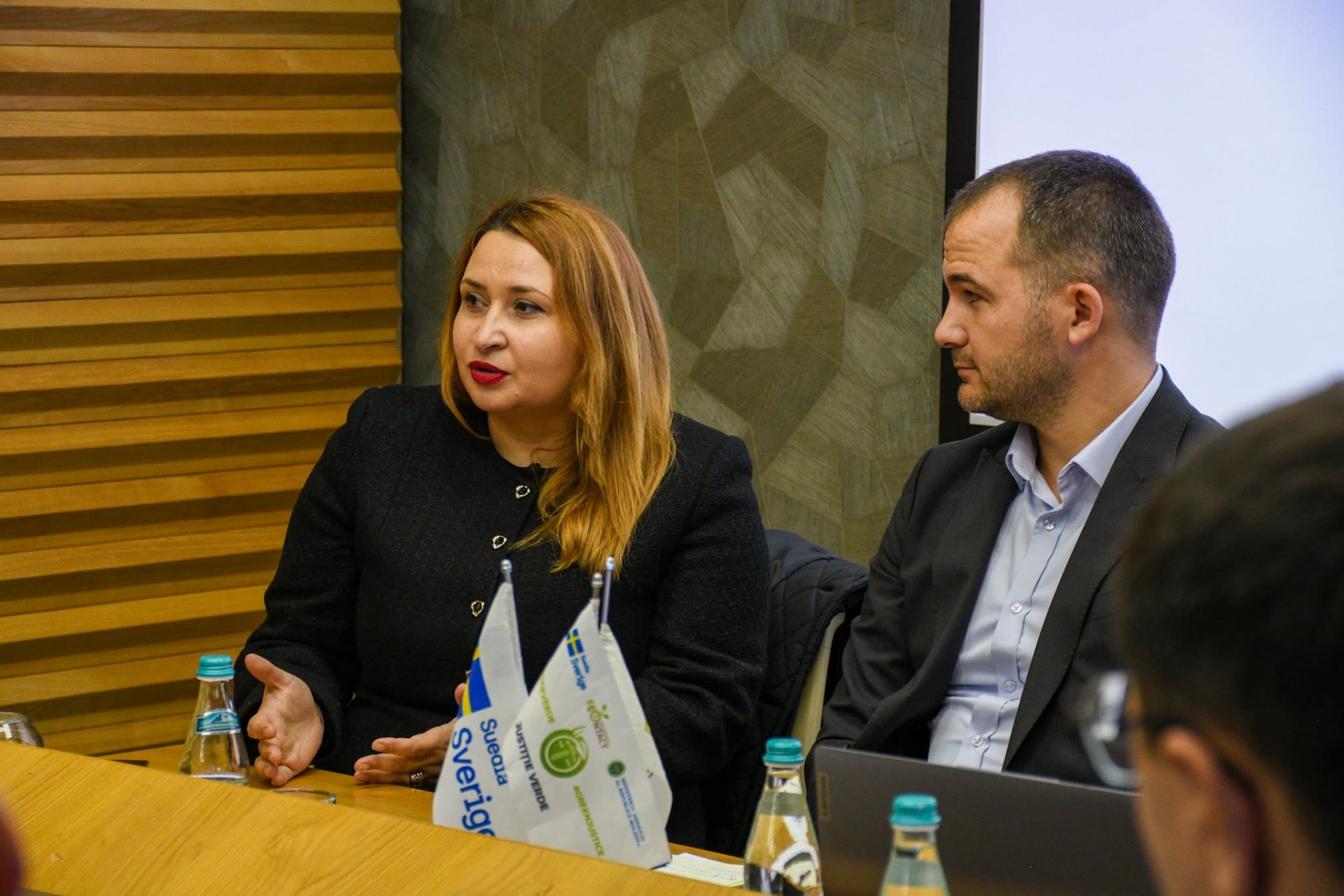
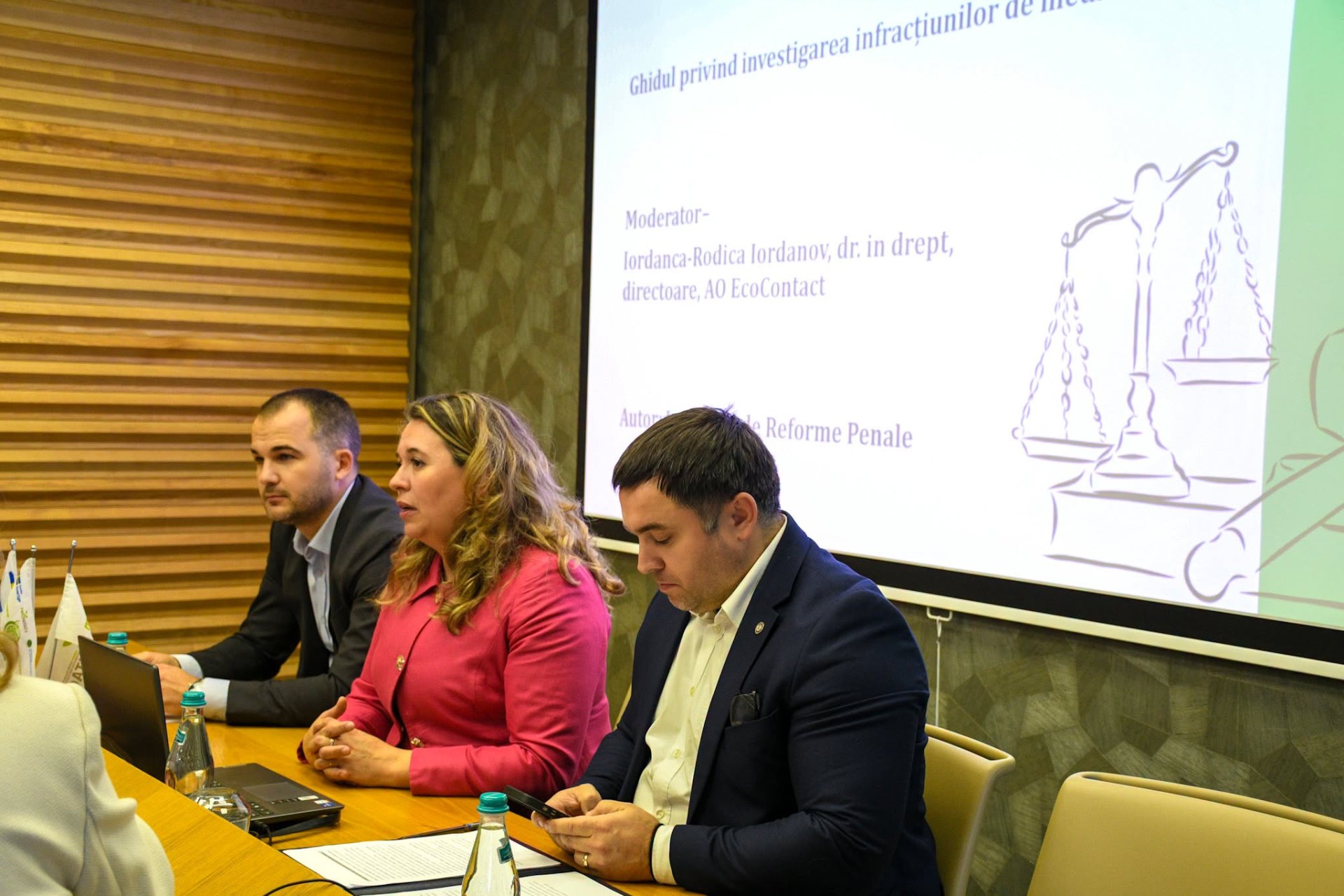
The roundtable organized by EcoContact and the Institute for Penal Reform brought together representatives of institutions responsible for identifying and investigating environmental violations. Participants discussed the draft and had the opportunity to submit proposals for improving the document before its finalization.

The guide is being developed as part of the project Green Justice for a Protected Environment and Sustainable Communities in the Republic of Moldova, implemented by EcoContact with the support of Sweden.
 Facebook
 Instagram
 X/Twitter
 Telegram
Powered paraglider illegally entered airspace of the Republic of Moldova
Republic of Moldova to promote tourism offering at WTM London 2026
Moldovan parliament speaker, Metropolitan of Moldova Vladimir discuss spiritual values, society's unity
Moldovan Education Ministry introduces mandatory training to prevent plagiarism, fraud at universities
Online services for submitting, issuing permits restored after cyberattacks in Moldova
PHOTO // Garden of 100 roots inaugurated in Nisporeni on eve of National House centenary
Deputy Prime Minister to visit Cyprus for discussions on European integration and cooperation
Cyberattack on digital public services: authorities block about 11 million access requests
PHOTO // Austria’s National Day marked in Chisinau
Violence can escalate to femicide: How to recognize warning signs and where victims can seek help
PHOTO GALLERY // Romanian Armed Forces Day celebrated in Chișinău with exhibition dedicated to international military missions during interwar period
Two cases of national airspace violations recorded in Moldova in past week; Defence Ministry reiterates need to strengthen air defense capabilities
Drone falls in central Moldova village; police secure area
First at November 1, 2026 elections in Moldova: voters to be able to vote using digital ID from EVO app
BUILDING MOLDOVA // Deputy PM says more than 95 per cent of Moldova’s settlements set to have access to tap water by 2030
Moldovan PM, at Building Moldova event: ''A European country is not declared, it is built''
BUILDING MOLDOVA // Moldova to have center for collection, processing of special waste
Chisinau Electrical Substation enters inspection stage ahead of energization
BUILDING MOLDOVA // Ten health centers to be renovated, endowed with modern equipment in Moldova
Moldovan parliament speaker explains why he met Metropolitans of Bessarabia, Moldova: “There must be good cooperation between the two Metropolitan Sees”
UPDATE // Heavy cross-border traffic at Leușeni Border Crossing Point eased
 National Bank of Moldova

Moldovan PM, at Building Moldova event: ''A European country is not declared, it is built''
Licensing of cereal and oilseed imports extended by late 2026
Moldova to strengthen integrity of electoral processes by joining International IDEA
Moldova aligns audiovisual legislation with European standards
Small farms in villages to be able to operate under clearly established conditions

Moldova to strengthen integrity of electoral processes by joining International IDEA
New guide set with Sweden’s support explains investigation of pollution, poaching and illegal logging
BUILDING MOLDOVA // Schools and universities at heart of European investment
BUILDING MOLDOVA // Deputy Prime Minister: Ungheni–Chișinău highway to put Moldova on European Union’s map
Moldova aligns audiovisual legislation with European standards
BUILDING MOLDOVA // Agriculture to be based on science and smart solutions
Small farms in villages to be able to operate under clearly established conditions
National legislation on electronic evidence adjusted to international standards
Regulatory framework on civil protection and fire safety aligned with European standards
Romanian language courses and integration support for foreigners in Moldova: Parliament passed bill on integration of foreigners
Passed by Parliament: Tractors and agricultural machinery to be type-approved in line with European standards
Taras Shevchenko gymnasium's library enriched with Ukrainian children’s literature
BUILDING MOLDOVA // Prime Minister presents strategic projects financed through Moldova Growth Plan
Parliament to hold closed-door hearings on cyberattack and compromise of data of 750,000 citizens
Moldovan Speaker's message on National Greening Day
LIVE // Building Moldova: Government presents strategic investment projects from Growth Plan
Receive the latest news directly to your email

Receive the latest news directly to your email