
Voted in first reading // More enterprises could benefit from SME support programs
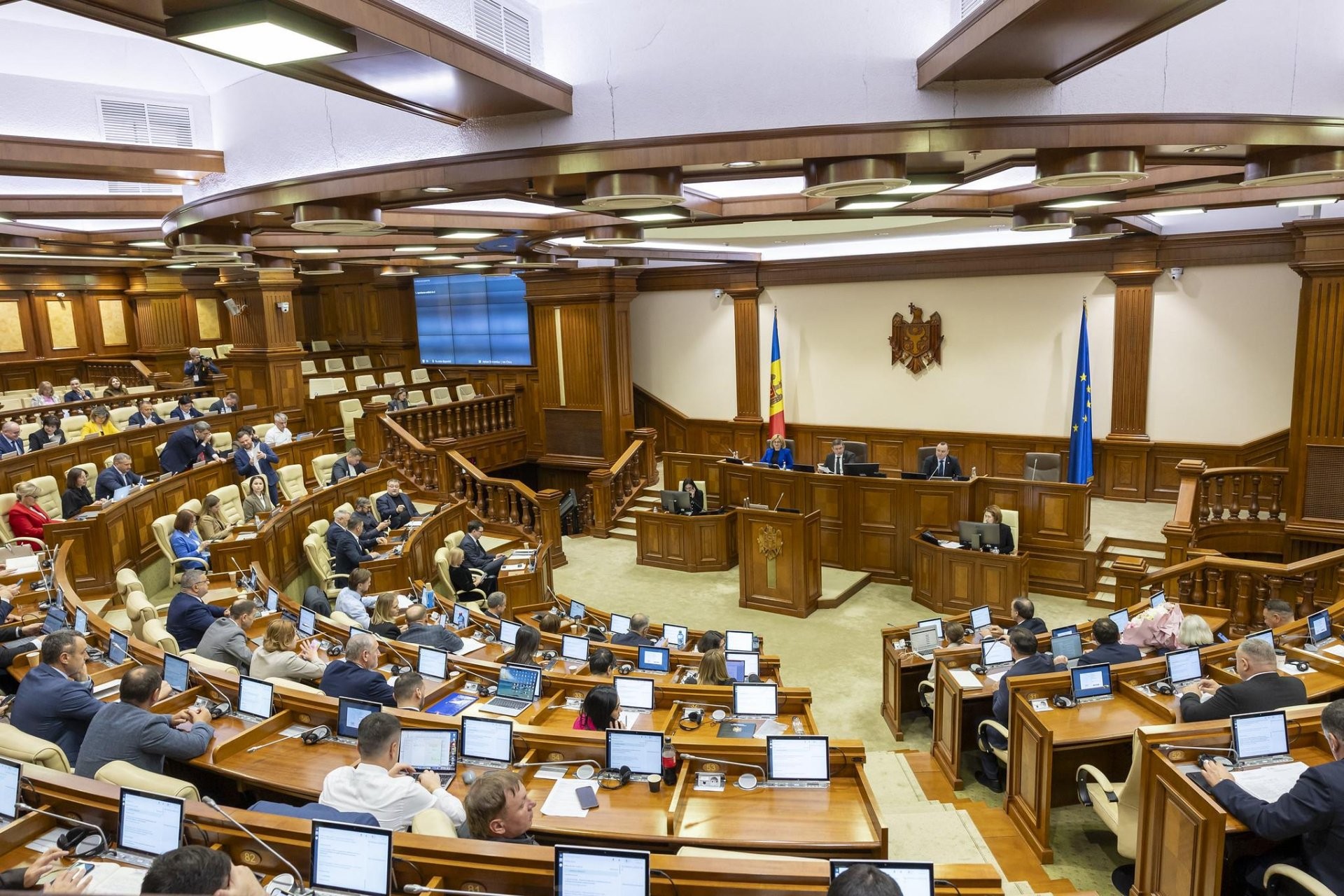
More enterprises in the Republic of Moldova could benefit from support programs and instruments intended for small and medium-sized enterprises (SMEs), following the harmonization of national legislation with the EU acquis. The bill was presented to the Parliament’s plenary session by Natalia Selevstru, State Secretary of the Ministry of Economic Development and Digitalization, and provides for changes to the criteria for classifying enterprises, the introduction of a new category of companies, and the development of export financing mechanisms.

According to Natalia Selevstru, the SME sector plays an important role in the national economy, while the proposed amendments aim both to align legislation with European standards and to improve enterprises’ access to support instruments.


“Micro, small and medium-sized enterprises account for 99.7% of all enterprises registered in the Republic of Moldova. They employ 71.6% of the average number of employees working in the country’s enterprises and generate 73.4% of the national economy’s sales revenues,” Natalia Selevstru said during the Parliament’s plenary session.


The official emphasized that the bill contributes to fulfilling the commitments undertaken by the Republic of Moldova in the European Union accession process, related to Chapter 20 – Enterprise and Industrial Policy – and Chapter 30 – External Relations.

One of the main amendments concerns the increase of financial thresholds for medium-sized enterprises. The annual turnover threshold is to rise from €25 million to €50 million, while the total assets threshold is to increase from €21.5 million to €43 million, in the equivalent amount in Moldovan lei.

According to Natalia Selevstru, based on last year’s data, approximately 148 companies currently classified as large enterprises could be included in the category of medium-sized enterprises, provided they meet the established criteria for two consecutive years.


“These amendments matter because classification into a particular category may determine eligibility for a support program. Therefore, the rules must be clear and reflect the actual size of the business. Through this amendment, we are fully aligning the definition of micro, small and medium-sized enterprises with the provisions of the European Commission’s recommendations,” the State Secretary explained.


The bill also establishes clearer rules for calculating the size of enterprises that are part of corporate groups. Thus, in the case of partner enterprises, between which there are holdings of at least 25% of the capital, the data will be aggregated proportionally to the share held. In the case of companies linked by control relationships, namely ownership of more than 50% of the capital or voting rights, the data will be aggregated in full.

Natalia Selevstru explained that these rules are necessary to ensure that support programs reach eligible enterprises rather than large businesses that could exceed the limits established for the SME category.

Another provision concerns the introduction of the category of small mid-cap enterprises, which exceed the size thresholds for SMEs.

According to the State Secretary, the request to introduce this category was made by representatives of the European Commission in May 2025, during the bilateral screening for Chapter 20.

The new category is intended to ensure a gradual transition for enterprises that exceed the thresholds established for SMEs, without them suddenly losing certain facilities or facing a disproportionate increase in administrative obligations.

At the same time, the official noted that although the European definition will be incorporated into national legislation, no support programs dedicated to this category are planned for the current or following year due to budgetary constraints.

The bill also seeks to create the necessary legal framework for more effective support for export financing. Companies delivering products to foreign markets sometimes have to accept deferred payment, meaning they receive the money 90 or even 180 days after delivery. During this period, companies need resources for production and delivery and must manage the risk of non-payment.


“Thus, the bill enables the development of mechanisms for guaranteeing, insuring and financing export credits, as well as providing support for interest payments,” the State Secretary explained.


Under the bill, the Entrepreneurship Development Organization (ODA) is designated as the institution responsible for these mechanisms, while other public institutions could be designated as export credit agencies, with their responsibilities established by Government decisions.

Natalia Selevstru noted that the adoption of the law will create the necessary legal framework, but the effective implementation of the instruments will depend on the availability of financial resources and the establishment of clear limits for the risks assumed by the state.

Another proposed amendment gives ODA the possibility to issue bonds in order to diversify funding sources and stimulate the development of the capital market.

According to Natalia Selevstru, the authorities envisage involving no more than ten companies to demonstrate, through concrete examples, that other SMEs can also access such financing instruments.

The bill also provides for the mandatory application of the SME test as part of the regulatory impact assessment. Thus, before proposing new requirements for the business environment, the authorities will have to assess the costs, time and administrative obligations that these requirements would generate for small and medium-sized enterprises. At the same time, institutions will have to identify and reduce existing administrative burdens.

The provisions of the bill will be implemented in stages. According to Natalia Selevstru, the new financial thresholds, the rules concerning relationships between enterprises and the category of small mid-cap enterprises are scheduled to enter into force on January 1, 2028.

Certain provisions regarding export credits will enter into force on the date the law is published, while the remaining provisions will take effect one month after publication.


“Through these amendments, we are creating clearer rules for classifying enterprises and laying the foundations for instruments that will support innovation, investment, business development and access to foreign markets,” the State Secretary concluded.


The bill was drafted by the Ministry of Economic Development and Digitalization.
 Facebook
 Instagram
 X/Twitter
 Telegram
PHOTO GALLERY // 30.7-kilogram cheese set national record at Moldexpo
Government launches in-depth assessment of Yandex Go’s activities in Moldova
Approved by Moldova's government: personal allowance to rise to 46,680 lei, VAT-free electricity consumption threshold to reach 150 kWh
Moldovan energy minister speaks about new value added tax thresholds for energy, additional funding for energy efficiency
VIDEO // MOLDAGROTECH, FARMER 2026 exhibitions open at Moldexpo center
PHOTO GALLERY // MOLDAGROTECH and FARMER 2026 brought together manufacturers and suppliers of agricultural technologies at Moldexpo
VIDEO // Prime Minister announces simplifications for small food producers
PHOTO // Cosăuți temporary bridge linking Moldova and Ukraine expected to open by late 2026
VIDEO // Moldexpo Exhibition Center aims to become Moldova Expo Park, regional hub for business, leisure, accommodation
Straseni–Gutinas power line at center of talks between Moldovan energy minister and new U.S. Ambassador
VIDEO // EBRD and EU to support modernization of Moldova’s irrigation infrastructure
VIDEO // Moldagrotech, Farmer 2026 exhibitions of Moldova to showcase solutions for improving agricultural efficiency
PHOTO GALLERY // Farmer from Briceni modernizes farm and prepares new investments in fruit growing
VIDEO // Moldova could import natural gas from Ukraine
Grant to strengthen cybersecurity: Republic of Moldova to receive $1.2 million in U.S. support
Parliament ratifies Agreement between Moldova and Denmark on gainful employment of family members of diplomatic staff
PHOTO GALLERY // Moldova to receive $1.2 million U.S. grant to strengthen cybersecurity
Voted in first reading // More enterprises could benefit from SME support programs
Prime Minister meets with IMF Mission visiting Chișinău
Students in grades 9–11 can receive fully funded scholarship for one year of high school in United States
Energy Minister at Energy Transition Agenda Conference: Moldova’s energy future is European, and regional integration path through which we can build it more quickly and efficiently
 National Bank of Moldova

Clear rules for traffic organization, public transport development and establishment of paid parking
Prime Minister meets with IMF Mission visiting Chișinău
More opportunities for small and medium-sized enterprises
Moldovan parliament's standing bureau approves agenda of parliament meeting of October 22
Topics examined at meetings of Moldovan parliament's standing commissions on 20–21 September 2026

American investments on agenda of discussions between U.S. officials and Moldovan leadership
European Union Ambassador to Moldova says gradual integration into EU can bring additional benefits to country before accession
New tool for searching for missing persons; Moldovan government approves creation of facial images registry
Entrepreneurship training, mentoring for survivors of violence in Moldova; 20 women to receive vouchers to start business
Moldovan parliament's standing bureau approves agenda of parliament meeting of October 22
VIDEO // Fiscal Policy of Moldova for 2027: Zero value added tax on higher electricity consumption, benefits for families, farmers, investors
EU market absorbs 69.9 million euros in Moldovan IT exports in first quarter of 2026
United States, Romania, Germany among main markets for Moldovan IT services
Moldova’s IT exports to EU grow by almost 20 per cent in one year
PHOTO // Moldova's Nicolae Testemitanu State University of Medicine and Pharmacy, National Public Health Agency inaugurate renovated, equipped study room
Annual conference on EU enlargement to take place in Chisinau on November 9–10
Topics examined at meetings of Moldovan parliament's standing commissions on 20–21 September 2026
ARMENPRESS: Armenia, Tajikistan discuss expanding environmental cooperation
Moldovan parliament speaker has meeting with Metropolitan of Bessarabia
Moldova's state secretary for reintegration has meeting group of students, young professionals
Moldovan government approves national strategy on drugs, addictions for 2026–2032
Receive the latest news directly to your email

Receive the latest news directly to your email