
Moldovan PM-designate says ambition is for Moldova to become most entrepreneur‑friendly European country
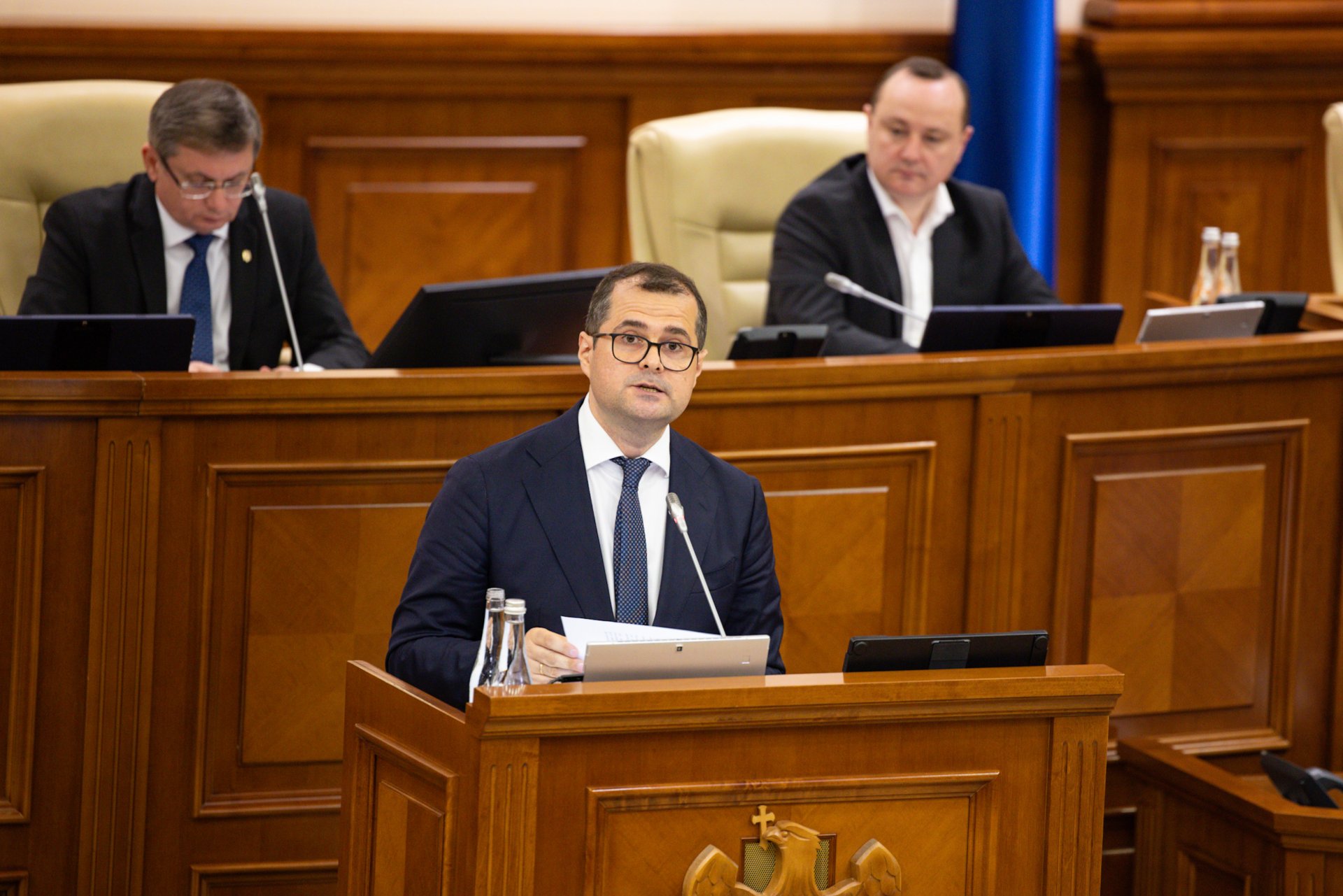
Prime Minister-designate Vasile Tofan has presented the main changes that the future government intends to implement, in order to accelerate economic growth. He said that the starting priority of the cabinet is to restore confidence, energy, and initiative in the economy, and that “the ambition is Moldova to become the most entrepreneur‑friendly European country.”

“Pessimism is the most dangerous disease of an economy. If entrepreneurs lack confidence, they postpone investments. If people do not see opportunities, they leave. If institutions do not make decisions, capital goes elsewhere. That is why the starting priority of this government is to restore confidence, energy, and initiative in the economy. Not through optimistic speeches, but through decisions that show people it is worth investing, working, and building here,” said Vasile Tofan.

The PM-designate stressed that the role of the government is to ensure stable rules, protected property, infrastructure, fair competition, and access to markets.

“At the current pace, we cannot catch up with European economies. We cannot sustainably finance salaries, pensions, hospitals, education, infrastructure, and security just by redistributing the same limited resources. We must produce more value here, in Moldova. Economic value is not created in ministries. It is created in factories, on farms, in IT companies, in workshops, in construction, in services, and in small and large enterprises. Our ambition is for Moldova to become the most entrepreneur‑friendly European country. This ambition is not measured by a slogan. It is measured in the days needed to open and expand a business, in the cost of compliance, in the number of reports, in the time spent at customs, and in the predictability of inspections,” the official said.

The prime minister-designate noted that by 2028, priority tax and customs interactions must be digital. The “once‑only” principle must be effectively applied: if the state already holds certain information, it should no longer request it from the citizen or the enterprise, he said.

At the same time, permits and reporting requirements will be revised, so that any authorization that does not protect a clear public interest will be removed or replaced by a notification.

Another change concerns the way inspections are carried out. Vasile Tofan argued that an enterprise that operates correctly should not be repeatedly inspected just because it is visible and easy to find, while high‑risk activities remain outside the authorities’ focus.

“And I want to make something very clear. In a normal tax dispute, the state should not send masked officers at six in the morning to raid an entrepreneur’s home in front of his children and family. The power of the state must be used where there is a real danger – organized crime, violence, serious fraud – not as an intimidation tool in a routine accounting or tax dispute. The law must be enforced. But it must be enforced proportionally and with common sense,” said the Prime Minister-designate.

Another aspect referred to by Vasile Tofan is the digitalization of services. According to him, by 2029, ten of the most important life and business events must be fully digitalized – from application to decision – and priority public services must be available online.

Likewise, Vasile Tofan advocated extending guarantees and investment loans, developing investment and venture capital funds and attracting private capital alongside public and European funds.

Another objective set is for exports of technology products and services to reach two billion euros by 2029, compared to the current value of around one billion euros.

“At least ten local companies will be prepared for stock exchange listing. We will also create instruments through which the savings of the Diaspora can finance productive companies and projects in Moldova. Our domestic market is small. Precisely for this reason, a company built here must be able to reach the European market quickly. Legal access to the single market is not enough. A producer must be able to test and certify in Moldova, at a reasonable cost, that its product complies with European standards. We will invest in laboratories, certification and quality infrastructure. We will digitalize customs services and reduce costs for operators who comply with the rules,” said Vasile Tofan.

He also said that diplomacy would have economic objectives.

“Missions in priority markets will have annual plans for investments and exports. We will not evaluate an embassy only by the number of meetings it organizes. What matters is how many investments it has facilitated, how many problems of exporters it has solved, and which markets it has helped to open,” the official said.

Regarding the budget deficit, Vasile Tofan said that, by 2029, the budget deficit relative to the Gross Domestic Product (GDP) must be reduced by at least two percentage points compared to the 2026 level, and tax revenues relative to GDP must increase by at least two percentage points.

“We cannot achieve these results by continuously increasing the pressure on the same taxpayers who already pay correctly. We must reduce the informal economy, undeclared work, cash‑in‑envelope salaries, and tax evasion. We must assess tax exemptions and keep only those that generate an economic or social benefit greater than their cost,” emphasized Vasile Tofan.

He advocated for the systematic review of public spending, stressing that “every leu spent on a structure that duplicates the function of another is a leu that does not reach a school, a medical service, a road, or a social service.”

Referring to tax reform, the PM-designate mentioned that it is necessary, but will be widely consulted, and the decisions will be explained.

“I will not promise that taxes and tax rules will not change. We need tax reform. It would be unserious and irresponsible to claim otherwise. But I can commit that changes will be consulted, that decisions will be explained, and that we will not treat compliant enterprises as the easiest source of additional revenue. Any major change will be analyzed according to three criteria: its effect on investments, on jobs, and on public revenues,” said Vasile Tofan.

To support economic development, Vasile Tofan underlined the need for public investment to increase from about 0.9 per cent to 2 per cent of GDP over the next two years.

“But we do not need more construction sites that are started and then frozen. We need well‑prepared projects, fully financed and completed on time. An unfinished road, a hospital without staff, or a water network without an operator does not represent a result,” the official said.

At the same time, he added that the 1.9 billion euros granted by the EU under the Growth Plan must be transformed into roads, bridges, water systems, energy infrastructure, hospitals, schools and better conditions for investment.
 Facebook
 Instagram
 X/Twitter
 Telegram
Moldova modernizes regulatory framework on financial guarantees, in line with EU legislation
Moldova to establish priority authorization regime for strategic energy orojects to accelerate interconnections with EU
Moldova–India business forum organized on July 20
Energocom started preparations for 2026–2027 cold season by booking natural gas transport capacities
Moldelectrica completes first testing stage of new 400 kV bay at Vulcănești substation
MOLDPRES REPORT // From stone quarry to medals: China forges its own path in wine world, while recognizing excellence of Moldovan production
Chinese market, strategic opportunity for exporters from Moldova
In June, Energocom purchased electricity at price of 131 euros/MWh
DOC // Economic resources of individuals targeted by international sanctions frozen by Tax Service
Union Motorway takes shape: Contract signed in Bucharest for Iași–Ungheni section during Vladimir Bolea’s visit
PHOTO // Moldova and Romania expand cooperation in transport infrastructure
Moldova to automatically exchange more categories of financial data with other countries
DOC // Published in Official Journal. Moldova joins two international maritime conventions
Agri-food reforms and progress on agenda of Agriculture Minister’s visit to Brussels
Moldovan PM-designate says financial support provided to amalgamated mayoralties – 3,000 lei for each resident – to be allocated according to assumed commitments
Moldova's designated PM proposes new vision for harnessing state-owned assets
VIDEO // Authorities to develop new concept of fiscal policy; Moldovan PM-designate says government to propose reform due to place emphasis where it is needed
PM-designate says grateful to Romania for its constant support of Moldova’s European path
Moldovan parliament speaker says Tofan Government to receive parliament’s vote, to immediately get to work
Moldova aims to open all EU negotiation chapters in next six months
Moldovan Ambassador in Moscow summoned to Russian Foreign Affairs Ministry
 National Bank of Moldova
Moldovan president has meeting with mayors of Gagauz autonomy
Speech of candidate for position of Moldova's PM, delivered in parliament's plenum
Moldovan president has meeting with members of People’s Assembly of Gagauzia
Moldovan president says leadership wants relationship with India to bring concrete results for people of Moldova
Moldova–India Business Forum: new perspectives for economic partnerships, bilateral investments

At least seven billion lei to be mobilized in coming years for public, private investments in Moldova's agri-food sector
Over one thousand voluntary amalgamation decisions approved in Moldova
Moldovan designated PM says Gagauzia an important bridge to Turkey
Moldovan PM-designate speaks about government team
Moldovan PM-designate says local administration reform difficult, can no longer be avoided
Moldovan PM-designate says ambition is for Moldova to become most entrepreneur‑friendly European country
Moldova's prime minister-designate says shares people’s indignation as for ''outrageous'' salaries, does not tolerate such cases
Moldovan PM-designate says government must focus on real efficiency, not just tick populist box
PM-designate says rapprochement between two banks of Dniester to be pursued peacefully, step by step, without escalation
Concluding EU accession negotiations, preparing signing of Accession Treaty by 2028 among goals of Moldova's Tofan Government
Prime minister-designate in parliament has plan for Moldova, determined to fight for stronger economy
Moldovan PM-designate in parliament says asking for MPs' vote for programme with clear direction
Speech of candidate for position of Moldova's PM, delivered in parliament's plenum
PHOTO GALLERY // Results of Peer-to-Peer Mathematics campaign presented at wrap-up event in Moldova
Moldova's parliamentary opposition says not to support investiture of Government led by Vasile Tofan
Energocom company of Moldova launches tenders for purchase of natural gas for next gas year
Receive the latest news directly to your email

Receive the latest news directly to your email