
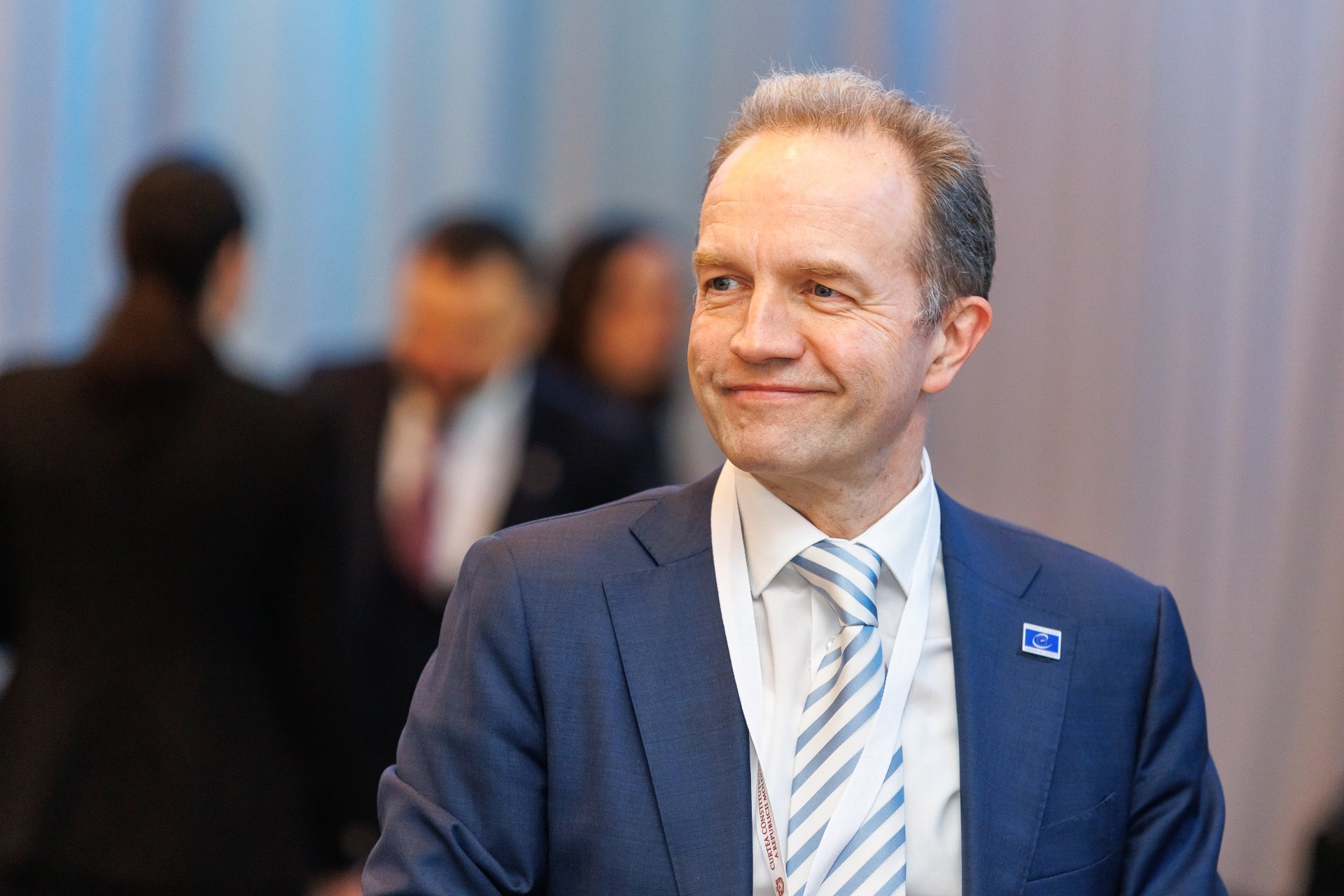
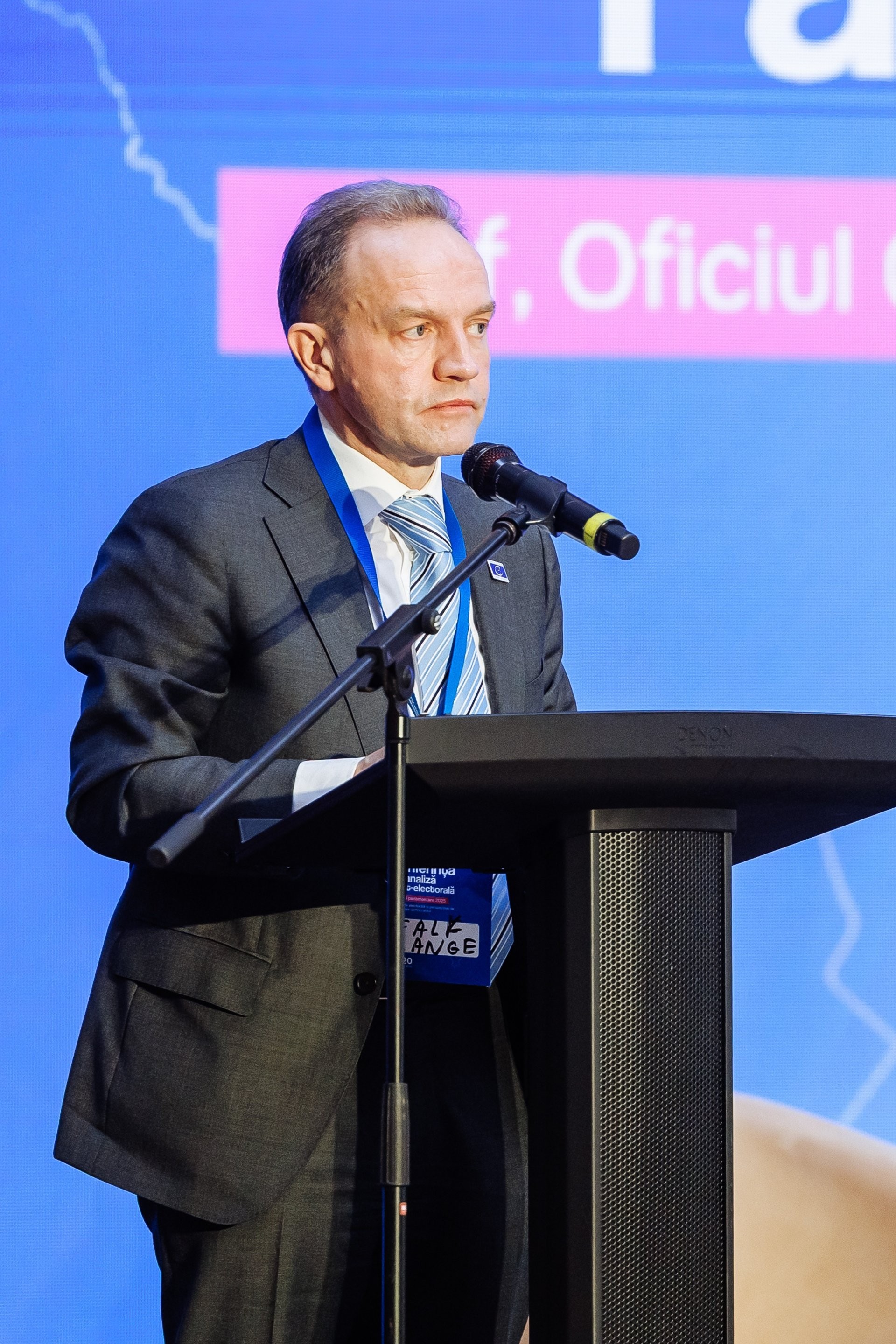
MOLDPRES INTERVIEW // Falk Lange, Head of the Council of Europe Office: “The Presidency of the Committee of Ministers is both a responsibility and an opportunity for the Republic of Moldova to demonstrate its commitment to European values.”
An exclusive interview for MOLDPRES with Falk Lange, Head of the Council of Europe Office in Chișinău, brings into focus a comprehensive analysis of the Republic of Moldova’s trajectory over the past three decades and the profound transformations the country has undergone.

The official emphasizes that, despite persistent challenges, the Republic of Moldova today stands out as a country with remarkable resilience and an increasingly consolidated democratic orientation. According to him, the status of candidate country for accession to the European Union, the ambitious reform agenda, and the firm commitment to European values — even in the context of significant geopolitical pressure — demonstrate a level of political and institutional maturity that would have been difficult to anticipate 30 years ago.

MOLDPRES: The Republic of Moldova holds the Presidency of the Committee of Ministers of the Council of Europe. How is this mandate perceived in Strasbourg? To what extent does this presidency reflect the progress made by our country in the fields of democracy and the rule of law?

Falk Lange: It's essential to understand that the Republic of Moldova's presidency of the Committee of Ministers is not a merit-based appointment or a reward. Rather, it represents the country's turn in a well-established rotational system that applies to all 46 member states of the Council of Europe. The presidency rotates alphabetically, with each country holding the position for six months, which means this is  the Republic of Moldova's turn in a sequence that every member state must undertake.

To this end, it offers the Republic of Moldova a valuable platform. The six-month term provides an opportunity to demonstrate organizational capacity, to set priorities that align with Council of Europe values, and to show leadership in facilitating dialogue among member states. It’s a responsibility and an opportunity for the Republic of Moldova to demonstrate its dedication to European values during its time in the chair. That said, with the number of activities planned and organised under the Presidency, the Republic of Moldova has set the bar high, demonstrating the country’s commitment to showcasing the progress made in upholding human rights, the rule of law, and democracy.

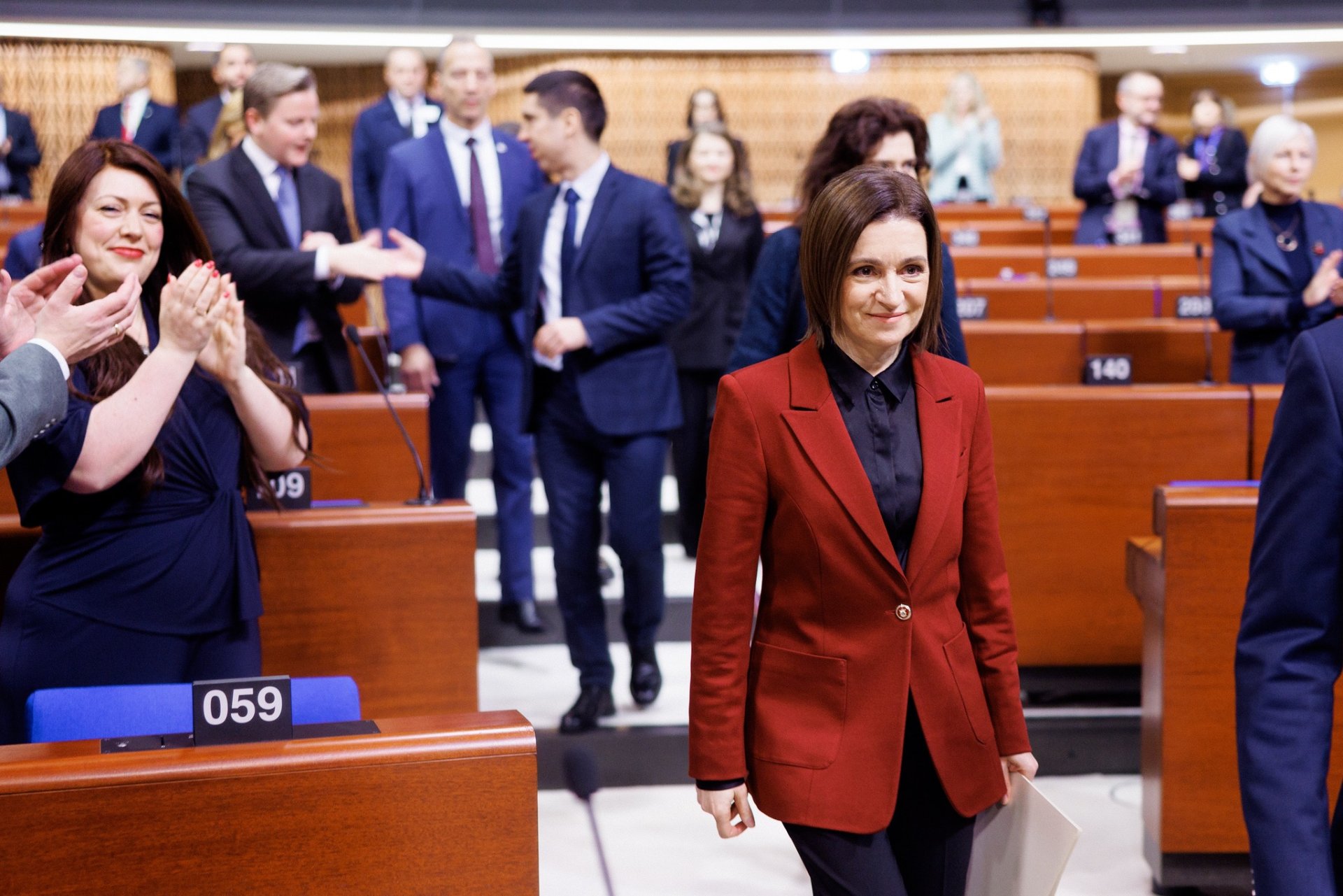
MOLDPRES: President Maia Sandu addressed the Parliamentary Assembly of the Council of Europe, speaking about the pressures and threats facing democracy in the Republic of Moldova. How was this message received in Strasbourg? Do you believe that this speech contributed to a better understanding, at the European level, of the challenges Moldova is facing?

Falk Lange: President Sandu's address was, to my knowledge, received positively and with considerable attention in Strasbourg, largely because it articulated challenges that resonate well beyond Moldova's borders, touching on vulnerabilities shared by many European democracies today.

The impact of her speech was further underscored when Secretary General Alain Berset referenced her remarks at a subsequent conference on media literacy and information integrity held in Chișinău. This acknowledgment highlighted the gravity of the issues Moldova faces, particularly regarding information manipulation and foreign interference, and signaled that her message had genuinely resonated at the Council of Europe.

In this regard, it is reasonable to conclude that President Sandu's address meaningfully contributed to raising European awareness of the specific pressures Moldova is navigating, while also reinforcing the broader conversation about safeguarding democratic integrity across the continent.

MOLDPRES: Disinformation remains one of the biggest challenges. How do you assess Moldova’s progress in combating this phenomenon? What role do state institutions, the media, and civil society play in strengthening information resilience?

Falk Lange: Information manipulation is indeed a pervasive problem in Europe today. Low-intensity, and constant waves of disinformation can have the effect of normalizing false narratives and challenge credible information and trust in credible sources of information. Moldova is not alone in facing these threats. According to a recent Eurobarometer survey, 81% of EU citizens see disinformation and foreign meddling as urgent issues, particularly during elections.

At a time when disinformation and foreign information manipulation increasingly target elections, public debate and trust in institutions, the discussion must shift from problem recognition to coordinated, long-term solutions, involving all relevant actors.

In this sense, resilience is achievable and all stakeholders play a critical role. Through human-rights-based policies, coordinated efforts on MIL (Media and Information Literacy), support for quality and independent journalism, and multi-stakeholder cooperation, Moldova can strengthen its ability to withstand information manipulation while upholding democratic values.

Faced with substantial challenges and on-going continued risks, the Republic of Moldova has demonstrated that it can stand strong against disinformation efforts, foreign interference and manipulation, particularly during last year’s national elections. This shows that preparedness, institutional coordination, the vigilance of media actors, and cooperation with international partners can make a tangible difference.

MOLDPRES: What tools and mechanisms does the Council of Europe provide to support member states in countering external interference and protecting democratic processes?

Falk Lange: The Council of Europe has long recognized that information integrity is fundamental to the health of democracy. Its work in this area is firmly anchored in the core values of human rights, the rule of law, and freedom of expression, as safeguarded by Article 10 of the European Convention on Human Rights. A key guiding principle remains that any restriction on content — whether illegal speech, harmful material, or false information — must fully respect international standards for free expression.

This commitment is further reinforced by the New Democratic Pact for Europe, which places the protection of democratic processes and institutions at the heart of the Council of Europe's strategic priorities, providing a renewed framework for member states to strengthen their resilience against external interference and emerging threats to democratic governance.

At the same time, the Council acknowledges that promoting information integrity demands comprehensive, proactive, and strategic approaches. Reactive measures alone are insufficient in the long term. Effectively countering disinformation requires a whole-of-society commitment, in which governments, media outlets, civil society organizations, digital platforms, and individual citizens each have a meaningful role to play.

Through various legal binding, as well as soft-law instruments, recommendations, and cooperation work, the Council of Europe offers member states a comprehensive framework on building resilience.

For instance, the AI Framework Convention addresses risks posed by artificial intelligence to human rights, democracy and the rule of law, while the Budapest Convention on Cybercrime provides a foundational legal framework for addressing cyber interference and related criminal activities in the digital environment.

A multitude of Council of Europe recommendations cover key policy areas on information integrity, including support to quality journalism and ensure the safety of journalists; media pluralism and diversity; independence and sustainability of public service media; electoral communication and media coverage of election campaigns;

The Council of Europe is working on integrating these instruments in the work carried out in the Republic of Moldova. MIL and resilience to disinformation emerges as a strategic priority for the country, informed by the growing needs of Moldovan authorities and society. In this sense, the Council of Europe works closely with the national authorities.

In 2025, a nationwide Media Literacy Assessment was developed and published with the support of the Council of Europe. The study provides robust evidence on information consumption patterns and vulnerabilities. The findings informed national communication strategies and positioned the Republic of Moldova as a contributor to regional and European policy dialogue on media literacy. The Council of Europe has also supported the Audiovisual Council of Moldova to draft its first MIL strategy.

As exemplified above, the fight against disinformation requires a complex and multi-stakeholder approach, and the Council of Europe will continue to set standards and help build trust and confidence in a democratic future of Europe.

MOLDPRES: The Republic of Moldova joined the Council of Europe in 1995 and has since been under monitoring by the Parliamentary Assembly. Do you observe recent developments that could lead to the lifting of this monitoring? How would you assess the transformations the country has undergone during this period?

Falk Lange: The Republic of Moldova's journey since joining the Council of Europe in 1995 has been one of gradual transformation. Over nearly three decades, the country has undertaken significant democratic reforms, and its commitment to this path was powerfully reaffirmed when the Council of the European Union granted Moldova candidate country status in June 2022 — a milestone that reflects both European aspirations and the country's concrete reform efforts.

The Assembly has acknowledged Moldova's continued implementation of an ambitious reform agenda, particularly in the areas of judiciary reform and anti-corruption measures, even under difficult circumstances and with limited financial and human resources. The EU accession process itself serves as an important driver for the legal and democratic reforms necessary to fully honour Council of Europe membership obligations.

Regarding the monitoring status, this remains a decision exclusively within PACE's mandate. What we can confirm is that PACE rapporteurs are expected to visit Moldova in the near future, with a further report anticipated, which will provide an updated and comprehensive assessment of the country's progress.

MOLDPRES: How does Moldova’s European integration path intersect with the commitments undertaken towards the Council of Europe? Would accession to the European Union mean that the Republic of Moldova has largely fulfilled its obligations regarding democratic reforms? In which areas are sustained efforts still needed?

Falk Lange: The relationship between Republic of Moldova's European Union integration path and its commitments to the Council of Europe is deeply intertwined and mutually reinforcing. It's important to understand that these are not parallel tracks but rather complementary processes. When Republic of Moldova works towards EU accession, it is simultaneously deepening its adherence to Council of Europe standards, because the EU itself is built upon these very principles. The European Convention on Human Rights, the work of the Venice Commission on constitutional matters, and the various monitoring mechanisms of the Council of Europe all provide essential benchmarks that the EU also considers when evaluating candidate countries.

MOLDPRES: The Council of Europe, through the Venice Commission, has provided crucial expertise for the vetting and pre-vetting processes in Moldova’s judiciary. However, we are witnessing considerable internal resistance within the system. How does the Council of Europe assess the current balance between the need for a thorough cleansing of the system and the risk of institutional blockages, and what recommendations do you have for overcoming this impasse without compromising democratic standards?

Falk Lange: The Council of Europe has consistently supported Moldova's judiciary reform efforts, including the vetting and pre-vetting processes, recognizing them as essential instruments for restoring and developing public trust in the justice system.

We are fully aware that the vetting process, while necessary, has created significant institutional pressures, including deepening vacancies within the judiciary. The reform efforts were initiated as a constructive response to a credibility and sustainability challenge. If the profession is unable to attract and retain sufficiently qualified candidates in the longer run, this points to deeper structural issues that must be addressed comprehensively and strategically.

In this regard, the Council of Europe would emphasize the importance of:
- Enhancing the attractiveness of judicial careers through improved remuneration, professional development opportunities, and strengthened institutional independence, thus building judicial capacity
- Maintaining the integrity of the vetting process while ensuring it operates as efficiently and transparently as possible to minimize prolonged institutional disruption
- Strengthening judicial training institutions to accelerate the pipeline of qualified candidates
Ultimately, the goal is not merely to strengthen the integrity of the system, but to build a judiciary that is independent, credible, and sustainable — one that genuinely serves Moldova's democratic aspirations and supports its path toward European integration.
MOLDPRES: What are the most important projects implemented in the Republic of Moldova with the support of the Council of Europe? What concrete results have been achieved in areas such as justice, anti-corruption, and human rights?
Falk Lange: It would be difficult to single out one defining project, as the Council of Europe's initiatives in the Republic of Moldova are deeply interconnected and collectively contribute to a broader process of democratic consolidation. Each area of engagement carries its own significance within this wider reform landscape. It is important to note that the Council of Europe Action Plan for the Republic of Moldova is the main strategic framework for co-operation between the Council of Europe and the Republic of Moldova, where priorities are jointly implemented with various stakeholders at the national and local levels, including civil society actors, thereby contributing to institutional sustainability and ownership of the progress made in jointly identified areas. Having said this, this is the fourth Council of Europe Action Plan for the country since 2013. It builds on the best practices and achievements of previous action plans and opens up new areas, such as the prevention of drug use and addictions, and increased involvement of civil society and youth participation in democratic decision-making.
Of course, with every strategic framework, certain areas have demonstrated particularly visible and meaningful impact. Justice sector reform and anti-money laundering efforts stand out — not only for their technical achievements, but for their contribution to something perhaps more fundamental: rebuilding public trust in institutions. When citizens begin to see that the justice system operates with greater integrity and that financial crimes are being addressed seriously, it meaningfully transforms the relationship between the state and the people it serves.
Beyond these areas, the Council of Europe has been equally committed to:
- Anti-discrimination awareness, working closely with partner institutions and civil society organizations to promote inclusive and equal treatment across all segments of society
- Migration and refugee support, strengthening the capacities of Moldovan authorities and developing more effective and sustainable long-term systems
- Children's rights, ensuring that Moldova's youngest and most vulnerable citizens benefit from stronger legal and institutional protections
- Istanbul Convention, supporting Moldova's efforts to prevent and combat violence against women and domestic violence, strengthening legislative frameworks and institutional capacities in line with European standards
- Electoral reform, working alongside Moldovan authorities and the Central Electoral Commission to enhance the integrity, transparency, and inclusiveness of electoral processes in line with Council of Europe standards and EOM recommendations
- Public administration reform, assisting Moldova in building more accountable, transparent, and efficient public institutions, a cornerstone of both good governance and the country's broader European integration agenda
Taken together, these efforts reflect the Council of Europe's comprehensive and sustained commitment to supporting Moldova's democratic journey across all its dimensions.
MOLDPRES: How do you assess developments regarding media freedom?
Falk Lange: The media landscape in the Republic of Moldova reflects a complex but evolving environment, where significant challenges coexist with encouraging signs of steady progress.
Persistent vulnerabilities continue to pose serious concerns, including the polarized nature of the media, its susceptibility to external influence, the growing threat of disinformation campaigns, financial pressures on independent newsrooms, risks to journalists' safety, and insufficient transparency in media ownership. It is also important to acknowledge that certain emergency measures — including the suspension of television channels and the blocking of websites — while motivated by genuine disinformation pressures, should be considered in light of proportionality and the safeguarding of freedom of expression.
At the same time, there are reasons to recognise steady progress. Moldova's EU accession process has served as a powerful catalyst for reform, driving alignment with European norms and reinforcing momentum across the media sector. Notable progress includes:
- Advancement toward a new Law on Media, aligned with the European Media Freedom Act
- Amendments to the Audiovisual Media Services Code, strengthening the independence of audiovisual regulatory authorities
- Ongoing policy efforts in media and information literacy, building societal resilience against information manipulation
These reforms are actively supported by the Council of Europe's continued engagement in Moldova. While systemic challenges remain — many of which mirror broader trends across European societies — Moldova has demonstrated a genuine commitment to reform and to meeting EU and Council of Europe standards on media freedom. The Council of Europe remains fully committed to supporting Moldova on this important journey.
MOLDPRES: What role does the Council of Europe play in promoting democratic values in the Transnistrian region? Are there initiatives that contribute to bringing the two banks of the Nistru River closer together?
Falk Lange: The Council of Europe's engagement with the Transnistrian region remains one of the most sensitive and complex aspects of our work in the Republic of Moldova. As Secretary General Berset has previously acknowledged, the human rights situation in Transnistria is particularly difficult to assess, precisely because full and unimpeded access to the region remains unavailable. This stands in stark contrast to the right bank, where the Council of Europe can directly observe, evaluate, and actively support improvements. This lack of access is not merely a logistical constraint — it represents a fundamental obstacle to the effective promotion and monitoring of human rights.
That said, the Council of Europe remains committed to following developments in the region closely and is guided by the overarching goal of protecting the rights of all people living on both banks of the Nistru River.
In pursuit of this goal, the Council of Europe works in close coordination with other international organisations that have the Transnistrian region within their portfolio, including the OSCE, recognising that a coherent and collaborative international approach offers the most meaningful prospects for progress.
Ultimately, the Council of Europe's position is clear: the human rights and fundamental freedoms of all individuals, regardless of which bank of the Nistru they live on, must be respected and protected. We remain ready to deepen our engagement as and when conditions allow, and we continue to advocate for unhindered access to the region as an essential prerequisite for meaningful progress.
MOLDPRES: How would you describe today’s Republic of Moldova compared to 1995?
Falk Lange: The Republic of Moldova of 2025 is a fundamentally transformed country compared to the one that joined the Council of Europe thirty years ago. In 1995, Moldova was a young, fragile democracy navigating the profound uncertainties of post-Soviet transition, with nascent institutions, limited democratic experience, and enormous structural challenges ahead.
Today, while significant challenges undoubtedly remain, the Republic of Moldova stands as a country that has demonstrated remarkable resilience and a clear democratic conviction. Its EU candidate status, its ambitious reform agenda, and its unwavering commitment to European values — even in the face of considerable geopolitical pressure — speak to a maturity and determination that would have been difficult to fully anticipate three decades ago. The progress achieved reflects a country that is not merely aspiring to European standards but is actively working to meet them.
MOLDPRES: What personal impressions have you formed during your mandate in Chișinău? What has impressed you the most about the Republic of Moldova?
Falk Lange: The Republic of Moldova has left a lasting and profound impression. What strikes one most is not simply the pace of institutional reform, but the spirit of the people themselves — their warmth, their resilience, and their deeply held belief in a better future. It is a country that has faced extraordinary pressures, both historical and contemporary, yet has consistently chosen the path of dialogue, reform, and European integration.
The dedication of Moldovan civil society, the commitment of reform-oriented institutions, and the energy of a younger generation that sees its future firmly within the European family are perhaps the most powerful and inspiring testimonies to the country's democratic journey. It is a privilege to accompany the Republic of Moldova on this path.
MOLDPRES: What is your message to the citizens of the Republic of Moldova in the context of its European path?
Falk Lange: A message of genuine encouragement and solidarity. The path toward European integration is neither simple nor without obstacles — but it is a path that the country has chosen with conviction, courage, and democratic legitimacy.
Every reform undertaken, every institution strengthened, and every standard met brings the country closer not only to the European Union, but to the values that the Council of Europe has championed for over seventy years — human rights, the rule of law, and democracy. These are not abstract principles; they are the foundation of societies where citizens live with dignity, freedom, and opportunity.
The resilience of the citizens of the Republic of Moldova is remarkable, their aspirations are legitimate, and they are not alone. The Council of Europe stands firmly beside them — today, tomorrow, and for as long as it takes to build the future that the country and its people so thoroughly deserve.
The Council of Europe was founded on 5 May 1949 through the signing of the Treaty of London, with its headquarters in Strasbourg. The organization was established to promote democracy, human rights, and the rule of law in Europe. Among its main founders were Winston Churchill, Konrad Adenauer, and Robert Schuman.
The Republic of Moldova became the 36th member state of the Council of Europe on 13 July 1995, marking an important step in its integration into the European democratic space. Accession provided the country with an important platform to make its voice heard at the European level and to promote the aspirations of its citizens.
The Republic of Moldova is currently holding the Presidency of the Committee of Ministers of the Council of Europe, a mandate assumed on 14 November 2025 and set to conclude on 15 May 2026. This is the second time the country has held this position, after its first presidency in 2003.
 Facebook
 Instagram
 X/Twitter
 Telegram
MOLDPRES INTERVIEW // ANSC Director: We make sure that path of public money to hospitals, schools or infrastructure fair and transparent
MOLDPRES INTERVIEW // Vice President of Romanian Academy says academic, research environment of Moldova advanced, can be efficiently integrated into European, international structures
MOLDPRES INTERVIEW // Rector of University from Romanian city says if someone overturns your history, national identity, it means you don’t have enough knowledge
MOLDPRES INTERVIEW // Director of South Regional Development Agency says Agency creating better living conditions, easier life for thousands of residents
MOLDPRES INTERVIEW // Lithuanian Ambassador about prospects of Moldova’s EU accession: If you make things real, they will become achievable
MOLDPRES INTERVIEW // Moldovan finance minister says government aims to modernize financial system for benefit of businesses, citizens
MOLDPRES INTERVIEW // Ambassador of State of Qatar to Moldova: We are working to improve ways of attracting Qatari investors to Moldovan market
MOLDPRES INTERVIEW // President of Moldova's Chamber of Commerce and Industry says country must use opportunities provided by European integration to attract investments, become competitive
MOLDPRES Interview // Minister of Internal Affairs: Interior Ministry applies European security standards and is ready to advance in EU accession process
MOLDPRES INTERVIEW // Moldovan energy minister says foremost interest citizens to have secure energy at affordable prices
Moldovan justice minister says, according to European Commission’s Report, Moldova made greatest progress among EU candidate states, including in justice field
INTERVIEW MOLDPRES // Moldovan defense minister says Russia's war in Ukraine highlighted vulnerability of defense sector, need of building strong, prepared, resilient army to current challenges
INTERVIEW WITH MOLDPRES // Deputy PM says wants Moldova where a child from any village has same opportunities as a child from Chisinau
INTERVIEW MOLDPRES // Deputy Prime Minister on Ukraine Peace Agreement: No discussion about Moldova can take place without Chișinău's participation
PHOTO // Garden of 100 roots inaugurated in Nisporeni on eve of National House centenary
Deputy Prime Minister to visit Cyprus for discussions on European integration and cooperation
Cyberattack on digital public services: authorities block about 11 million access requests
PHOTO // Austria’s National Day marked in Chisinau
 National Bank of Moldova
Moldovan President meets with Hungarian President and Prime Minister
President attends commemoration in Budapest marking 70th anniversary of 1956 anti-communist revolution
Moldovan PM meets young people who won three medals for Moldova at World Robotics Championship
Moldovan PM, vice-president of European Investment Bank discuss accelerating development projects in Moldova
Moldovan deputy PM for reintegration participates in marking 30 years of work of theoretical lyceum from Grigoriopol

President attends commemoration in Budapest marking 70th anniversary of 1956 anti-communist revolution
Violence can escalate to femicide: How to recognize warning signs and where victims can seek help
PHOTO GALLERY // Romanian Armed Forces Day celebrated in Chișinău with exhibition dedicated to international military missions during interwar period
PHOTO // President honors courage of Hungarian people, 70 years after 1956 anti-communist Revolution
Ukraine condemns violation of Moldova’s airspace
Moldovan president condemns incident in Telenesti district: “Russia’s war continues to endanger citizens’ lives”
Staff member of Russia's Embassy in Moldova to be declared persona non grata after explosive-laden drone crashed in Telenesti district
Moldovan PM meets young people who won three medals for Moldova at World Robotics Championship
Facilitated access to EU market: European Investment Bank provides 150 million euros to modernize agri-food sector through Moldova's Orchard II programme
Moldovan PM, vice-president of European Investment Bank discuss accelerating development projects in Moldova
Two cases of national airspace violations recorded in Moldova in past week; Defence Ministry reiterates need to strengthen air defense capabilities
Moldovan deputy PM for reintegration participates in marking 30 years of work of theoretical lyceum from Grigoriopol
Drone falls in central Moldova village; police secure area
First at November 1, 2026 elections in Moldova: voters to be able to vote using digital ID from EVO app
National Bank of Moldova simplifies foreign exchange rules: transfers, investments of up to 100,000 euros without authorization
PHOTO, VIDEO // Moldovan head of state president welcomed by Hungarian president at Sándor Palace in Budapest
Receive the latest news directly to your email

Receive the latest news directly to your email