
VIDEO // Moldova opens gas market and abandons monopoly model: companies can choose own supplier as liberalization reshapes economy
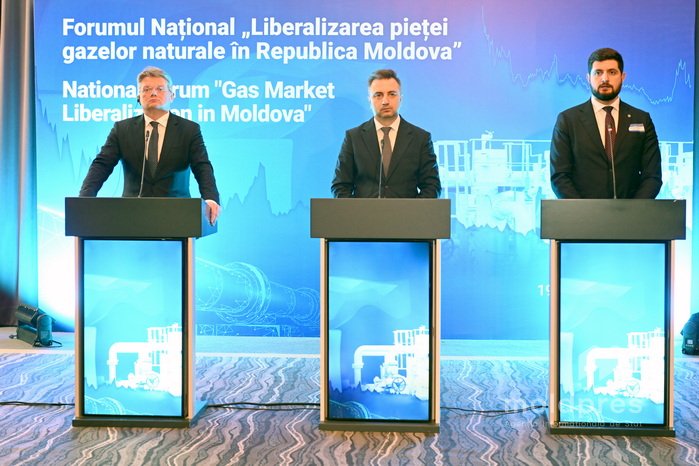
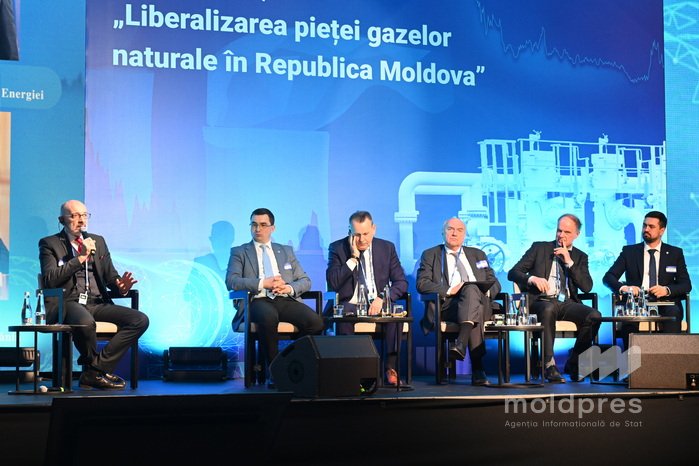
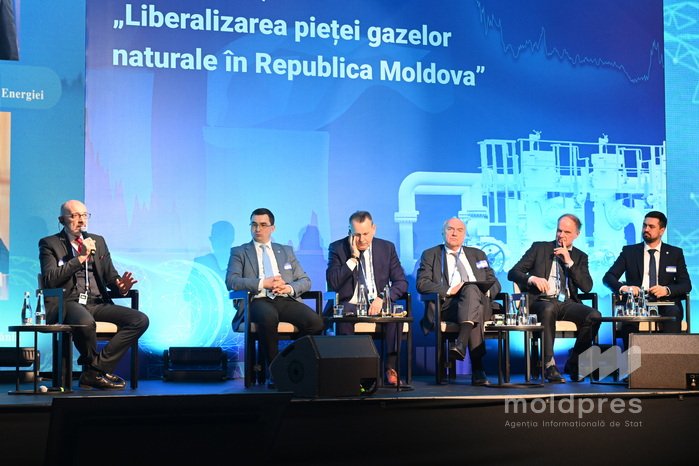
The Republic of Moldova is entering a new stage of energy reforms: starting from April 1, 2026, the natural gas market will be fully open to competition, marking one of the most important economic transformations in the energy sector since independence. The announcement was made in Chișinău during the forum Liberalization of the Natural Gas Market in the Republic of Moldova, organized by the National Energy Regulatory Agency (ANRE) together with the Energy Community Secretariat and European partners.

The event brought together public authorities, regulators, energy suppliers, major industrial consumers and international experts, and is part of the European project Moldova Energy Independence and Resilience (MEIR), funded by the European Union.

What liberalization means in practice

After April 1, large industrial consumers and business entities will no longer receive gas through a regulated or default mechanism; instead, they will have to negotiate commercial contracts directly with suppliers, based on market offers.

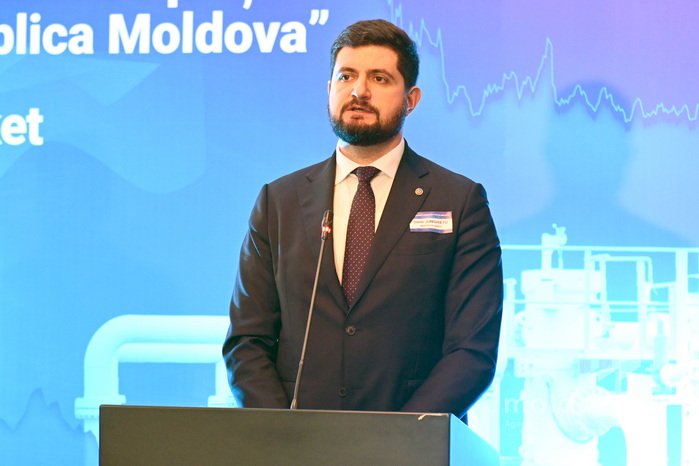
Minister of Energy Dorin Junghietu explained that the reform aims to create an energy system similar to that in EU member states.

“The gas market reform and the measure to be implemented starting from April 1, 2026, have a primary objective: creating competition, alternatives, and diversification of supply sources. Competition will provide consumers access to diversified prices. A free, competitive and transparent market benefits not only end consumers, who can obtain tailored offers, but also contributes to stabilizing and increasing the resilience of the natural gas market,” the official estimated.

According to the minister, there are currently about 30 licensed companies, roughly half of which are already active and prepared to operate in a competitive environment.

Officials stress that the core element of the reform is diversification of sources—a lesson learned after recent energy crises, when the Republic of Moldova was vulnerable due to its dependence on a single supplier.

“A Normal Economic Situation,” European partners say

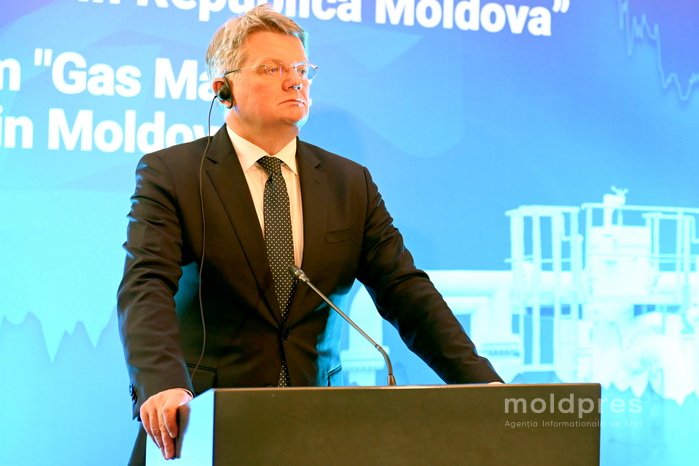
Artur Lorkowski, Director of the Energy Community Secretariat compared the old energy model to a controlled economy.

“Imagine a country where all cars are bought from a single state-owned company at identical prices. Such a situation is not natural. What is happening today is that the Government is giving large natural gas consumers the freedom to make their own business decisions, to look for cheaper sources and to choose gas at a price that matches their strategies,” the European official noted.

According to him, the Republic of Moldova is technically prepared for the reform; preparations began back in October 2021, and the interconnection infrastructure already allows access to international gas markets.

Who is required to enter the free market

ANRE notes that in the first stage, liberalization will apply to large and medium non-household consumers, who account for approximately 55% of the country’s annual gas consumption.

The timetable was approved by ANRE Board Decision No. 564 of September 30, 2025. Under Law No. 108/2016 on Natural Gas, these consumers must select a supplier and sign a valid contract by April 1, 2026.

Of the 204 targeted large consumers, only 82 had completed the contracting procedure so far.

ANRE issues a clear warning:

“Starting from April 1, 2026, large non-household consumers that do not have a valid contract concluded with a supplier on the free market may be left without natural gas supply, which can affect the functioning of economic activities and the continuity of enterprises’ operational processes,” ANRE states.

The list of consumers and the supplier-switching procedure are available on the institution’s website.

What happens to households

Household customers will not yet be required to move to the free market. They will remain under the regulated public service (tariffs set by ANRE), but will have the voluntary option to choose a commercial offer if it becomes more advantageous.

New supply routes

A key element of the reform is regional infrastructure. Authorities highlighted the role of the Vertical Corridor (Greece–Balkans–Eastern Europe), the Trans-Balkan route, and interconnections with Romania and Ukraine.

They enable gas imports from multiple sources and reduce the historic dependence on a single supplier. Even though storage in Ukraine involves certain security risks in the current regional context, transport corridors are essential for lowering costs and ensuring supply stability.

Economic impact

For industry, the reform could directly affect prices and the competitiveness of Moldovan products. Companies will be able to negotiate directly, choose cheaper offers and optimize their energy costs.

At the same time, the authorities are pursuing broader goals: energy security, integration into the EU energy market, and alignment with the EU acquis.

The forum also included a Business-to-Business (B2B) session, where gas suppliers and industrial consumers negotiated contracts directly—a typical mechanism in European markets.

Significance of the reform

Gas market liberalization is not just a technical measure but a strategic one. It marks Moldova’s shift from a monopoly-dominated system to a competitive European framework. In the long term, authorities expect the reform to lead to greater energy resilience, market-based price formation, and reduced geopolitical vulnerabilities—an essential step in the country’s European integration process.
 Facebook
 Instagram
 X/Twitter
 Telegram
Direct flights from Chișinău to Korea
Facilities for Moldovans returning to live at home: Government-approved decision
Moldelectrica enterprise to be reorganized
Moldova and Korea strengthen bilateral economic cooperation: agreement signed in Chișinău
VIDEO // Work continues on Moldova's largest water main: central region’s water supply project moves forward
All consumers affected by 15–16 February glaze ice reconnected to power grid
New opportunities for entrepreneurs from Moldova, Ukraine: business school to be opened in Chisinau
Moldovan parliament speaker says leadership aims to repair three thousand km of roads by 2029
Constanta port of Romania to take over Giurgiulesti International Free Port
PM visits Made in Moldova Exhibition
National Bank of Moldova says country's economy exits stagnation zone, with 5.2 per cent GDP's growth in third quarter of 2025
Finance minister announces timing of next disbursement under Growth Plan for Moldova
Farmers can apply for grants of up to 1 million dollars: Ministry of Agriculture launches AGGRI 2026 call
There comes time in life when you must return and contribute to country’s economic growth - deputy premier says
Moldovan parliament speaker says reform of local public administration must be carried out in next autumn, there is no time to wait
Moldovan energy minister in parliament says country reaches stage of maturity, after years in which energy system was fragile, dependent, vulnerable to political blackmail
Mayors of Moldova directly Involved in EU accession: launch of Local Ambassadors Network
Moldovan prosecutor to be reevaluated: Superior Council of Prosecutors rejects Vetting Commission’s negative report
Moldovan parliament speaker talks about former president of Gagauzia's people's assembly
Moldovan PM meets Ambassador of Japan
Moldova's National Public Health Agency confirms imported case of monkeypox: infected person under medical supervision
 National Bank of Moldova
Moldovan PM visits kindergarten in commune of Chisinau municipality
Revocation of Moldovan president's Decree No. 418-IX from April 11, 2022, on granting of pardon
Moldovan PM meets Ambassador of Japan
Prime Minister in talks with 16 mayors of Chişinău suburbs
Moldovan PM, Ambassador of Cyprus discuss European path of Moldova



Arrest warrant for former leader of Moldovan Democratic Party extended by another 30 days
MOLDPRES INTERVIEW // Rector of University from Romanian city says if someone overturns your history, national identity, it means you don’t have enough knowledge
Investors can submit bids for construction of large wind power plants including storage systems
Prime Minister in talks with 16 mayors of Chişinău suburbs
Government earmarked over 185 million lei for projects in capital’s suburbs
Electricity from storage systems reflected for first time in national energy system
Over 25,000 old home appliances recycled in 2025 through EcoVoucher Program
Deputy Prime Minister meets with new Ambassador of Cyprus
New member of Board of Directors of Deposit Guarantee Fund appointed today
VIDEO // Moldova opens gas market and abandons monopoly model: companies can choose own supplier as liberalization reshapes economy
Chisinau-based Eugen Doga International Airport operates as normal, as difficult weather conditions overcome
Fewer companies required to pay VAT: VAT registration threshold raised to 1.7 million lei
Parliamentary opposition submits simple motion against Ministry of Defence policies
PHOTO GALLERY // Dialogues on energy: images from Gas Market Liberalization Forum
VIDEO // Roadmen worked around clock across country: over 200 machines and thousands of tons of anti-skid material used following snowfall and blizzard
Romania approves construction of new bridge over Prut, Albita–Leuseni
Receive the latest news directly to your email

Receive the latest news directly to your email