
President: Future of democracy depends on how we protect each person's ability to think independently
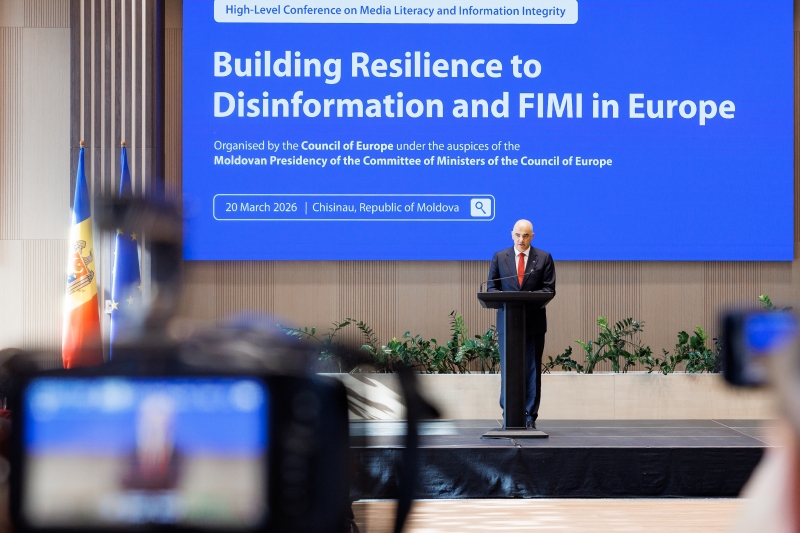
President of the Republic of Moldova Maia Sandu took part in an international conference - Media Literacy and Information Integrity: Building Resilience to Disinformation and FIMI in Europe, held in Chișinău, where she spoke about new threats to European democracies and the need to strengthen society’s resilience to information manipulation.

In her speech, the head of state stressed that Europe is undergoing a profound transformation in the nature of risks, highlighting the emergence of a new type of conflict – cognitive warfare. "It is a war that targets the way people think, what they believe and how they act," the President stated. This directly affects public trust and citizens’ ability to make free and informed decisions.

Maia Sandu pointed out that the Republic of Moldova has directly felt these pressures, including during recent electoral processes, when there were coordinated attempts to influence elections through disinformation, illegal funding and manipulation of the information space.

At the same time, the head of state drew attention to the fact that these threats did not disappear with the end of the elections, but have become more subtle and sophisticated. In this regard, the President noted that cognitive warfare is not a temporary episode, but a reality affecting the whole of Europe.

Maia Sandu evoked the direct link between information manipulation and Russia’s war against Ukraine, stressing that, in addition to military aggression, there are constant efforts to influence public perceptions, weaken support for the neighboring country and generate divisions within European societies. She also mentioned actions aimed at undermining trust in the need to strengthen Europe’s defense capabilities and in the European Union’s enlargement process.

The President emphasized the need for institutions and the legal framework to adapt quickly to these challenges, welcoming the Council of Europe’s initiative to develop a legal instrument to combat external information manipulation and interference. "We must be able to act in time," the head of state noted.

Particular emphasis was placed on media and information literacy, which is essential for increasing society’s resilience. "In a cognitive war, the strength of a democracy also depends on its citizens’ ability to resist manipulation," Maia Sandu declared. The head of state referred especially to young people, who are the most exposed to the digital environment, but are also those who can contribute decisively to protecting democracy. At the same time, the President added that resilience is not enough; a proactive approach is also needed, based on clear, credible communication and the promotion of democratic values.

In conclusion, the head of state said that the current stake of cognitive warfare goes beyond electoral processes or the functioning of institutions; its essence is protecting each citizen’s ability to think freely. "Ultimately, the future of democracy depends on how we protect each person’s ability to think independently," Maia Sandu concluded.
 Facebook
 Instagram
 X/Twitter
 Telegram
Government adjusts alert measures in energy sector
Process of enrolling children in kindergartens simplified by Government
MD-ALERT: Moldova to have national emergency warning system
New measures to limit spread of ragweed across country
Higher-quality medicines on market in Moldova
Strengthening professional capacities of inspectors from Moldova's control bodies in context of integration into European Union
Moldovan PM participates in Moldova–France Business Forum
Moldovan parliament speaker meets European Commissioner for Enlargement in Brussels: 189 million euros for Moldova
Moldova to receive second Growth Plan installment – 189 million euros
First meeting of Chisinau, Tiraspol working groups on road transport's development, road infrastructure held in 2026
Deputy Prime Minister meets with United Nations Resident Coordinator in Moldova
Moldovan President meets with Greek Minister of Culture
Moldovan PM, IMF executive director have discussion on Fund's positive report on Moldova
Speaker paid working visit to Strășeni district and discussed local development projects
Romania provides new batch of equipment and materials for Dniester River response
DOC // Published in Official Journal. Kindergarten enrollment files can be submitted online
PHOTO // World Down Syndrome Day. Prime Minister joined campaign Not All Flowers Grow the Same
President: Future of democracy depends on how we protect each person's ability to think independently
President on World Down Syndrome Day: Let us build a country where everyone is seen, heard, and supported
Moldovan parliament speaker comments on country’s withdrawal from founding agreements of Commonwealth of Independent States
Adopted in first reading: Parliament supports definitive withdrawal of Moldova from statutory bodies of Commonwealth of Independent States
 National Bank of Moldova
Moldovan PM has meeting with European Commission's Director-General for Neighbourhood and Enlargement Negotiations
PM, Chair of NATO Military Committee discuss modernizing security sector of Moldova
President meets with Admiral Giuseppe Cavo Dragone, Chair of NATO Military Committee
Consultations on local public administration reform held in all districts of country and Gagauzia: Over 4,500 mayors and citizens participated
Moldovan President met with UK Minister of State

PM, Chair of NATO Military Committee discuss modernizing security sector of Moldova
Moldovan authorities prepare impact studies after Dniester River's pollution
Moldovan parliament speaker says Transnistrian conflict must be settled in civilian format
Moldovan environment minister unveils report in parliament: “I will call things by their name: the sole party responsible for this massive pollution is the Russian Federation”
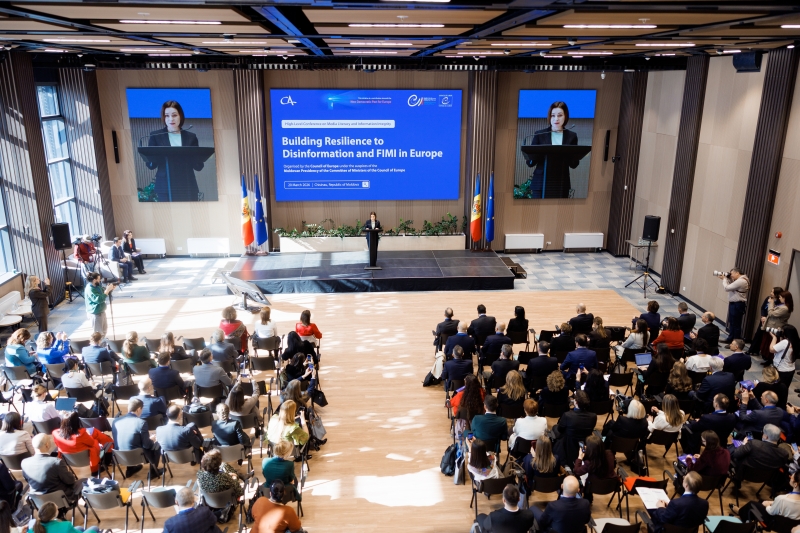
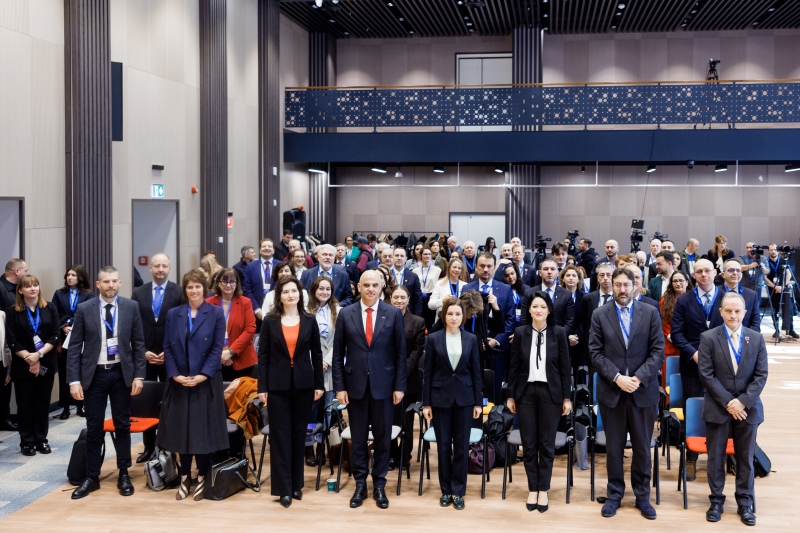
PHOTO GALLERY // High-level conference on combating of disinformation, interferences, manipulation, held in Chisinau
Moldovan president says La Francophonie one of few country's bridges to European family
More transparency on shelf: Moldovan parliament adopts law on short agri‑food supply chains
Arrest warrant for former leader of Moldovan Democratic Party extended for another 30 days
China’s opportunities shared with the world; Chinese Ambassador to Moldova says deepening bilateral cooperation can bring benefits to Moldova
Parliament open to talks to resolve electoral deadlock in Gagauzia
Investments to promote reading: literary labs to be created in 25 schools in Moldovan capital
President meets with Admiral Giuseppe Cavo Dragone, Chair of NATO Military Committee
VIDEO // French language and Francophone values celebrated in Parliament of the Republic of Moldova
New step in development of digital payments: Open Banking standard entered into force
VIDEO// Speaker appreciates Romania’s support, which reacted quickly in managing situation on Dniester River
Parliament examines denunciation of CIS agreements
Receive the latest news directly to your email

Receive the latest news directly to your email