
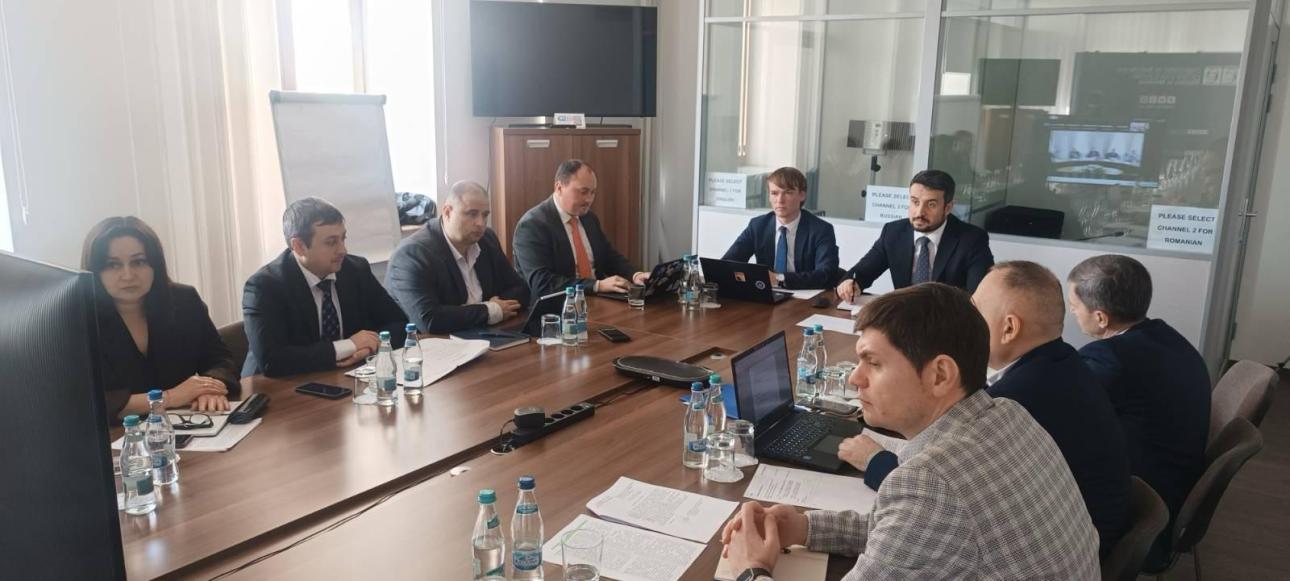
First meeting of Chisinau, Tiraspol working groups on road transport's development, road infrastructure held in 2026
The first online meeting of the working groups on the development of road transport and road infrastructure in the current year today took place, with the participation of experts from both banks of the Dniester River

The agenda included more current topics in the field.

As concerns the operation of the vehicle registration offices in the cities of Tiraspol and Rabnita (VROs), Chisinau reiterated a string of systemic problems that have been constantly signaled and that continue to affect the functionality of the mechanism, including the poor organization of appointments and free access for applicants, as well as the impossibility of getting information in the Romanian language, which creates additional difficulties for citizens and limits the effectiveness of this mechanism.

The participants in the meeting reiterated that the procedure for providing specialized services in the VROs was regulated by the national legislation in force, and compliance with these requirements was indispensable.

Attention was drawn to the fact that, as of the end of 2025, the comparative statistics of neutral license plates issued by the VROs (14 thousand plates) and standard national license plates issued to citizens of Moldova residing in the Transnistrian region (24 thousand) show a clear trend of higher attractiveness of Moldovan license plates.

In order not to create obstacles to the free movement of citizens of Moldova in the Transnistrian region, the need to eliminate the so‑called vignette payments and other artificial barriers abusively introduced and maintained by Tiraspol was emphasized.

As for the implementation of the e-CEMT system and potential obstacles in the Transnistrian region that may affect the free movement of vehicles, goods and property, the participants agreed to maintain a dialogue, in order to identify possible practical solutions.

As far as the subject of bridges crossing the Dniester River is concerned, the priority of ensuring road traffic safety was highlighted, as well as the need to ensure a responsible approach to the technical condition of roads in the Transnistrian region. Chisinau reiterated the need to ensure good quality road conditions, in the interest and for the benefit of road infrastructure users.

In the context, experts from Chisinau reported on the degrading condition of some bridges across the Dniester River and the need for urgent interventions on the Criuleni–Dubasari bridge, in order to avoid potential risk situations.

Chisinau confirmed its readiness to assess the condition of the roads in the Transnistrian region and to carry out subsequent repair works, provided that all barriers to free movement across the Dniester River are removed.

With regard to the issues raised by the experts from Tiraspol, Chisinau stressed that the participation of drivers from the region in international road traffic was conditional on holding driving licences of Moldova, in accordance with the national and international standards in force.

To provide practical solutions in the interest of drivers in the Transnistrian region and to make progress on this dimension, experts from Chisinau proposed the gradual alignment of the activities of driving schools in the region with the requirements of the regulatory framework in force.

As for the issue of ambulances, the participants pointed out that there are clear and legally functional solutions. At the same time, it was noted that against the backdrop of a growing demand for medical services from residents of the region—reaching almost 75 thousand medically insured persons in 2025—it is necessary to ensure the free movement of ambulances from the right bank and the possibility of unhindered access to the available medical assistance through the single national emergency service 112.

Chisinau reiterated the importance of maintaining a pragmatic dialogue focused on concrete solutions, in the interest of citizens on both banks of the Dniester River. It emphasized that any lasting progress was conditional on the application of a uniform regulatory framework and the avoidance of unilateral approaches.
 Facebook
 Instagram
 X/Twitter
 Telegram
Moldovan President’s speech to Lithuanian Parliament on Independence Restoration Day
Stricter rules on use of veterinary medicines to ensure food safety
Moldova and Korea to develop economic cooperation based on new agreement
Government initiates Moldova's withdrawal from statutory bodies of CIS
Clearer rules for sanctioning traffic violations committed with vehicles registered in other countries
Moldovan president has meetings with top leadership of Lithuania
Nominal composition of parliamentary working group on Gagauzia established in Moldova
Moldovan deputy PM has meetings in Bucharest with officials of Foreign Affairs Ministry, Presidential Administration of Romania
Moldova's State Chancellery gets CAF User Certificate, strengthening commitment to excellence in organizational management
Lithuanian President awarded Order of Republic
Deputy Prime Minister for Reintegration meets with Minister of Foreign Affairs of Romania
Moldovan PM has meeting with oil products importers
Transnistrian file discussed with researchers from United States
Deputy Prime Minister: Reintegration - complicated, lengthy process with many unknowns
Moldovan PM participates in Moldova–France Business Forum
Moldovan parliament speaker meets European Commissioner for Enlargement in Brussels: 189 million euros for Moldova
PM says Moldova modernizing, enjoys confidence of European partners, government to continue working to improve citizens’ lives
Moldova to receive second Growth Plan installment – 189 million euros
New installment of about 200 million euros for Moldova disbursed by EU: how money to be used
Moldovan deputy PM for reintegration presents results of visit to Brussels
First meeting of Chisinau, Tiraspol working groups on road transport's development, road infrastructure held in 2026
 National Bank of Moldova
Moldovan PM participates in Moldova–France Business Forum
Moldovan parliament speaker meets European Commissioner for Enlargement in Brussels: 189 million euros for Moldova
Moldova to receive second Growth Plan installment – 189 million euros
Deputy Prime Minister meets with United Nations Resident Coordinator in Moldova
Moldovan President meets with Greek Minister of Culture

PHOTO // Deputy Prime Minister on visit to Washington: development prospects for Moldova and regional developments on agenda
Deputy Prime Minister meets with United Nations Resident Coordinator in Moldova
Moldovan President meets with Greek Minister of Culture
General Prosecutor’s Office opened criminal case over pollution of Dniester River
BNM Governor: New IMF Program to support European integration agenda, strengthen investor confidence, mobilize investments
VIDEO // Large-scale intervention in Bălți: Authorities distribute water and deploy teams to manage crisis
Moldova advances decisively in EU accession process; Cypriot official says stronger Moldova means stronger Europe
PHOTO // Drone found in Ștefan Vodă
Marta Kos: European Commission disbursed 200 million euros to Moldova after completion of dozens of reforms
PHOTO // 200 Million lei for Green Home Programme: start of energy rehabilitation for thousands of households of Moldova
PHOTO // Drone fragments found in Ștefan Vodă district
Technical negotiations on final clusters of Moldova’s EU accession process launched in Brussels
Group of MPs pays study visit to NATO Headquarters
Increased fuel imports in Moldova amid Middle East tensions
PHOTO GALLERY // Russian ambassador summoned to foreign ministry to provide explanations about attack on Novodnistrovsk hydropower plant, which caused pollution of Dniester River
Russia’s ambassador summoned to Foreign MInistry
Receive the latest news directly to your email

Receive the latest news directly to your email