
Civil society mobilizes support for Moldova’s EU accession
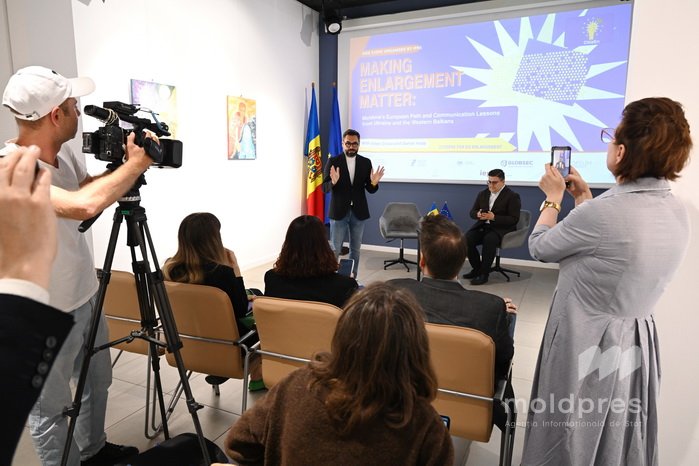
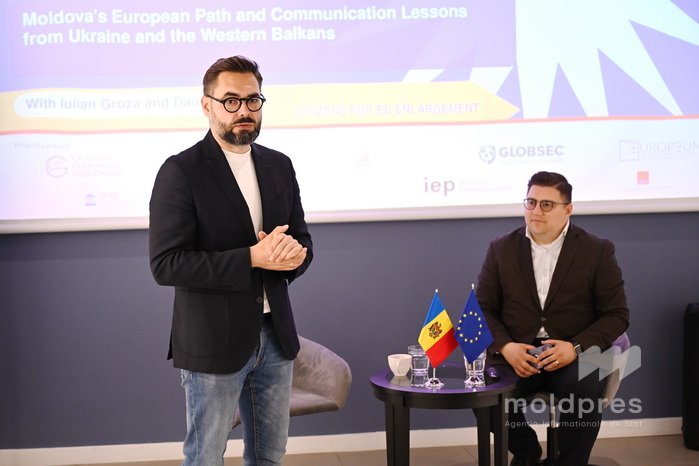
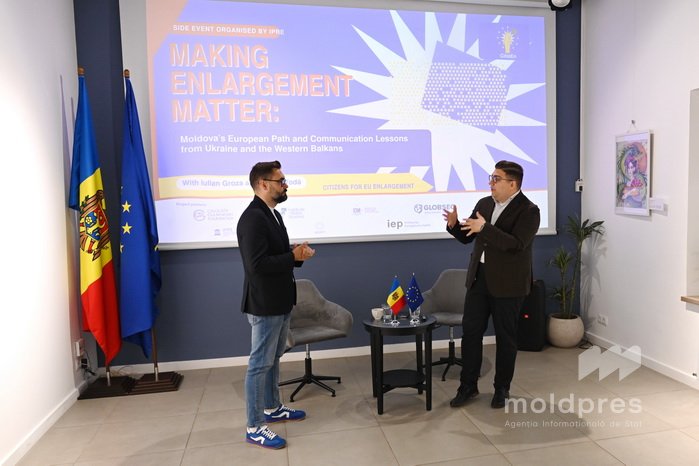
The civil society plays an essential role in supporting the process of Moldova’s European integration, including by promoting the benefits of European Union’s enlargement in member states where public support for this process is lower. This conclusion was formulated by experts and representatives of major European research and analysis centers. They assembled in Chisinau at a regional event dedicated to the future of EU enlargement, hosted by the Institute for European Policies and Reforms (IPRE).

The event brought together representatives of think tanks and organizations from EU member states, the Western Balkans, Ukraine and Moldova, who discussed communicating the enlargement process, the necessary reforms and the involvement of civil society in supporting the European path of candidate countries.

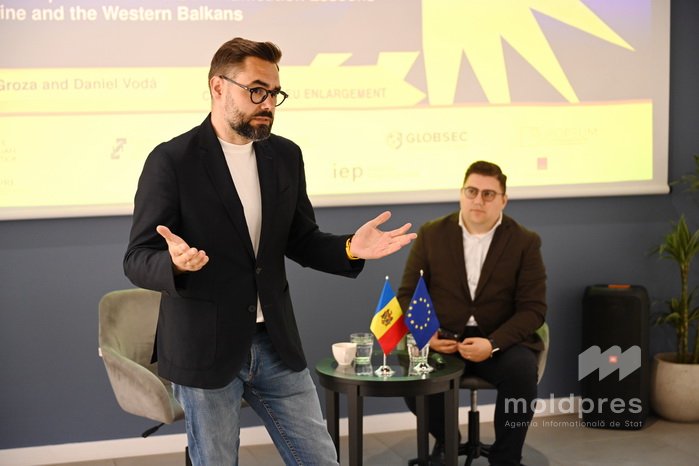
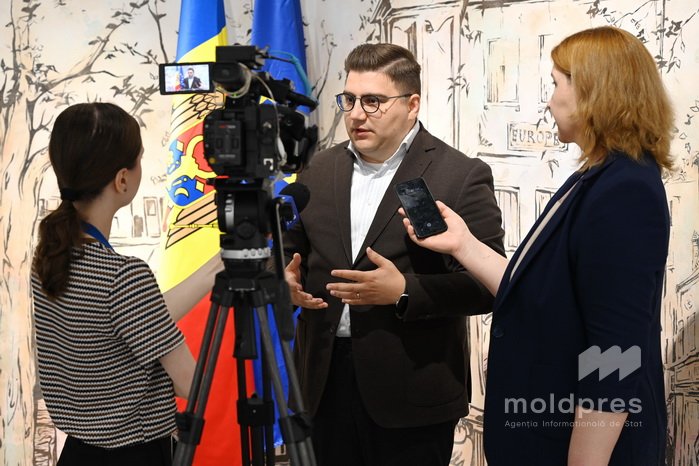
IPRE associate expert Daniel Voda drew attention to the fact that, although the majority of European citizens support EU enlargement, there are states where public support stays low.

“Eurobarometer data show that not all EU member states support enlargement with the same enthusiasm. The data suggest that 57 per cent of European citizens support enlargement, but there are problems in some countries, such as France, Austria, or the Czech Republic, where support for enlargement – and I stress, not for Moldova’s accession, but for EU enlargement in general – is quite low,” said Daniel Voda.

According to him, civil society is actively trying to contribute to changing these perceptions, through dialogue and direct communication with citizens and decision-makers in EU member states.

“We are involved by bringing together more than 11 important non-governmental organizations and think tanks that advise citizens, universities and decision-makers in those countries, and we talk about what we have managed to achieve in Moldova. We explain why Moldova, Ukraine and the countries of the Western Balkans, once they become members of the European Union, will contribute to strengthening the European project. In other words, the civil society is providing its own contribution to the enlargement process,” the expert said.

Daniel Voda underlined that European integration was not only the responsibility of authorities and European institutions, but also of citizens.

“Through communication, through transparency, through talking about our achievements, as well as about the contribution we can bring to the European project, we convince these societies that the European Union needs to enlarge. Our formula is Moldova, Ukraine and the Western Balkans, meaning a broad enlargement, following the model of 2004, when more states became members of the European Union,” he added.

Vladislava Gubalova, senior researcher at GLOBSEC, noted that the experience of previous enlargements can serve as a source of inspiration, but the current context is different.

“The first major wave of enlargement, which included the countries of Central and Eastern Europe, and later Romania and Bulgaria, can provide many examples of good practices. However, I believe the context has changed significantly. Although dialogue and learning from previous experiences are important, we must also look to the future,” said Gubalova.

She emphasized that the current enlargement process was being shaped by new geopolitical factors, external interference and changes in the way communication works.

“One of the main challenges for Moldova will be its ability to send a message that is clear and easy to understand, but at the same time strong and convincing. For this, the creative involvement of all relevant actors is necessary – institutions, the business community, citizens of EU member states, teachers, educators and decision-makers. Broad engagement and innovative communication methods are needed, especially in conditions of limited resources,” the expert stressed.

The GLOBSEC representative pointed out that Moldova already offers valuable examples in combating information interference and influence campaigns.

“We notice that there are many things EU member states can learn from Moldova’s recent experiences. In Moldova, we can see how malign interference and influence campaigns adapt very quickly. From this perspective, in other parts of Europe, we often lag behind,” said Vladislava Gubalova.

Sebastian Schäffer, director of the Institute for the Danube Region and Central Europe (IDM), considers that one of the major challenges of the enlargement process was the different pace between candidate countries and EU member states.

“One of the biggest challenges is keeping up with the speed proved by some candidate countries, including Moldova. It is possible that we will reach a situation in which candidate states are ready for accession, while some EU member states are not yet ready for this step,” he said.

At the same time, Schäffer praised the progress made by Moldova, but warned that the accession process still entails a considerable amount of work.

''What Moldova is demonstrating is impressive, and what the government has achieved so far is impressive. However, there are still many things that need to be implemented, in order to take over and apply the EU acquis. The road is still long, and I believe that there will be obstacles along the way, that will have to be overcome,” said Sebastian Schäffer.

IPRE executive director Iulian Groza said that the organization he leads was trying to build communication bridges not only between candidate states, but also between them and EU citizens.

“While we negotiate accession, it is very important that this is known at the grassroots level in the European Union – that is, by citizens in those countries. Perceptions differ. Support for enlargement is overall a majority, but it varies from country to country. In some states it is higher, and in others, such as Austria or the Czech Republic, it is lower,” Groza said.

According to Iulian Groza, the mission of the civil society and the experts’ community is to help enhance the level of information and understanding of the enlargement process before member states are called upon to ratify potential accession treaties.

“Our mission is that, while we are negotiating and carrying out the necessary reforms, we see what we can do together with colleagues from other countries, in order to ensure that decision-makers and citizens in member states are aware of this process. When the time comes to ratify the accession treaty, there should be sufficient support for Moldova to be able to become a member of the European Union, in line with the proposed timetable,” concluded Iulian Groza.

The participants in the event agreed that the success of the accession process depended not only on implementing reforms and holding official negotiations with Brussels, but also on the ability of Moldova and its partners to effectively communicate the benefits of enlargement both to Moldovan citizens and the EU member states’ ones.

On 22 June 22, in Brussels, the first Moldova – European Union Summit will take place after the official opening of negotiations. Moldova will be represented by President Maia Sandu. On the EU side, President of the European Council António Costa and President of the European Commission Ursula von der Leyen will attend the event.

The Moldova – European Union Summit is a high-level dialogue format established by both sides and reflects the increasingly close partnership between Moldova and the EU, as well as their firm commitment to our country’s accession to the EU. This year’s meeting will take place one week after the official opening of the accession negotiations on the first cluster of chapters, “Fundamental values”, marking a new stage in the European path of Moldova.

During the summit, leaders will discuss the next steps in the negotiations and Moldova’s reforms agenda. Both the European Commission and the European Council have confirmed that Moldova was ready to open negotiations on all clusters of chapters, as provided for in the merit-based accession process.
 Facebook
 Instagram
 X/Twitter
 Telegram
Moldovan Central Electoral Commission accredits 16 international observers for elections of Gagauzia's bashkan
Designated Romanian PM: “Romania must be Moldova’s main support in joining EU”
Republic of Moldova has four new ambassadors. Appointment decrees published in Official Journal
Prime Minister explains why Transnistrian region was not included in administrative-territorial reform
Moldovan MP says Foreign Affairs Ministry sends protest note to Ukraine, after Ukrainian border guards illegally crossed Dniester River
Moldova's foreign affairs minister, Ambassador of Slovakia discuss bilateral cooperation
Deputy Prime Minister meets ambassadors of countries in Weimar format
Irina Gutnic arrived at Chisinau city hall to resume duties as deputy mayor
DOC // Olga Roșca and Stanislav Secrieru appointed as advisers to President Maia Sandu
Spain willing to share experience with Moldova in training magistrates, combating corruption
Spain’s National Day celebrated in Chisinau: “Moldova is a future partner with whom we wish to share the European project”
VIDEO // Moldovan parliament speaker says once again convinced that Moldova has necessary support on path toward great European family
Moldovan Foreign Affairs Ministry condemns repeated violation of national airspace
Moldovan Central Electoral Commission approves ballot paper designs for regional elections due on November 15
Drone falls in central Moldova village; police secure area
First at November 1, 2026 elections in Moldova: voters to be able to vote using digital ID from EVO app
National Bank of Moldova simplifies foreign exchange rules: transfers, investments of up to 100,000 euros without authorization
PHOTO, VIDEO // Moldovan head of state president welcomed by Hungarian president at Sándor Palace in Budapest
Drone illegally entered airspace of Moldova, disappears from radar
Two members of Judges' Evaluation Commission to end activities on 31 December 2026
Energy consumption in ten hospitals in Moldova expected to drop by 40%; first two hospitals begin renovation
 National Bank of Moldova
COMMENTARY on Tiraspol event
Summary of Moldovan parliament's plenary meeting held on October 22, 2026
Balti city mayor to be assisted by own cabinet; Moldovan parliament passes relevant draft in first reading
Moldovan MPs vote on draft on tax, customs facilities for import of 24 musical instruments meant for national collection of musical instruments
Moldovan parliament votes in first reading: construction of Straseni–Gutinas power line, modernization of Straseni substation to be declared of national public utility

State Secretary for Reintegration: Revenue from taxes imposed in Transnistrian region will return to population through Convergence Fund
MOLDPRES INTERVIEW // What should a woman in an abusive relationship know? Dominika Stojanoska, UN Women Country Representative: “The violence is not her fault and she does not have to go through this situation alone”
Joint border control, energy projects on Prime Minister’s agenda during visit to Kyiv
Ukraine's Ambassador to Chisinau: Dniester incidents must be investigated, findings made public
PHOTOS // Story behind legend of Dracula: Irish culture, film from 1931 presented in Chisinau
Prosecutor Petru Iarmaliuc passes external integrity assessment
Summary of Moldovan parliament's plenary meeting held on October 22, 2026
Moldovan environment minister, Romanian counterpart discuss environmental cooperation
Judge Veaceslav Cernalev heard by Commission for Evaluation of Judges
Balti city mayor to be assisted by own cabinet; Moldovan parliament passes relevant draft in first reading
Moldovan MPs vote on draft on tax, customs facilities for import of 24 musical instruments meant for national collection of musical instruments
OSCE Permanent Council: Moldova rejects Russia’s claims concerning Transnistria, calls for withdrawal of military forces from its territory
Moldovan parliament votes in first reading: construction of Straseni–Gutinas power line, modernization of Straseni substation to be declared of national public utility
PHOTO // Three Moldovan carabineers return from Kosovo after six-month peacekeeping mission
Access to education, quality public services in focus during visits by secretary general for reintegration to Tiraspol, Bender, Varnita
Romania's new PM to pay first visit to Chisinau on October 27
Receive the latest news directly to your email

Receive the latest news directly to your email