
Annual leave to be expressed in working days: proposed changes by Ministry of Labour and Social Protection
The annual leave regime will be revised. It will be expressed in working days instead of calendar days as is currently the case. The new rules will apply from 1 January 2027 and will cover employees in all sectors. The authorities claim that the changes are necessary to provide more clarity, predictability and fairness.

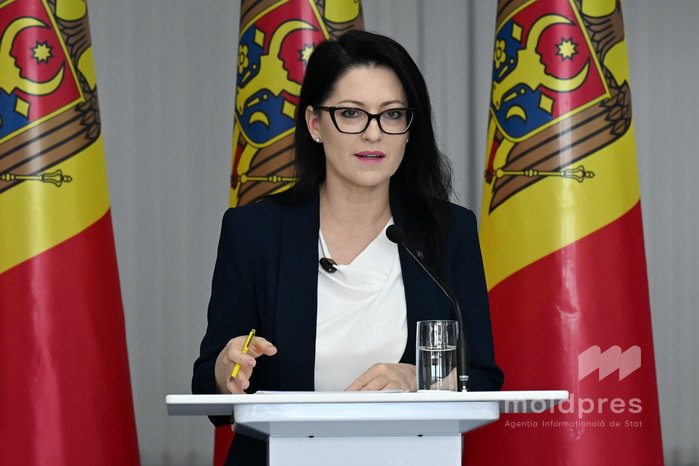
The need for these amendments was explained today by Minister of Labour and Social Protection Natalia Plugaru, who stressed that the current leave system generates different situations for people who are entitled to the same amount of leave.

“Today, annual leave is expressed in calendar days. (...) Now, this leave of 28 calendar days can in practice be equivalent to 20–24 working days of rest. In other words, the current system actually generates different situations for people who have the same right. To give you an example, two employees who are entitled to 28 calendar days of leave do not always receive the same actual rest period. Depending on how they schedule it, if they take it proportionally or in fractions, only during the working week, then, naturally, the effective leave is much longer. If a person takes, for example, from Monday to Monday, that is 8 days. If they take only from Monday to Friday and then again from Monday to Friday, that is 5 days of leave each time and in total 10 days,” the minister explained.

According to her, by moving from calendar days to working days, the authorities aim to bring more clarity, predictability and fairness.

“The current system, expressed in calendar days, creates a situation in which people, depending on how they take their leave, benefit from less or more effective days of rest. Therefore, by moving from calendar days to working days, we aim to bring more clarity, predictability and fairness. When the leave period is expressed in calendar days, both the employee and the employer constantly have to make conversions and calculations to understand how many actual days of rest have been granted. When leave is expressed in working days, each person knows exactly how many days of rest they receive. And the differences generated by weekends or by the way leave is split no longer exist,” argued Plugaru.

Another reason for the proposed changes is alignment with the experience of other European countries, given that most EU Member States already use systems based on working days. The minimum duration of annual leave in European states varies between 20 and 30 working days, and the EU average is approximately 24 working days.

At the same time, another change proposed by the authorities as part of the annual leave reform is the elimination of additional leave in the public sector, which is currently granted to certain categories of staff. This additional leave is granted for length of service and can increase the total duration of annual leave by up to 20 days.

“The draft proposes to eliminate these preferential regimes for civil servants, civil servants with special status, prosecutors, judges and other similar categories. The standardisation of these regimes and the reduction of additional leave will reduce the pressure on the public budget,” said Natalia Plugaru, noting that the estimated impact of the new rule is up to 5% of the wage fund for these categories.

The Minister of Labour added that this measure helps simplify the system and reduce unjustified differences between different categories of employees.

Natalia Plugaru stressed that under the proposed reform no employee will lose leave that has already been accrued; all leave entitlements accumulated up to 31 December 2026 will be preserved in full.

“This reform does not aim to reduce the right to rest. The goal is to provide a clear, fair, easy-to-administer and transparent system, in which every employee knows how many actual days of rest they receive, a system that is compatible with European practices and easier to administer for both employees and employers. This is the objective of the reform we are proposing,” concluded Natalia Plugaru.

The new rules are to be applied from 1 January 2027, after all the necessary stages for the approval and entry into force of the draft are completed.
 Facebook
 Instagram
 X/Twitter
 Telegram
Moldova's Foreign Affairs Ministry: Moldovan citizens dead in accident in Hungary to be repatriated
PHOTO GALLERY// World Blood Donor Day marked through vast event held in Chisinau
VIDEO // Voluntary amalgamation in Fălești: town halls of Glinjeni, Pietrosu, Bocani, Ișcălău and Catranîc merging
Day Laborers to be registered online
VIDEO // World Blood Donor Day: each donation can save up to three lives
PHOTO GALLERY // China Days in Chișinău through lens of MOLDPRES
Heavy traffic at Sculeni Border Crossing Point eased
VIDEO // Localities of Roșcani, Telița and Calfa approved final decision on voluntary amalgamation
China Days in Chișinău: Gastronomy, Traditions and Modern Technologies in Heart of Capital
Moldovan president urges citizens to learn about local public administration reform
PHOTO // Modernization of Moldova's Costesti–Stanca dam advances; project to be completed by late 2026
New European training opportunities for professionals; justice minister signs agreement on Moldova’s accession to Academy of European Law
Phenomenon of phone, online fraud continuously growing in Moldova; General Police Inspectorate handling 754 fraud cases
Moldovan president expresses condolences after traffic accident in Hungary
Parliament speaker says phone scams coordinated from outside Moldova; authorities consider solutions to identify fraudulent calls
USA, Moldova advance Liberty Line project; Moldovan PM says interest of American investors growing
PHOTO GALLERY // Evening dedicated to love poetry at Romanian Literature Museum
Moldovan PM, World Bank Group's representatives discuss priority energy projects
 National Bank of Moldova
State Chancellery representatives took part in meetings of Interreg Europe Programme Committees
Feasibility study for Strășeni–Gutinaș Liberty Line completed
Pre-feasibility study for Straseni–Gutinas Liberty Line power line completed; PM says partnership with United States delivers concrete results for Moldova's energy security
Moldovan PM, World Bank Group's representatives discuss priority energy projects
Delegation of Moldova addresses circumstances straining work of Joint Control Commission

Moldovan PM, World Bank Group's representatives discuss priority energy projects
Voted by parliament: legislation on administration, use of public roads to be aligned with EU standards in Moldova
Adopted by parliament: parents who fail to pay child support risk arrest or community service in Moldova
Delegation of Moldova addresses circumstances straining work of Joint Control Commission
Moldovan parliament adopts new facilities for setting electric energy storage systems
Moldovan parliament speaker says single value-added tax would reduce tax optimization, compensations to go directly to citizens
Moldova's Public Property Agency orders investigation at MoldATSA, suspends enterprise's director from duty
Labour minister says leadership wants Moldova with active, involved older people
Moldovan parliament speaker says human factor behind incident that led to death of National Army soldier
Speaker: Venice Commission’s recommendations on evaluation of judges to be examined and integrated into draft law
Cooperation and strengthening partnership between Moldova and North Atlantic Alliance discussed at Foreign Ministry
Meeting between Deputy Prime Minister for Reintegration and Director of Konrad Adenauer Stiftung Office in Moldova
Parliament introduces new rules on minimum wage assessment and adjustment
EUROPEAN VILLAGE // Dumitru Blajinu House of Culture in Pererita renovated with Government support
Speaker to mayors involved in voluntary amalgamation process: We are building stronger and more European Moldova
DescOperă Festival starts at Orheiul Vechi on June 18: four evenings of classical music, opera, open-air performances
Receive the latest news directly to your email

Receive the latest news directly to your email