
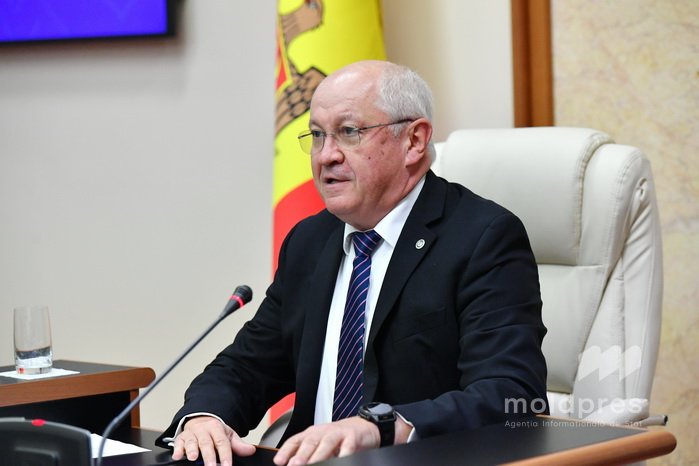
Prime Minister: Memory of deported obliges us to build society in which such tragedies never again possible
The deportations were a crime against innocent people, an attempt to destroy communities, identities and destinies. The memory of the deported obliges us to build a society in which such tragedies are never again possible. The message was delivered by Prime Minister Alexandru Munteanu, on the occasion of the 85th anniversary of the first mass Stalinist deportation operation from Bessarabia and Northern Bukovina.


“Today we mark 85 years since the first mass Stalinist deportation operation from Bessarabia and Northern Bukovina. Over 22,000 people were torn from their homes and sent to Siberia and Kazakhstan. Families were separated, destinies were broken and innocent lives were cut short,” wrote Alexandru Munteanu.


Prime Minister Munteanu noted that it is important to know our history and pass it on to our children, because by speaking about these tragedies, we better understand how precious freedom, dignity and every person’s right to live in safety truly are.


“Today we commemorate all those who suffered as a result of Stalinist repressions. We keep their memory alive. The deportations were a crime against innocent people, an attempt to destroy communities, identities and destinies. We must know our history and pass it on to our children. By speaking about these tragedies, we better understand how precious freedom, dignity and the right of every person to live in safety are. The memory of the deported obliges us to build a society in which such tragedies are never again possible.


The official underlined that for many of us this tragedy is part of our family history.


“My grandfather, my father’s father, was deported. I never had the chance to meet him. He returned home gravely ill, after years of suffering and forced labor, and died far too young. As in my family, there are thousands of other families in the Republic of Moldova with such stories that are passed down from generation to generation,” said Alexandru Munteanu.


The mass deportation operation from the Moldavian SSR during the night of June 12–13, 1941 included 18,392 people, and was part of a broader action to “cleanse” the new territories occupied by the USSR in 1939–1940, as a consequence of the Ribbentrop–Molotov Pact. The mass deportation of July 6–9, 1949 was the largest on the current territory of the Republic of Moldova. The operation targeted over 11,000 families, with the contingent of those forcibly relocated in cattle wagons numbering 35,796 people, including 11,889 children, 14,033 women and 9,864 men.

In the context of the 85th anniversary of the first mass Stalinist deportation operation from Bessarabia and Northern Bukovina, the fourth edition of the wagon exhibition “State Terror in Soviet Moldova: Scope, Victims and Perpetrators” was inaugurated today in the Great National Assembly Square. Through documents, photographs, period objects and testimonies, it reconstructs the suffering of deported families and the memory of those who went through the experience of Soviet state terror.
 Facebook
 Instagram
 X/Twitter
 Telegram
Foreign Ministry in talks with Ukrainian authorities about drone exploded in Orhei: Responsibility for any drone that reaches our country’s territory lies with Russia
Foreign Ministry condemns incident in Orhei: Threat to security and violation of state’s sovereignty and territorial integrity
Luxembourg MPs visit Moldova for talks on European integration
Embassy of the Republic of Moldova in Israel warns of new security measures following missile attack from Iran
Vladimir Voronin steps down from leadership of Moldovan Party of Communists; Diana Caraman elected as party's president
Chișinău and Bratislava discuss next steps in EU accession negotiations
EU Commissioner in talks with Prime Minister and Deputy Prime Ministers
Right to fair trial – most frequently reported problem by Moldovan citizens in 2025: Ombudsman’s report presented in parliament
Moldovan parliament sets up inquiry committee on phone, online scams: damages exceeding 270 million lei
Moldovan parliament speaker describes Russia’s intention to move Russian Center of Culture to Tiraspol as political provocation
Moldovan parliament speaker says each day of delay of elections in Gagauzia works against autonomy
Moldovan head of state says Russia’s interference constant, efforts must be made to counter it
EU Commissioner for Enlargement says Moldova on first position in its preparations for European Union membership
Moldovan president says all EU member states reconfirm Moldova ready to open accession negotiations
Prime Minister: Memory of deported obliges us to build society in which such tragedies never again possible
Exhibition “State Terror in Soviet Moldova: Scale, Victims and Perpetrators” inaugurated in Great National Assembly Square
Investment opportunities and economic reforms presented at Moldova – Benelux Forum
DOC // Official public competition opened for position of TRM director general
Ambassador of Moldova to China: Cooperation with Guangdong Province can open new economic and investment opportunities
Victims of Stalinist deportations commemorated in Chișinău
Moldova becomes member of WorldSkills Europe: European vocational training standards, experience exchange
 National Bank of Moldova
President on 85 years after first wave of Stalinist deportations: Commemorating deportations is about memory of past and the democratic future we are building together
Construction works at Vulcanesti Electrical Substation completed – substation ready for energization
DAR 1+3 Programme: 33 localities of Moldova to receive funding for development, infrastructure projects
Moldova's fiscal policy for 2027 – submitted for public consultation: simpler, more competitive, easier-to-administer tax system
Fifty million euros investments in modernization of 20 model schools of Moldova

About 790 mayoralties involved in voluntary amalgamation process in Moldova
Heavy showers forecast all over Moldova; National Crisis Management Center orders measures to prevent flooding
ARMENPRESS: Armenia to send humanitarian aid to Lebanon via Türkiye
Moldova to have additional tools to combat cybercrime
Moldovan PM says government advocates for strong economy
Construction works at Vulcanesti Electrical Substation completed – substation ready for energization
Moldova, Bulgaria to hold economic forum for new partnerships, investments in next autumn
DAR 1+3 Programme: 33 localities of Moldova to receive funding for development, infrastructure projects
BTA: New Marble Statue Fragments Discovered at Ancient Heraclea Sintica
Moldovan government approves launch of negotiations with Tunisia on abolishing visa regime for holders of diplomatic, service, special passports
Moldovan PM speaks on results of first Moldova – EU Investment Conference: benefits for citizens and business environment
Moldova's fiscal policy for 2027 – submitted for public consultation: simpler, more competitive, easier-to-administer tax system
Fifty million euros investments in modernization of 20 model schools of Moldova
Moldovan citizens residing in Canadian province of Quebec to be able to receive pensions, other social benefits
Moldovan government strengthens natural gas stocks for consumers on both banks of Dniester
Moldovan PM says first Stalinist deportations from Bessarabia painful history that citizens must know
Receive the latest news directly to your email

Receive the latest news directly to your email