

Adopted by parliament: parents who fail to pay child support risk arrest or community service in Moldova
Parents who evade or refuse to pay child support will be subject to administrative arrest or unpaid community service. The parliament has adopted a draft law to this effect in second reading.

The legislative initiative was developed by a group of MPs if the Action and Solidarity Party’s (PAS) faction and aims to align the national legal framework with international standards on the protection of children's rights, as well as on preventing violence against women and domestic violence.

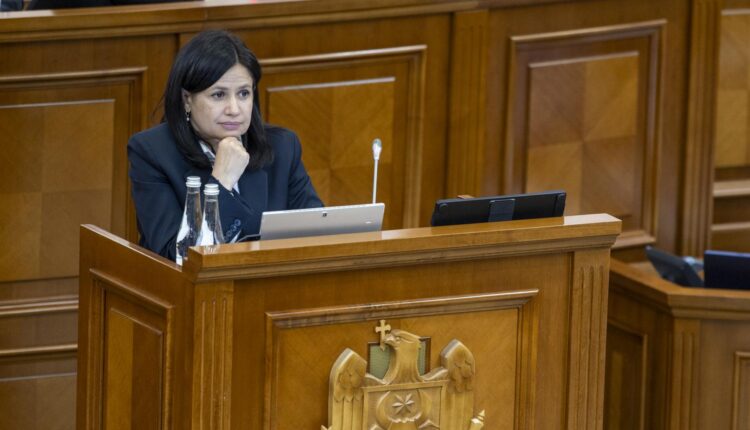
The head of the parliament’s legal commission for appointments and immunities, Veronica Rosca, presented the report on the draft in plenum and noted that most of the submitted amendments had been examined and included in the draft.

"The legal commission for appointments and immunities examined this draft law and notes that, according to the explanatory memorandum, the draft was developed in the context of the need to align the legal framework with international standards on the protection of children's rights and the prevention of violence against women and domestic violence, as well as to improve the mechanisms for enforcing court decisions on establishing the child's residence, visitation schedule and payment of child support. After examination in first reading and the conduct of public consultations and hearings, it was found that the legislative initiative represents an effective regulatory intervention in ensuring the fulfillment of maintenance obligations and contributes to the effective protection of the best interests of the child. As a result, opinions and amendment proposals were received from more authorities, as well as from civil society. On behalf of the legal commission for appointments and immunities, we will also propose this draft for a third reading, to which the edited text of the law will be attached," the cited source said.

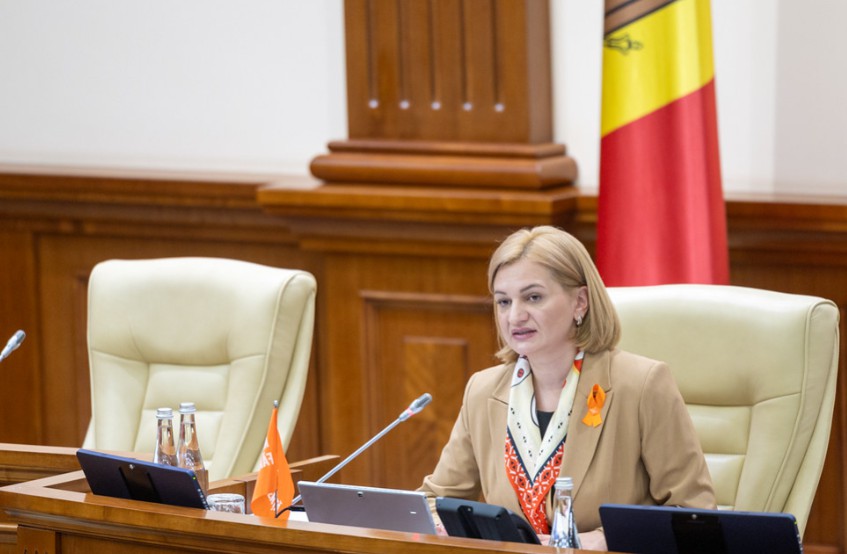
Deputy Parliament Speaker Doina Gherman noted that the document was one of the drafts that required massive efforts on behalf of the legal commission, the competent ministries and all stakeholders involved. At the same time, it is an extremely important draft law for citizens, and it brought back into focus the problem that prompted this initiative, given its particularly large scale.

"We are talking about more than 50,000 children of Moldova who are involved in child support enforcement procedures. At present, regular payments are made in only about 5 per cent of the cases under forced execution. Therefore, the problem is extremely serious. During the debates in the first reading, as well as during the public consultations organized on the platform of the legal commission, we received more proposals from the institutions concerned and interested parties. Thus, a string of amendments were drafted to the Family Code, the Enforcement Code and the Criminal Code. I refer, in particular, to Article 14¹ of the Enforcement Code, under which the court may order, in addition to a travel ban, the application of additional measures, such as unpaid community service, administrative arrest, suspension of a hunting license and of other permissive documents, such as licenses for recreational and sport fishing."

Gherman specified that, with regard to the Family Code, the procedures for establishing a visitation schedule with the child were amended.

"In the absence of an agreement between the parents, the visitation schedule between the child and the parent living separately is established by the territorial guardianship authority and is subject to confirmation by the court, under the Civil Procedure Code. Accordingly, the government will be required, within three months, to adopt a decision clearly regulating the way the best interests of the child are assessed. The child's age, attachment to one of the parents, relationships with siblings, the child's degree of maturity and other circumstances relevant to protecting the child's best interests will be taken into account. Finally, I would like to emphasize the amendment to the Criminal Code regarding the incrimination of femicide in the special part of the Criminal Code as an aggravating circumstance. Following consultations, including with civil society and the Justice Ministry, we reached a consensus wording. Femicide is understood to mean an act that endangers the life and/or health of a woman or girl, committed out of prejudice based on gender and resulting in the victim's death, regardless of whether the act is committed by a family member or another person. This definition introduced in the Criminal Code will allow covering both direct and indirect forms of femicide. Thus, Articles 145, 150, 151 and 201¹ of the Criminal Code are supplemented, so that femicide is expressly provided as an aggravating form in the following cases: intentional murder, intentional grievous bodily harm, incitement or facilitation of suicide and domestic violence. Through these amendments, the Criminal Code will allow the stricter classification and punishment of acts committed against women and girls when they are motivated by gender-based prejudice."

According to the draft, the Contravention Code will be supplemented, so that non-payment of child support is no longer sanctioned only by a fine. Defaulting parents will risk administrative arrest from 10 to 15 days or 45–60 hours of unpaid community service.

The document also provides for additional measures in the case of persons who try to leave the country while having outstanding child support debts, including a ban on crossing the state border.

The draft's authors say that these measures are necessary, given that about 30,000 children of Moldova do not constantly benefit from child support.

The draft also clarifies the child's right to maintain personal relationships with both parents, as well as with grandparents and siblings. The intentional and repeated non-enforcement of the visitation schedule established by law may represent grounds for requesting a change in the child's residence, if this measure corresponds to the best interests of the minor.

The new provisions will enter into force on the date of publication in the Official Journal and the government will have three months to adapt its regulatory framework.
 Facebook
 Instagram
 X/Twitter
 Telegram
PHOTO GALLERY// World Blood Donor Day marked through vast event held in Chisinau
VIDEO // Voluntary amalgamation in Fălești: town halls of Glinjeni, Pietrosu, Bocani, Ișcălău and Catranîc merging
Day Laborers to be registered online
VIDEO // World Blood Donor Day: each donation can save up to three lives
PHOTO GALLERY // China Days in Chișinău through lens of MOLDPRES
Heavy traffic at Sculeni Border Crossing Point eased
VIDEO // Localities of Roșcani, Telița and Calfa approved final decision on voluntary amalgamation
China Days in Chișinău: Gastronomy, Traditions and Modern Technologies in Heart of Capital
Moldovan president urges citizens to learn about local public administration reform
PHOTO // Modernization of Moldova's Costesti–Stanca dam advances; project to be completed by late 2026
New European training opportunities for professionals; justice minister signs agreement on Moldova’s accession to Academy of European Law
Phenomenon of phone, online fraud continuously growing in Moldova; General Police Inspectorate handling 754 fraud cases
Moldovan president expresses condolences after traffic accident in Hungary
New details about accident in Hungary: Moldova's Foreign Affairs Ministry says Moldovan, Romanian passports found at the scene
Adopted by parliament: parents who fail to pay child support risk arrest or community service in Moldova
Delegation of Moldova addresses circumstances straining work of Joint Control Commission
Moldovan parliament speaker says single value-added tax would reduce tax optimization, compensations to go directly to citizens
Moldova's Public Property Agency orders investigation at MoldATSA, suspends enterprise's director from duty
 National Bank of Moldova
Pre-feasibility study for Straseni–Gutinas Liberty Line power line completed; PM says partnership with United States delivers concrete results for Moldova's energy security
Moldovan PM, World Bank Group's representatives discuss priority energy projects
Delegation of Moldova addresses circumstances straining work of Joint Control Commission
Meeting between Deputy Prime Minister for Reintegration and Director of Konrad Adenauer Stiftung Office in Moldova
Moldovan PM has talks with delegation of Monitoring Committee of Parliamentary Assembly of Council of Europe

Moldova's Public Property Agency orders investigation at MoldATSA, suspends enterprise's director from duty
Labour minister says leadership wants Moldova with active, involved older people
Moldovan parliament speaker says human factor behind incident that led to death of National Army soldier
Speaker: Venice Commission’s recommendations on evaluation of judges to be examined and integrated into draft law
Cooperation and strengthening partnership between Moldova and North Atlantic Alliance discussed at Foreign Ministry
Meeting between Deputy Prime Minister for Reintegration and Director of Konrad Adenauer Stiftung Office in Moldova
Parliament introduces new rules on minimum wage assessment and adjustment
EUROPEAN VILLAGE // Dumitru Blajinu House of Culture in Pererita renovated with Government support
Speaker to mayors involved in voluntary amalgamation process: We are building stronger and more European Moldova
DescOperă Festival starts at Orheiul Vechi on June 18: four evenings of classical music, opera, open-air performances
Deputy Prime Minister presented Moldova’s infrastructure investment opportunities in Greece
Electoral authorities from Moldova, Ukraine, Albania and North Macedonia sign Memorandum to strengthen democratic resilience and European cooperation
DOC // Moldovans working in Ukraine to be eligible for pensions and other social benefits
Moldovan, Polish officials discussed next steps for Moldova on path to EU accession
DOC // Moldovan citizens who worked legally in Canada to be eligible for social benefits
Ludmila Catlabuga on farmers’ protests: They have every right to protest and I will stand by them
Receive the latest news directly to your email

Receive the latest news directly to your email