
Reform of pension system for military personnel and special-status officials: retirement age to increase gradually
The Ministry of Labour and Social Protection is proposing changes to the pension system for military personnel and officials with special status. Thus, the retirement age will gradually increase from 45 in 2027 to 50 in 2036, the required service period for obtaining a pension will be 20 years compared to the current 12 years and 6 months, and the calculation base for determining the pension will be expanded.

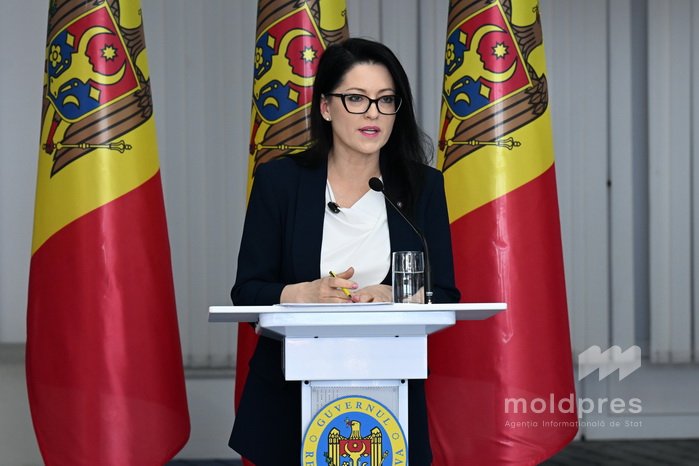
Minister of Labour and Social Protection Natalia Plugaru said today at a press conference that the changes are being proposed given that the current pension system operates under rules established more than three decades ago, with the main law dating back to 1993. Since then, some amendments have been made, but the structure of the system has remained largely unchanged.

Thus, the first important change is the introduction of a clear retirement age. It will gradually increase from 45 years in 2027 to 50 years in 2036.

“We are talking about a transition of almost 10 years, so it is not an abrupt change, it is a slow, predictable one. The retirement age will increase by six months each year, and each person will have enough time to plan their career and professional path,” explained the Minister of Labour and Social Protection.

At the same time, for certain subdivisions and professions that involve increased risk, the possibility of retiring at 45 will be maintained.

“In practice, our analyses show that the average retirement age is already 43.5 years. In some institutions, people retire at a much younger age, even at 30. By comparison, military personnel in Romania generally retire at 60. This age can be reduced for high-risk categories, but not below 45. Also, most European countries are adjusting their special pension systems to find a balance between staff retention, sustainability and fairness,” said Natalia Plugaru.

The second change concerns the length of service required to obtain a pension. At present, it is 12 years and 6 months, while under the new approach the authorities propose a special service period of 20 years.

“This is already happening, because in reality people are staying in the system much longer. For certain high-risk categories, the threshold will remain at 15 years. Existing data show that most beneficiaries already accumulate this 20-year length of service,” said Natalia Plugaru.

Another change concerns the elimination of the obligation to be discharged from service in order to have one’s pension established. In other words, the person will no longer be required to leave the system in order to benefit from pension rights.

“This measure offers more flexibility and also contributes to retaining experienced specialists,” noted the Labour Minister.

A new and important element of the reform is the introduction of a pension re-examination mechanism if the person continues to work after reaching retirement age.

“The new law proposes the possibility of re-examining the pension after accumulating 60 months of activity completed after 1 January 2027. Subsequently, after the first re-examination is carried out following the first five years worked after 1 January 2027, we propose that the re-examination be carried out again every 24 months,” argued Natalia Plugaru.

The authorities are also proposing changes to the method of calculating pensions. Currently, the calculation base is determined using the last 12 months of activity, whereas the amendments propose using a period of 60 months.

“This will prevent attempts to accumulate a higher wage fund only in the final year of activity. Through this approach we provide a more representative picture of the entire career in the system and reduce the fluctuations generated by income earned only over a short period,” said the Labour Minister.

At the same time, the Ministry of Labour and Social Protection proposes the standardization of the one-off allowances granted upon discharge from service. Their amount will be set according to uniform, predictable and fair criteria for all institutions concerned.

“I know this is a sensitive topic, and it is somehow natural that it is, because we are talking about people who serve the state, who ensure the defence of all of us, we are talking about security and public order and about those who in fact work in conditions entirely different from those on the general labour market, often under high risk. Therefore, first of all, I want to underline a fundamental principle of this reform. It is not against officials with special status; on the contrary, the reform aims to maintain recognition of the specific nature of these professions while at the same time ensuring a fairer and more sustainable pension system in the long term,” explained Minister Natalia Plugaru.

Currently, the pension system for military personnel and officials with special status covers 23,000 beneficiaries from six institutions: the Ministry of Internal Affairs, the Ministry of Defence, the Intelligence and Security Service, the State Protection and Guard Service, the National Anticorruption Centre and the National Administration of Penitentiaries.
 Facebook
 Instagram
 X/Twitter
 Telegram
More mayoralties from north Moldova district involved in voluntary amalgamation
Phone scams worth over 4 million lei recorded in Moldova in just a few days
Moldova's Foreign Affairs Ministry: Moldovan citizens dead in accident in Hungary to be repatriated
PHOTO GALLERY// World Blood Donor Day marked through vast event held in Chisinau
VIDEO // Voluntary amalgamation in Fălești: town halls of Glinjeni, Pietrosu, Bocani, Ișcălău and Catranîc merging
Day Laborers to be registered online
VIDEO // World Blood Donor Day: each donation can save up to three lives
PHOTO GALLERY // China Days in Chișinău through lens of MOLDPRES
Heavy traffic at Sculeni Border Crossing Point eased
VIDEO // Localities of Roșcani, Telița and Calfa approved final decision on voluntary amalgamation
China Days in Chișinău: Gastronomy, Traditions and Modern Technologies in Heart of Capital
Moldovan president urges citizens to learn about local public administration reform
PHOTO // Modernization of Moldova's Costesti–Stanca dam advances; project to be completed by late 2026
New European training opportunities for professionals; justice minister signs agreement on Moldova’s accession to Academy of European Law
Investments in modernization of 20 schools, ten medical institutions: financial support provided by EU, European Investment Bank
Reform of pension system for military personnel and special-status officials: retirement age to increase gradually
Annual leave to be expressed in working days: proposed changes by Ministry of Labour and Social Protection
Public sector pay system to be reformed
Minister of Finance: Impact of VAT reform will not exceed 200 lei per month for 80% of citizens
Parliament speaker says phone scams coordinated from outside Moldova; authorities consider solutions to identify fraudulent calls
USA, Moldova advance Liberty Line project; Moldovan PM says interest of American investors growing
 National Bank of Moldova
Deputy PM for reintegration pays tribute to participants in actions to defend independence, territorial integrity of Moldova
State Chancellery representatives took part in meetings of Interreg Europe Programme Committees
Feasibility study for Strășeni–Gutinaș Liberty Line completed
Pre-feasibility study for Straseni–Gutinas Liberty Line power line completed; PM says partnership with United States delivers concrete results for Moldova's energy security
Moldovan PM, World Bank Group's representatives discuss priority energy projects

PHOTO GALLERY // Evening dedicated to love poetry at Romanian Literature Museum
Pre-feasibility study for Straseni–Gutinas Liberty Line power line completed; PM says partnership with United States delivers concrete results for Moldova's energy security
Moldova joins two international maritime conventions
Moldovan PM, World Bank Group's representatives discuss priority energy projects
Voted by parliament: legislation on administration, use of public roads to be aligned with EU standards in Moldova
Adopted by parliament: parents who fail to pay child support risk arrest or community service in Moldova
Delegation of Moldova addresses circumstances straining work of Joint Control Commission
Moldovan parliament adopts new facilities for setting electric energy storage systems
Moldovan parliament speaker says single value-added tax would reduce tax optimization, compensations to go directly to citizens
Moldova's Public Property Agency orders investigation at MoldATSA, suspends enterprise's director from duty
Labour minister says leadership wants Moldova with active, involved older people
Moldovan parliament speaker says human factor behind incident that led to death of National Army soldier
Speaker: Venice Commission’s recommendations on evaluation of judges to be examined and integrated into draft law
Cooperation and strengthening partnership between Moldova and North Atlantic Alliance discussed at Foreign Ministry
Meeting between Deputy Prime Minister for Reintegration and Director of Konrad Adenauer Stiftung Office in Moldova
Parliament introduces new rules on minimum wage assessment and adjustment
Receive the latest news directly to your email

Receive the latest news directly to your email