
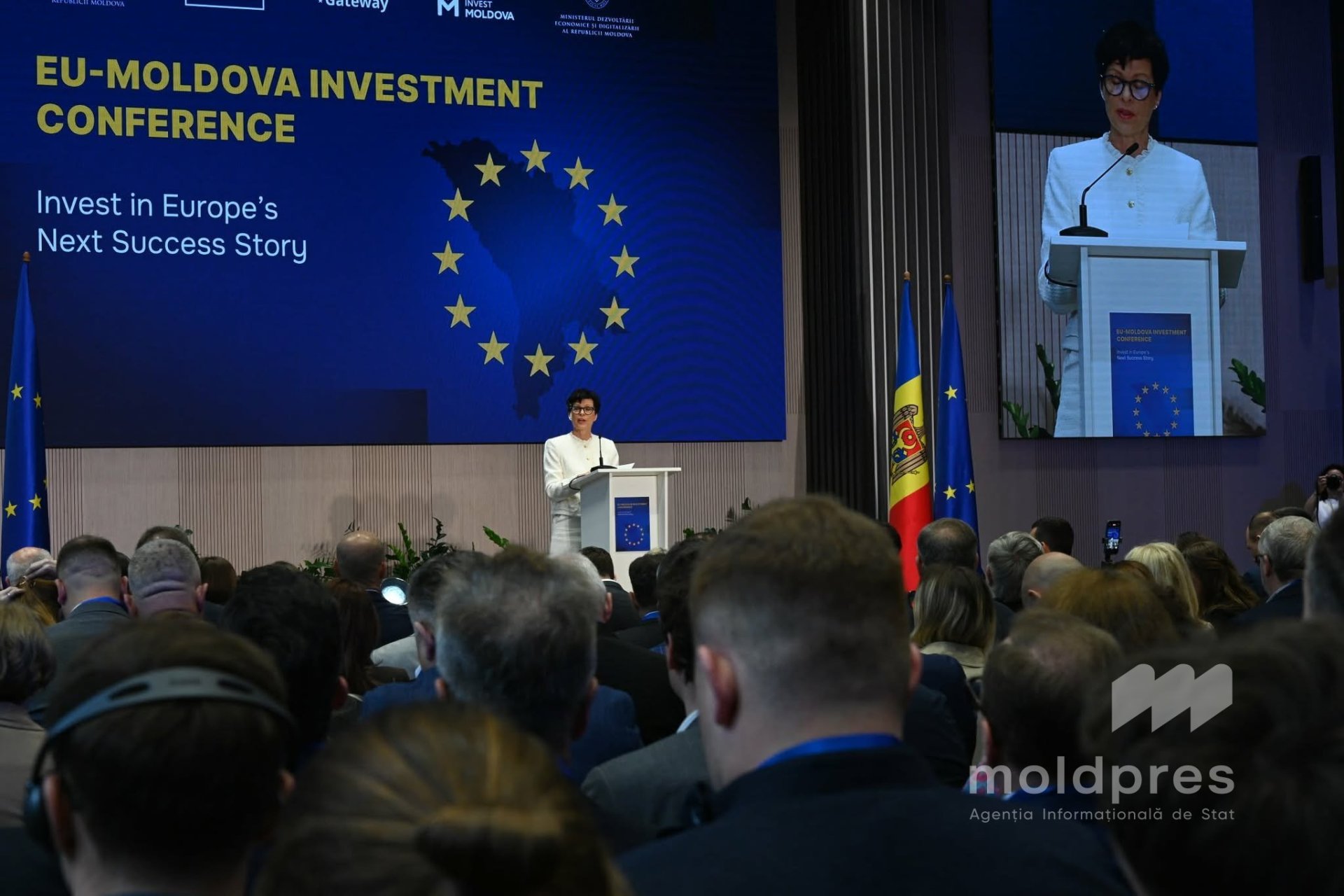
European Commissioner in Chișinău: Moldova will be increasingly integrated into European economy, not only at time of accession, but long before it
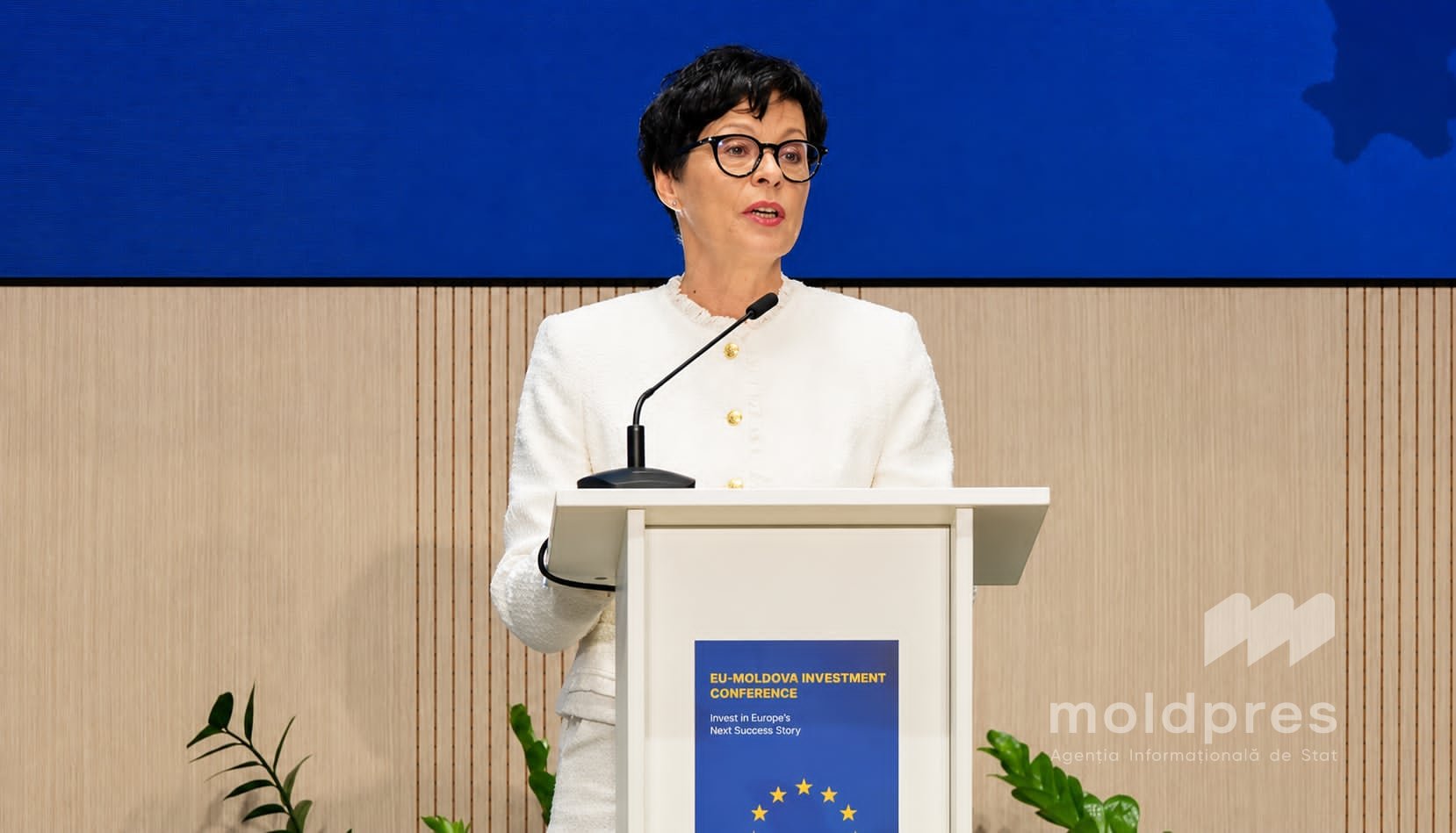
The Republic of Moldova has carried out essential reforms that have enabled the country to advance on its European path and build a solid foundation for its future accession to the European Union. Despite regional uncertainties, one trend is clear: Moldova will become increasingly integrated into the European economy, not only at the time of accession, but long before that. Change is coming to Moldova, and now as many investment projects as possible need to be implemented so that Moldovan citizens can feel these changes. European Commissioner for Enlargement Marta Kos made the statements at the opening of the Republic of Moldova – European Union Investment Conference, held today in Chișinău.

“I am very pleased to return to Moldova. It has been about a year since I was here to sign the EU Growth Plan, the largest financial support package the EU has offered to Moldova since it gained independence. At that time, I travelled across the country to meet the people who will benefit from this plan, the mayors who will help implement the projects and the entrepreneurs who will turn them into reality. From Ungheni, Bălți and Edineț to Comrat and Cahul, I met many ambitious and hard‑working people. I also met many young people eager to seize the opportunities that their European future will bring here, at home. This is the call we are responding to today through this investment conference,” said Marta Kos at the opening of the event.

The Commissioner emphasized that in recent years the way Europeans see Moldova has changed.

“Europe sees Moldova’s potential. It has seen a nation that has opposed foreign interference and hybrid attacks, and that has chosen its European path. Not just once, but five times. It has seen a country that is fighting corruption and organized crime, bringing to justice people who once seemed untouchable. We also see a nation that is implementing the reforms needed for accession at record speed. I will not say that you are the best students in the class. Moldova is one of the best‑performing candidates, but also a very good student in the class,” the official noted.

Marta Kos pointed out that “very soon, in mid‑June, the most important cluster of chapters in the negotiation process – the one on fundamentals – will be officially opened.” “We have been waiting for this to happen, but you did not wait for someone else to build your future. You have already been working for your own future, and this is producing results. This step will allow us to formalize the process and the work you have carried out during this waiting period. In many areas, including in the key rule‑of‑law reforms, informal negotiations have enabled you to move forward and build a solid basis for future accession to the European Union. We have also seen impressive results in implementing the reforms laid out in the Growth Plan. With an implementation rate of 93%, Moldova is ahead of all EU candidate countries that benefit from growth plans. This result strengthens confidence. We see your progress. We see your potential. And many investors see it as well. I can see them today in this room, and investors are already betting on Moldova’s European future,” said Marta Kos.

The European Commissioner announced that during today’s conference, letters of intent will be signed with eight companies that plan to invest in the Republic of Moldova.

“These represent planned investments of around 208 million euros. In addition, we have identified planned investments from financial institutions worth up to 443 million euros. These will be mobilized through a combination of EU grants, guarantees and loans, alongside financing from international financial institutions, the Government of the Republic of Moldova and the private sector. In total, EU support is generating planned investments of up to 640 million euros, to which are added private‑sector investments announced by the Government of the Republic of Moldova, amounting to 364 million euros. Thus, the total value of investments exceeds one billion euros,” the European official said.

Among the entrepreneurs who will invest in our country are a company from Belgium, a water sector company that aims to build modern drinking water plants across Moldova, a pharmaceutical manufacturer that intends to expand its operations, as well as two companies from Latvia and Lithuania.

“Moldova is attractive because it has begun to replicate the recipe for success proven by many countries that joined the European Union before it. The recipe is very simple: reforms that improve the business environment and legal security attract investments, and investments generate economic growth and innovation. And with economic growth comes prosperity. Then comes the most important part: people directly benefit from these changes. Moldova can follow the same European path to prosperity, a path that will bring opportunities to its hard‑working and innovative people, in both cities and villages,” the European Commissioner said.

Marta Kos said that Moldova is a small country in terms of square kilometres or population, but a very large country in terms of its European determination, perseverance, positive energy and its conviction that it will succeed. Thus, the European Commissioner urged foreign companies to invest in the Republic of Moldova, stressing that the economic arguments for investing in Moldova are strong, as the economic relationship between the European Union and Moldova is already deep.

“Dear business leaders, dear investors: now is truly a good time to invest in Moldova. Despite global uncertainties, one trend is clear: Moldova will be increasingly integrated into the European economy, not only at the time of accession, but long before that. The process is already underway. We see the progress of reforms. This success is the foundation of your country’s future success. Change is coming to Moldova. I can already see it. Now we need to implement as many investment projects as possible so that Moldovan citizens can see and feel these changes. I know that Moldova can do it,” concluded Marta Kos.

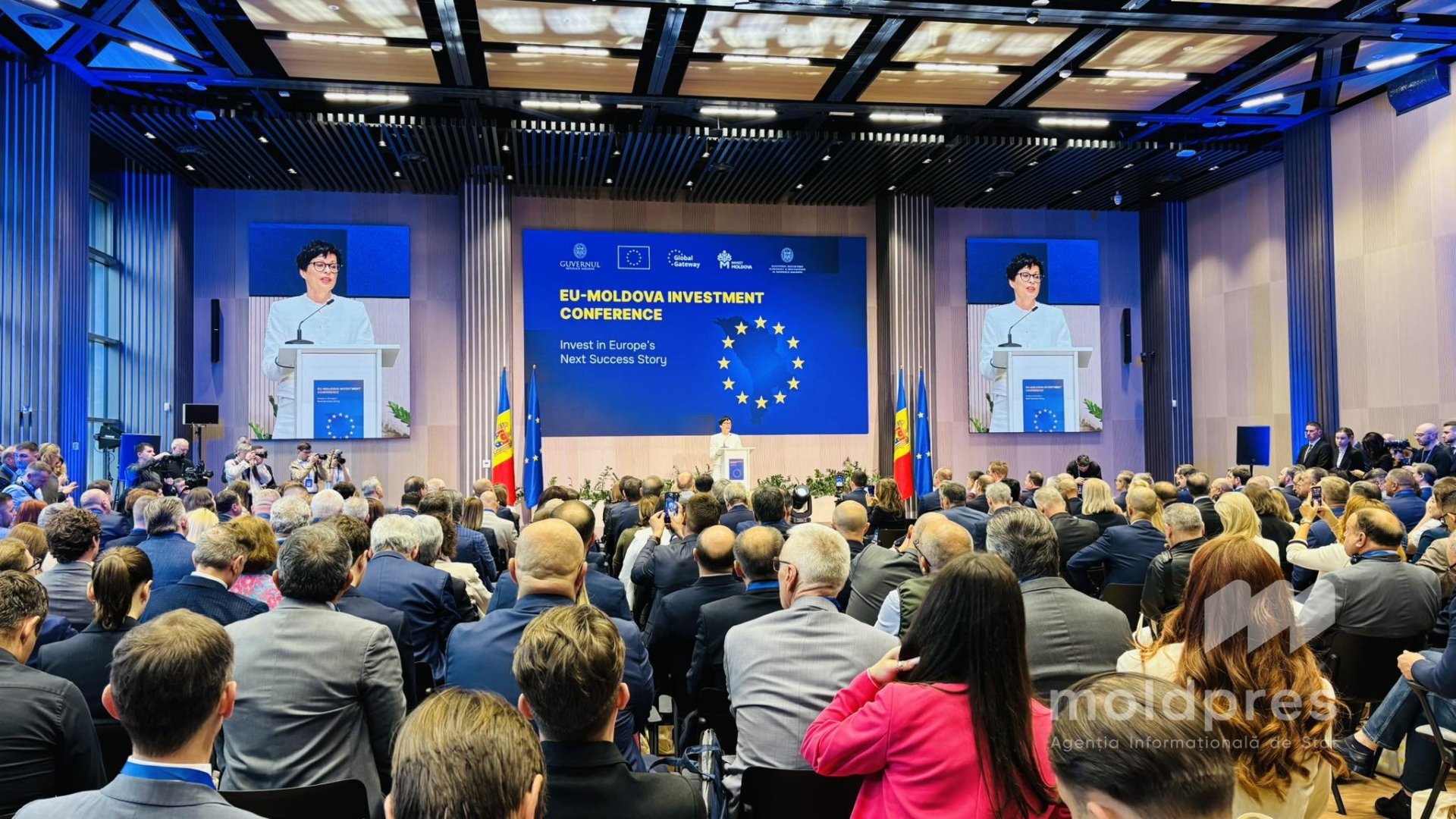
Chișinău is hosting today the first Republic of Moldova – European Union Investment Conference. The event is dedicated to investment opportunities in our country and to its growth role within the European economic area. It brings together political decision‑makers, European institutions, financial organizations, investors, business leaders and experts from various sectors. Held under the motto “Invest in Europe’s next success story”, the conference will focus on investments that can strengthen EU–Moldova supply chains and support our country’s economic growth.
 Facebook
 Instagram
 X/Twitter
 Telegram
Moldovan parliament's delegation on visit to Brussels for talks on European integration
Moldovan Central Electoral Commission presents preliminary results of second round of new local elections
Local elections: Over 21% of voters cast ballots by 3:00 p.m.
Moldova continues on path to EU even without formal decision on clusters, says head of state
New local elections: over 2 percent of voters cast ballots by 09:00
Citizens expected at polls to participate in second round of new local elections for mayor
VIDEO // Head of State on foreign visits: Moldova must convince EU countries to accept accession
Moldova ready to open first negotiation cluster with European Union, says Moldovan foreign minister
Deputy Prime Minister: Moldova increasingly respected internationally
CEC announces silence day ahead of second round of new local mayoral elections
PHOTO GALLERY // About 400 mayors gathered in PMAN for event - Strong city halls. Developed Communities. Romania’s acting prime minister special guest
Larisa Miculeț to assume role of acting head of Embassy of the Republic of Moldova in Ireland
Romania’s acting PM in Chisinau speaks about proposal for sanctions against Russian diplomats in Bucharest
Moldovan PM says many things are to be done, Romania stays Moldova's strategic partner
President's message to European investors: When you invest in Moldova, you invest in country whose future anchored in Europe
Deputy Prime Minister: Moldova–EU Investment Conference shows we are reliable partner and will continue to move forward
LIVE TEXT // Investment Conference in Chișinău. Deputy Prime Minister: Moldova advancing toward full integration into European market
Investments exceeding 1 billion euros announced at Moldova – European Union Investment Conference
Messages of support from Brussels
Prime Minister at Moldova–EU Investment Conference: Moldova ready for accession and becoming part of European economy
European Commissioner in Chișinău: Moldova will be increasingly integrated into European economy, not only at time of accession, but long before it
 National Bank of Moldova
President's message to European investors: When you invest in Moldova, you invest in country whose future anchored in Europe
Investments exceeding 1 billion euros announced at Moldova – European Union Investment Conference
Messages of support from Brussels
European Commissioner for Enlargement to pay visit to Chisinau
Moldova completed clearing former Republican Stadium site and moving to transfer it to U.S. Government

Entrepreneurs on both banks of Dniester can participate in training program to develop export capacities
Cypriot EU Presidency launched preparations for official opening of Cluster 1 in accession negotiations with Moldova and Ukraine
PHOTO GALLERY // Doga Gallery: Master’s Art—treasure of Universe
Prosecutors' vetting continues in Moldova: 70 files completed, 42 prosecutors pass evaluation
European Commissioner for Enlargement to pay visit to Chisinau
Moldova, Turkey seek to expand joint projects in culture, tourism
Natural gas transit tariff on route to Ukraine to be cut by 90 percent; Moldovan energy minister: “It will make the route more economically feasible”
European Commissioner for Enlargement expected in Chisinau, to advance EU accession reforms, boost investments; visit's agenda
European Parliament Vice-President calls for launch of political negotiations, opening of all clusters with Moldova
Moldova ranks third in Europe for short-term tourist accommodations' affordability
PHOTO, VIDEO // Women from rural communities, protected areas take part in an exchange visit to Comana Natural Park of Romania
VIDEO // Moldovan deputy PM for European integration says Moldova ready to open EU accession negotiations
Alignment with EU labour standards: cross-border workers to be eligible for unemployment benefits
Moldova completed clearing former Republican Stadium site and moving to transfer it to U.S. Government
CNMC director after Tuesday’s heavy rains: There are no major risks
Record number of registrations for Moldova – EU investment conference
Receive the latest news directly to your email

Receive the latest news directly to your email