
Mihai Isac: Moldova participated in ECP Summit in Yerevan as state at heart of EU enlargement talks
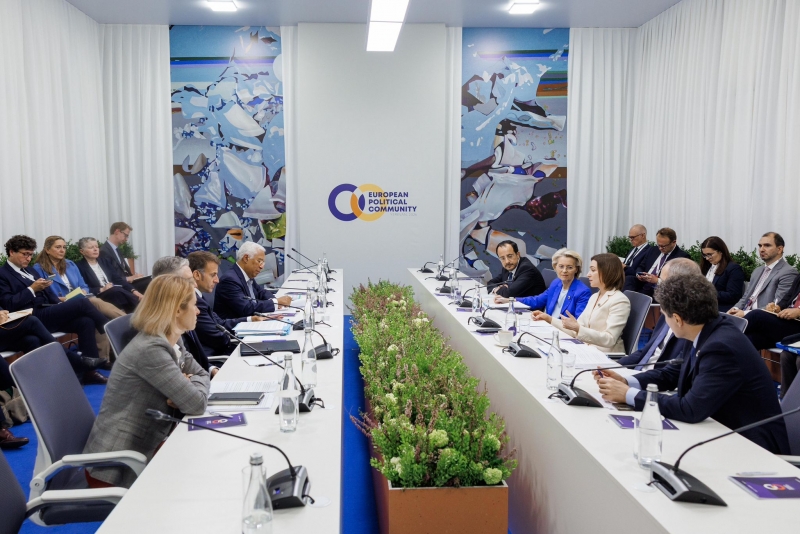
For Chișinău, the importance of the European Political Community (EPC) summit held on 4 May in Yerevan, Armenia, begins with the simple fact of being present at the negotiating table. The Republic of Moldova did not attend as a marginal observer, but as a state at the center of debates on the enlargement of the European Union and the architecture of European security.

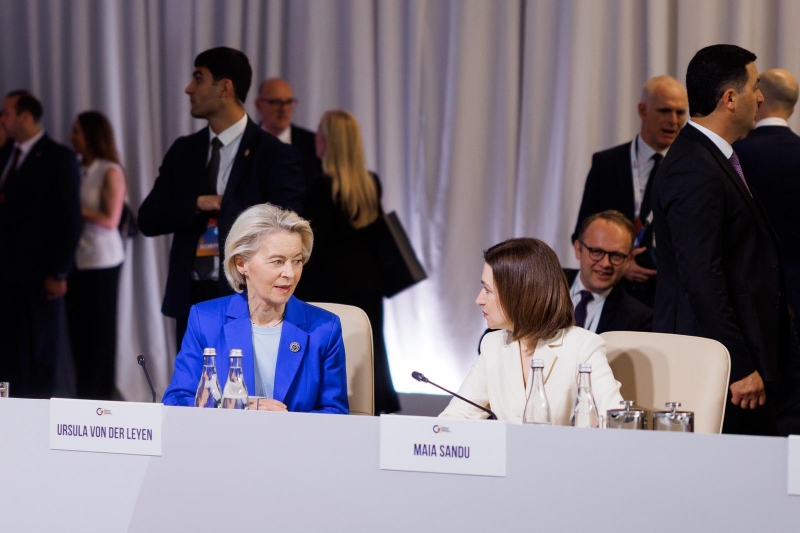
Asked by MOLDPRES, political analyst Mihai Isac underlines that President Maia Sandu co-chaired, together with French President Emmanuel Macron, a session dedicated to democratic resilience in the face of hybrid threats. The topic is of major relevance for the Republic of Moldova, in the context of recent experiences marked by energy pressure, disinformation campaigns, opaque political financing, attempts at destabilization, and interference in electoral processes.

“Yerevan is trying to show that it no longer wants to be viewed solely through the lens of historical dependence on Russia”

Mihai Isac: The European Political Community summit in Yerevan is not just a diplomatic gathering in a capital far from Chișinău. For the Republic of Moldova, the event has a direct stake, confirming that Moldova’s security, its European path, and its resistance to hybrid war are already European topics, not just internal concerns. For Armenia, the summit carries an even more dramatic significance. This is the moment when Yerevan is trying to demonstrate that it no longer wants to be seen exclusively through the lens of a historical dependence on Russia, but as a state seeking political, economic, and security anchoring in Europe, more precisely in the European Union.

On 4 May 2026, Armenia hosted the eighth summit of the European Political Community. The meeting brought together leaders from over 40 states, including the Republic of Moldova, Ukraine, EU member states, the United Kingdom, Turkey and Canada, which was invited for the first time as a non-European state to this format. According to the European Council, the summit’s agenda focused on democratic resilience, connectivity, and economic and energy security – themes that directly affect both Moldova and Armenia.

At the same time, we must not forget that Armenia has a direct land border with the Islamic Republic of Iran, a state with which it has complicated relations, marked by a tumultuous history.

Moldovan stake was twofold: security guarantees and EU accession

For Chișinău, the importance of the summit begins with its simple presence at the table. The Republic of Moldova did not participate as a marginal observer, but as a state at the center of discussions on EU enlargement and European security. President Maia Sandu co-chaired, together with Emmanuel Macron, a session dedicated to democratic resilience in the face of hybrid threats, a topic that is one of the most sensitive for the Republic of Moldova after years of energy pressure, disinformation, opaque political financing, destabilization attempts, and electoral interference.

Moldova’s stake was twofold, namely security guarantees and EU accession. On the one hand, Chișinău used the forum to talk about defending democracy from external interference. On the other hand, it sought to maintain political pressure for advancing accession negotiations. In Yerevan, President Maia Sandu held a meeting dedicated to the European future of the Republic of Moldova and to consolidating peace and security, attended by leaders such as the President of Romania, Nicușor Dan, Emmanuel Macron, Giorgia Meloni, Keir Starmer, Ursula von der Leyen, António Costa and Kaja Kallas.

Important message from Romania’s President Nicușor Dan: leaders discussed the Republic of Moldova’s accession to the European Union

An important message came from Romania’s President Nicușor Dan, who said that leaders discussed the Republic of Moldova’s accession to the European Union and that an answer regarding the advancement of the process could be delivered by the end of June, in a context in which Moldova’s file is politically linked to that of Ukraine. The discussion focused on the official opening of the accession process with the first negotiation cluster. For Chișinău, this is one of the most concrete stakes of the meeting, namely turning political support into technical steps in the accession process.

Yerevan is also important for the Republic of Moldova because of the political parallel between the two states. Armenia, like the Republic of Moldova, is situated in a space of geopolitical pressure. Both countries have historically complicated relations with Russia, have societies vulnerable to propaganda, and need Western partners to strengthen their institutions. The difference is that the Republic of Moldova already has EU candidate status and a clearer accession path, while Armenia is only beginning to test its European trajectory. Precisely for this reason, the Republic of Moldova can appear in Yerevan not only as a beneficiary of European support, but also as a state that can share experience in resilience, fighting disinformation and institutional adaptation. Romanian support, a fundamental element in the security architecture of the Republic of Moldova, cannot be replicated in Armenia, despite Armenia’s deep historical ties with certain states, such as France, where there is a large Armenian diaspora of almost one million people.

The central question: can Armenia break away from Russia?

The central question is whether Armenia can break away from Russia. The accurate answer is that this is neither a sudden nor a total process, but it is visibly moving away. Armenia froze its participation in the Collective Security Treaty Organization, the Russia-dominated military alliance, as early as 2024, after Prime Minister Nikol Pashinyan accused the bloc of failing to meet its obligations toward Armenia. However, Pashinyan stated at the time that there was no immediate discussion about closing the Russian military base in Armenia, a sign that the break is not complete and that Yerevan is avoiding a full-frontal confrontation with Moscow. The trauma of Nagorno-Karabakh profoundly marks Armenia’s political scene, and it will eventually be called to account electorally in one form or another, especially for politicians perceived as too moderate in their relations with Baku.

Armenia remains caught in a harsh reality. Yerevan seeks more strategic freedom, yet it still depends on Russia in terms of economy, energy, and security. Moscow is aware of this and uses it. In April 2026, Vladimir Putin warned Armenia that it cannot be at the same time part of the European Union and the Eurasian Economic Union, the Russian-dominated economic bloc. Pashinyan acknowledged that simultaneous membership in the two blocs is not possible in the long term, but said that for now Armenia can combine membership in the Eurasian Economic Union with developing cooperation with the EU.

Therefore, Armenia is not severing its relationship with Russia through a solemn declaration. Rather, it is trying to reduce Russia’s monopoly over its security and foreign policy. The summit in Yerevan reflects this change through symbols and practical decisions. The fact that more than 40 European leaders came to Armenia’s capital sends a direct message: the South Caucasus region is no longer treated solely as a Russian sphere of influence, but as part of the European conversation on security, democracy and connectivity.

Strategic reorientation in Armenia: the beginning of a European integration process

Armenia is moving closer to Europe, but this rapprochement is more a process of strategic reorientation than a rapid path to accession. In April 2025, Armenia adopted a law creating the legal basis for closer ties with the European Union, but Prime Minister Pashinyan clarified that this is not a formal membership application, but the start of a broader integration process. It must be acknowledged that joining the EU will be difficult, given that Armenia has no border with the Union, depends economically on Russia, and is located in a region marked by conflict with Azerbaijan as well as Turkish pressure.

Yerevan summit also comes at a very sensitive electoral moment for Armenia. Parliamentary elections are scheduled for 7 June 2026 and are crucial for the future of Nikol Pashinyan and for the country’s geopolitical direction. The European Parliament has already warned about the risk of external interference and disinformation, mentioning concerns about Moscow’s attempts to influence the outcome of the vote. In this context, the summit also becomes an electoral stage. Pashinyan is showcasing to Armenian voters that rapprochement with Europe brings political support, expertise, investment and resilience guarantees.

Statement of support for Armenia at EPC summit in Yerevan

On the sidelines of the summit, the leaders of France, Lithuania, Estonia, Norway, Poland, the United Kingdom, the President of the European Council and the EU’s High Representative for Foreign Affairs signed a joint declaration of support for Armenia. The document affirms support for Armenia’s sovereignty, for democratic resilience and for free elections on 7 June, without external interference. The leaders promised support through experts, capacity building, equipment and electoral observation.

This is one of the important political decisions of the moment: Europe is not just welcoming Armenia’s pro-European orientation, but is trying to protect it at a critical electoral juncture. For the Republic of Moldova, the message is familiar. Chișinău has gone through the same type of pressure, including information warfare, non-transparent financing, destabilization campaigns and attempts to turn elections into a geopolitical referendum. Therefore, discussions about Armenia have a direct impact on the Republic of Moldova. They confirm that the EU treats the defense of electoral processes as part of the continent’s security.

Another important decision is the strengthening of the EU’s civilian presence in Armenia. On 21 April 2026, the EU Council decided to create the European Union Partnership Mission in Armenia, with an initial mandate of two years. The mission will assist Armenian authorities in responding to hybrid threats, foreign information manipulation, cyberattacks and illicit financial flows. This is a practical, not merely symbolic, decision, as the EU is sending institutional expertise into a country subjected to major geopolitical pressure.

On the security track, the EU also decided to provide financial support to Armenia through the European Peace Facility. In January 2026, the EU Council approved an assistance measure of 20 million euros to improve the logistical capabilities of the Armenian armed forces, bringing total support under this framework to 30 million euros. The aim is to protect civilians in crisis situations and to increase interoperability for possible international missions, including EU missions.

Economically, the deepening EU–Armenia relationship is reflected by a 270-million-euro resilience and growth plan for 2024–2027 and by Global Gateway investments expected to reach 2.5 billion euros. The European Council notes that these investments target economic growth, connectivity and job creation. For Armenia, this is the tangible European offer: not just declarations about values, but money for infrastructure, reforms and regional links.

The decisions taken in Yerevan mean commitments

The summit’s decisions must, however, be explained carefully. The European Political Community is not an institution that adopts accession treaties or binding decisions like a European Council. It is rather a flexible political framework where leaders discuss directly, negotiate bilaterally, and create joint initiatives. Therefore, the decisions from Yerevan do not amount to a single spectacular final document, but to a series of commitments: support for Armenia, backing for Moldova in its European process, cooperation against hybrid threats, discussions about connectivity, energy security, Ukraine, and the fight against cross-border crime.

For the Republic of Moldova, a concrete outcome was participation in the meeting of the European Coalition Against Drugs, launched in 2025 at the initiative of Emmanuel Macron and Giorgia Meloni. In Yerevan, leaders discussed combating illicit financial flows, money laundering, confiscation of assets from criminal activities, and the exchange of information on the use of cryptocurrencies for money laundering. For Chișinău, this matters because organized crime, illegal financing and cross-border networks often intersect with political and electoral vulnerabilities.

At regional level, the summit also sent a message about peace between Armenia and Azerbaijan. António Costa said that the Yerevan meeting is historic because it is the first to take place in the South Caucasus and because the President of Azerbaijan, Ilham Aliyev, took part by videoconference. Costa presented the summit as one for peace in the Caucasus, linking regional stability to resilient democratic institutions and to economic ties between neighbors.

The lesson from Yerevan: small states gain visibility when they tie their national agenda to Europe’s security agenda

For the Republic of Moldova, the lesson from Yerevan is clear. Small states can gain visibility when they link their national agenda to Europe’s security agenda. The Republic of Moldova is not merely asking for support for accession; it is showing that defending its democracy is part of defending the continent. And Armenia demonstrates that dependence on Russia is not a fatality, even if breaking free from this dependence is slow, risky and costly.

The Yerevan summit is important for Moldova because it keeps Chișinău at the center of European discussions, offers it the opportunity to call for faster EU accession, and strengthens its profile as a state that has accumulated experience in resisting hybrid warfare. For Armenia, the summit marks a stage of visible rapprochement with Europe, but not a complete break with Russia. Yerevan is trying to change direction without triggering a geopolitical shock it could not manage. And for Europe, the meeting shows that the political frontier of the continent is no longer drawn only on the map, but wherever societies choose democracy, sovereignty and the right to decide their own future.
 Facebook
 Instagram
 X/Twitter
 Telegram
SIS Director reveals details on Alexandru Bălan’s espionage activities
Head of Moldova's National Integrity Authority reports in parliament: irregularities worth tens of millions of lei detected in 2025
Former president of European Council encourages Moldova on path to EU
Moldovan parliament expands foreign relations: friendship groups with United Arab Emirates, Saudi Arabia created
Japan’s Minister for Internal Affairs to pay visit to Moldova
VIDEO // Speaker welcomes return home of SIS officers and thanks U.S. and European partners for involvement
Diplomat Dumitru Socolan appointed Secretary General of Foreign Ministry
Parliament welcomes Moldova’s progress in press freedom ranking
Over 21 million trips by Moldovans to EU recorded after visa liberalisation
Moldovan foreign affairs minister says accusations by Russian ambassador attempts to destabilize situation, part of hybrid warfare mechanism
Moldovan deputy PM for reintegration says gradual elimination of tax exemptions provided to economic agents of Transnistrian region to allow unifying fiscal space
President about Balan’s pardon: He held position of responsibility during Plahotniuc’s time. I don’t think there are other risks at present
Extended parliamentary control over CSE and flexible duration of state of emergency proposed by MPs
Prime Minister and Austrian Chancellor discuss Moldovan-Austrian cooperation in Dubrovnik
Moldova represented at annual high-level meeting of Economic and Financial Dialogue between EU and countries candidates for accession
Mihai Isac: Moldova participated in ECP Summit in Yerevan as state at heart of EU enlargement talks
Meeting of Cooperation Committee between Moldova and North Carolina held in Chișinău: progress in implementing joint projects and new priority areas
European Commission Vice-President to pay official visit to Chișinău
PHOTO // Energy Minister approached regional energy security strengthening in Brussels
MOLDPRES INTERVIEW // Falk Lange, Head of the Council of Europe Office: “The Presidency of the Committee of Ministers is both a responsibility and an opportunity for the Republic of Moldova to demonstrate its commitment to European values.”
Moldova strengthens European image: high standard at Council of Europe
 National Bank of Moldova
Moldovan president participates in meeting of European Coalition Against Drugs at European Political Community's Summit in Yerevan
Moldova's European future at center of high-level meeting in Yerevan
Voluntary amalgamation in north Moldova district: nine mayoralties merge, to receive 85 million lei in incentives
Moldovan PM says national resilience built through shared responsibility, coordination, preparedness
President received Japanese delegation led by Minister for Internal Affairs and Communications

Moldova strengthens European image: high standard at Council of Europe
European MP says elections in EU can influence Moldova’s path, European support stays strong
Moldovan president participates in meeting of European Coalition Against Drugs at European Political Community's Summit in Yerevan
MEP says Moldova resisted Russian pressure, gaining increasing support in European Union
Moldova adopts North Carolina’s agricultural extension model to support local farmers
First in EU accession process: European Parliament, parliament of Moldova launch joint working groups on negotiation chapters
Moldova’s EU accession process on agenda of EPC Summit's discussions; Romanian president: “We will have an answer by end of June”
Opportunities of strategic investments presented at Moldova – EU Conference, held in Chisinau on June 4
Moldova's European future at center of high-level meeting in Yerevan
Voluntary amalgamation in north Moldova district: nine mayoralties merge, to receive 85 million lei in incentives
European Parliament member says Moldova continues to take concrete steps towards EU accession, political support for this goal stays strong
Moldovan PM says national resilience built through shared responsibility, coordination, preparedness
Moldovan PM says authorities choose to be prepared for any situations, to manage them as efficiently, professionally as possible
Reform of local public administration: nine mayoralties in north Moldova district rule to merge; incentives of 85 million lei provided by authorities
Governor of National Bank of Moldova in Bucharest says Moldova proves it can deliver concrete results, with direct impact on citizens, economy
Construction of Straseni–Gutinas power line to become strategic public utility project in Moldova
Receive the latest news directly to your email

Receive the latest news directly to your email