
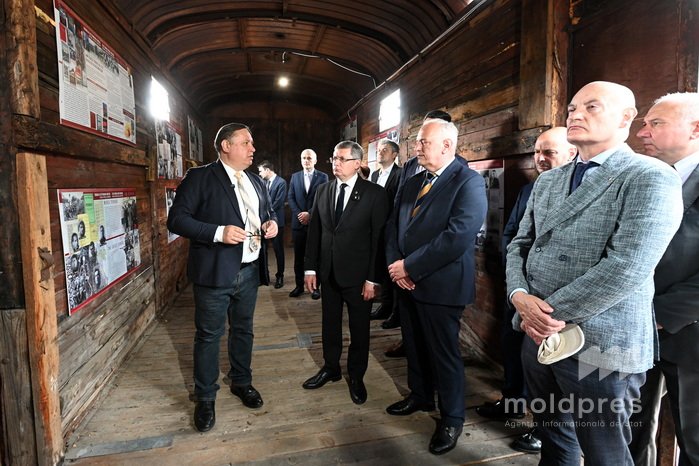
Exhibition “State Terror in Soviet Moldova: Scale, Victims and Perpetrators” inaugurated in Great National Assembly Square
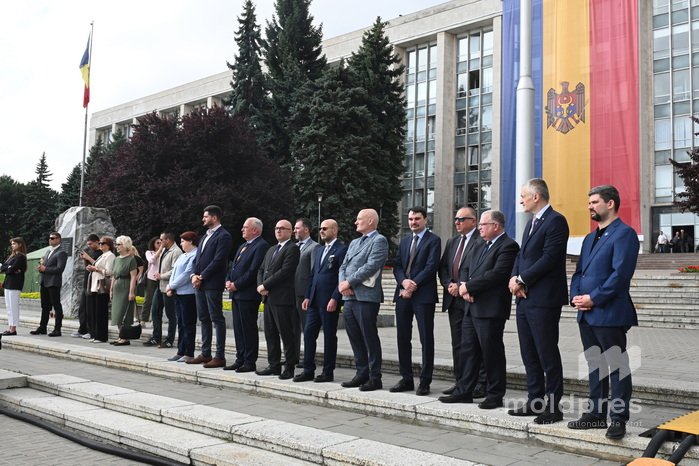
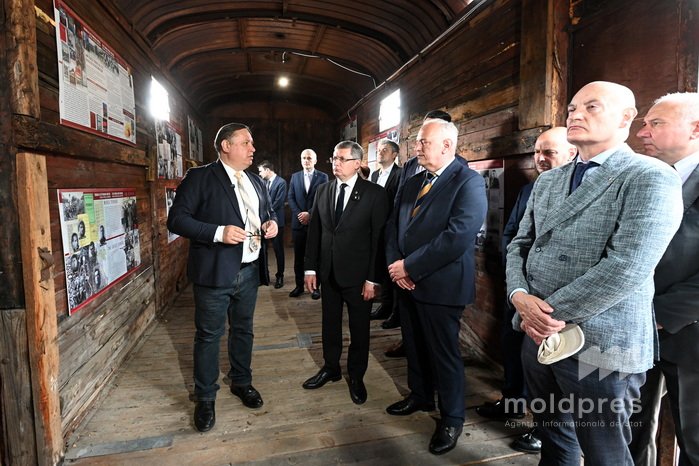
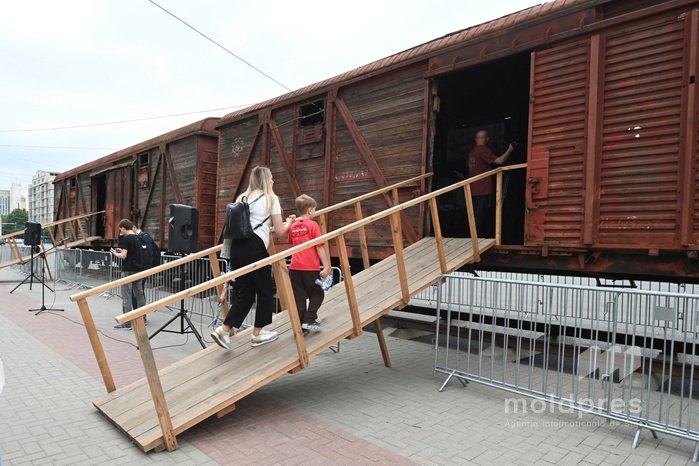
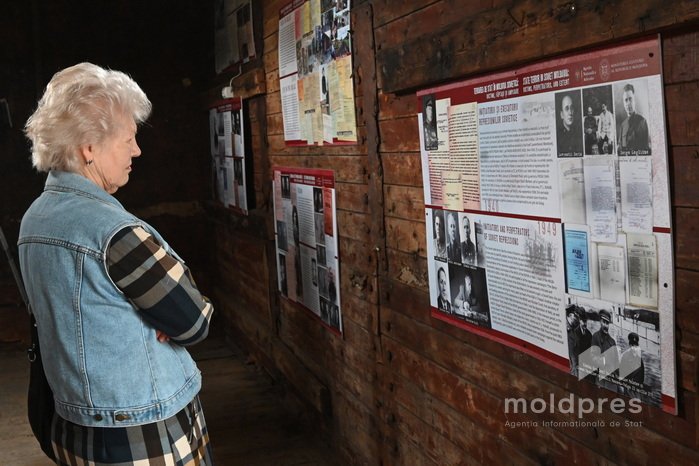
The fourth edition of the railcar exhibition “State Terror in Soviet Moldova: Scale, Victims and Perpetrators” was inaugurated today in the Great National Assembly Square. Through documents, photographs, period objects and testimonies, the exhibition reconstructs the suffering of deported families and the memory of those who experienced Soviet state terror.

The exhibition can be visited until July 6, between 09:00 and 21:00. This year’s edition has a special significance, as it is organized in the context of marking 85 years since the first Stalinist deportations. On the night of June 12–13, 1941, thousands of people were taken from their homes and deported to Siberia and Kazakhstan in cattle wagons, as part of one of the most tragic repressive operations of the Soviet totalitarian regime.

The exhibition “State Terror in Soviet Moldova: Scale, Victims and Perpetrators” reconstructs the suffering of deported families not only from Bessarabia, but also from the left bank of the Dniester (the Great Terror in the Moldavian ASSR, 1937–1938), and it transcends the Stalinist period by evoking repression and resistance in the years 1953–1989. Moreover, the exhibition is designed in such a way that it also includes the famine of 1946–1947 as a method of Soviet state terror in Bessarabia and in the territory on the left bank of the Dniester.

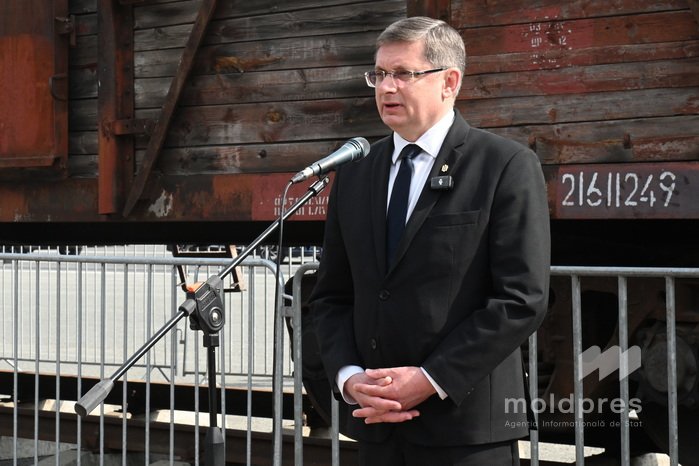
Present at the inauguration, Speaker Igor Grosu said that the memory of these tragedies is an anchor that must remind us each time what authoritarian, criminal regimes can lead to.

“This is a sad anniversary, because we commemorate and remember our grandparents and great-grandparents who went through this ordeal. Many of them never returned. Those who did return carry the scars of those atrocities. We thank those who had the courage and the strength to put these testimonies on paper, so that we, today’s generation, and our children can know, understand and pass them on. This is important because any society, any nation, any people without memory, without knowing its own history, is like a leaf in the wind. The memory of these tragedies is an anchor that must remind us each time what authoritarian, criminal regimes can lead to. And the worst thing, which we unfortunately still experience today, is that such regimes still exist in our proximity,” said Igor Grosu.

He welcomed the organization of a similar exhibition in Bălți and mentioned that such events should also be organized in the south of the country, emphasizing that it is important to talk as much as possible about the effects of these historical tragedies in order to prevent their repetition.

“I am glad that such an event is also organized in Bălți. I urge you to take it further, to the south, to Cahul. I strongly encourage us to speak more, to commemorate, and to make use of the eyewitnesses of those tragedies who have the courage to speak, to pass on to the younger generation what happened, so that we never again allow such things to occur in the history of our nation,” the official said.

At the same time, Igor Grosu announced that a draft law will be put forward to include in the legislation of the Republic of Moldova sanctions for those who deny the atrocities of the Stalinist regime.

Minister of Culture Cristian Jardan said that the exhibition organized in the Great National Assembly Square is a sign of respect for the victims of the deportations and a history lesson about the tragedies that totalitarian regimes can bring.

“It is, first and foremost, a sign of respect for the victims of the deportations. On this night, it is 85 years since thousands of families from the territory of today’s Republic of Moldova were taken to Siberia. At the same time, it is also a history lesson about the tragedies and the damage that totalitarian regimes can bring. We must learn from our past, a recent past which, unfortunately, was hidden from us for decades. These tragic events were spoken about only in whispers and only at home,” said the Minister of Culture.

Cristian Jardan also mentioned that the exhibition presents testimonies about the organized famine of 1946–1947. “It is also an exhibition in which we bring into discussion the great tragedy of 1946–1947, when we speak about the hunger that was provoked or organized, when at least 130,000 people fell victim to a true genocide. We must remember. When we want to have a future ahead of us, we must know our recent past, learn from those sad events in order not to allow their repetition ever again,” the Minister of Culture specified.

Cristian Jardan stressed the importance of organizing a similar event in the north of the country, in Bălți.

“This year, our exhibition is also taking place in Bălți, for the first time. In the square of the northern railway station in Bălți, a railcar has also been set up with the same exhibition. It is a symbolic and powerful moment through which we honor the victims of the thousands of deportees from the north of the country,” the official underlined.

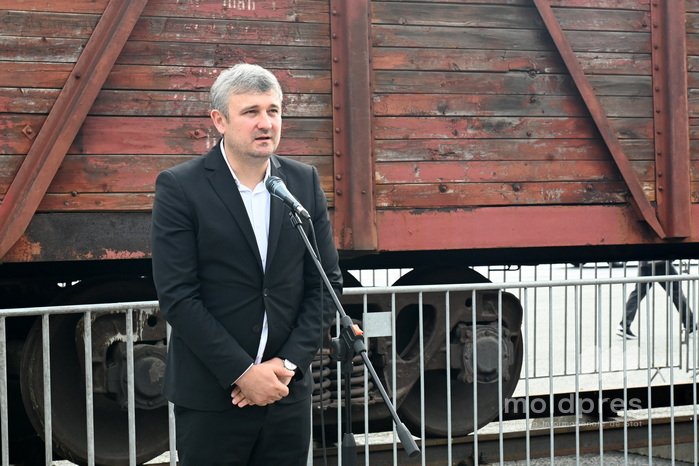
Director of the National Archives Agency Igor Cașu said that the fourth edition of the exhibition “State Terror in Soviet Moldova: Scale, Victims and Perpetrators” comes with several new elements for visitors.

“Together with several state institutions, we considered it appropriate to use this occasion, when we commemorate the deportations, to remind people of all forms of state terror. It is a term, by the way, that is well established in Russian historiography. Thus, the exhibition aims to commemorate all the victims of the Soviet regime, practically from the beginning to the end. The exhibition reflects all social groups, all ethnic groups, without distinction. We devote special attention to the women’s revolt in the spring of 1946. We have other new elements as well. There is a map of the 1951 deportation. I invite you to come and talk to those who survived and who provide extraordinary testimonies; it is a unique opportunity to discover them,” said Igor Cașu.

The President of the Association of Former Deportees and Political Prisoners, Alexandru Postică, shared harrowing testimonies about the terror and repressions of the Stalinist regime.

“We must remember that in 1940 there was that occupation which generated unimaginable repressions, never before seen on this earth. Our parents and grandparents were forced to flee to Romania. Some were killed and thrown into lime pits. Others were deported. Others were subjected to famine and died by the hundreds of thousands. Others were unjustly imprisoned in penitentiaries, as well as in psychiatric hospitals. Almost 25% of the population suffered directly from the Soviet occupation. Today we commemorate 26,000 people who suffered as a result of the first wave of deportations of June 13, 1941,” said Alexandru Postică.

The exhibition program includes, in addition to daily visiting, several special events. On June 21, thematic films from the collections of the National Archives about Soviet repressions will be screened, and on June 28 a theater performance will be staged. On July 6, a special event dedicated to the deportations of the night of July 6–7, 1949 will take place.

The exhibition is organized by the Ministry of Culture and the National Archives Agency, with the support of the Association of Former Deportees and Political Prisoners, the Moldovan Railways, the State Chancellery, the “Blue Frame” project, regional museums and other state institutions. The mass deportation operation from the Moldavian SSR on the night of June 12–13, 1941 affected 18,392 people and formed part of a wider action to “cleanse” the new territories occupied by the USSR in 1939–1940, following the Ribbentrop–Molotov Pact.

The mass deportation of July 6–9, 1949 was the largest on the current territory of the Republic of Moldova. The operation targeted more than 11,000 families; the contingent of those forcibly displaced in cattle wagons totaled 35,796 people, including 11,889 children, 14,033 women and 9,864 men.
 Facebook
 Instagram
 X/Twitter
 Telegram
CIS Agreement on Interstate Humanitarian Fund denounced
DOC // Citizens of the Republic of Moldova working in Slovakia to be eligible for pensions
Modern equipment for pupils from central Moldova settlement, through project supported by World Bank
Moldovan PM conveys message to border police on 34th anniversary of institution's foundation
MOLDOVA IS ME // From Denmark, through China, back home; story of Moldovan woman who opened in Chisinau first restaurant with Japanese Omakase concept
Moldova withdraws from cultural agreement signed within Commonwealth of Independent States
USMF "Nicolae Testemițanu" to hold oath-taking ceremony for doctors and pharmacists
VIDEO // Civil Society Gala held in Chișinău
First European Forum of Environmental Human Rights Defenders held in Strasbourg; Moldova’s experience presented by EcoContact
Over 250 rescuers from Europe to take part in MD–EU MODEX 2026 exercise organized in Moldova
VIDEO // Over 5 million lei seized following searches in fraud file in Moldova; five people detained
Sergiu Caraman remains head of Superior Council of Magistracy
VIDEO // Alexei Buzu: Government allocates 145 million lei for development of amalgamated localities in Călărași
EUROPEAN VILLAGE // Over 27 million lei invested in modernizing infrastructure in central Moldova settlement
MOLDOVA IS ME // Story of Moldovan woman who survived deportation
President on 85 years after first wave of Stalinist deportations: Commemorating deportations is about memory of past and the democratic future we are building together
Prime Minister: Memory of deported obliges us to build society in which such tragedies never again possible
Exhibition “State Terror in Soviet Moldova: Scale, Victims and Perpetrators” inaugurated in Great National Assembly Square
Investment opportunities and economic reforms presented at Moldova – Benelux Forum
DOC // Official public competition opened for position of TRM director general
Ambassador of Moldova to China: Cooperation with Guangdong Province can open new economic and investment opportunities
 National Bank of Moldova
My Village – Our Town Hall: Over 790 city halls involved in voluntary amalgamation process
President on 85 years after first wave of Stalinist deportations: Commemorating deportations is about memory of past and the democratic future we are building together
Construction works at Vulcanesti Electrical Substation completed – substation ready for energization
DAR 1+3 Programme: 33 localities of Moldova to receive funding for development, infrastructure projects
Moldova's fiscal policy for 2027 – submitted for public consultation: simpler, more competitive, easier-to-administer tax system

Ambassador of Moldova to China: Cooperation with Guangdong Province can open new economic and investment opportunities
Victims of Stalinist deportations commemorated in Chișinău
Moldova becomes member of WorldSkills Europe: European vocational training standards, experience exchange
About 790 mayoralties involved in voluntary amalgamation process in Moldova
Heavy showers forecast all over Moldova; National Crisis Management Center orders measures to prevent flooding
ARMENPRESS: Armenia to send humanitarian aid to Lebanon via Türkiye
Moldova to have additional tools to combat cybercrime
Moldovan PM says government advocates for strong economy
Construction works at Vulcanesti Electrical Substation completed – substation ready for energization
Moldova, Bulgaria to hold economic forum for new partnerships, investments in next autumn
DAR 1+3 Programme: 33 localities of Moldova to receive funding for development, infrastructure projects
BTA: New Marble Statue Fragments Discovered at Ancient Heraclea Sintica
Moldovan government approves launch of negotiations with Tunisia on abolishing visa regime for holders of diplomatic, service, special passports
Moldovan PM speaks on results of first Moldova – EU Investment Conference: benefits for citizens and business environment
Moldova's fiscal policy for 2027 – submitted for public consultation: simpler, more competitive, easier-to-administer tax system
Fifty million euros investments in modernization of 20 model schools of Moldova
Receive the latest news directly to your email

Receive the latest news directly to your email