
BTA: Cultural Values – National Pride Book Maps Out New Approach to Protecting Bulgaria’s UNESCO Heritage
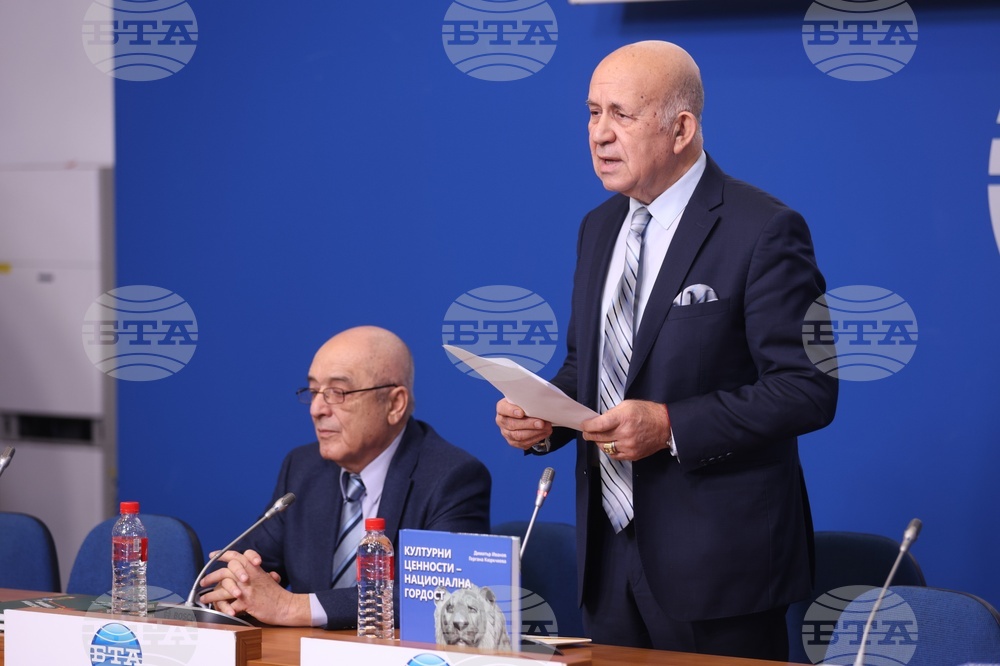
The book Cultural Values – National Pride sets out a single framework for protecting and managing Bulgaria’s cultural and natural heritage, University of Library Studies and Information Technologies (ULSIT) board of trustees chair Stoyan Denchev said in Sofia on Tuesday. He spoke at the book’s presentation at the BTA National Press Club in Sofia.

The monograph combines academic analysis, expert assessment and strategic thinking into a single concept for the protection and management of Bulgaria’s cultural and natural heritage, Denchev said during in the presentation of the book at BTA's National Press Club in Sofia.

The book is the outcome of systematic academic and expert work carried out through the activities of the Ekspertika Laboratory at ULSIT, Denchev said. He added that it examines 32 sites, grouped into four main thematic areas. The first part focuses on tangible cultural heritage, the second on intangible cultural heritage, the third on natural heritage, and the fourth on intermediate forms of recognition.

“For five years, ULSIT has been running the master’s programme Expert Assessment of Cultural Heritage Assets and Works of Art. Since last year, the University of National and World Economy (UNWE) has been training postgraduate specialists in the valuation and insurance of cultural heritage assets. In other words, we are closing the loop between theory and practice—two universities, one ministry, and several civic organizations,” said Dimitar Ivanov, who co-authored the book with Gergana Kyurkchieva.

Ivanov added that the aim was to confront the chronic problems affecting Bulgaria’s cultural heritage. He noted that they had also drafted amendments to Bulgarian legislation on the protection of cultural heritage.

“Through cultural heritage and cultural values, Cultural Values – National Pride shows us that memory is alive, and one way to keep it alive is through expert perspective and assessment, as understanding and valuing individual items of cultural heritage,” said Vanya Dobreva, head of the Culture, Historical Heritage and Tourism Department.

“I think the book will be useful to all circles involved in studying, preserving, presenting, restoring and promoting cultural heritage,” said Mariela Modeva, director of the leadership institute at ULSIT.

“The book is genuinely very interesting and deals with a very current topic. I will bring together the themes of memory and wealth, because everything described in the book is part of our memory and part of what we must protect. We have great wealth, but we do not even realize we have it,” said Dimitar Dimitrov, rector of UNWE.

“Bulgarian legislation in the field of culture, and specifically cultural heritage, really needs a fresh reading and a new analysis that can be put through an important expert review, as the authors have done,” said Ventzislav Velev, director of the Intangible Cultural Heritage Directorate at the Ministry of Culture.

Egypt’s ambassador to Bulgaria, Nader Saad, congratulated the team on the book, which he rated highly, especially because it was published in both English and Bulgarian. He said this was particularly important for people living here who, unfortunately, do not always have a good command of foreign languages.

“This book is of great interest to me. I am an adviser at the Chinese Embassy in Bulgaria and relatively new to the post, having arrived in Bulgaria this August. It is very important for me to deepen my understanding of Bulgaria. I represent the Ministry of Culture and Tourism of the People’s Republic of China, so culture, tourism, and related areas are of particular importance to me,” said Zhang Yanbo, Advisor for Culture and Tourism at the Embassy of China in Bulgaria.

Denchev added that the book would be distributed free of charge to all institutions in Bulgaria and abroad involved in safeguarding cultural heritage and would not be offered for sale.

The photographs for the book were provided by the Bulgarian News Agency (BTA). The publication was reviewed by Toshko Yordanov and Polina Karastoyanova.
 Facebook
 Instagram
 X/Twitter
 Telegram
BTA: Currency Exchange in Bulgarian Post Branches Going Well, Says Deputy Prime Minister
BTA: Bulgarian Banking Sector Ensures Smooth Transition to the Euro, Says Banks Association
BTA: Bulgaria Becomes the 21st Eurozone Member
BTA: Chair of Commodity Exchange State Commission to Head Coordination Centre on Euro Adoption
BTA: Trips by Bulgarian Residents Abroad Up 5.8%, Non-Residents' Visits to Bulgaria Up 2.9% Y/Y in November
BTA: Bulgarian Naval Research Ship Arrives at Bulgarian Antarctic Base on Livingston Island
BTA: New Construction Chamber Chair Kachamakov Pledges Fight Against Shadow Economy, Focus on Workforce and Youth Engagement
BTA: First Bulgarian Geodesist to Set Foot on Antarctica Worked on Research Laboratory at Bulgaria’s Livingston Island Base
BTA: Aleksandar Nikolov and Karlos Nasar Make Top Ten of Balkan Athlete of 2025 Poll
BTA: Continue the Change - Democratic Bulgaria: New Cabinet with This Parliament Is Highly Undesirable
BTA: National Social Security Institute Unanimously Approves 2026 State Social Security Budget
BTA: Scope Ratings Agency Confirms Bulgaria's "A-" Credit Rating, Outlook Stable
BTA: Kiril Valchev Unanimously Re-elected BTA Director General
BTA: Romanian PM Paying Two-Day Visit to Austria, Scheduled to Meet Hungarian Counterpart
Exhibition, Queen Marie and Chisinau, opened at National Museum of History of Moldova
Moldovan president to meet Moldovans living in Ireland
Moldovan government joins Earth Hour international initiative
Increased flow of passengers in Moldova on eve of Easter holidays; Customs Service head announces measures to streamline traffic
 National Bank of Moldova
Moldova switches to daylight saving time on night of March 28 to March 29
Moldovan government joins Earth Hour international initiative
Moldovan president, EU Commissioner for Justice discuss accelerating justice reforms
Moldovan PM has discussions with European Commissioner for Democracy, Justice and the Rule of Law
Moldovan PM has meeting with Romania’s economy minister

Moldovan president, EU Commissioner for Justice discuss accelerating justice reforms
PHOTO // Professional training in urology: resident physicians of Moldovan Medical University participate in European study programme
Judge’s Day established in Moldova
Moldovan PM has discussions with European Commissioner for Democracy, Justice and the Rule of Law
Electricity consumption decreases by 3 per cent in Moldova on March 26; energy minister describes this as important result of efforts of all country's consumers
VIDEO // Energy minister says solidarity of European partners helps country overcome energy crises
PHOTO // Moldovan defense minister meets Slovak counterpart; regional security, strengthening national resilience on agenda
Moldovan PM has meeting with Romania’s economy minister
EU provides additional support for justice reform in Moldova
Moldova again avoids power cuts through emergency measures, regional cooperation
President conveys message at Assembly of Judges
CSM held 50 meetings last year and adopted over 700 decisions
Moldovan President attends General Assembly of Judges
President’s address to General Assembly of Judges
PHOTO // Republic of Moldova opened Honorary Consulate in Almaty, Kazakhstan
President on 108 years since Union of Bessarabia with Romania
Receive the latest news directly to your email

Receive the latest news directly to your email