
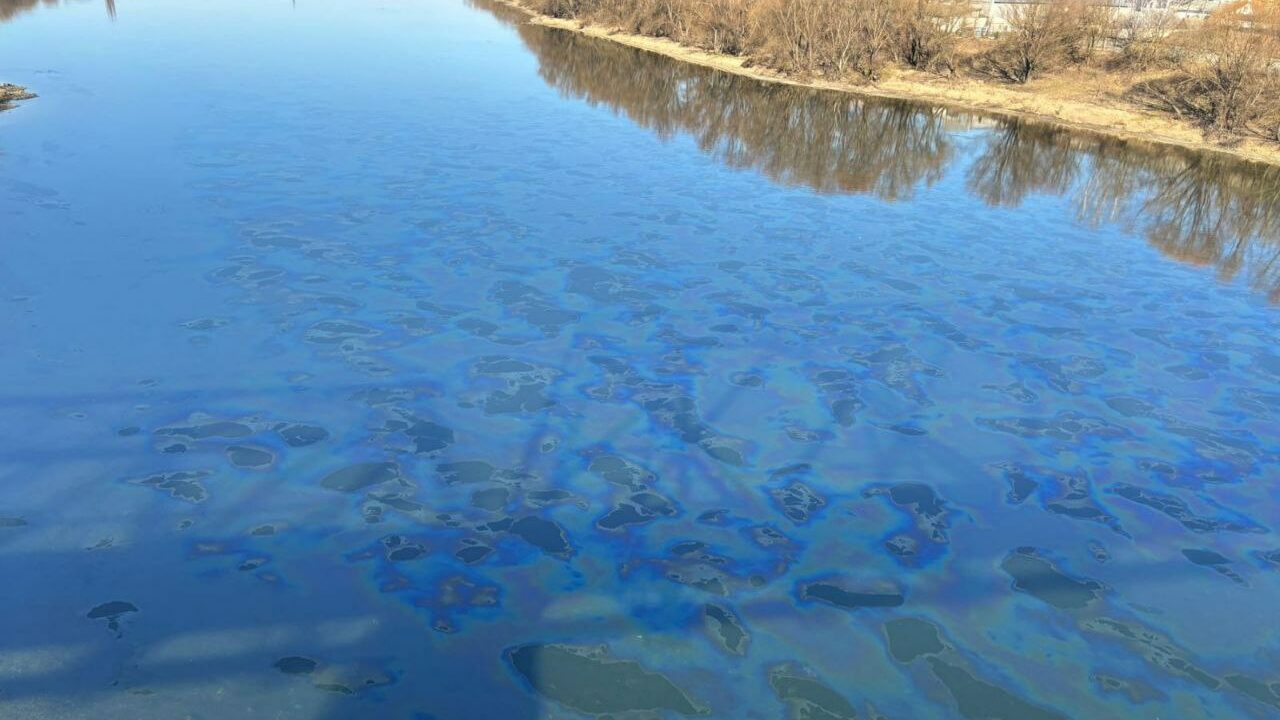
Pollution of Dniester River after Russia’s attack on Novodnistrovsk: Promo-LEX organization files criminal complaint with Moldova's Prosecutor General’s Office
The Promo-LEX Association has filed a criminal complaint with the Prosecutor General’s Office (PG) of Moldova regarding the massive contamination of the Dniester River with oil substances, following the military attack by the Russian Federation on the Dniester Hydropower Complex in Novodnistrovsk, Ukraine, on March 7, 2026. The criminal complaint by Promo-LEX is necessary, but an international case file must be prepared, says WatchDog expert Andrei Curararu.

Promo-LEX is requesting the initiation of criminal proceedings for water pollution offences (Article 229 of the Criminal Code) and ecocide (Article 136 of the Criminal Code), emphasizing the seriousness of the acts and the cross-border impact of the pollution.

Through the criminal complaint, Promo-LEX has requested the start of criminal proceedings and the urgent preservation of evidence, including laboratory analyses, water and sediment samples, as well as satellite data. The organization has also requested the carrying out of judicial environmental expert assessments, international judicial cooperation with the authorities of Ukraine and a full evaluation of the ecological and material damage caused.

“Filing this criminal complaint is a necessary step to protect the interests of Moldova and its citizens. The massive pollution of the Dniester is not an administrative incident, but an act of exceptional gravity, that affects the right to a healthy environment, the right to water and the health of hundreds of thousands of people,” said Vadim Vieru, lawyer and Programme Director at Promo-LEX.

The criminal complaint filed by the Promo-LEX Association with the Prosecutor General’s Office of Moldova on the pollution of the Dniester River, following the attack by the Russian Federation on the Dniester Hydropower Complex in Ukraine, is “a correct and necessary move,” says WatchDog expert Andrei Curararu.

“The pollution of the Dniester is not an administrative incident, but an act of exceptional gravity,” Curararu noted.

However, the expert draws attention to a limitation: “Moldovan criminal law applies on the territory of Moldova, to persons who can be held liable before Moldovan courts. Vladimir Putin is currently not in this category. And he will not be.”

Curararu underlines that the domestic case remains essential, but that an international case file must be prepared:

“The preservation of legally relevant evidence, laboratory analyses, satellite data, cooperation with Ukrainian authorities – all of these build a body of evidence without which no international forum can work. The domestic criminal case is the evidentiary infrastructure of a future international case. The problem is that no one seems to be working explicitly on the latter.”

Curararu also cited more relevant international precedents in cases of environmental damage caused in the context of armed conflicts.

Among them, there are the 1991 Gulf War, when the UN Compensation Commission ordered Iraq to pay reparations, including to third states affected by pollution, as well as NATO’s 1999 bombings of Yugoslavia, which triggered transboundary pollution in the Danube, later documented by UN experts.

Another example is the attack on the Jiyeh power plant in Lebanon in 2006, which caused massive oil spills in the Mediterranean Sea and led to the establishment of a compensation fund through a UN General Assembly resolution.

In the expert’s opinion, Moldova must act quickly to document the impact of the incident on the environment and the economy.

“Moldova now has 15 days of environmental alert status. The window for preserving evidence with maximum legal value is right now. If we wait for the water to clear before we decide what to do legally, we will lose the arguments that make the difference between moral support on social networks and a winnable international case,” Curararu concluded.

On the night of 6 to 7 March 2026, the hydropower complex in Novodnistrovsk was the target of a missile and drone attack, with the explosions causing a massive discharge of technical oils and other oil products into the Dniester River. Four days later, on March 10, pollutant slicks were identified on the territory of Moldova and laboratory analyses carried out by the Environment Agency confirmed that maximum admissible concentrations had been exceeded.

Following the incident, the supply of drinking water was halted in the municipality of Balti and in other localities and fishing was banned on the river section between Naslavcea and the Dubasari reservoir. To manage the situation, the National Army was mobilized and the EU Civil Protection Mechanism was activated. At the same time, the government established a 15-day environmental alert status for the Dniester basin.
 Facebook
 Instagram
 X/Twitter
 Telegram
New opportunities for tourism cooperation between Moldova and China
Persons concerned in abusive legal actions to benefit from enhanced protection in Moldova
Persons harmed in criminal or contravention proceedings to be able to request compensation from state for damages caused in Moldova
Criminal liability to be able to be transferred after reorganization of legal entities in Moldova
Adopted by parliament: more judicial procedures to be digitalized to improve access to justice in Moldova
Voted by parliament: Moldova to integrate into European system for recognition of professional qualifications
PHOTO // Moldova's National Public Security Inspectorate's subdivisions equipped with five vehicles through project co-financed by European Union
New rules for medical staff: Moldova to recognize professional qualifications got in EU
Labour and Social Protection Ministry invites Moldovans returning from abroad to information session on social insurances rights
PHOTO // Investments worth 4.8 million lei in schools of Moldova: over 100 institutions to receive modern equipment
Lower energy invoices for family with four children from Moldova, who benefited from EcoVoucher Programme
PHOTO // About 90 environmental inspectors from all regions of Moldova participate in seminars on application of contravention rules
Enhanced traffic at Leuseni, Sculeni border crossing points of Moldova; travelers urged to choose alternative customs posts
PHOTO // Union Highway A8 enters design phase on territory of Moldova
Around 300 public institutions from Chisinau to benefit from modernization of district heating infrastructure
PM has meeting with Ambassador of Ukraine to Moldova
VIDEO // Moldovan firefighters, part of joint efforts to extinguish vegetation fires across Europe
PM meets European Union Ambassador to Moldova
PM, Ambassador of Romania discuss Moldovan-Romanian partnership, European path of Moldova
Moldovan Economic Development and Digitalization Ministry prepares two new deregulation packages: 100 laws, government decisions to be amended
Moldovan parliament denounces agreement with Commonwealth of Independent States on cooperation in field of books, printing
 National Bank of Moldova
PM has meeting with Ambassador of Ukraine to Moldova
PM meets European Union Ambassador to Moldova
Moldovan PM to pay official visit to Bucharest
PM, Ambassador of Romania discuss Moldovan-Romanian partnership, European path of Moldova
Moldovan PM says government to intervene before problems turn into bigger crises

Moldovan PM says government to intervene before problems turn into bigger crises
Roads of Moldova to be mandatorily assessed every five years
Moldovan PM says absolute priority drinking water for people
Moldovan PM government cannot influence 60 per cent of gas tariff, there is room for optimization for remaining 40 per cent
Red Code of reduced water flow on many rivers of Moldova
Moldovan PM announces new measures to supply market with diesel, protect consumers from price increases
Protest held outside Moldovan parliament building against higher gas tariffs; parliament speaker demands solutions from opposition
LIVE // Moldovan PM holds news conference
Court rulings to be recognized more easily abroad; Moldova joins Hague Convention
Peculiarities of elections to People’s Assembly of Gagauzia to be included in Electoral Code
Parliament speaker says Moldova does not risk running out of fuel
Over 10,000 applicants submit admission files to universities of Moldova on first day of contest
Moldovan PM, fuel market participants discuss measures to secure domestic market
What state of alert in energy, hydrological sectors involves: Moldova's government prioritizes actions to protect population, ensure uninterrupted operation of vital services
Citizens to be able to come up with proposals for authorities’ agenda via e-Democracy platform
PM says Moldova has lowest fuel prices in region, country must make sure it has necessary volumes
Receive the latest news directly to your email

Receive the latest news directly to your email